I started the day with an excellent Eggs Stornoway (a Benedict with black pudding) at the Davron Hotel and ended it with a tasty Beefsteak pie at the Crudin Bay golf course. Not exactly rough living, and I won’t be losing any weight on this trip.
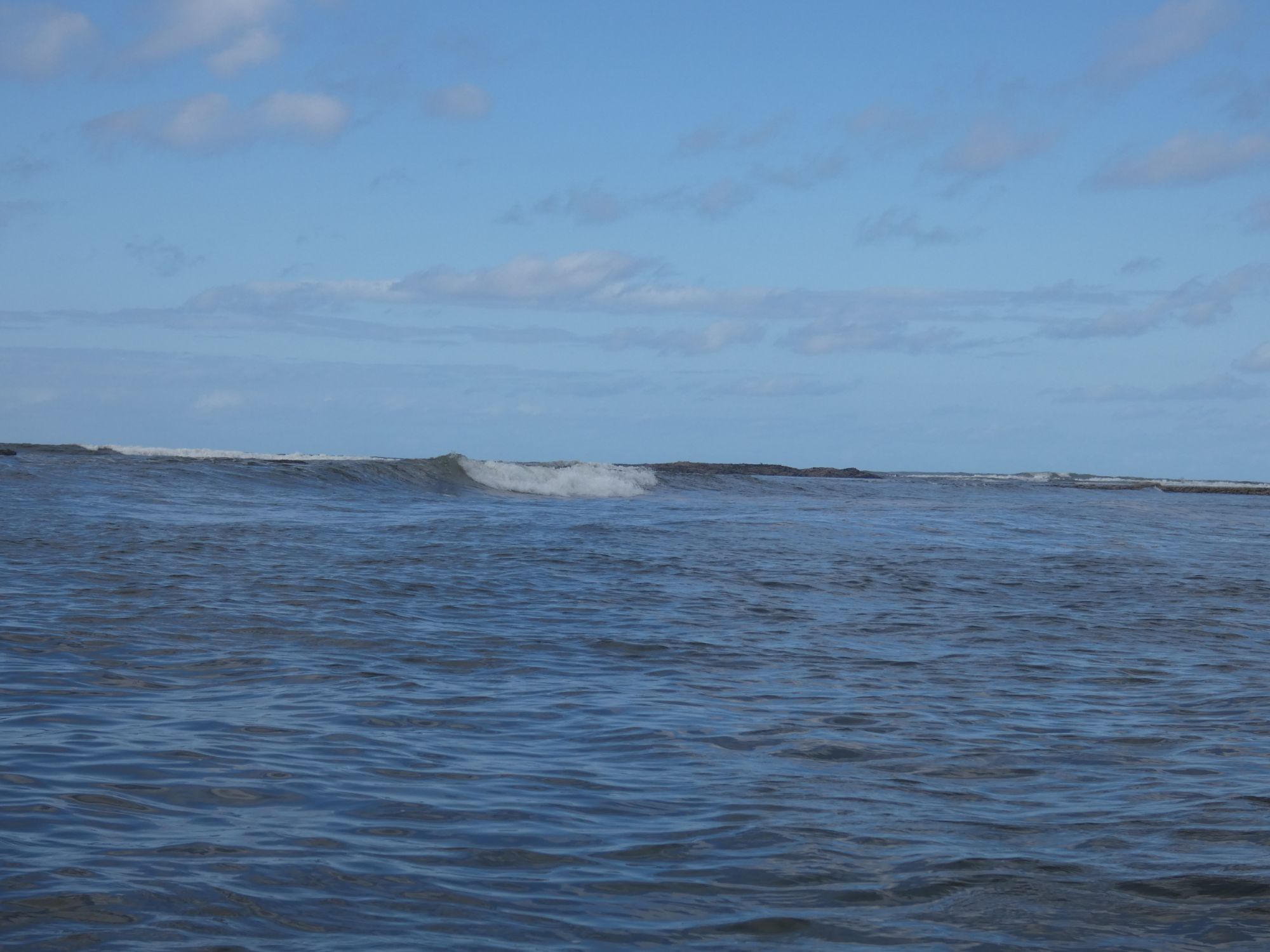
The weather and tide couldn’t have been any better for taking on Rattray Head. There was a slight offshore southwesterly that had taken all the swell away, and I’d have the southerly flood tide with me to Rattray. If I timed it correctly, this would just be easing to slack water at Rattray Head itself.
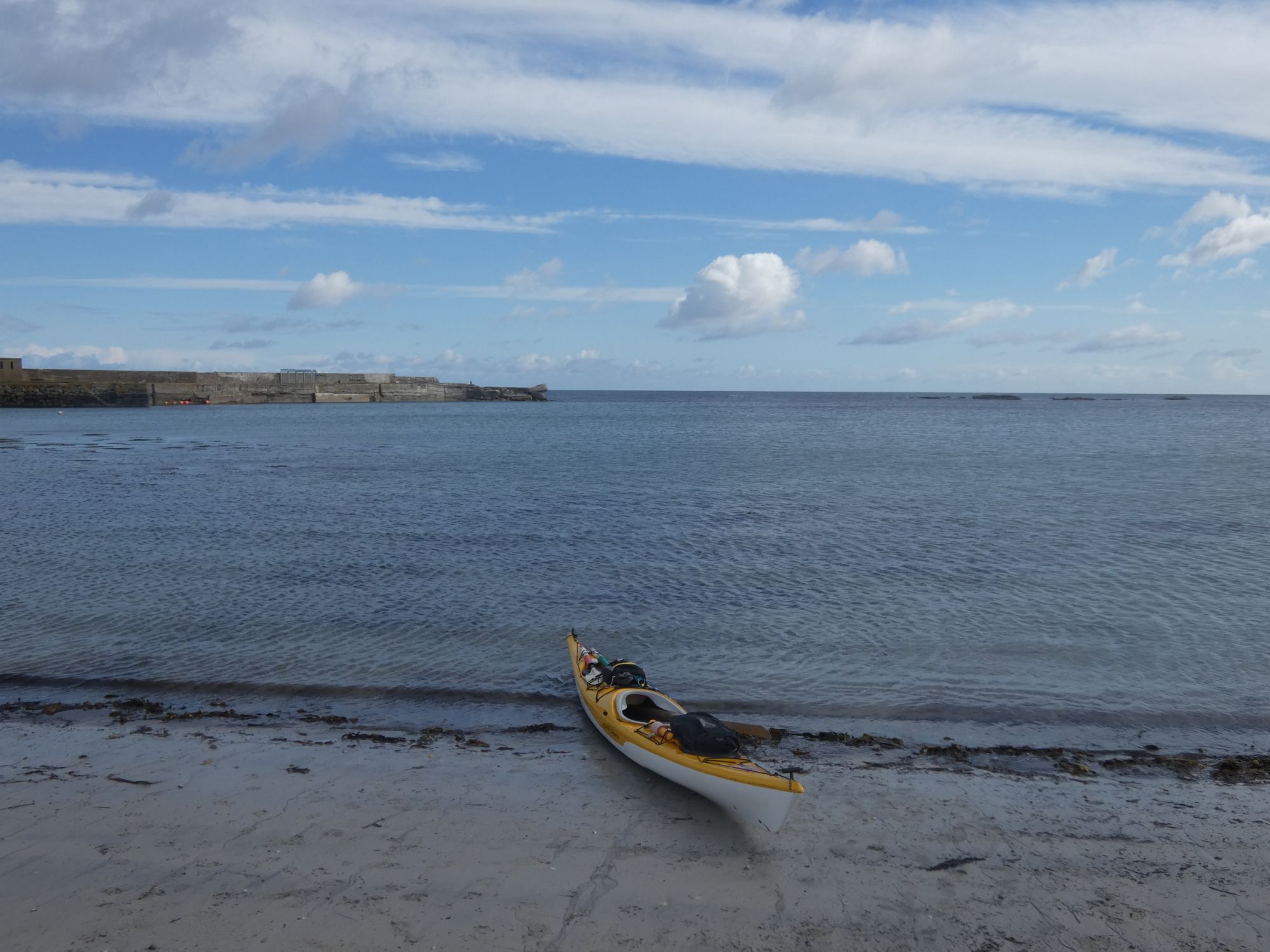
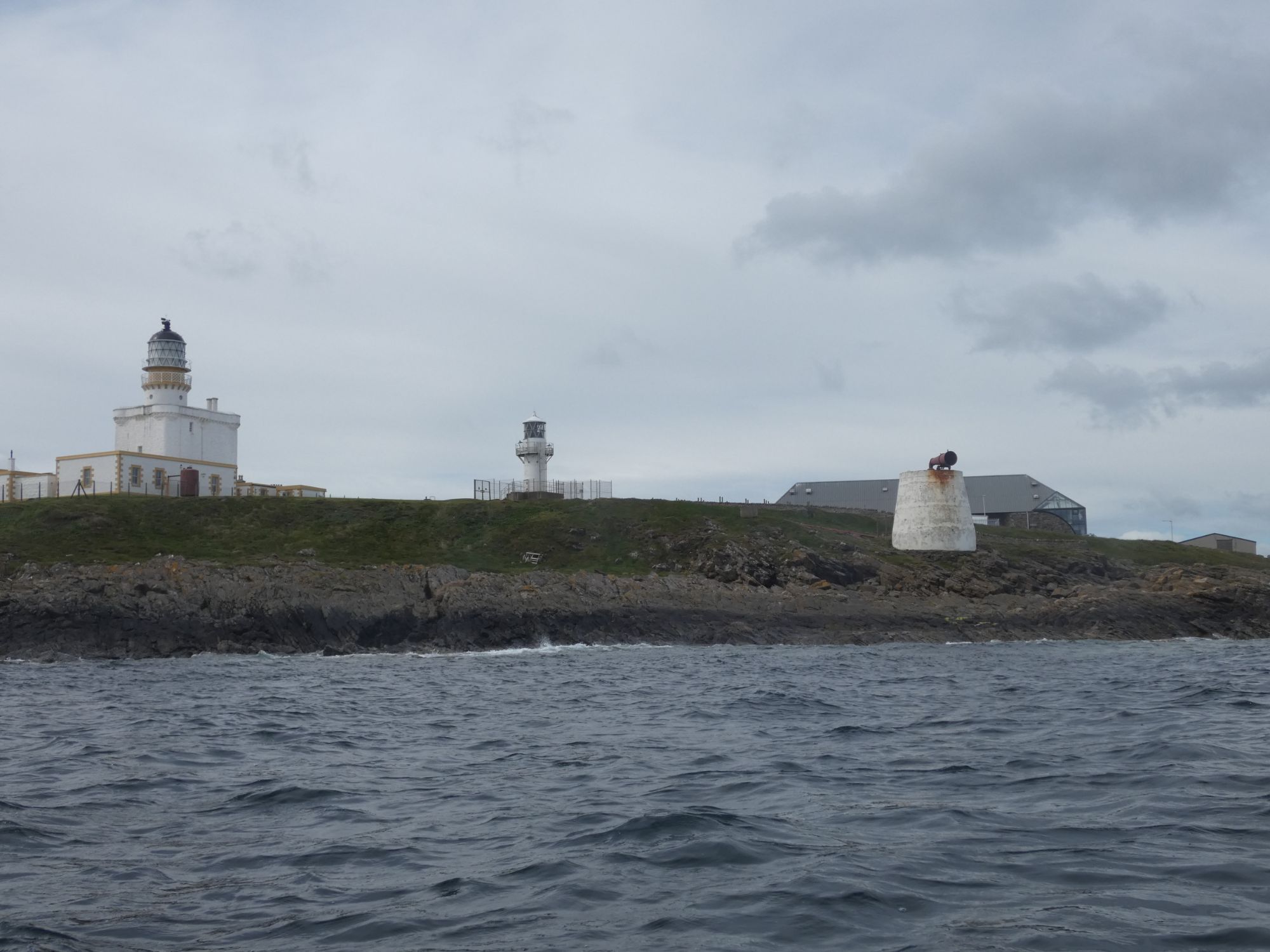
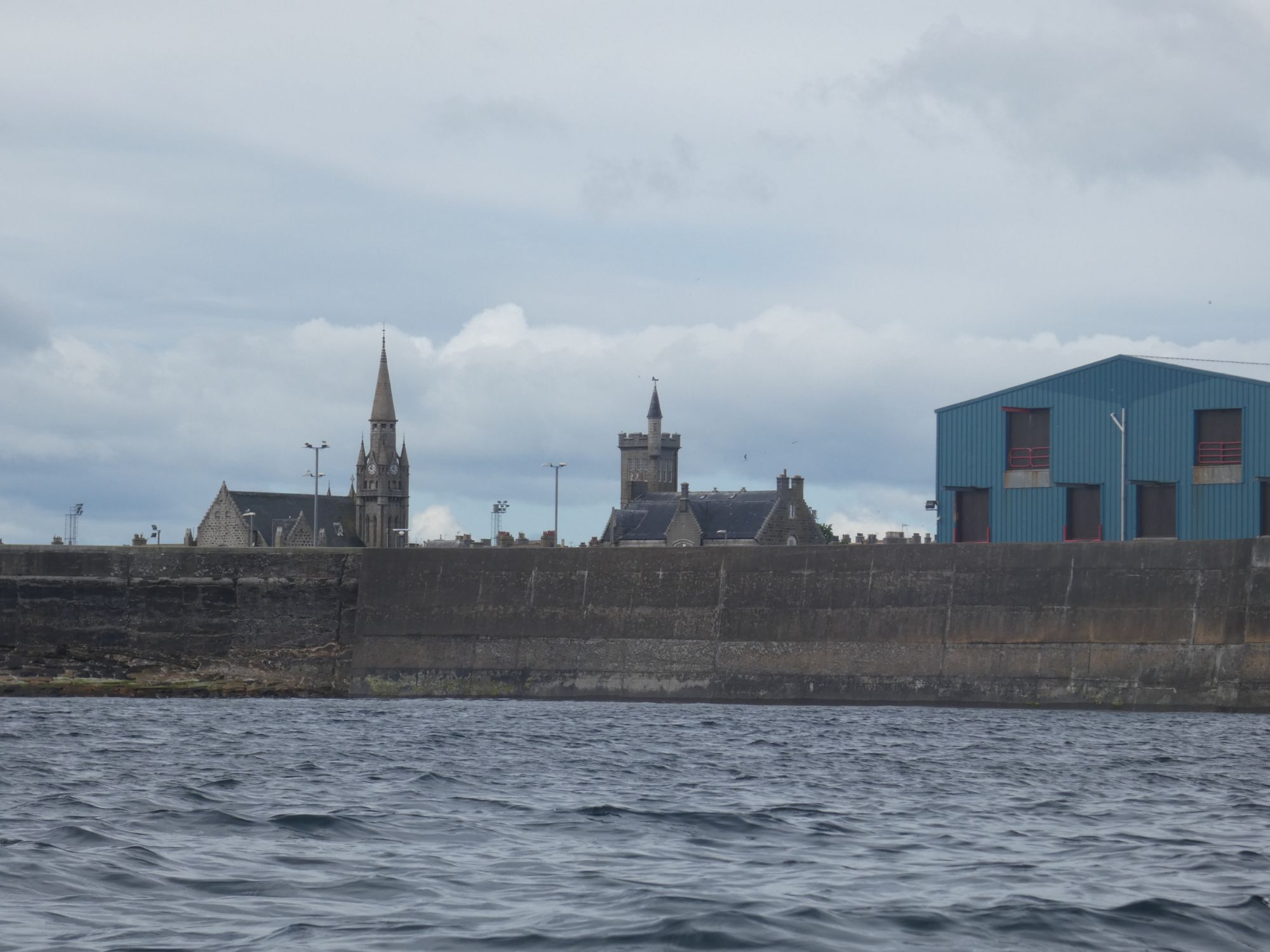
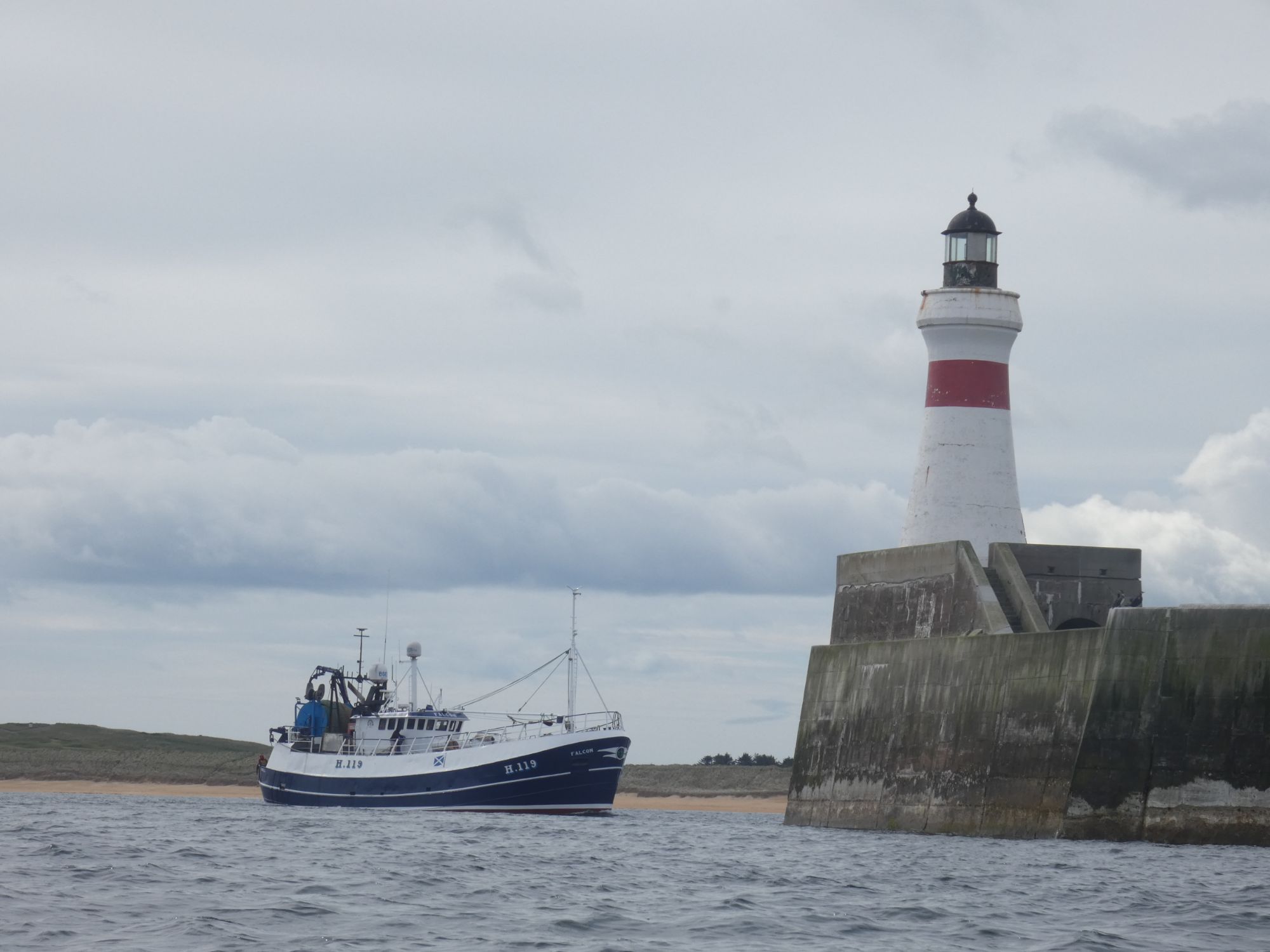
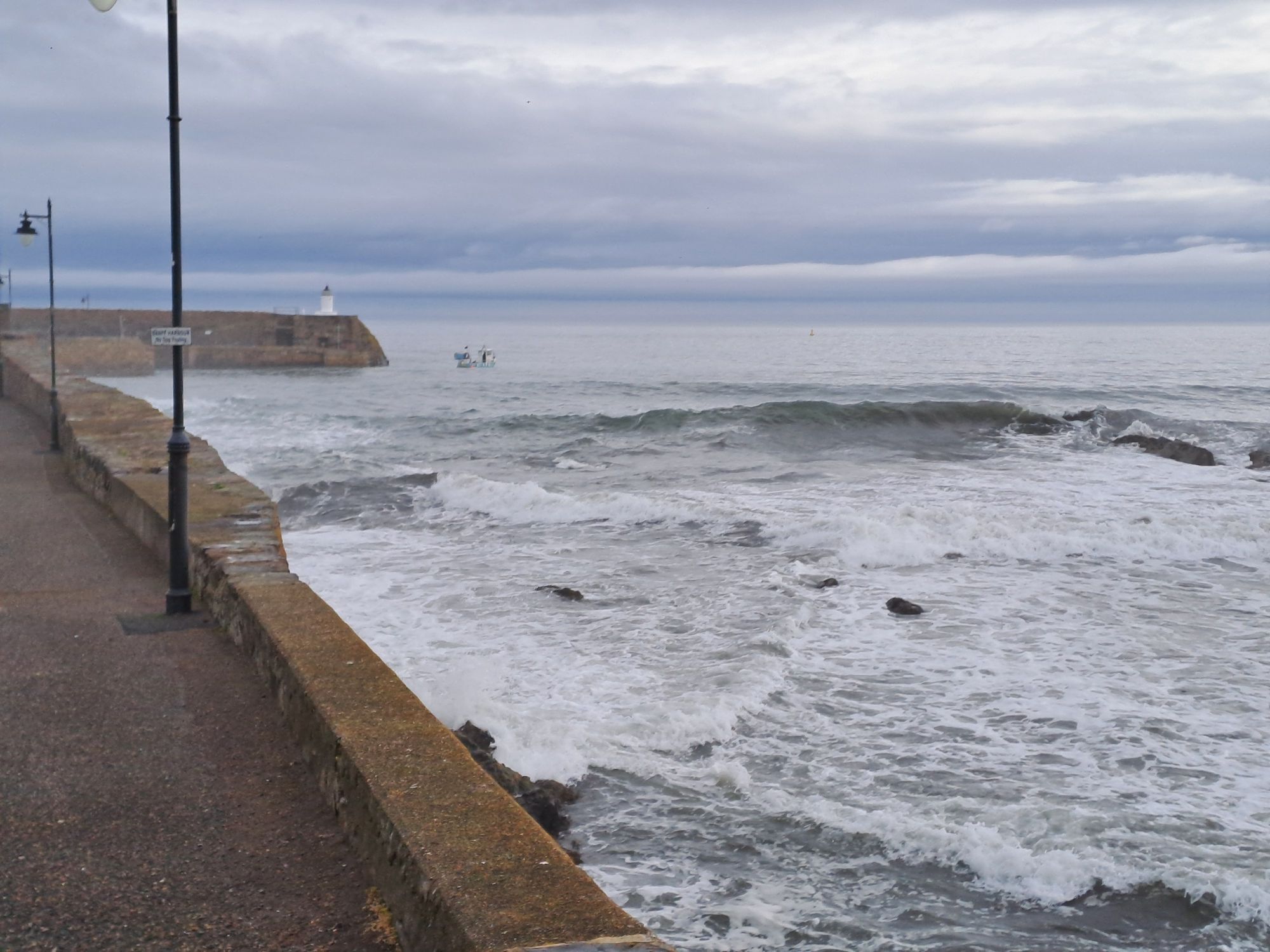
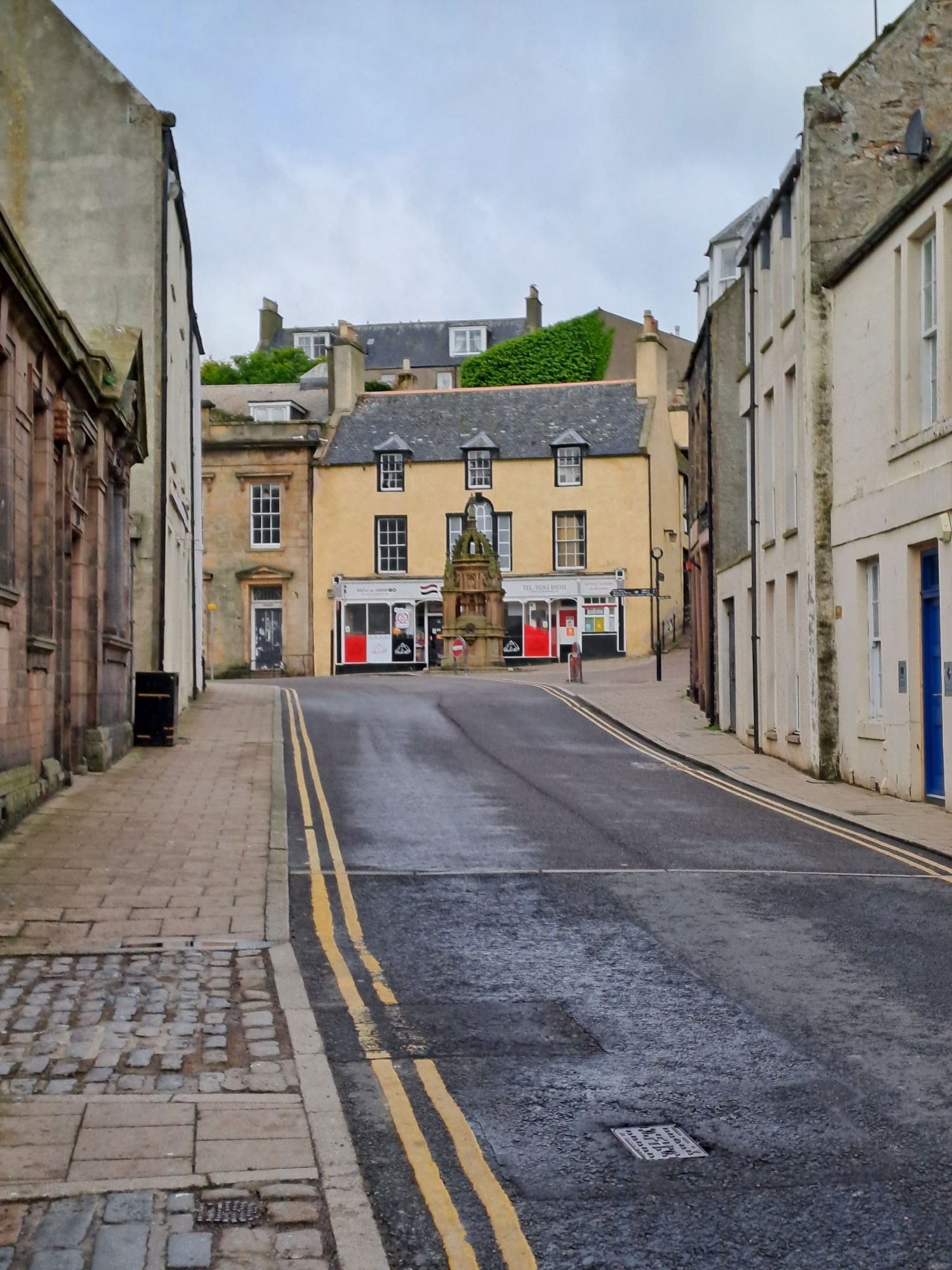
Rather than wheel the kayak back to the harbour, I set off from the beachCalm water to the eastKinnaird Head at Fraserburgh Fraserburgh town behind the harbour wallA fishing boat entering Fraserburgh harbour before I cross the entrance
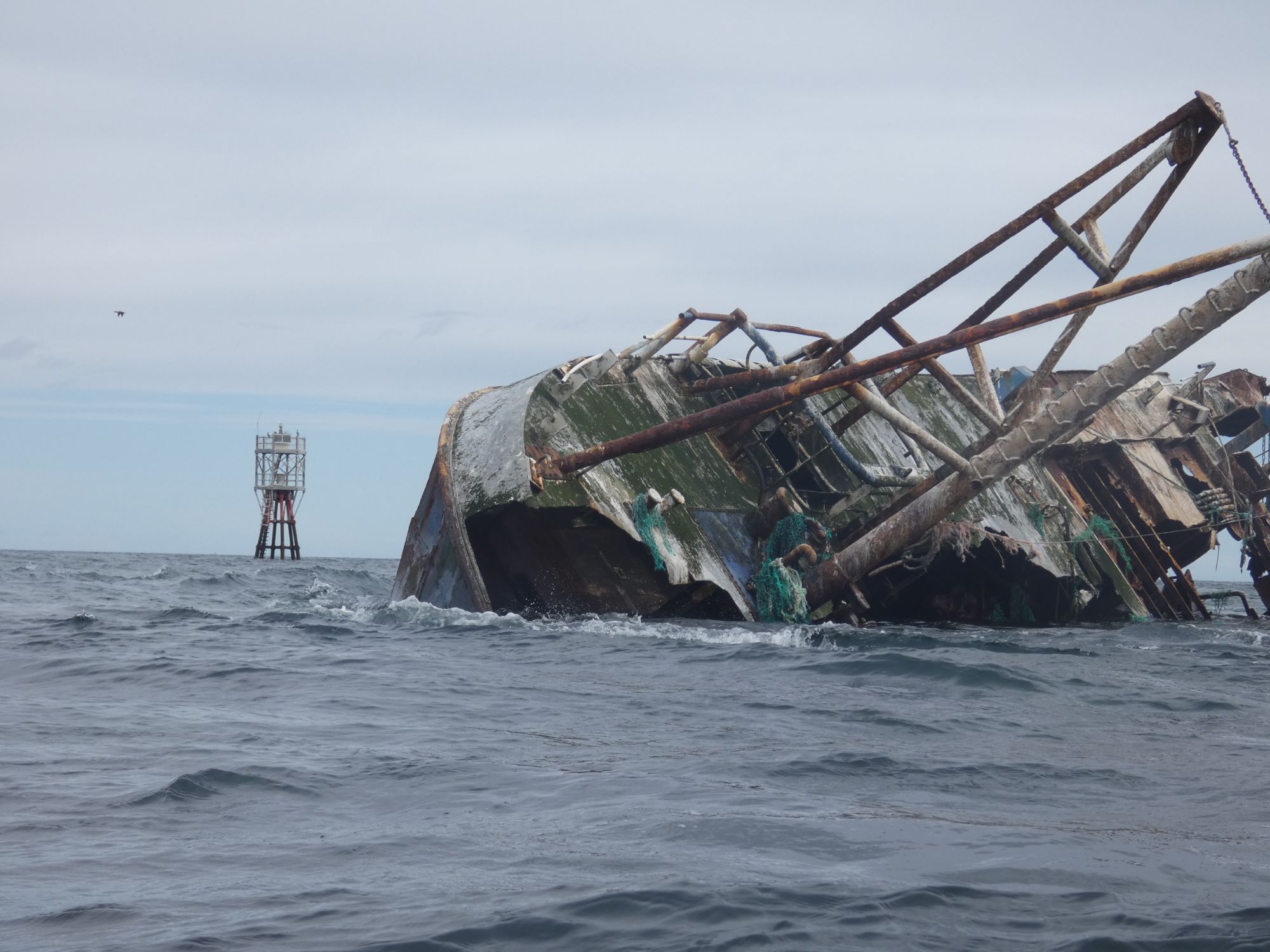
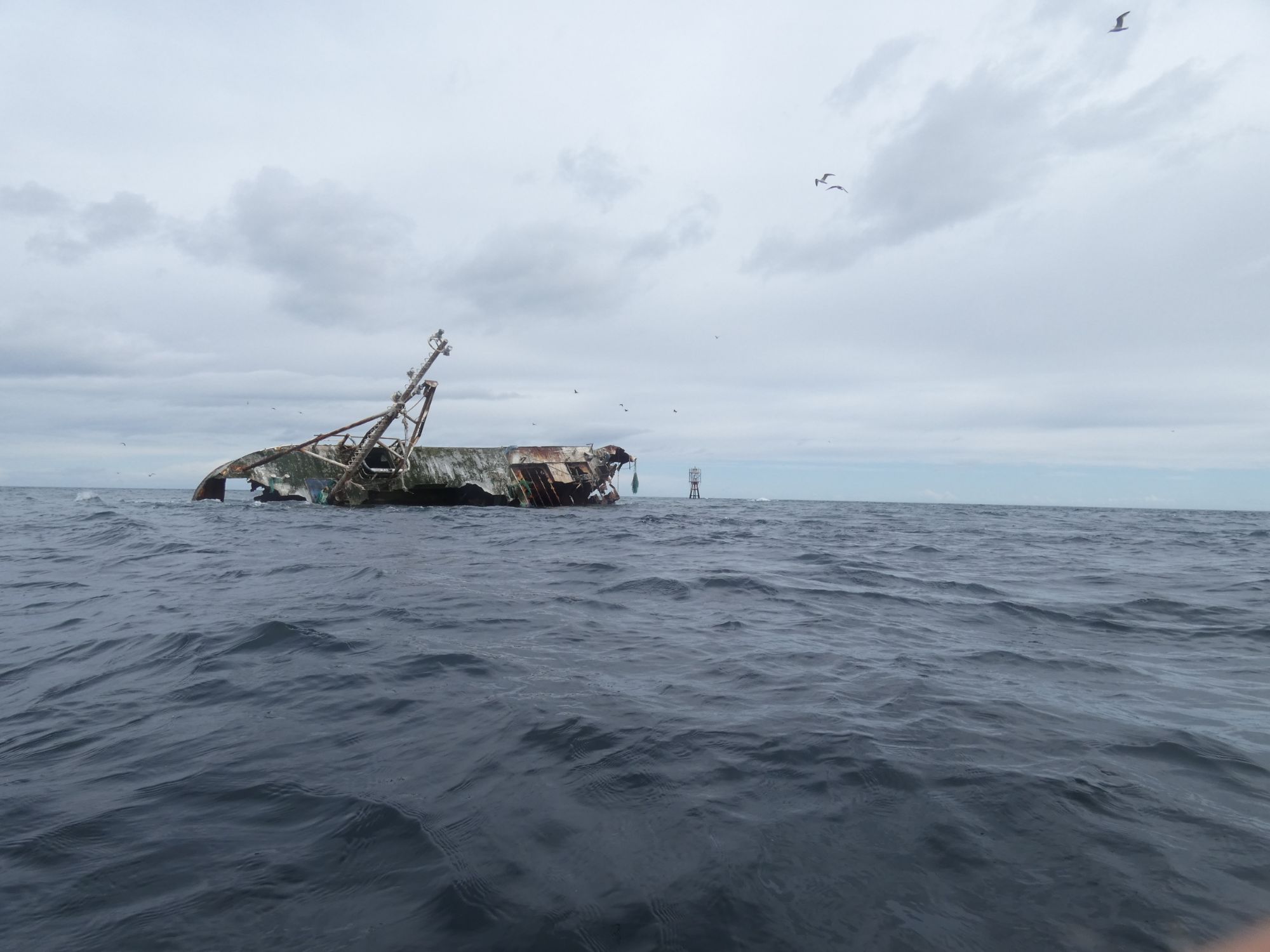
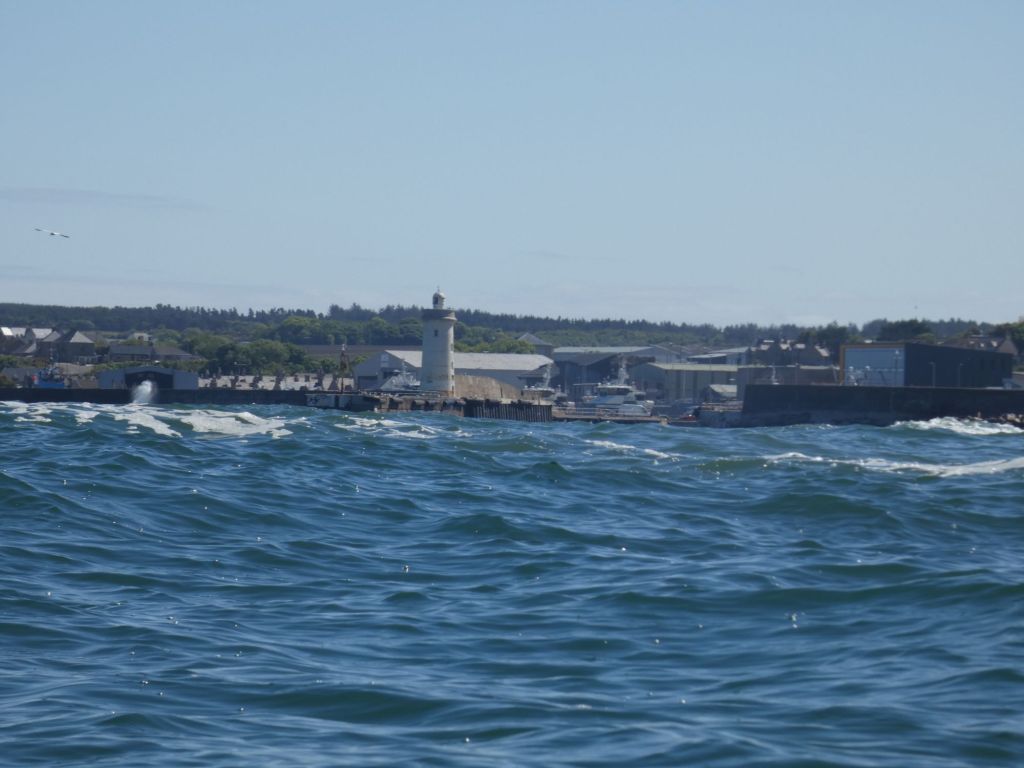
After Fraserburgh, I started to notice the effects of the current taking me onwards. At Cairnbulg Point, I was sped by the wreck of the Sovereign almost before I could get my camera out. I was doing 6 kph without paddling. At low water, this would be dry.
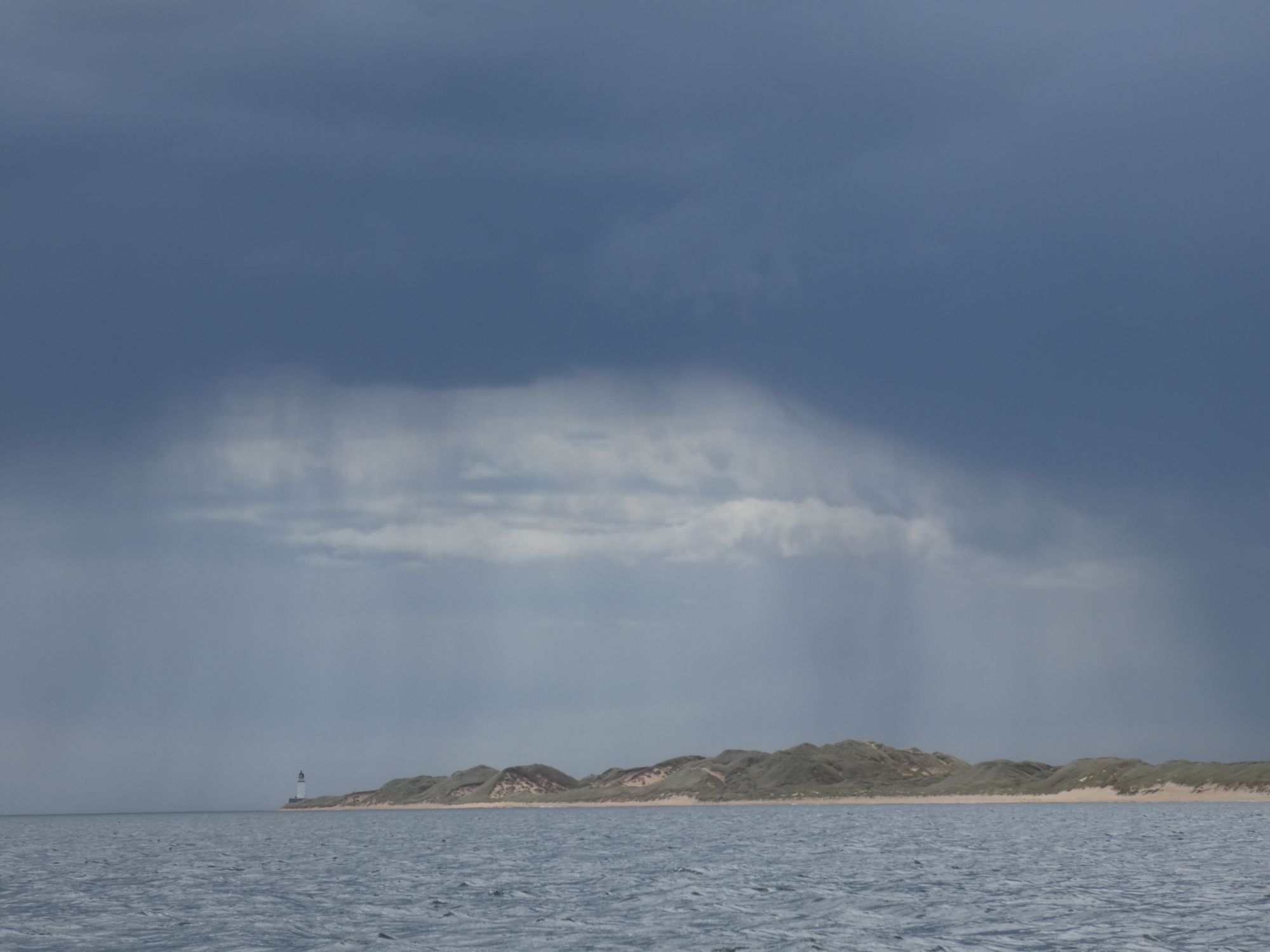
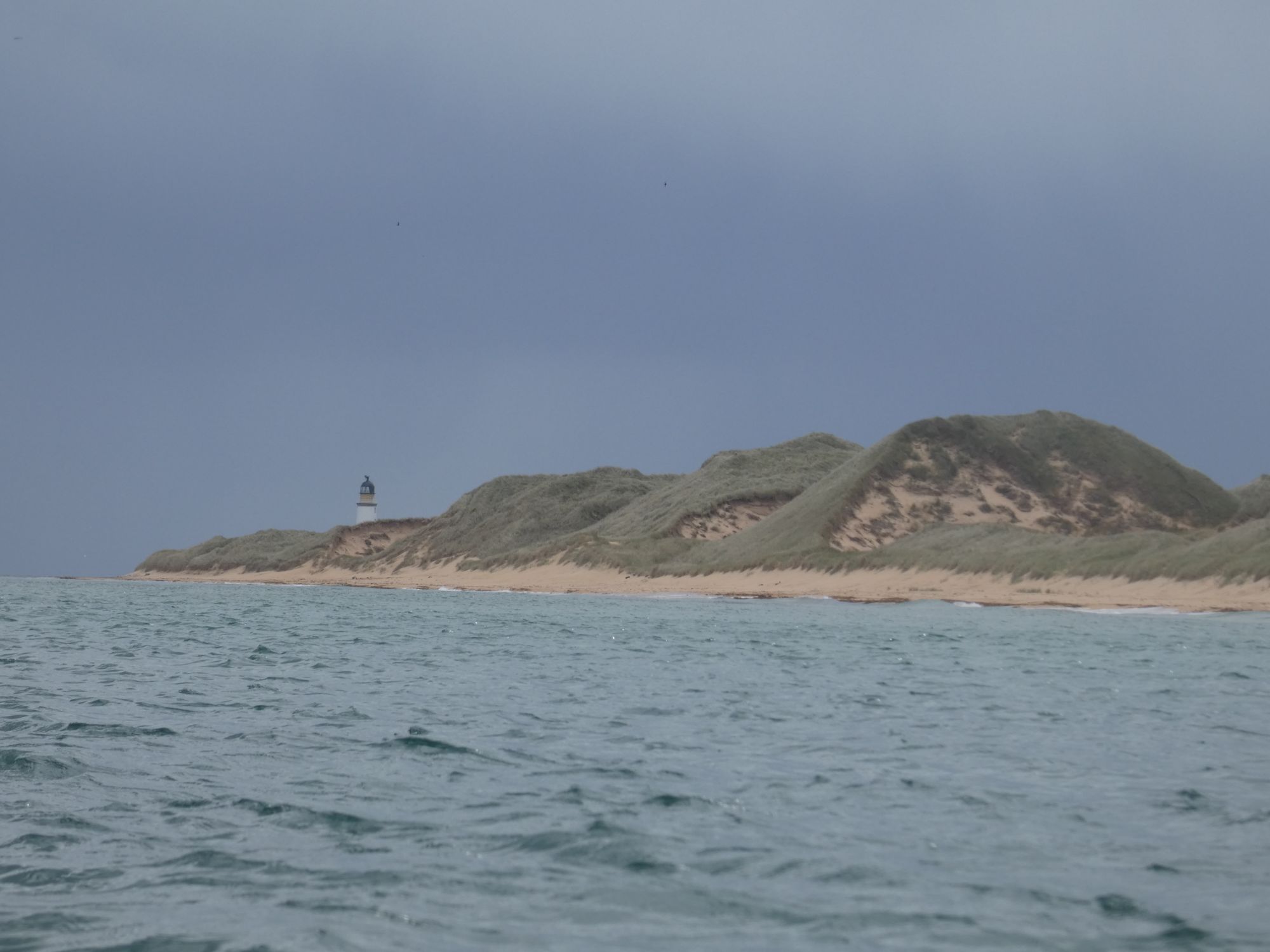
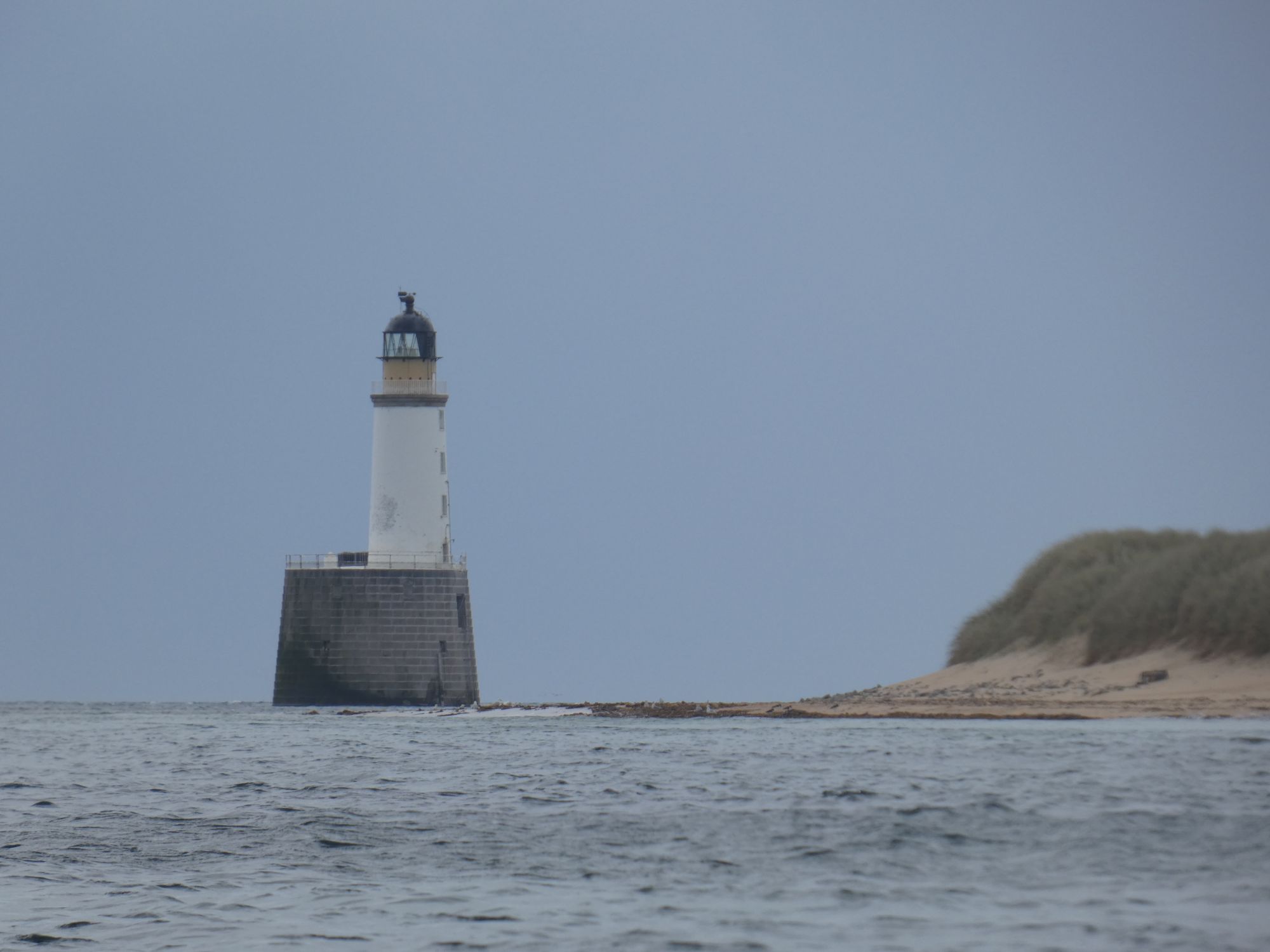
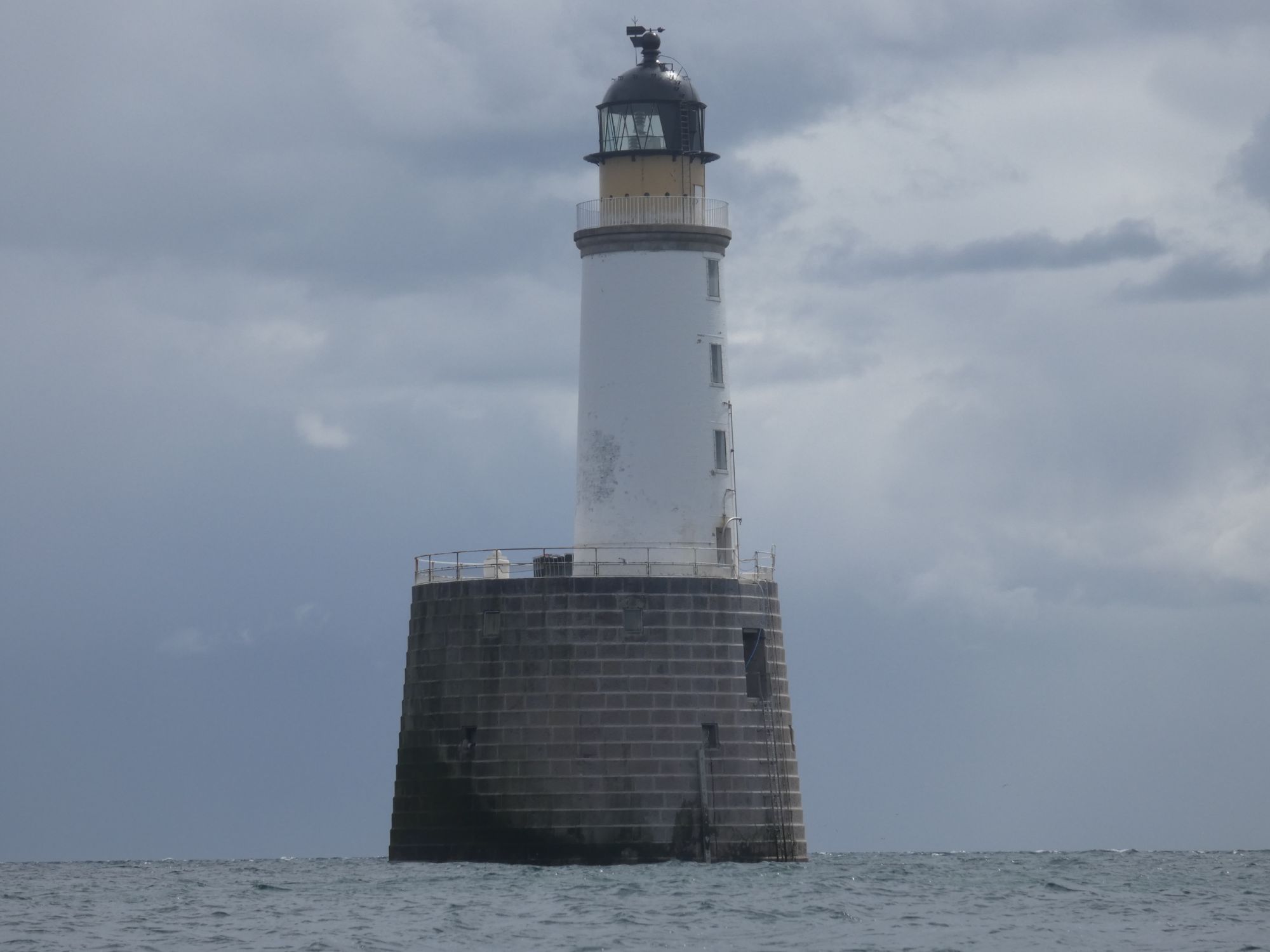
Once round Cairnbulg Point and past Inverallochy, I could see the Rattray Lighthouse 10 kms in the distance. I was keeping a kilometre out to sea to be sure I was getting the benefit of the tidal flow, but as I got halfway across the wide sandy bay, I noticed a large rain shower approaching from the east and the wind began to freshen. I headed closer to the shore to reduce my exposure to wind blown chop.
The wreck of the fishing boat, Sovereign, at Cairnbulg PointBehind me in a flash
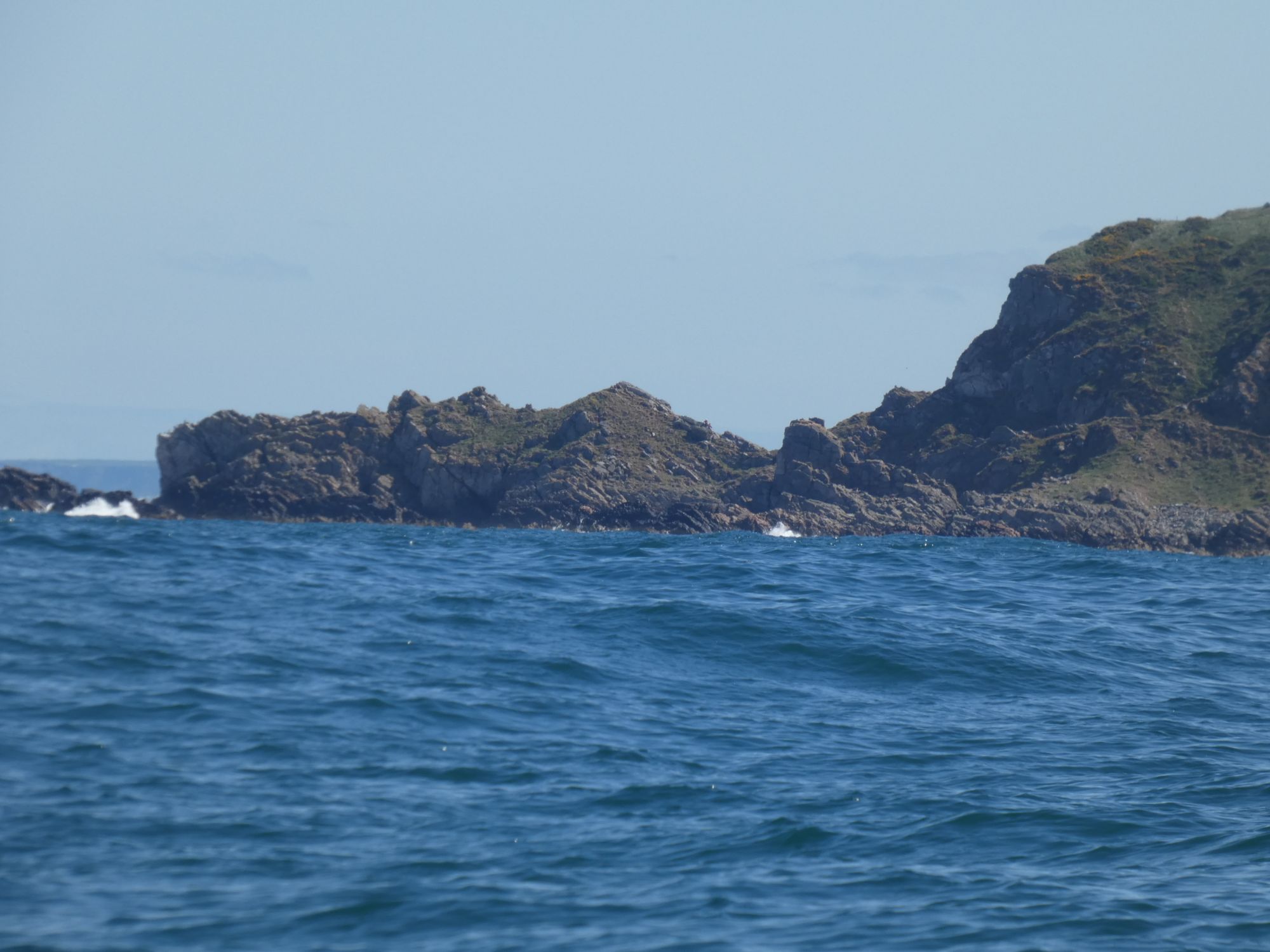
As I moved to the east, I expected my view of the gap between the lighthouse and the headland behind to increase. I was surprised to see it decreasing. Was I still being pushed out to sea, and was I going to be swept around the sea side of the lighthouse? It wasn’t until the headland aligned with the lighthouse that I realised the lighthouse was the further away of the two and that my expected transit was actually working in reverse.
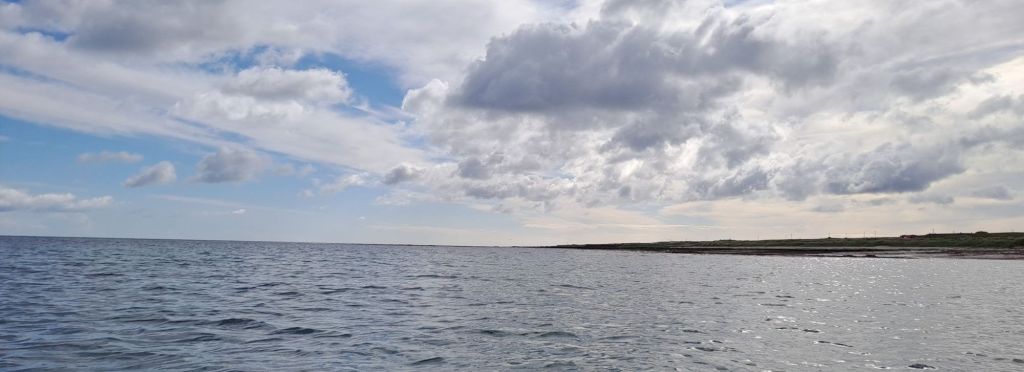
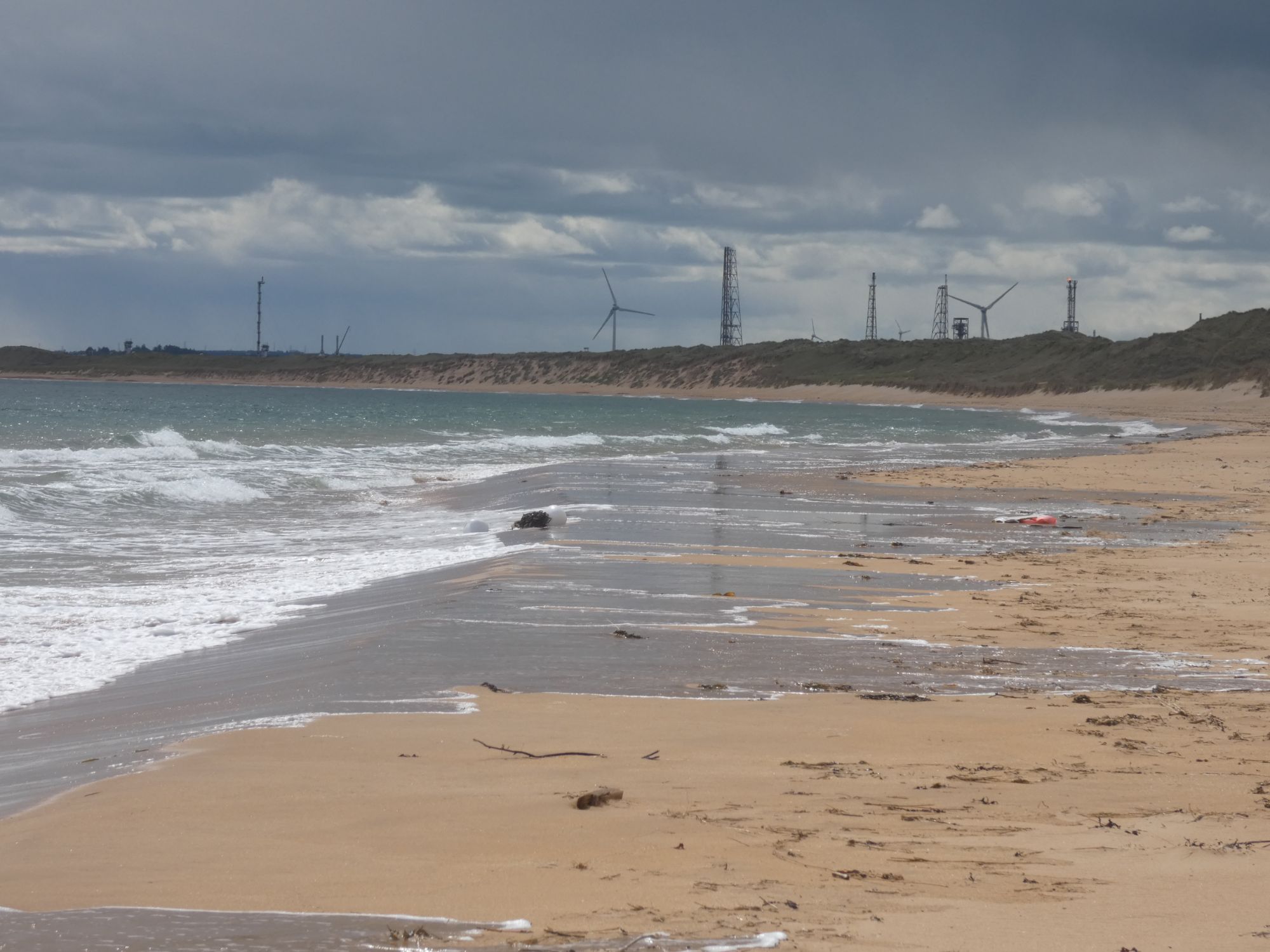
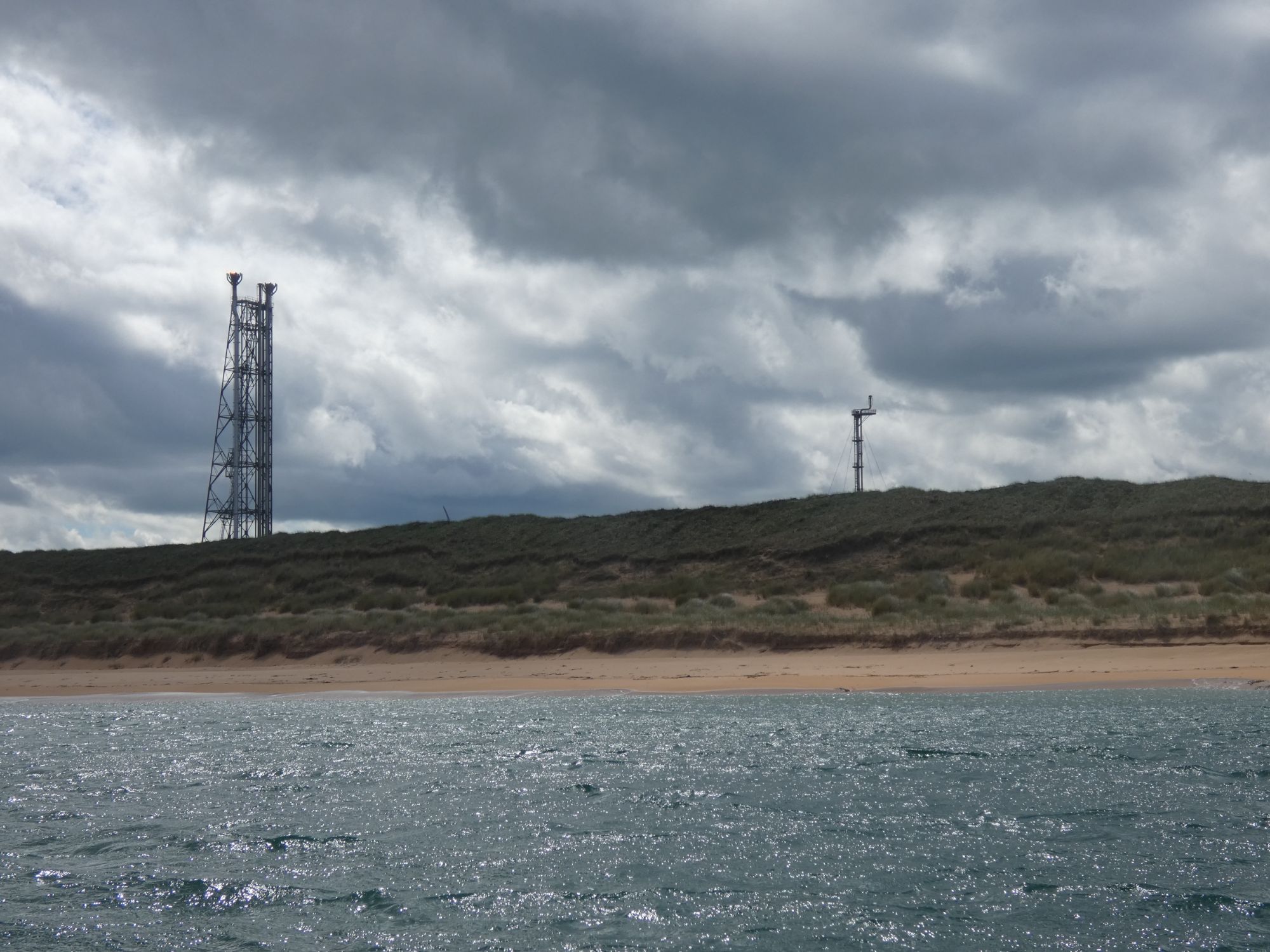
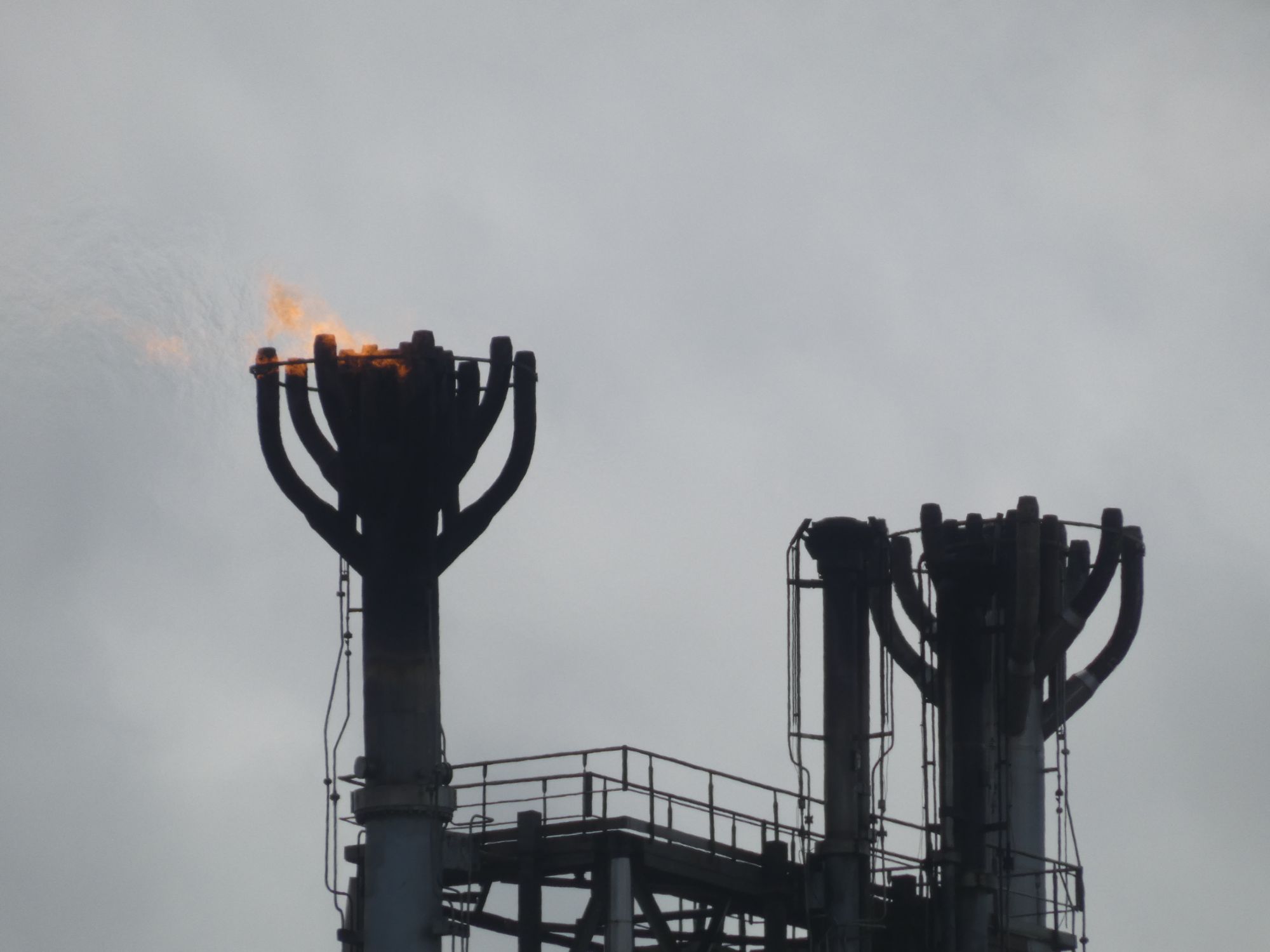
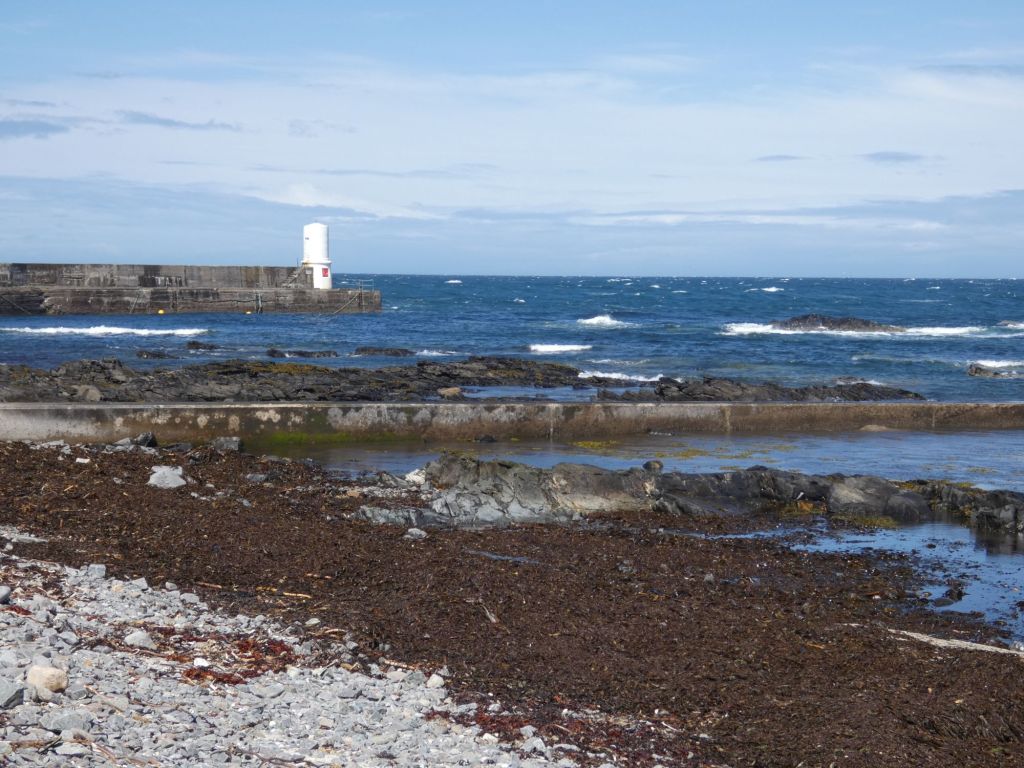
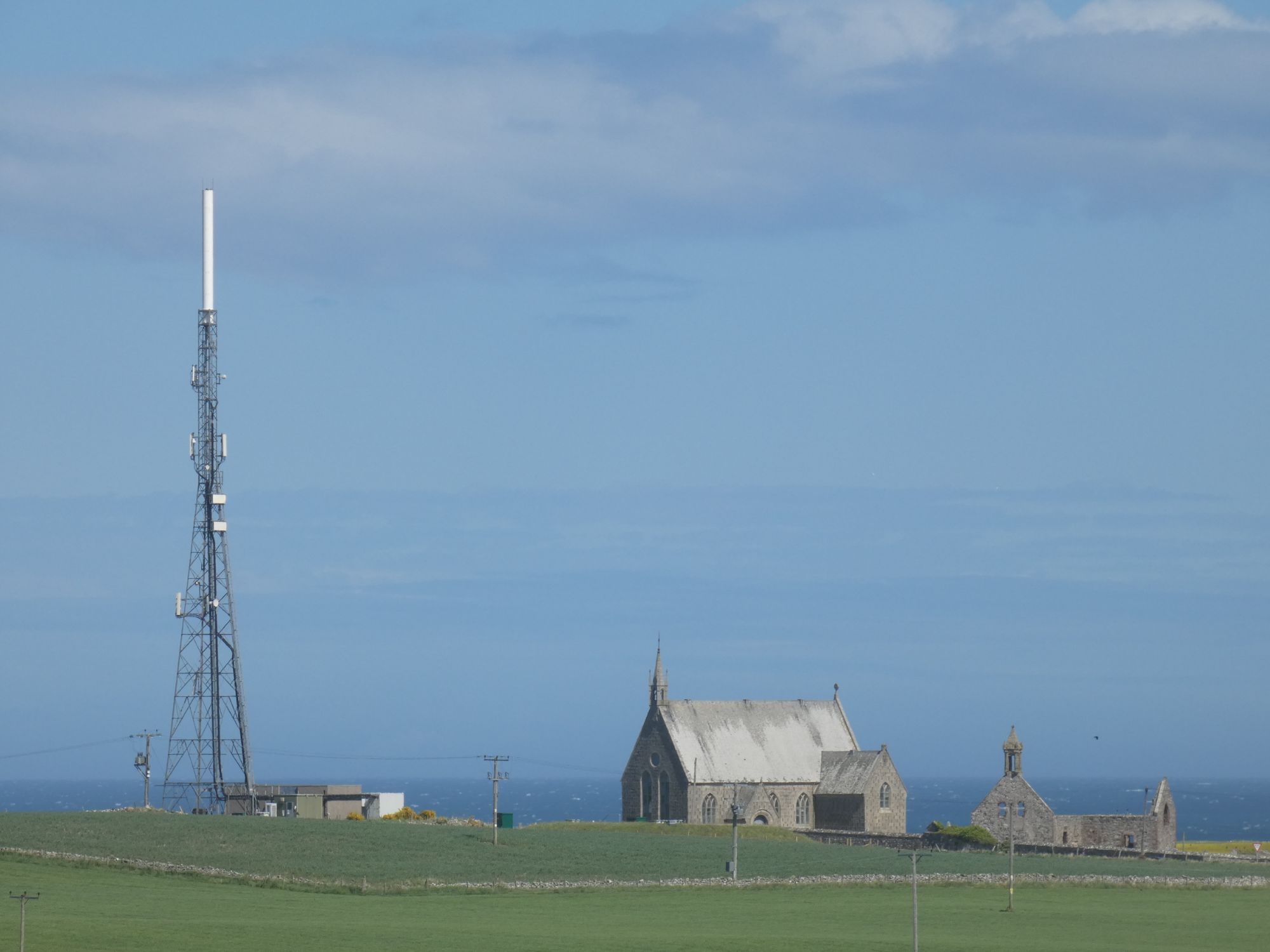
The rain shower passed to the south of me as I realised the headland was closer to me than the lighthouseThe dunes on the headlandThe calm waters of Rattray HeadVery little tidal flow at the base of the lighthouse Looking south to the gas terminalGas terminal flare stacksJust a low burn
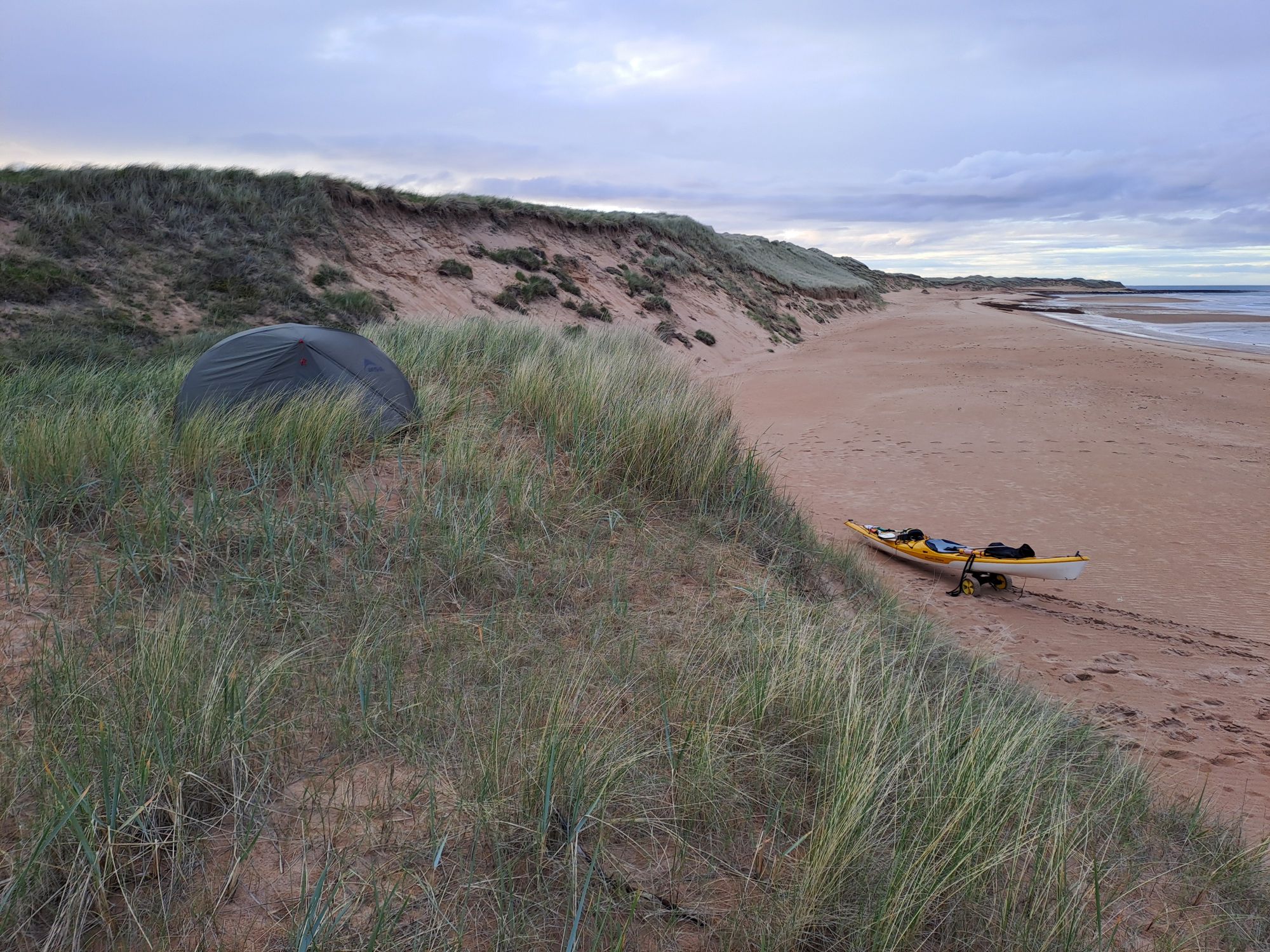
As I approached Peterhead, I made the decision to stop early and set up camp in the dunes a few kilometres north of town, not far from the 10th tee of the Peterhead Golf Course’s furthest hole. Nobody but a few dog walkers walked this far north of town.
Joyce, a long-time friend of my sister and the family, lives near Peterhead. She met me at the bridge over the Ugie and whisked me off to her golf course at Cruden Bay for an excellent dinner.
The idea that the town got its name from a traveller who “rose hearty” after helping a ghost find peace is less likely true than gaelic explanation, but I prefer the myth. I certainly slept well in the excellent Davron Hotel.
I ate two full Scottish breakfasts here, a haddock and chips dinner, and a carvery mountain of food on Sunday. All was delicious. The staff were all genuinely friendly and appeared to get on great with each other.
On my arrival on Saturday evening, my kayak was welcomed into the beer garden as if it were another paying customer.
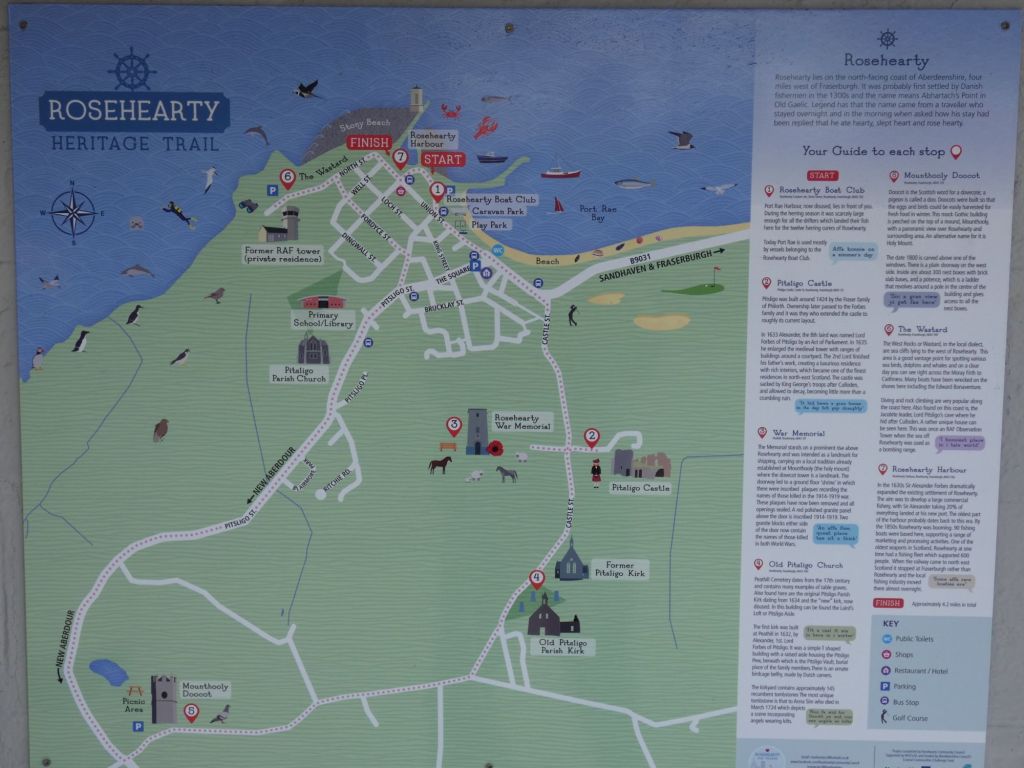
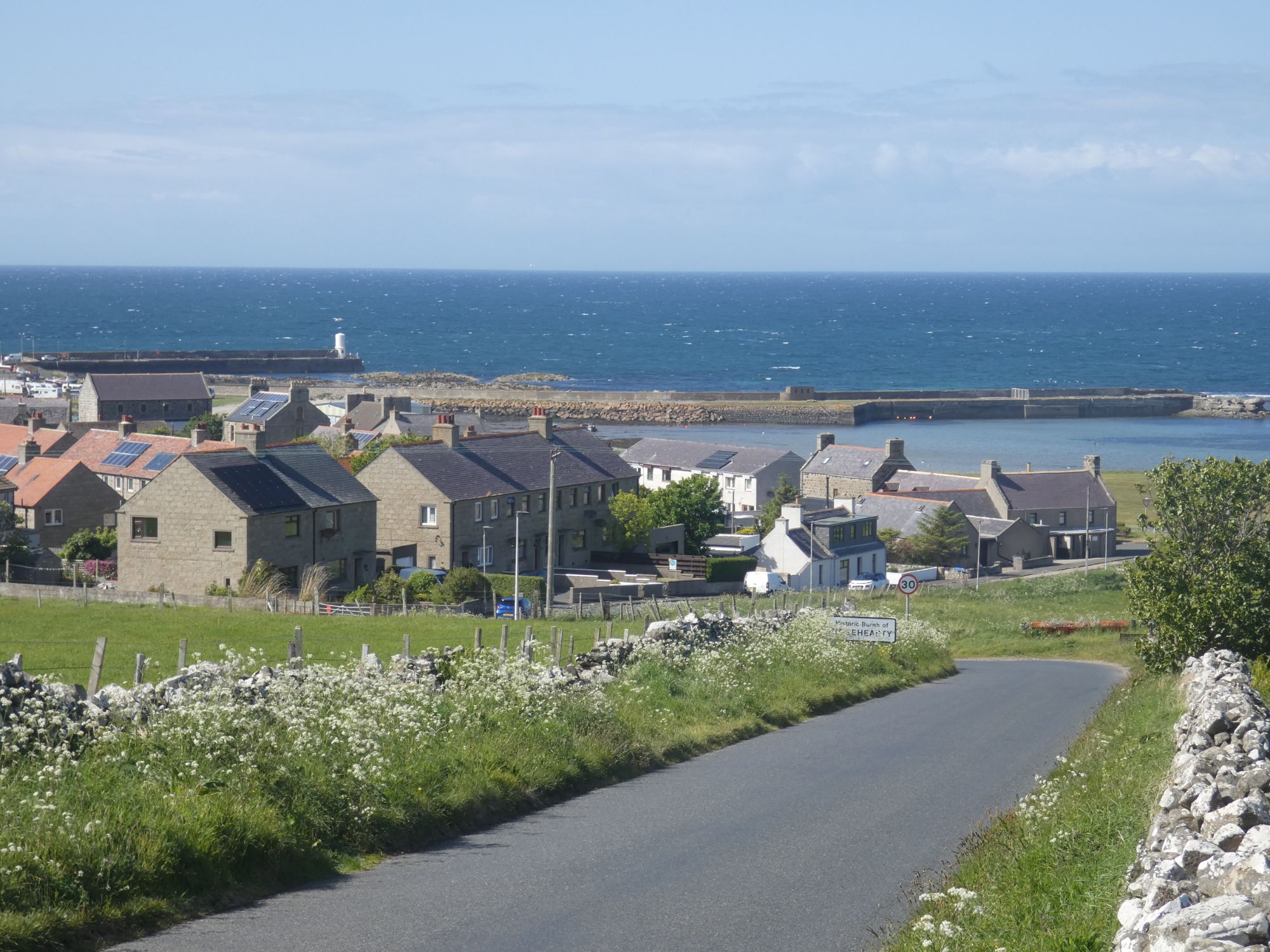
The wind and sea state were a steady F5 all day, so I was happy with my decision to take a weather day. It wouldn’t have been pleasant in a kayak at Rattray Head. Instead, I opted to take the four and a half mile hike along the Rosehearty Heritage Trail with its delightful information boards.
The start of the trail
Before I had made my hotel reservation, I had checked to see if the town had a campsite. My old OS map indicated it did, but Google Maps showed no sign of it. On my arrival, I saw camper vans on a grassy area next to the Community Boat Club, fifty metres from the start of the trail.
I had a pleasant chat with Peter, one of the founders of the camping area, outside the Boat Club clubhouse. After the original commercial campsite closed down, the club took it on as a Motorhome Aire. The club is a registered charity, and motorhome owners can become temporary members for the small daily fee of £10 that entitles them to a spot on the grass. Unfortunately, tent owners are not given the same welcome, as previous tent owners on two wheeled motorised vehicles had been known to abuse the privilege. Peter did indicate that, under rare circumstances, this rule could be overlooked.
Some pictures from the Heritage Trail (walked in reverse direction):
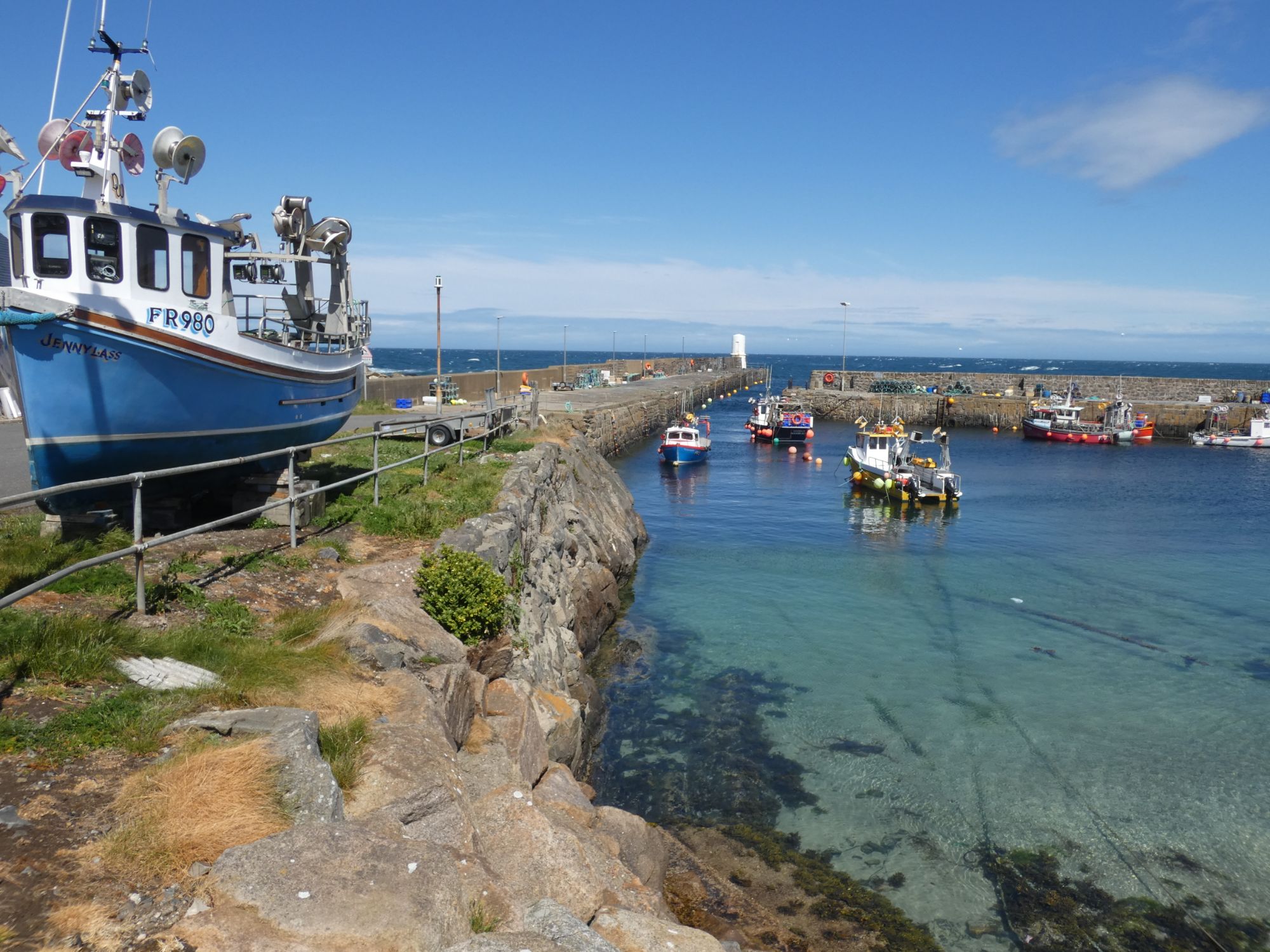
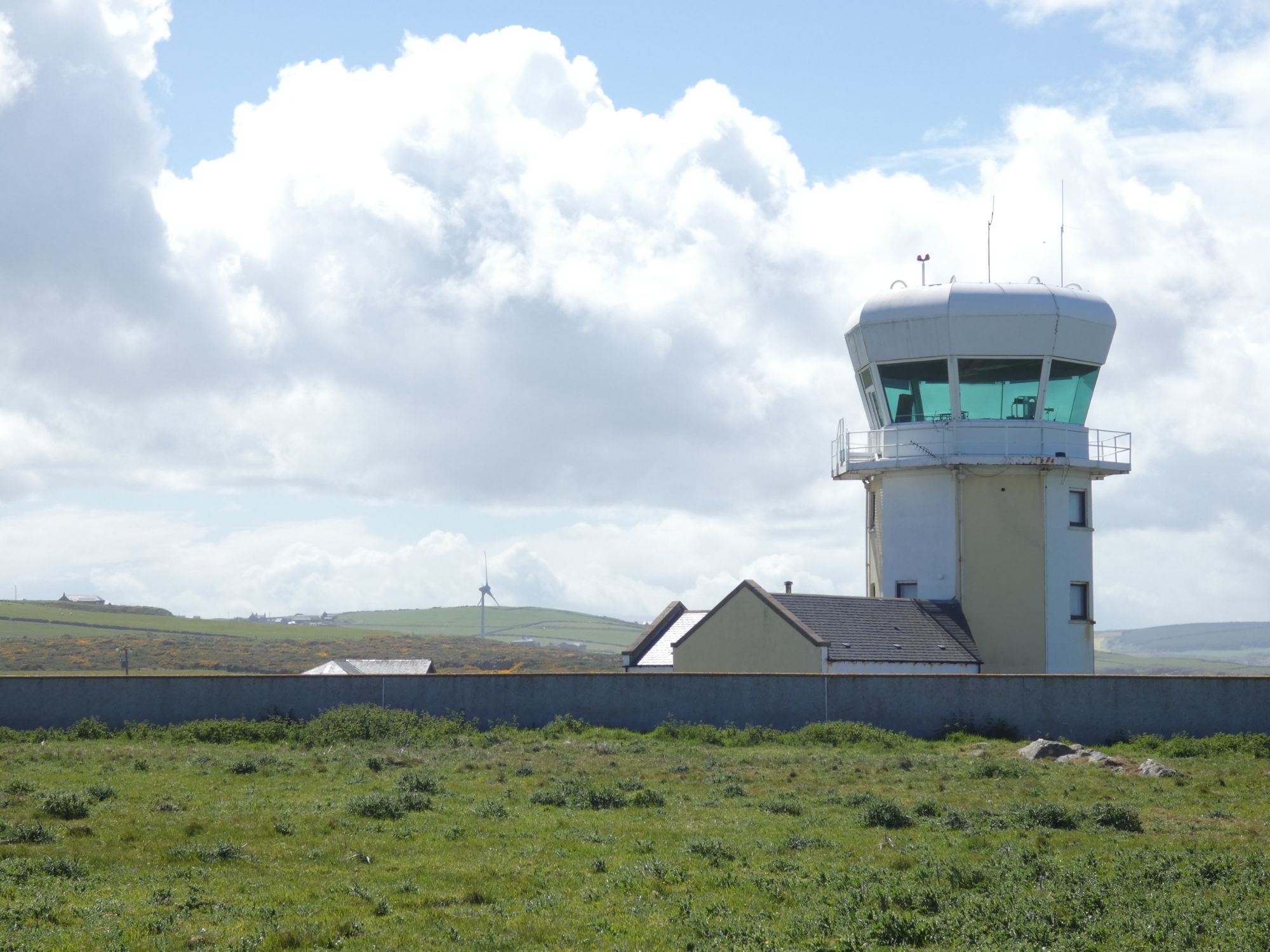
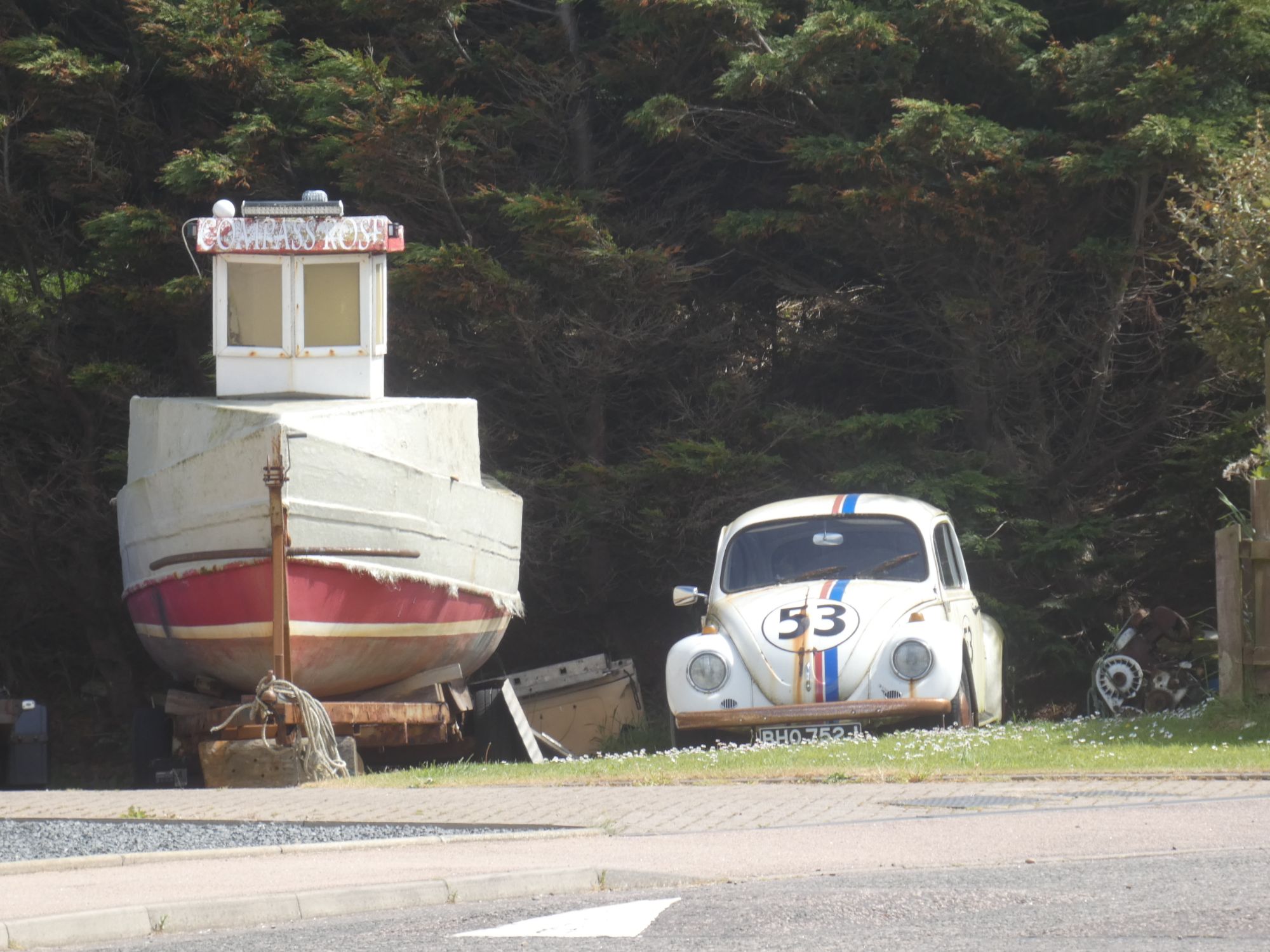
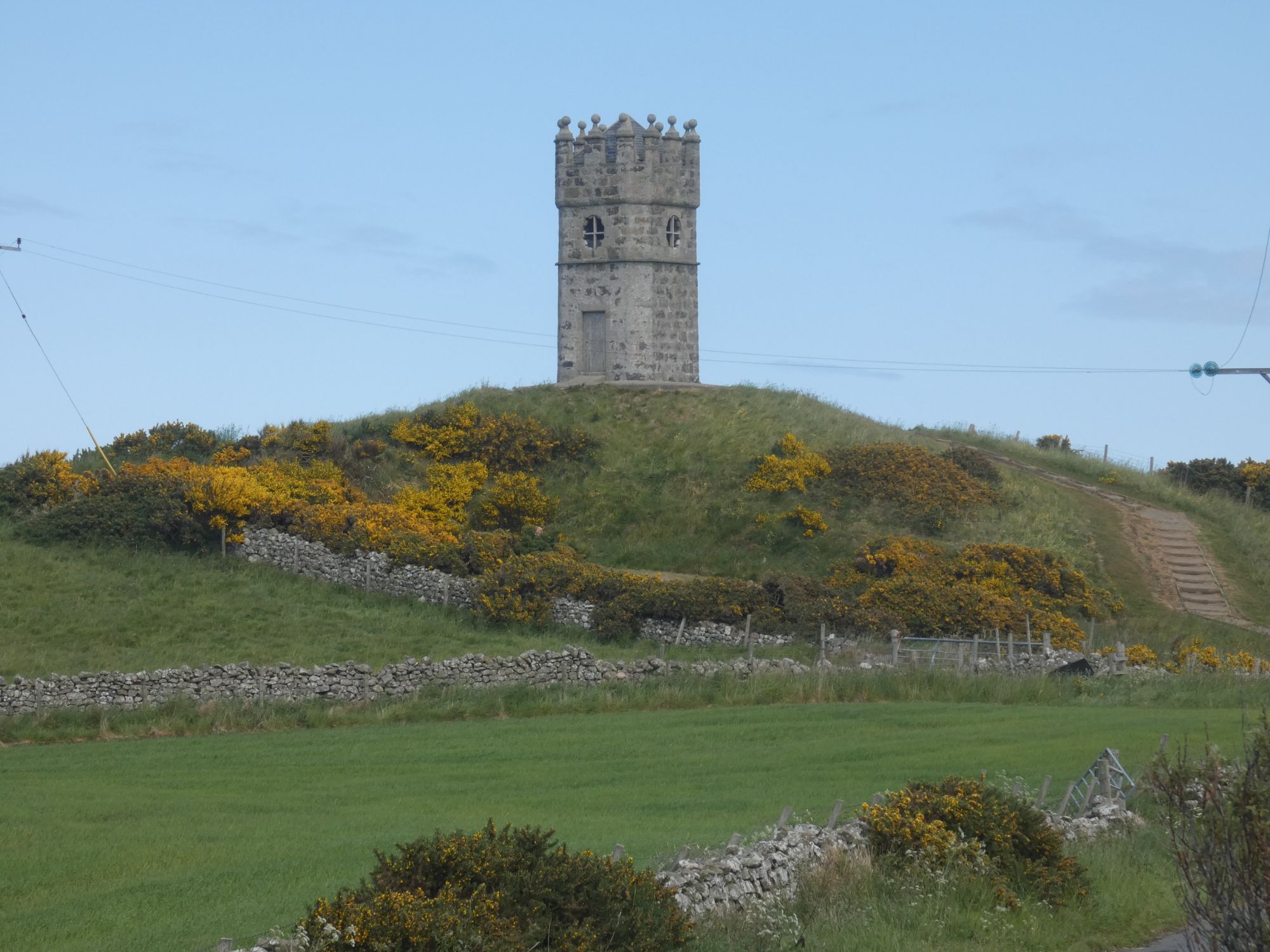
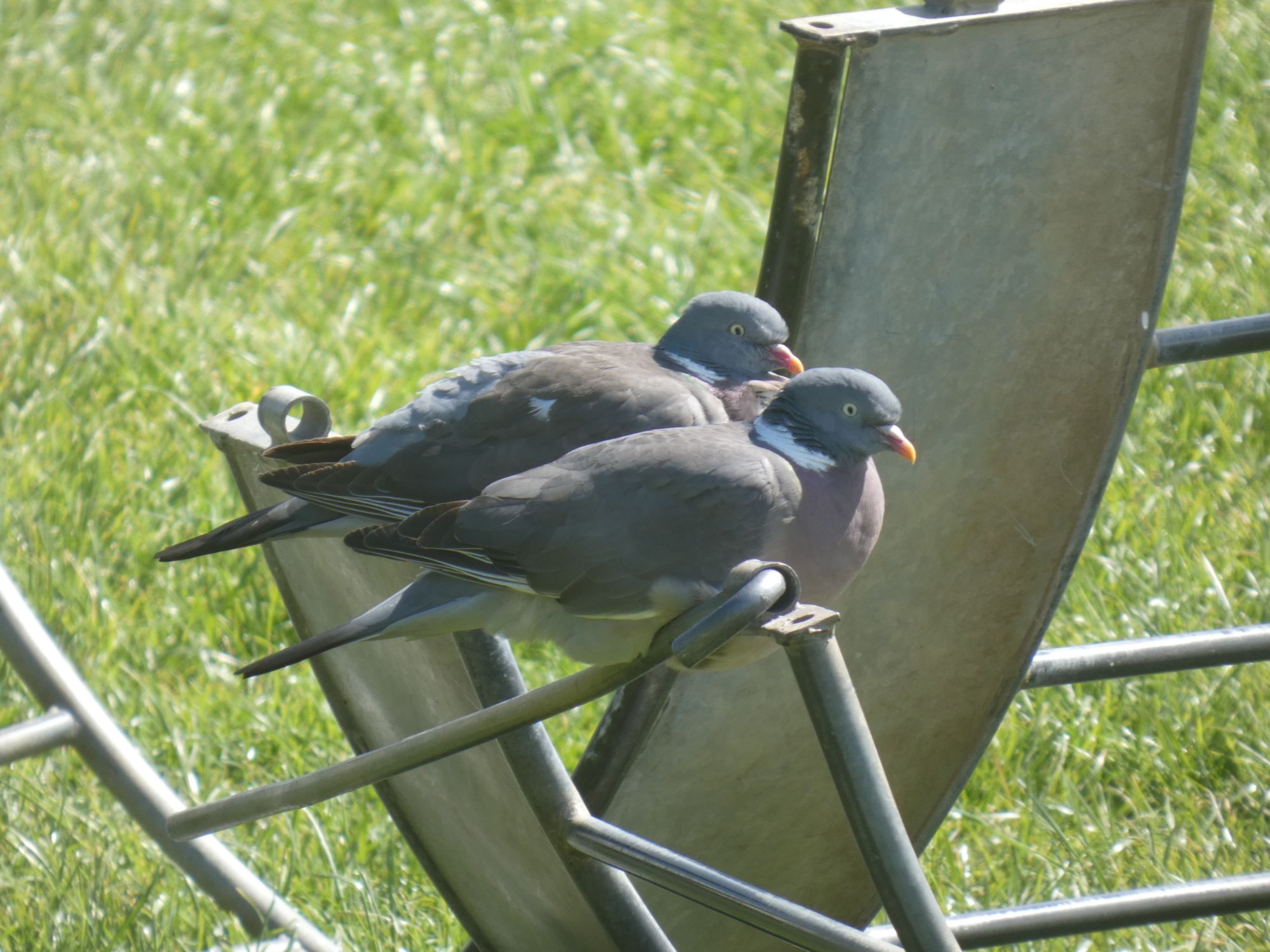
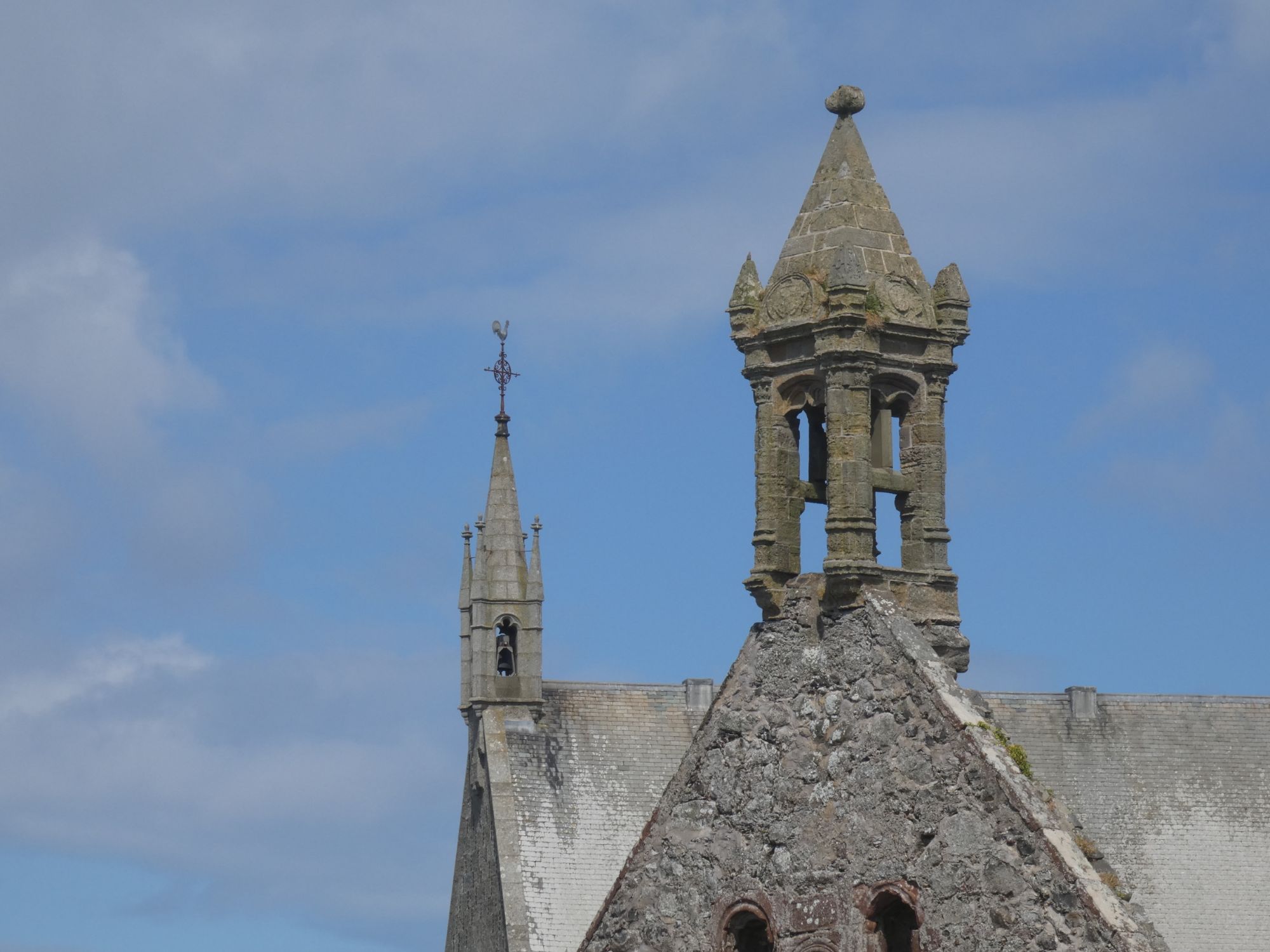
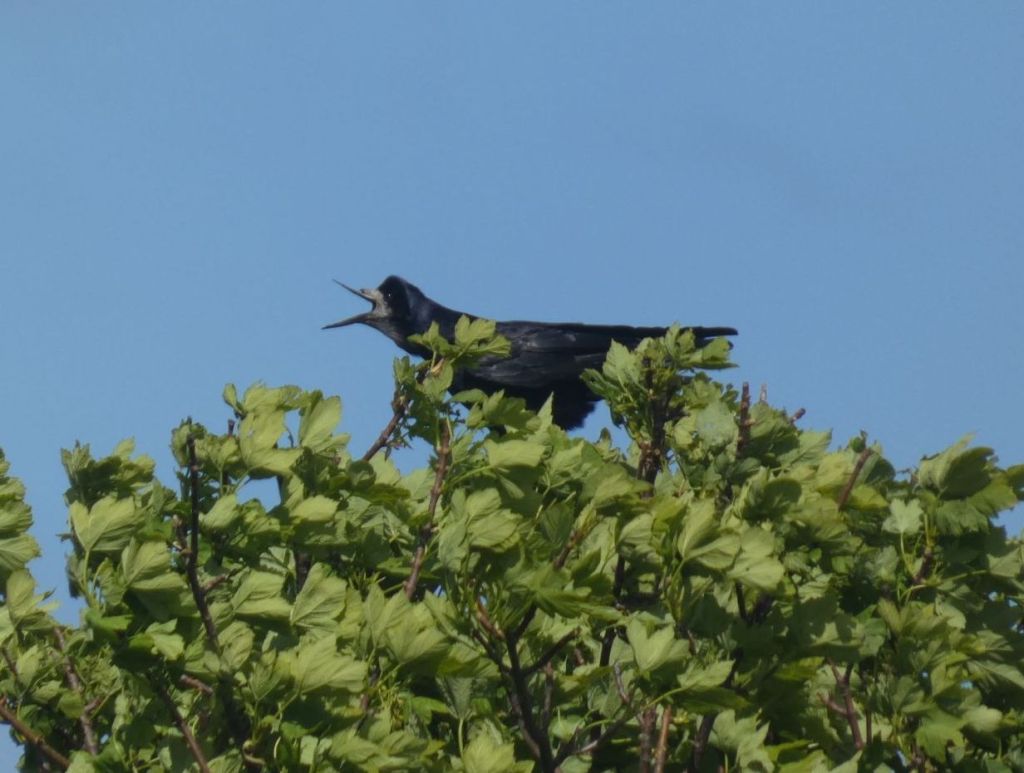
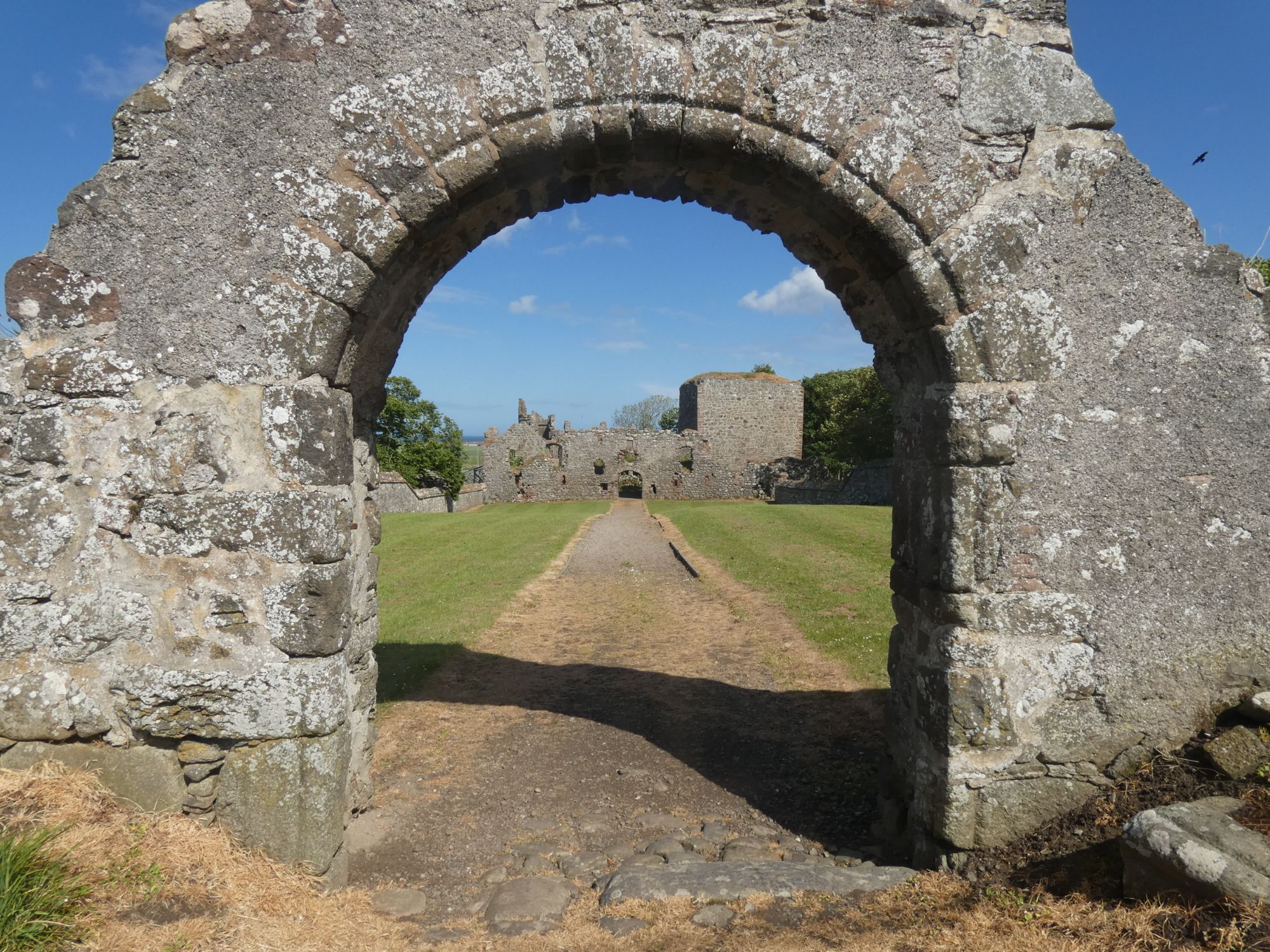
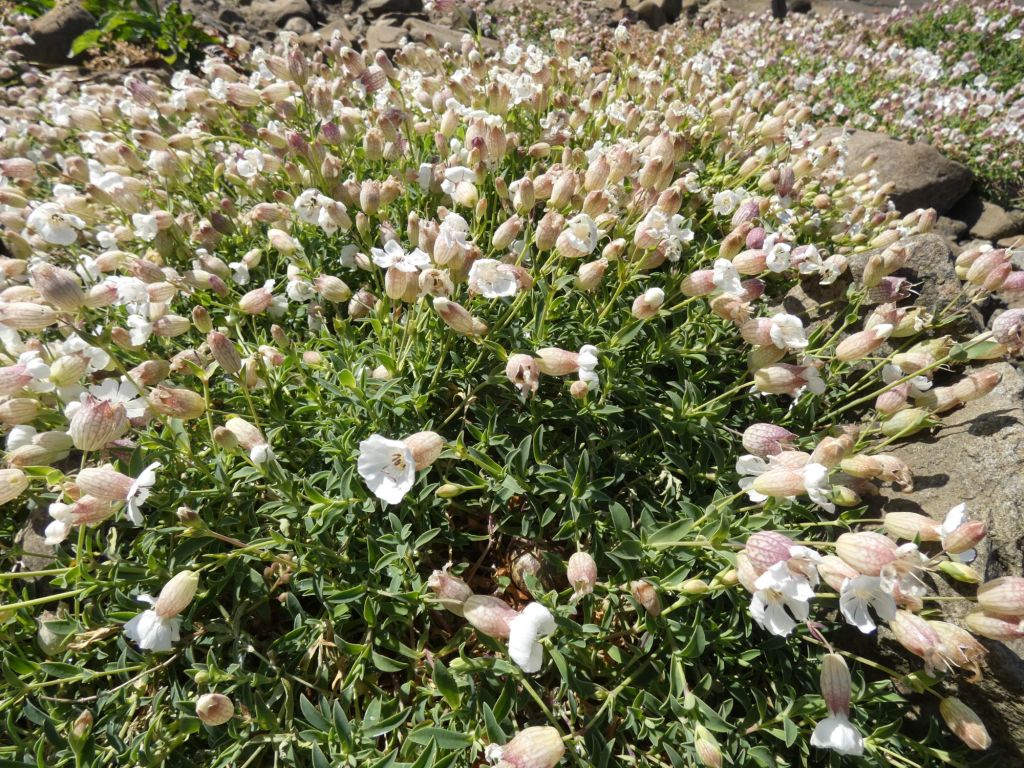
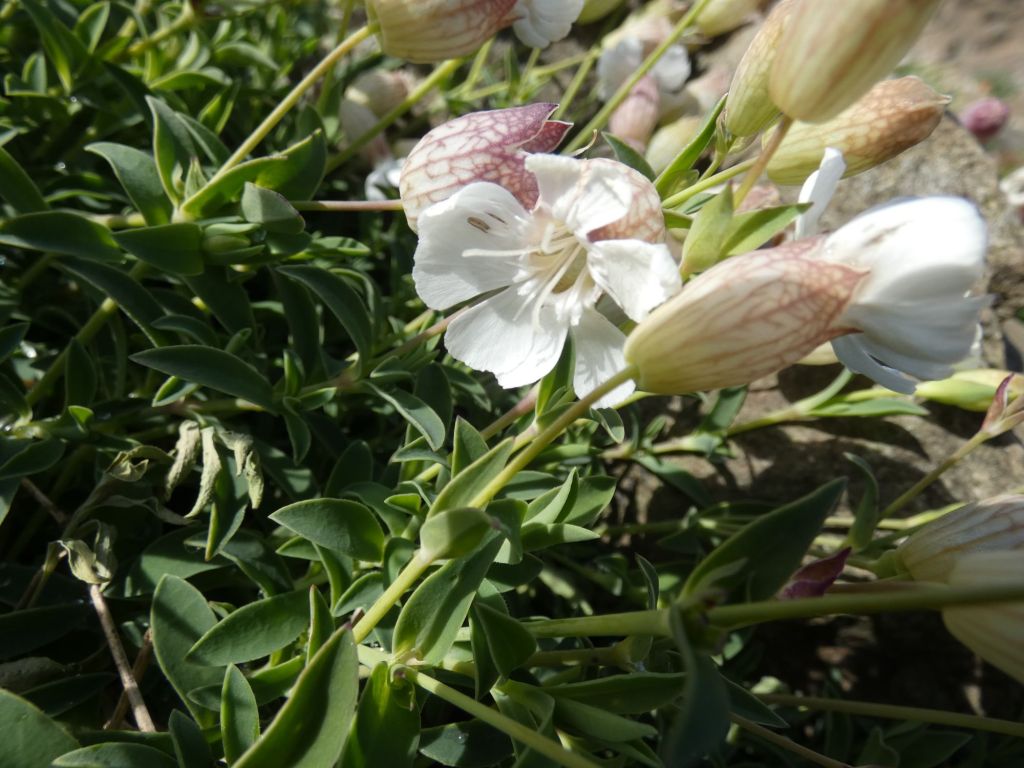
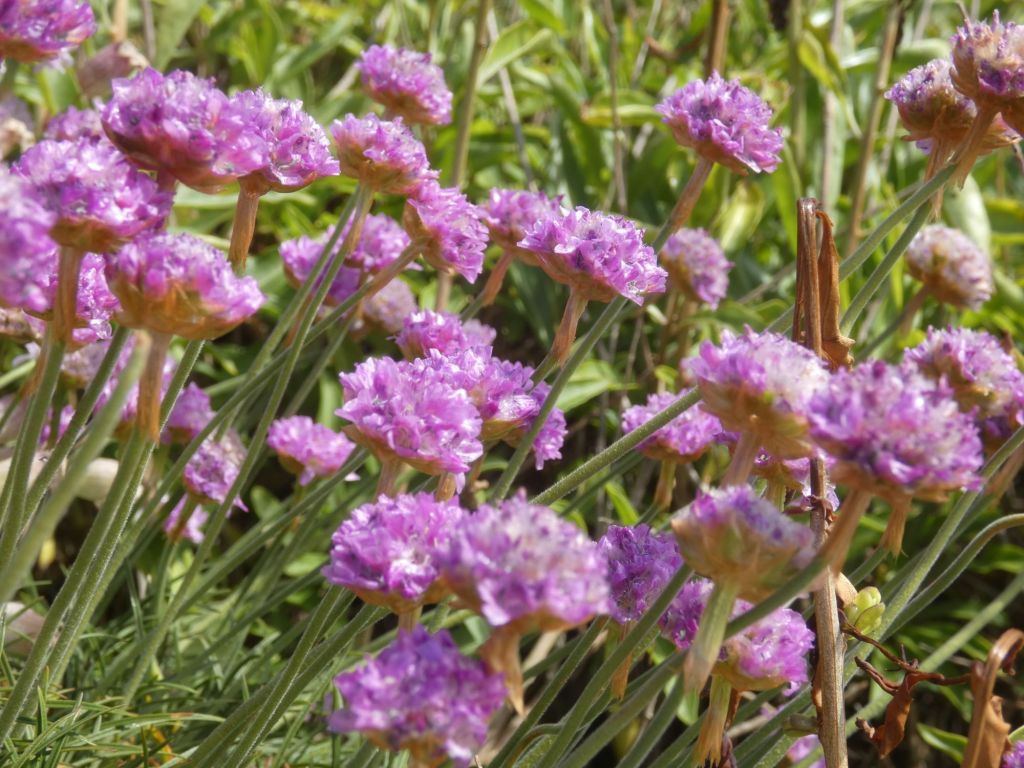
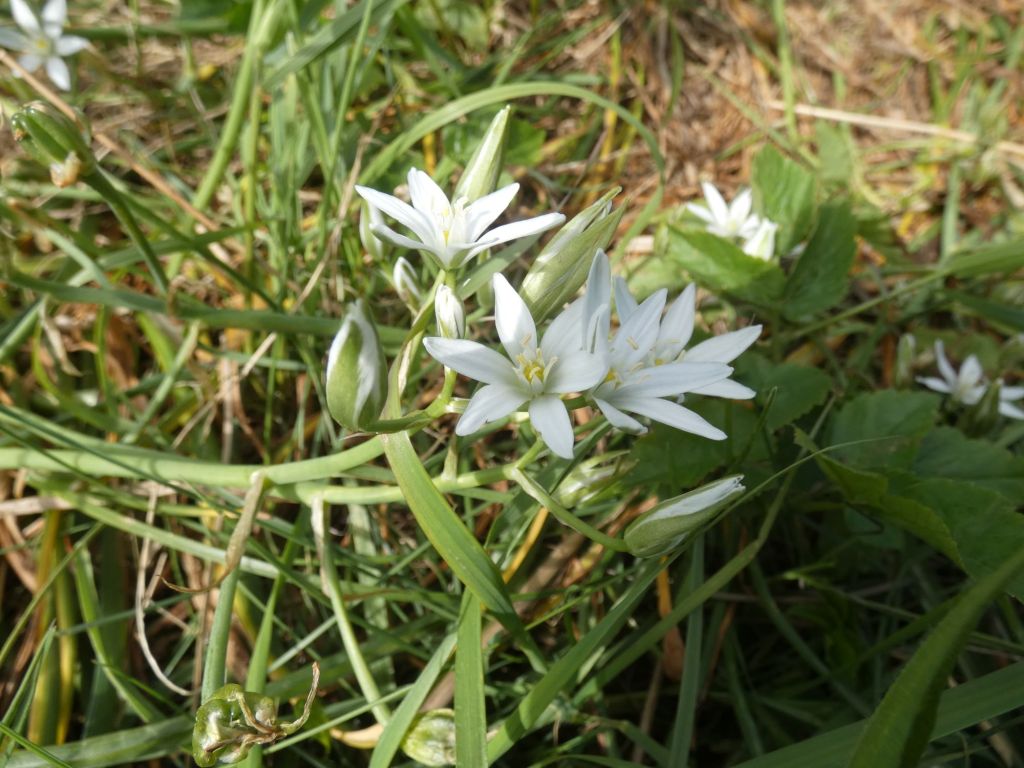
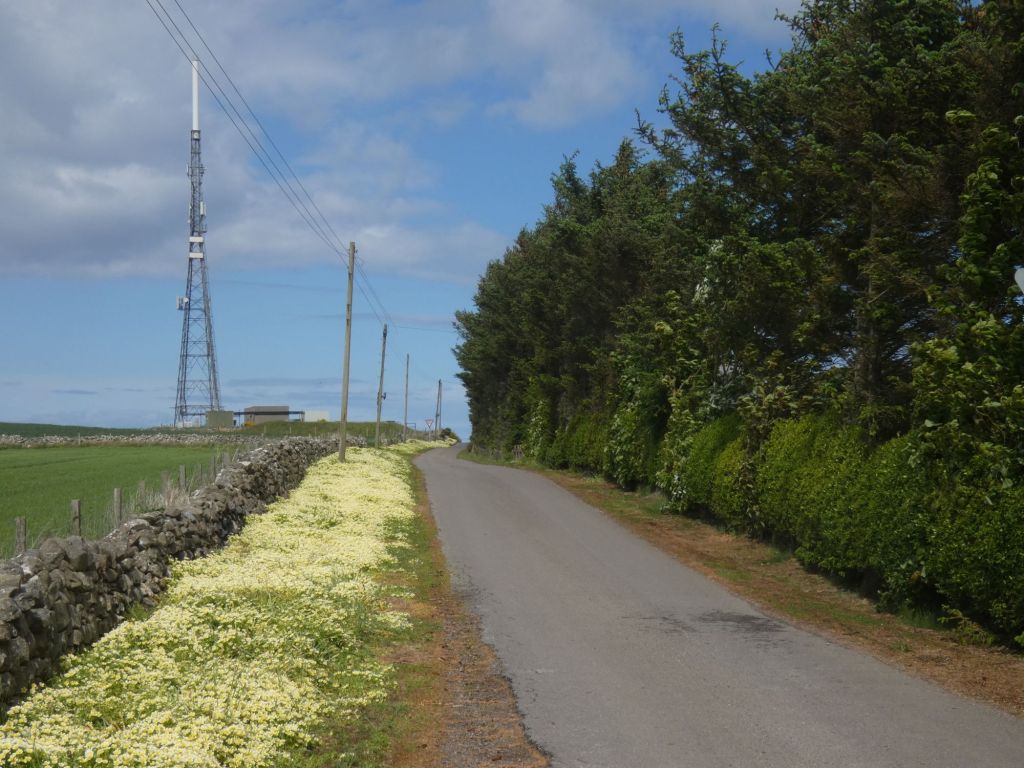
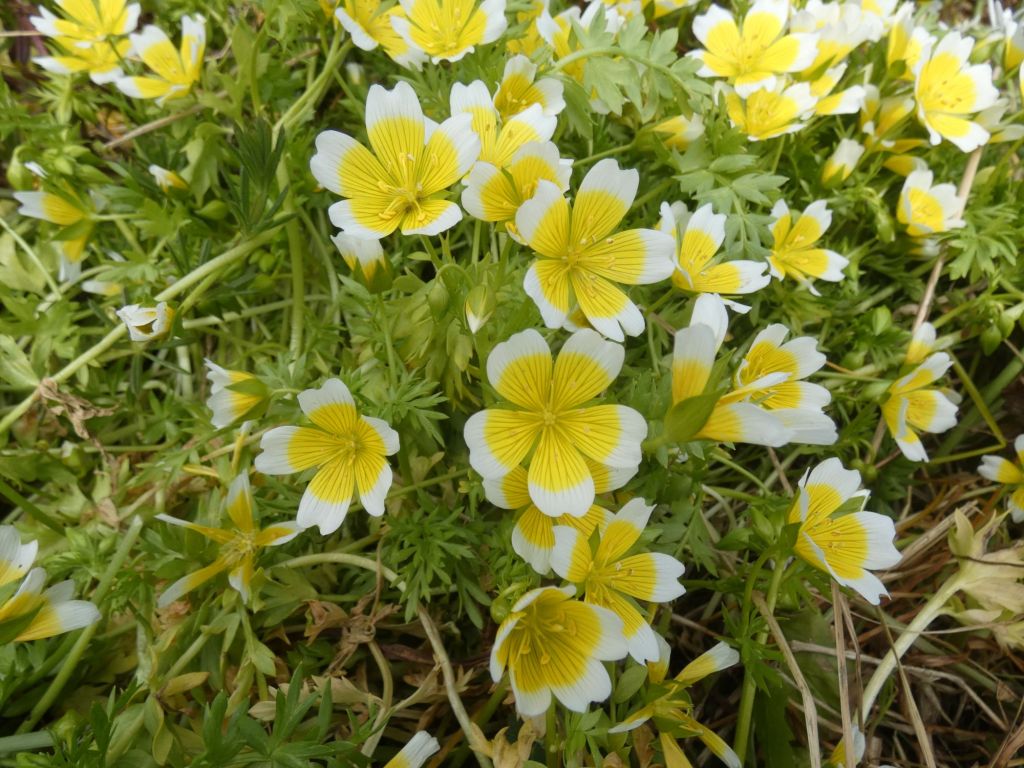
Looking towards the harbour entranceRosehearty HarbourAn old RAF bombing site observation tower that has now been incorporated into a private homeInteresting driveway inhabitantsMust have been a big high tideThe doocotThe old and the newAn interesting rural perch for wood pigeons I see you, but can you see me?The old and the former Pitsligo KirksThe old part of Pitsligo Kirk graveyardOne of many rooks in a noisy rookeryPitsligo CastleRoseheartyThe flowers on my walk
Since leaving the Caledonian Canal, I have frequently referred to the excellent East Coast of Scotland: Sailing Directions by Andy Carnduff. It was quite opportune that Rob, one of my kayaking partners from the Ireland trip, had bumped into the author in Aberdour in Fife at the end of last year when I was just starting to plan for this trip. I instantly snapped up the offer of a reduced price copy.
From my last four days’ experiences, I can testify to the accuracy of one of his early paragraphs in the introduction to this part of the coast:
“When northeasterly winds blow, the fetch from Norway allows substantial swell to rise. This is fine while in the open Firth but approaching the shore the swell converts to what can be frightening breakers. To minimise any effect of the swell within the harbours, most entrances are parallel to the shore, allowing the swell to sweep past, but the boat entering must temporarily lay beam on to the sea and suffer a side thrust of surf, just at the time when precision of course between stone harbour walls is critical. The first couple of such experiences lend urgency to quick learning! And there is always the consideration that another vessel may be trying to exit the harbour into the same wave.”
I was happy that the swell was now much reduced and that an entry into Banff Harbour and a cooked breakfast was on the cards.
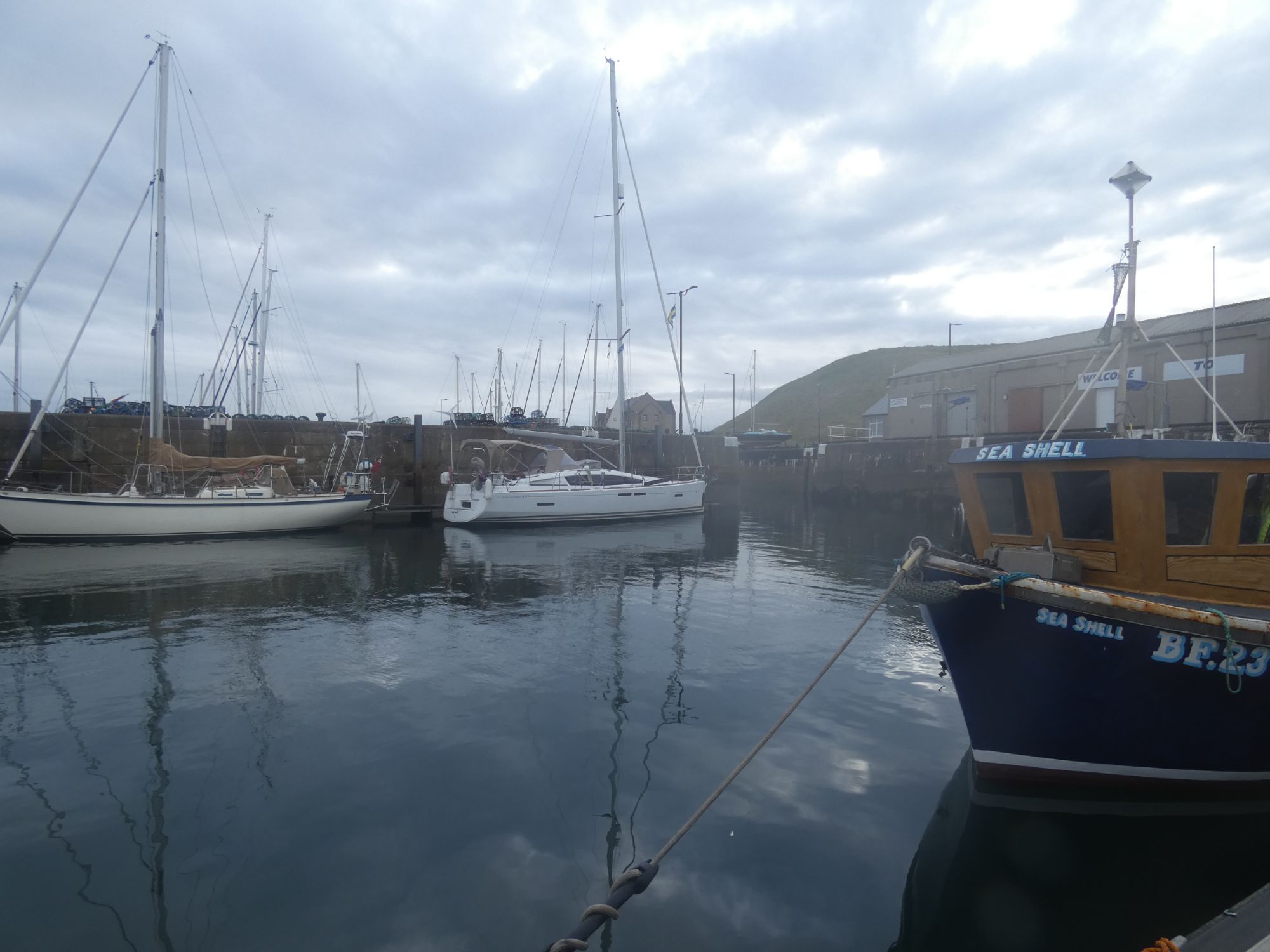
Getting ready to leave its pontoon home for the night Goodbye to the marina yachts
I packed up my Whitehills rough camp early and quickly and made the short paddle to Banff. At first, it felt like I was paddling in treacle, but I soon realised that it was just the way I was paddling. Yesterday’s paddle in clapotis had given my body a full core workout, and it took a while for my back to relax and body rotation to resume.
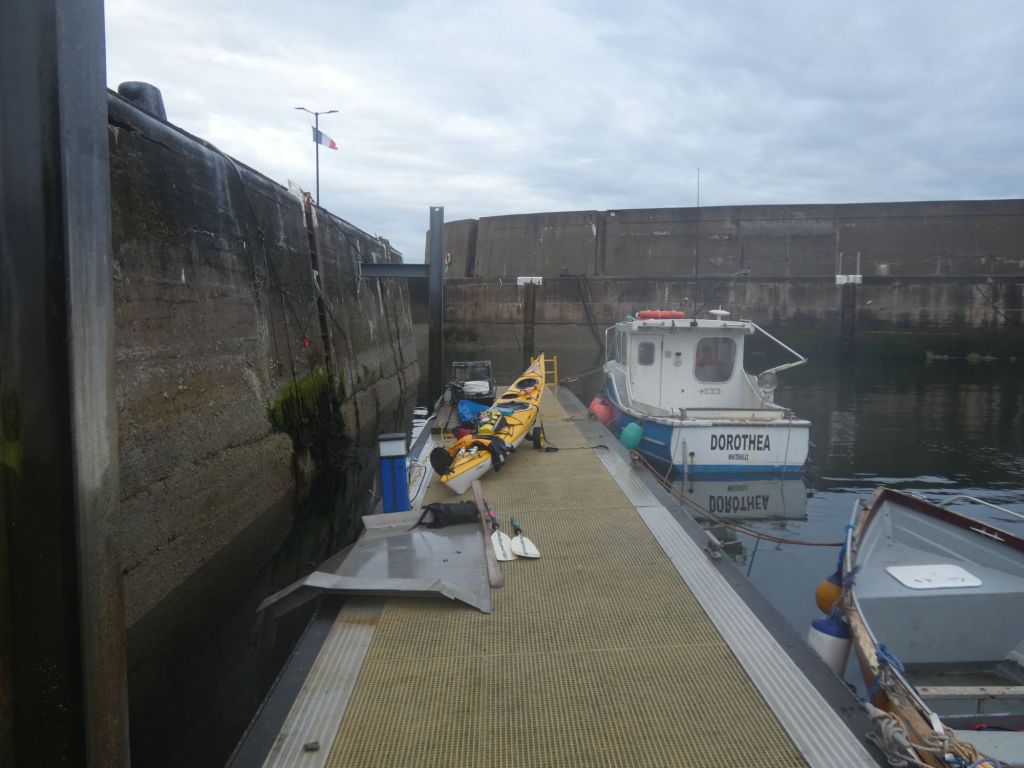
I pulled into Banff Harbour around 7.30, just as the marina toilets were being opened by a woman who assured me I’d have no problem getting a cooked breakfast here, though I may have to wait till 9.
Away from the rising tide in Banff outer harbour
After making sure my boat was well away from the rising tide, I walked into Banff and found an open bakery where a cheerful woman served me a full Scottish breakfast and a large tea that I could eat in the comfort of a small table by the window. I also bought some local butteries and demerara shortbread to eat as snacks later. Life was good again!
Banff inner harbourLooking out towards harbour entrance on the leftWalking towards Banff centre for my bakery breakfast
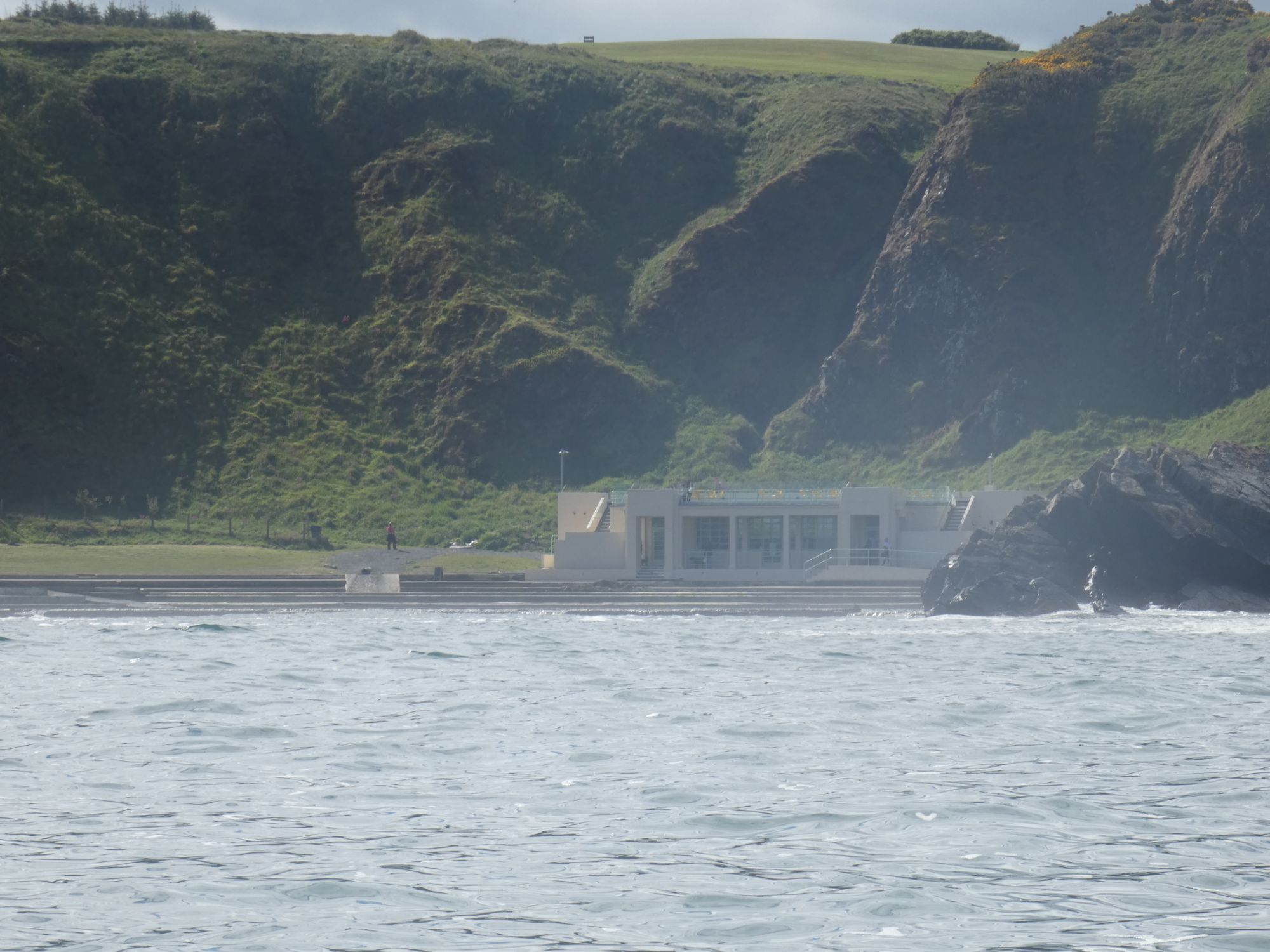
I was soon on the water again. Paddling east past Macduff and an unusual building, which I learned soon after, via an unprompted message from David, was a disused swimming pool.
The coast from here on to my finishing point in Rosehearty was spectacular.
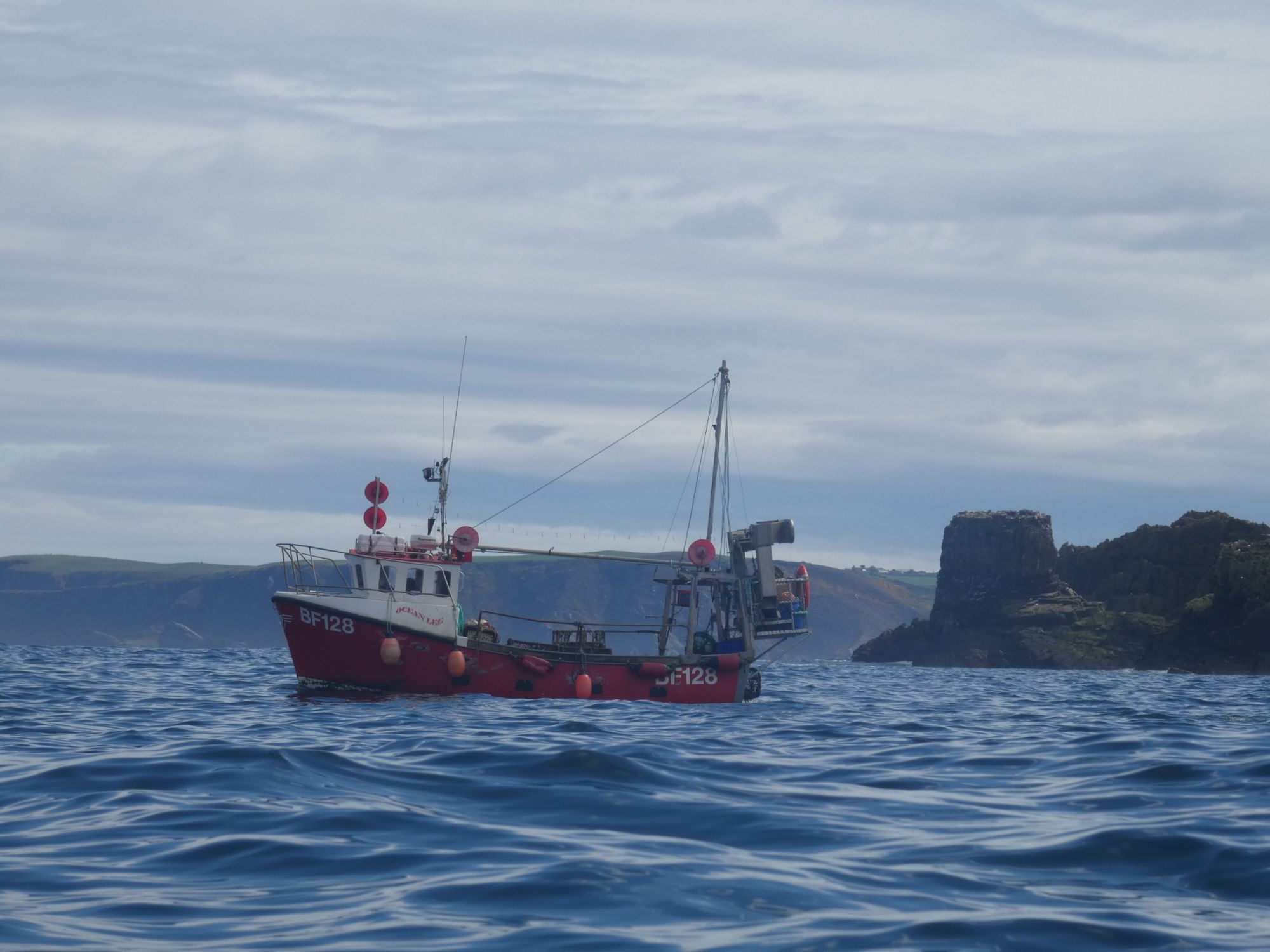
Disused outdoor swimming pool east of MacduffCreel boat taking advantage of reduced swellHead of Garness with Troup Head in the distance
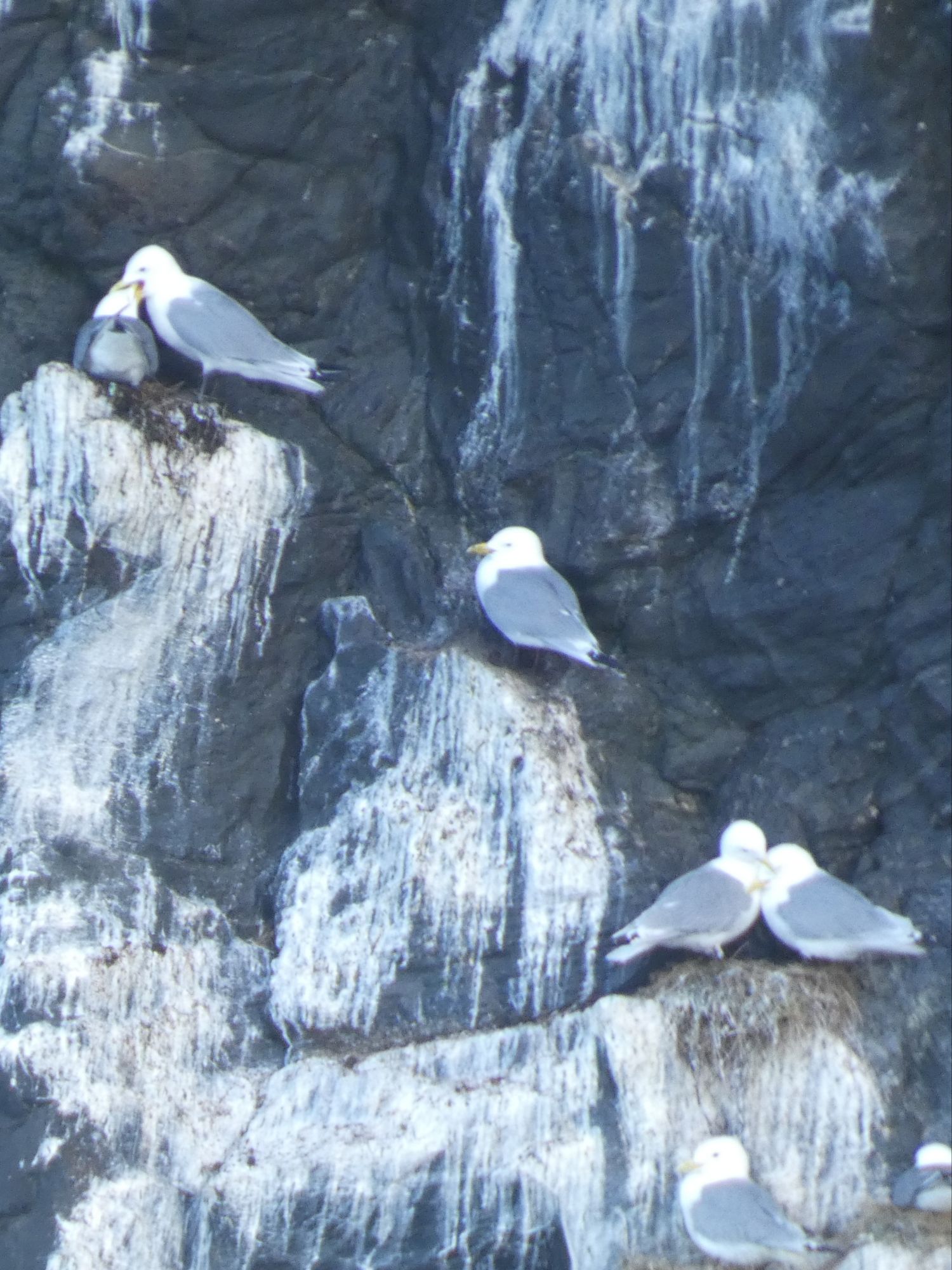
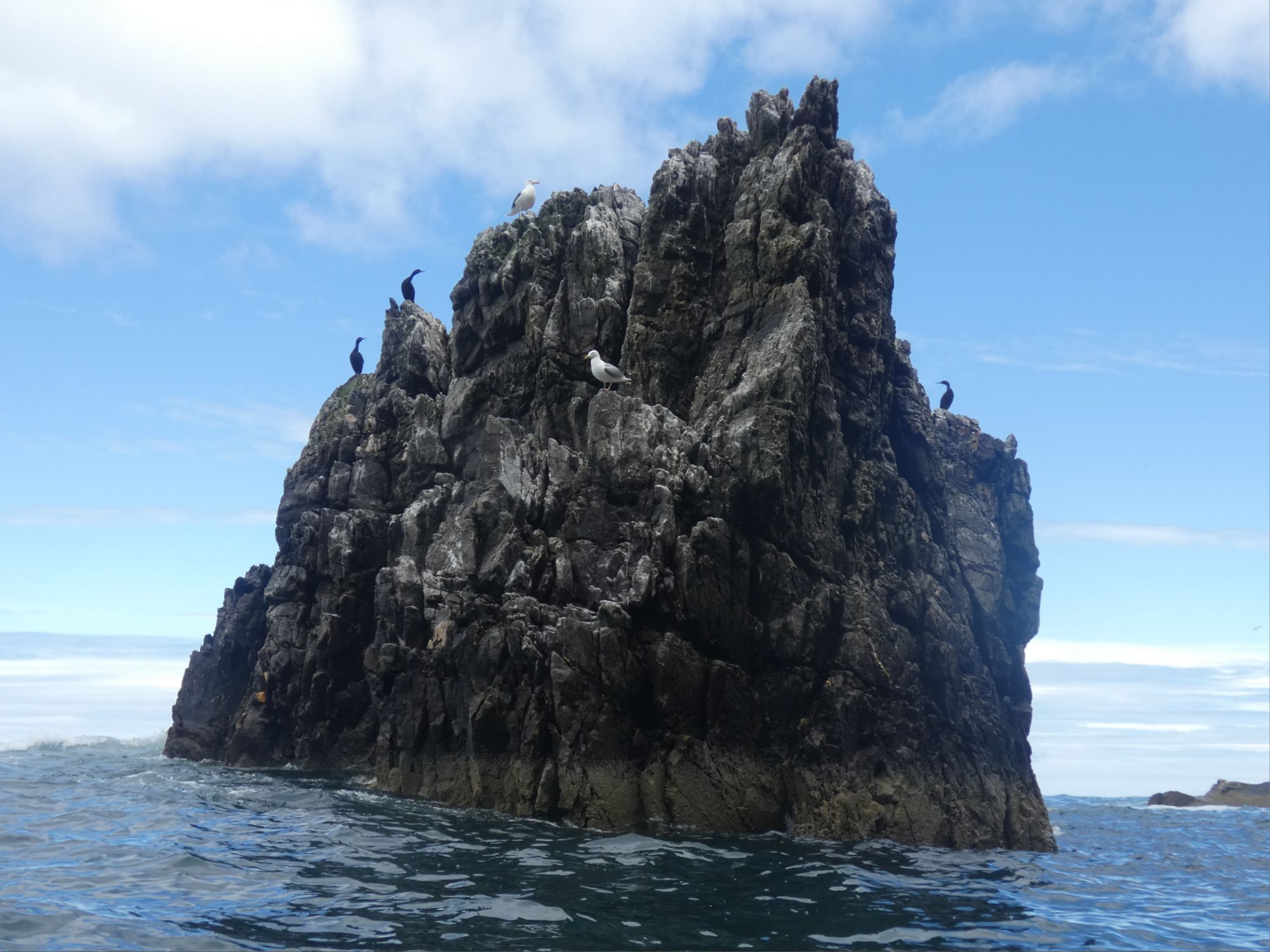
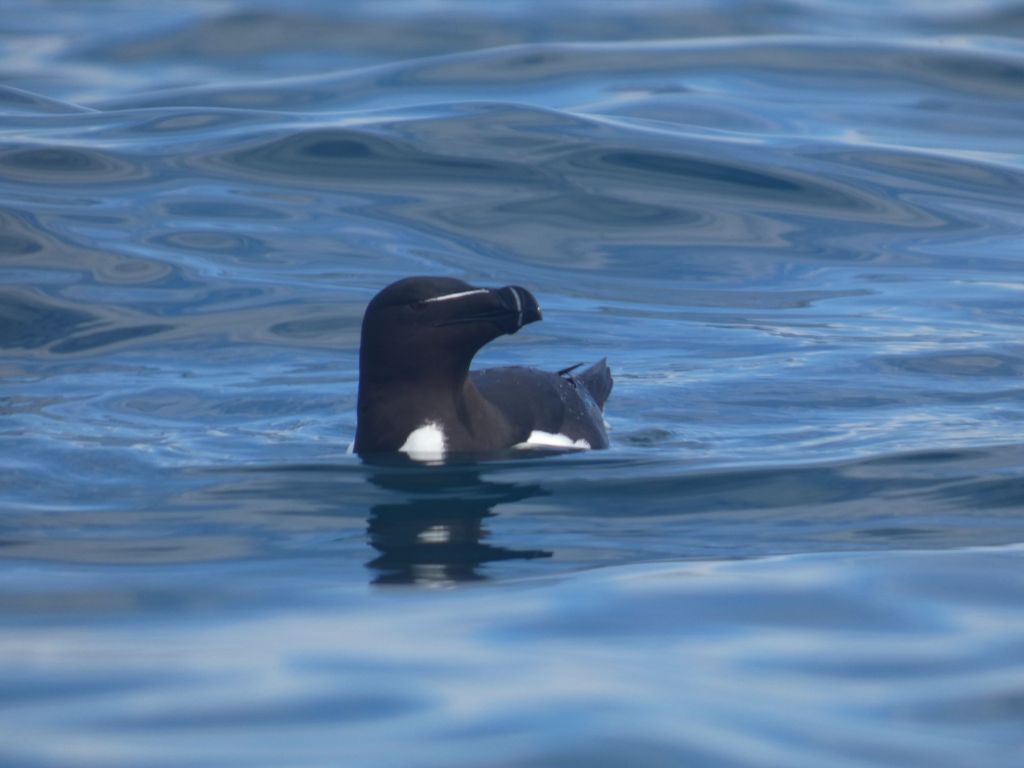
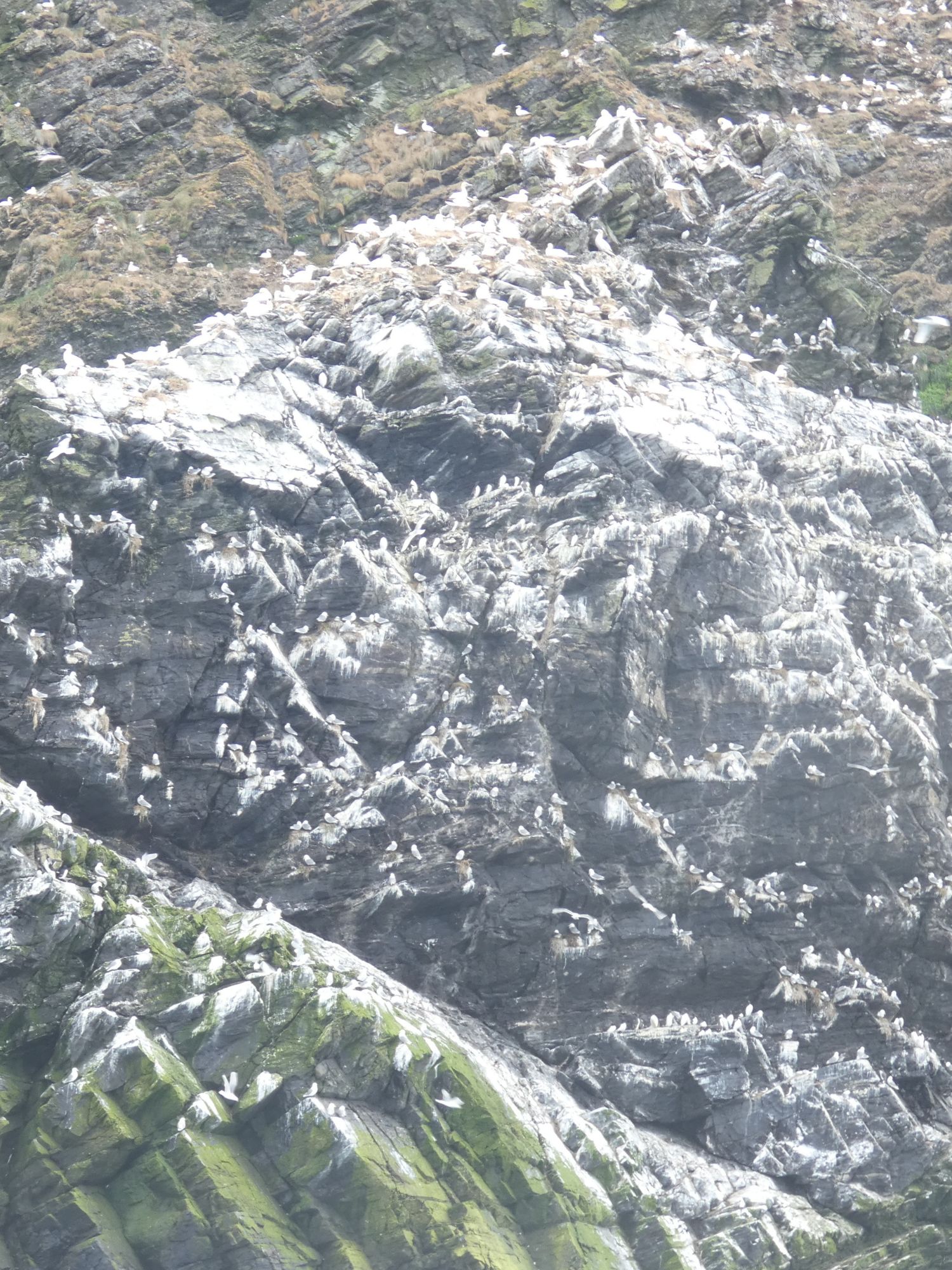
I was at first disappointed by the lack of seabirds on the early cliffs. It seems to me that the bird flu has impacted some species more than others. The guillemot and razorbill nesting sites looked sparsely populated, and the usual noisy bustle for space was almost silent. Few fulmars were flying about, but their numbers did pick up when I got further on past Pennan. The kittiwake colonies, however, appeared to be doing quite well.
Nesting kittiwakesOn the inside of an interesting pinnacle. Shags. Black-backed and herring gulls.One of the many razorbills floating aroundTaking the inside passage. At the end of which I earned myself a cup of cold sea water down the open neck of my cag.
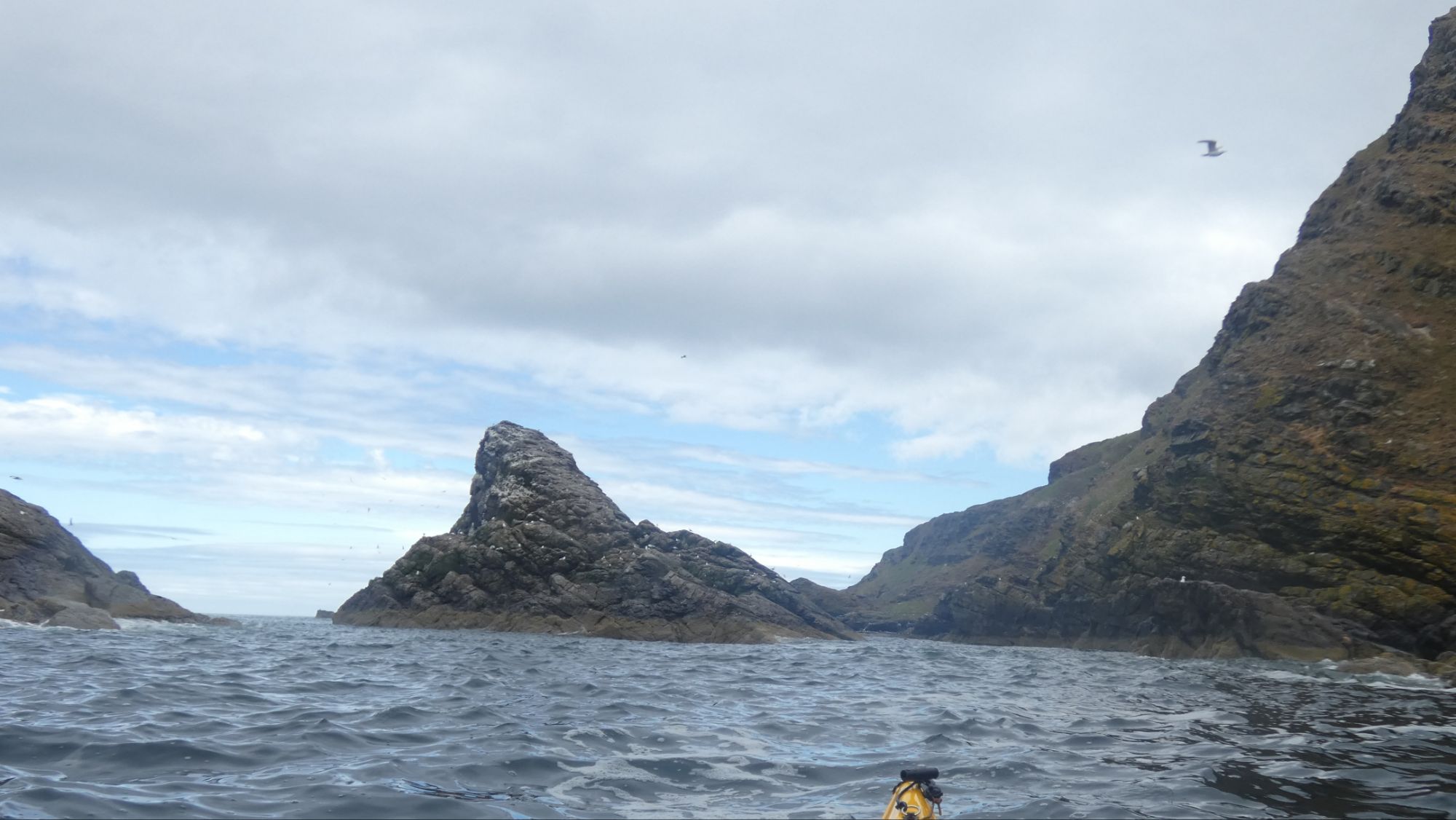
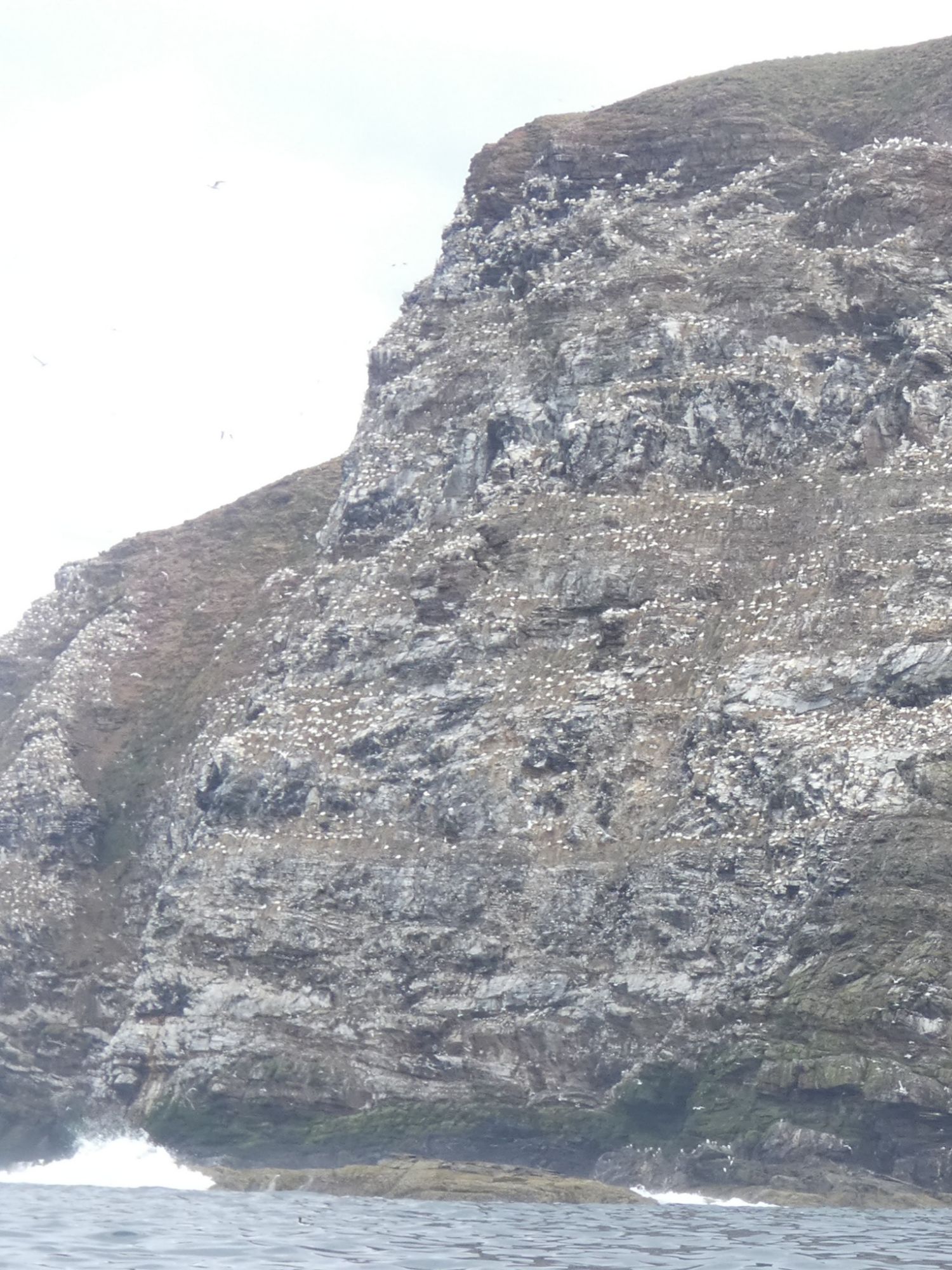
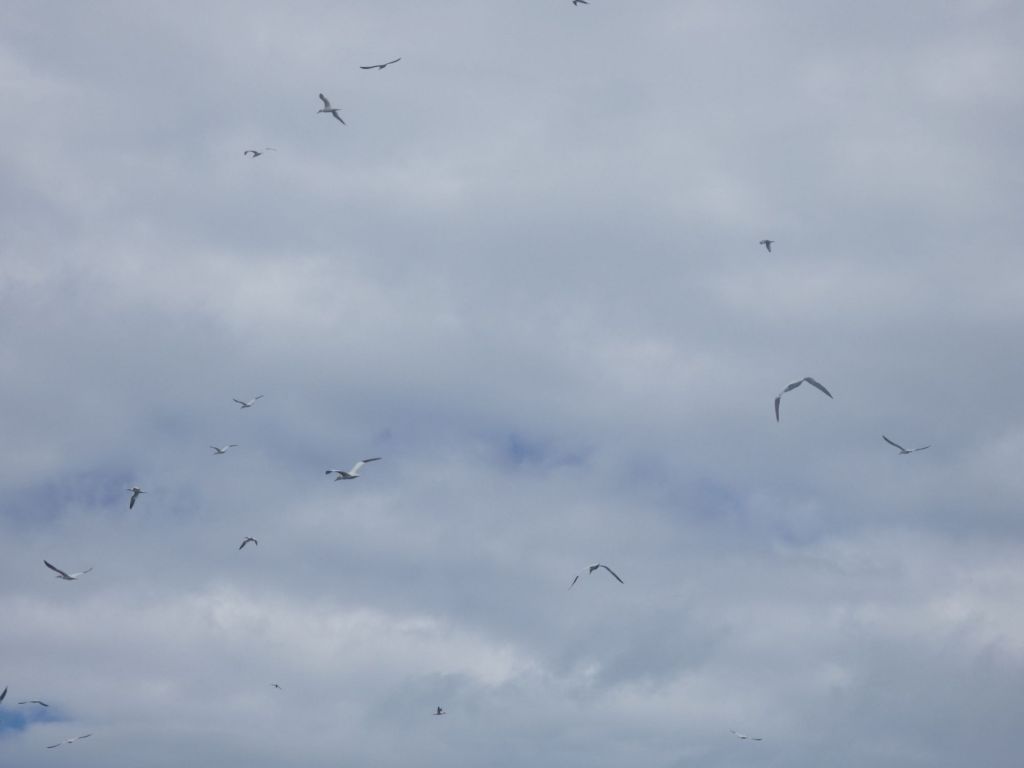
When I reached Troup Head, all changed. I spent 15 minutes just drifting in my kayak, watching the birds swirling overhead. A huge number of gannets nest here, and for some reason, I wasn’t aware of it until I arrived today. I’ve since learnt that it is a relatively recent colony with the first birds only arriving in 1988. The estimate from 2014 of 6,500 breeding pairs seems to be well short of the numbers there now.
A small part of Troup Head gannet colony. Every white dot is a gannet.Gannets swirling overheadA hierarchy of guillemots on the bottom, kittiwakes in the middle, and gannets on top.
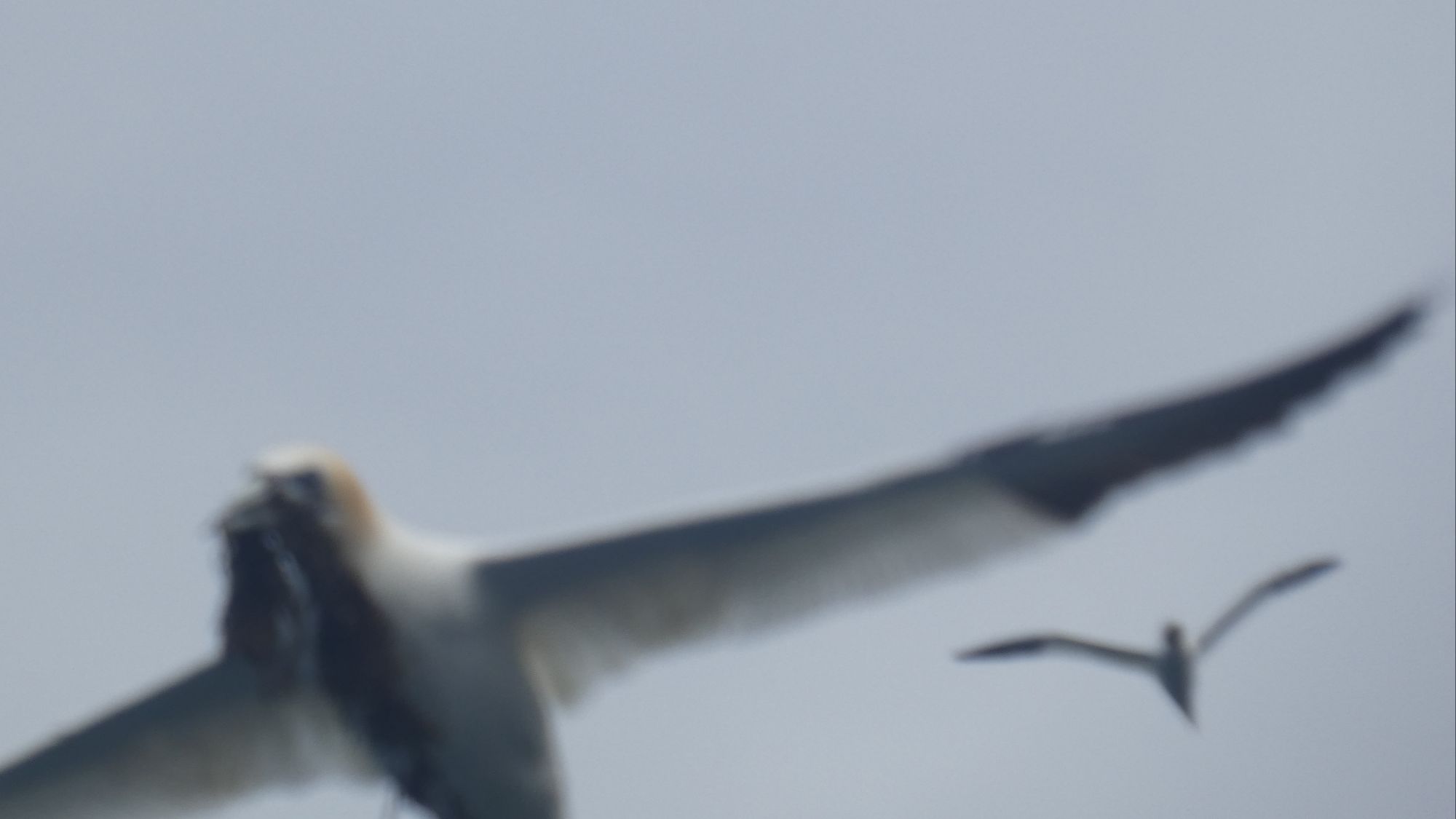
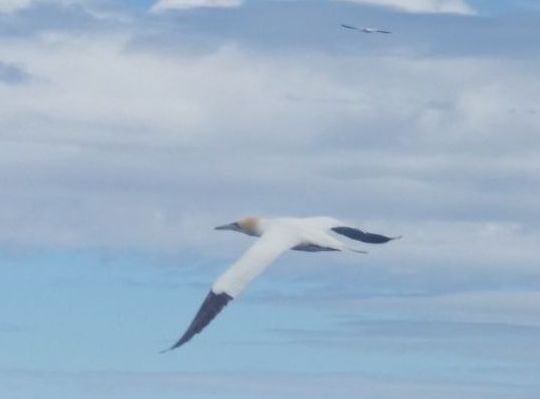
Many gannets appeared to be carrying seaweed as nesting material, but I couldn’t work out why some were heading out to sea with it. Clearing old nest material? Going out to give it a wash? Who knows.
One of many failed attempts to capture a gannet in flightResorting to digital crop
I reluctantly resumed my journey as I still needed lunch, and I had a fair way to go to get to Rosehearty.
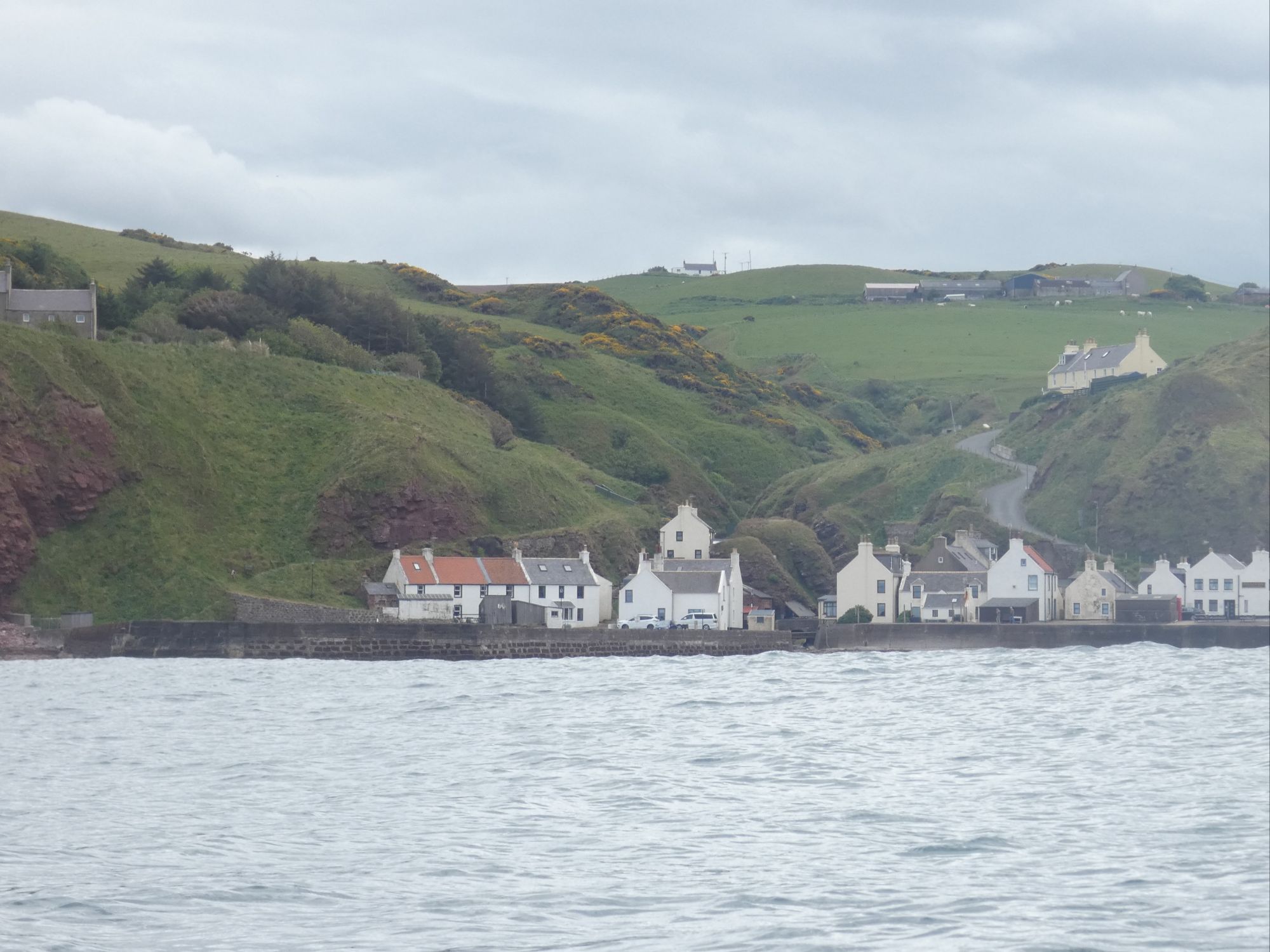
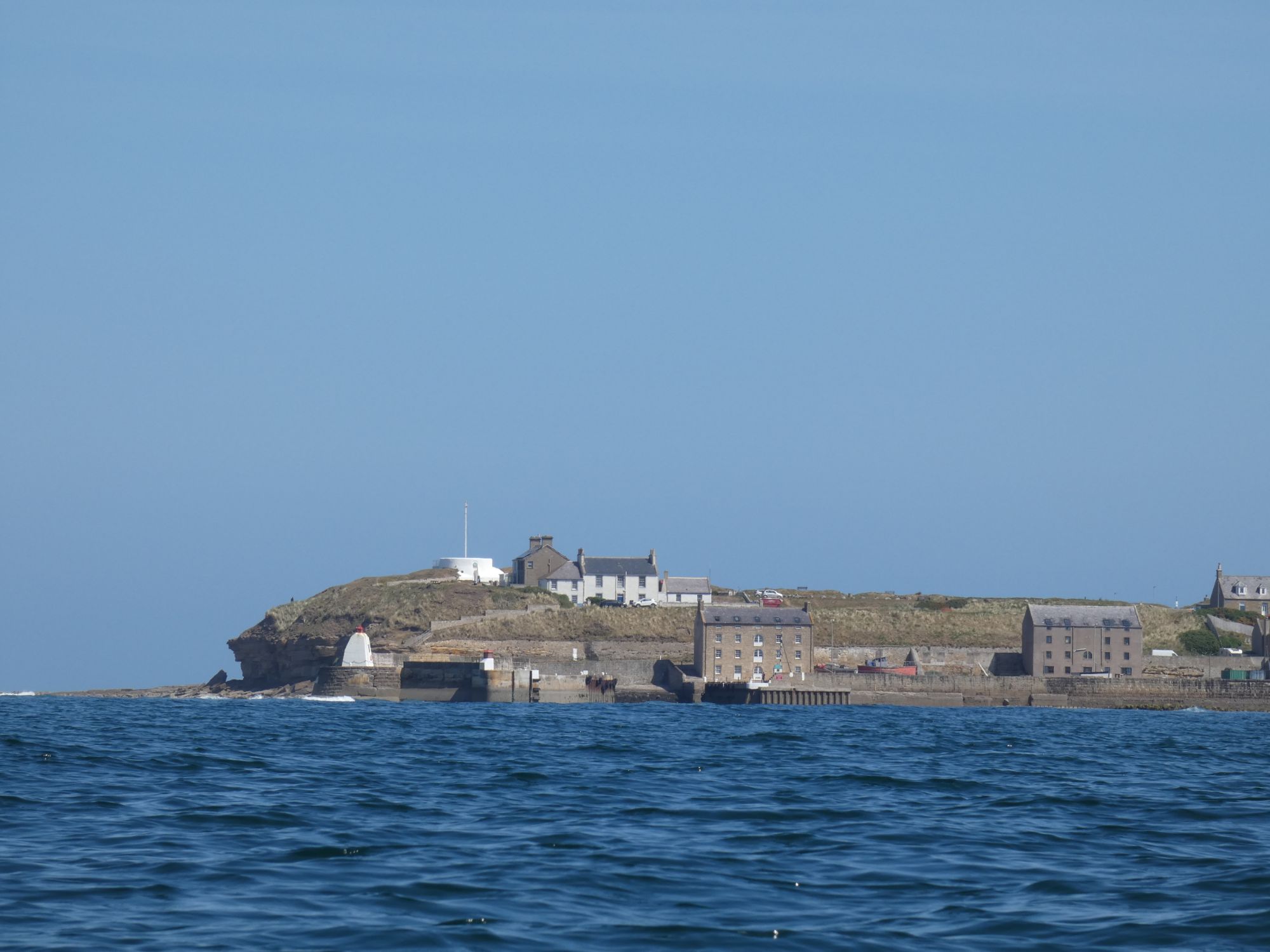
I stopped at the small harbour in Pennan. A place I’d been a couple of times before, and the filming location for the phone box in Local Hero.
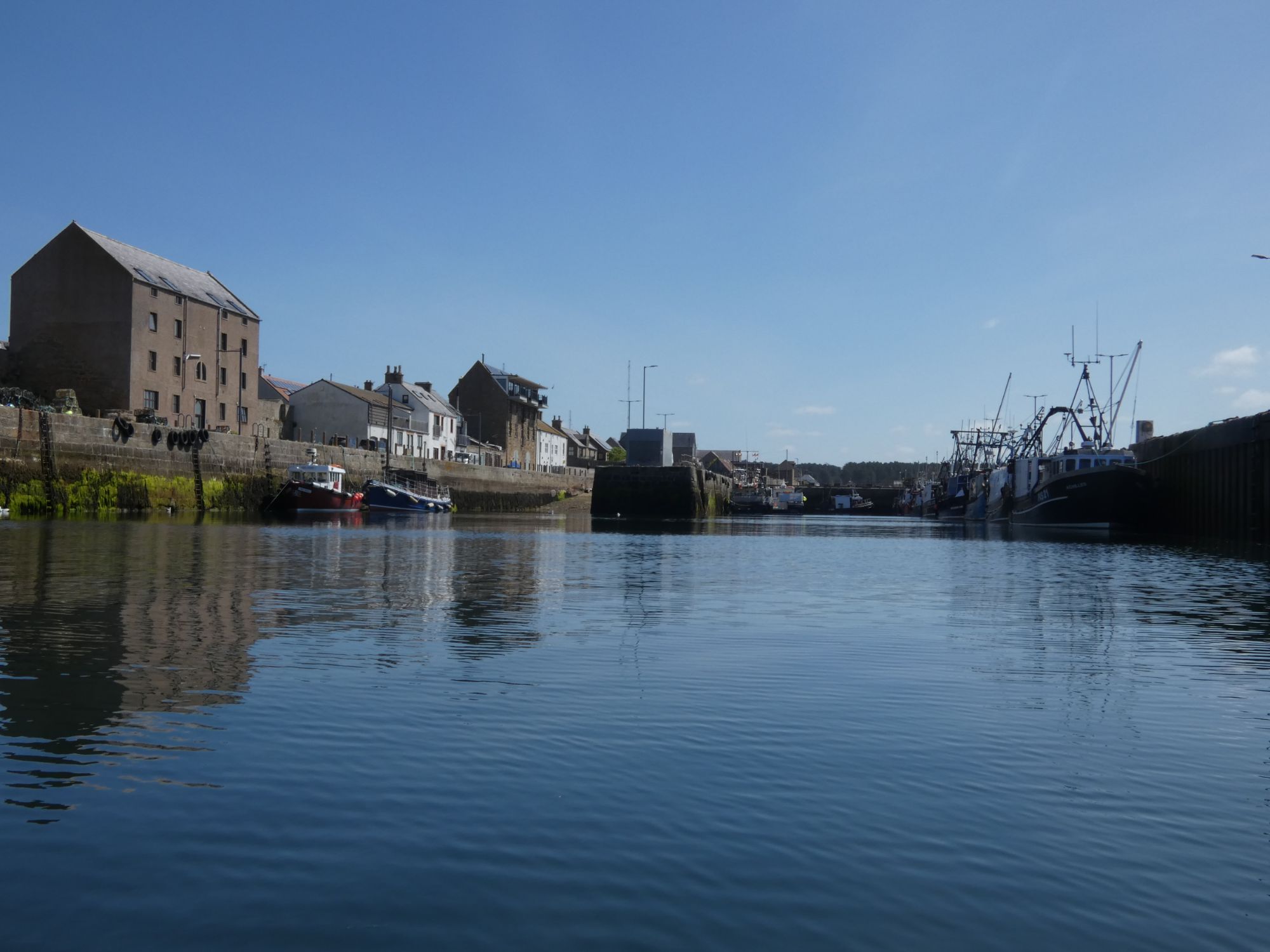
The entrance to the harbour is on the left and away from the surf that rolls in in the rest of the bay
I ate my lunch here, sitting on the sunny harbour wall chatting to Greg and Lindsay, who were over for the day from Elgin with their kids. They were mastering their paddleboard (and swimming) skills in the calm harbour waters.
The lovely little Pennan Harbour
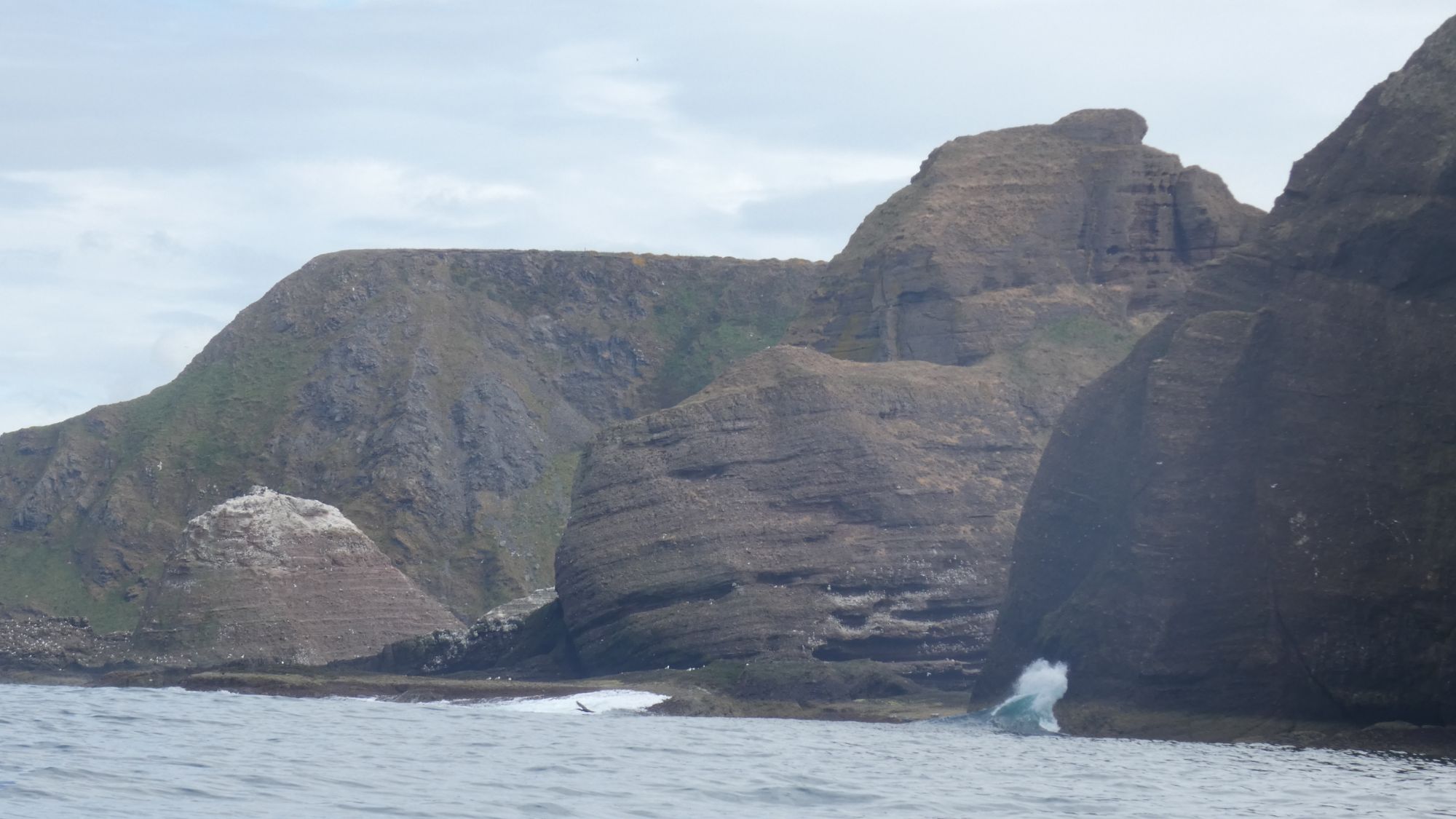
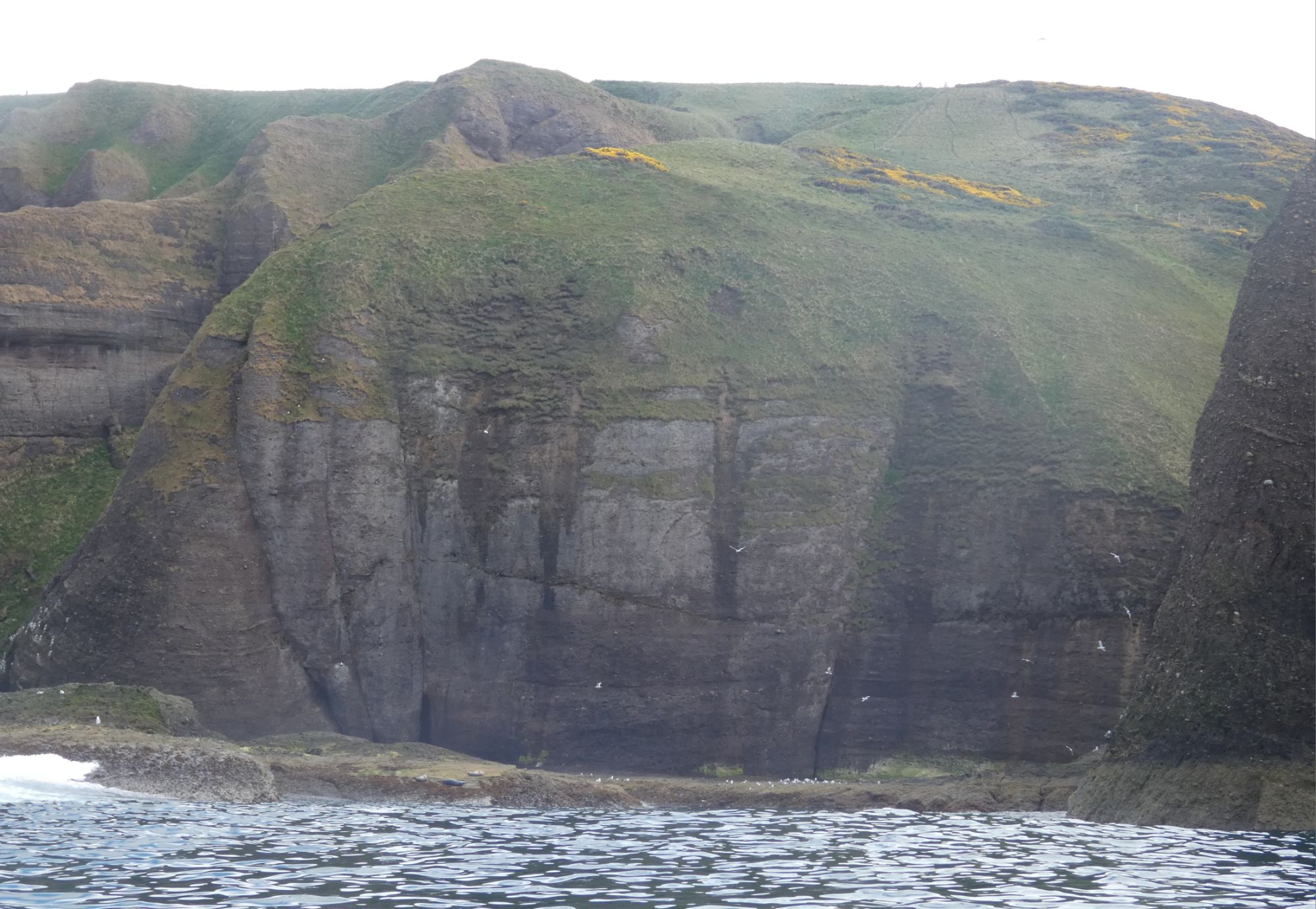
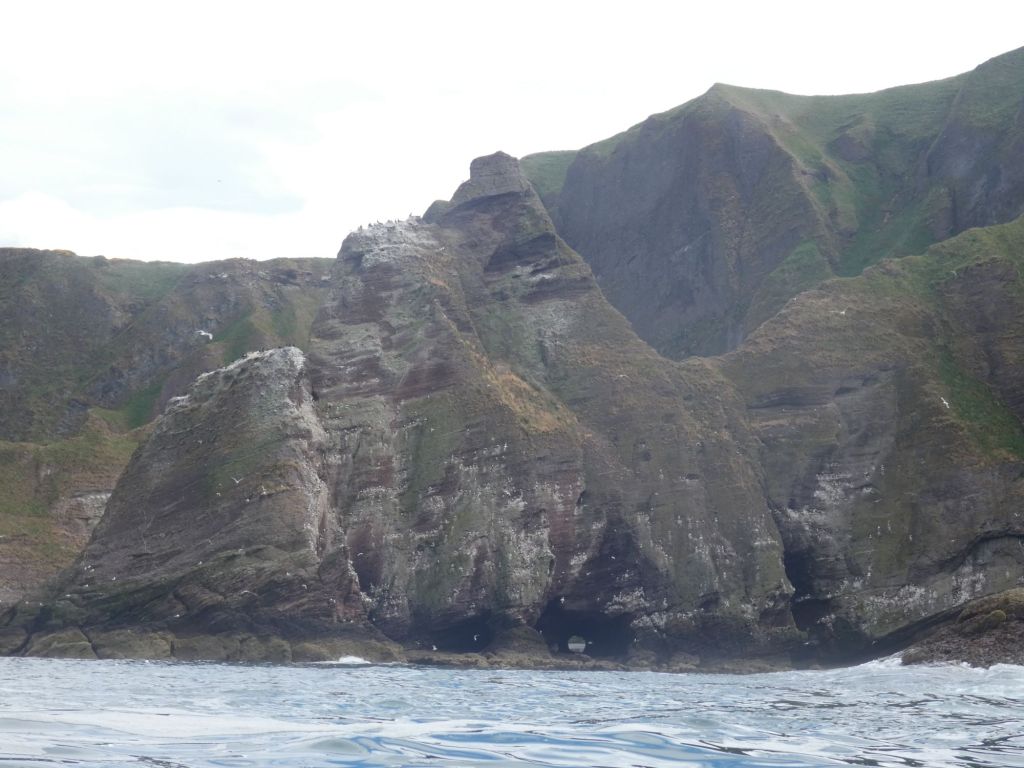
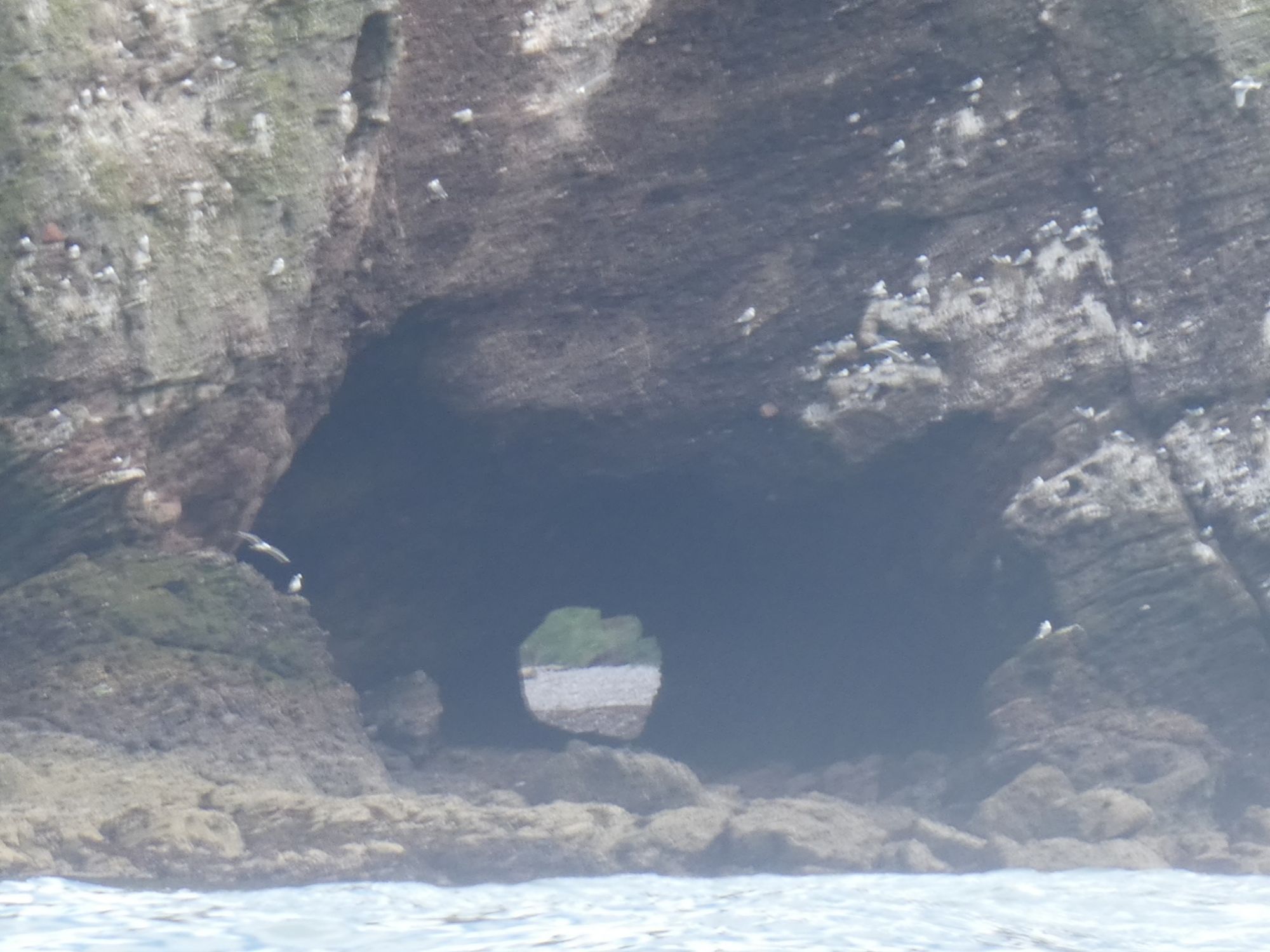
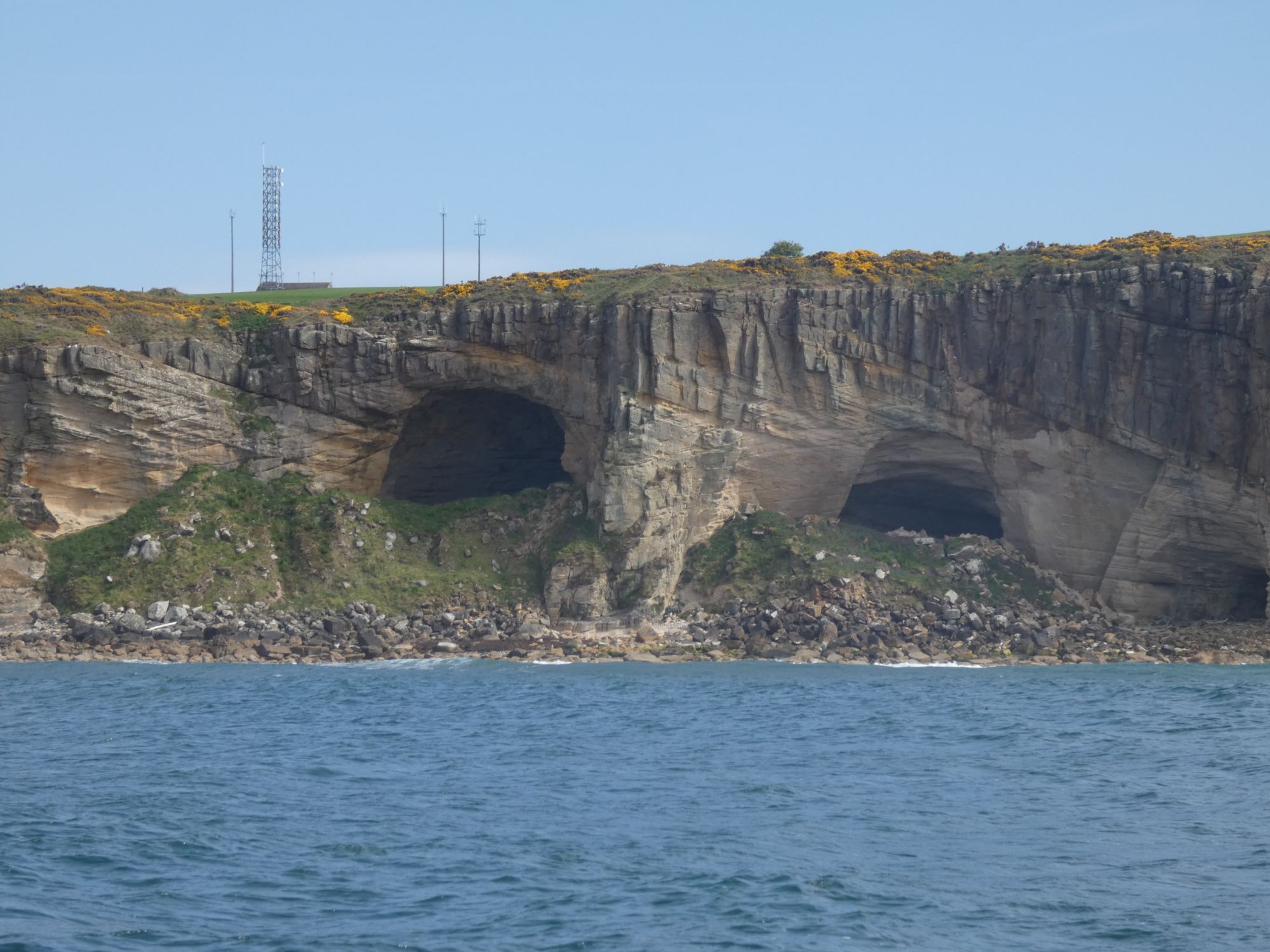
There is a dramatic change to the rock that makes up the cliffs to the east of Pennan – a deep red old sandstone – and some of the formations are other worldly. I may have got too engrossed in the Expanse sci-fi book series, but I’m sure some of them were about to hum into life with alien technology.
All different shapesAn alien withinA tiny whole at the bottomZoomed in
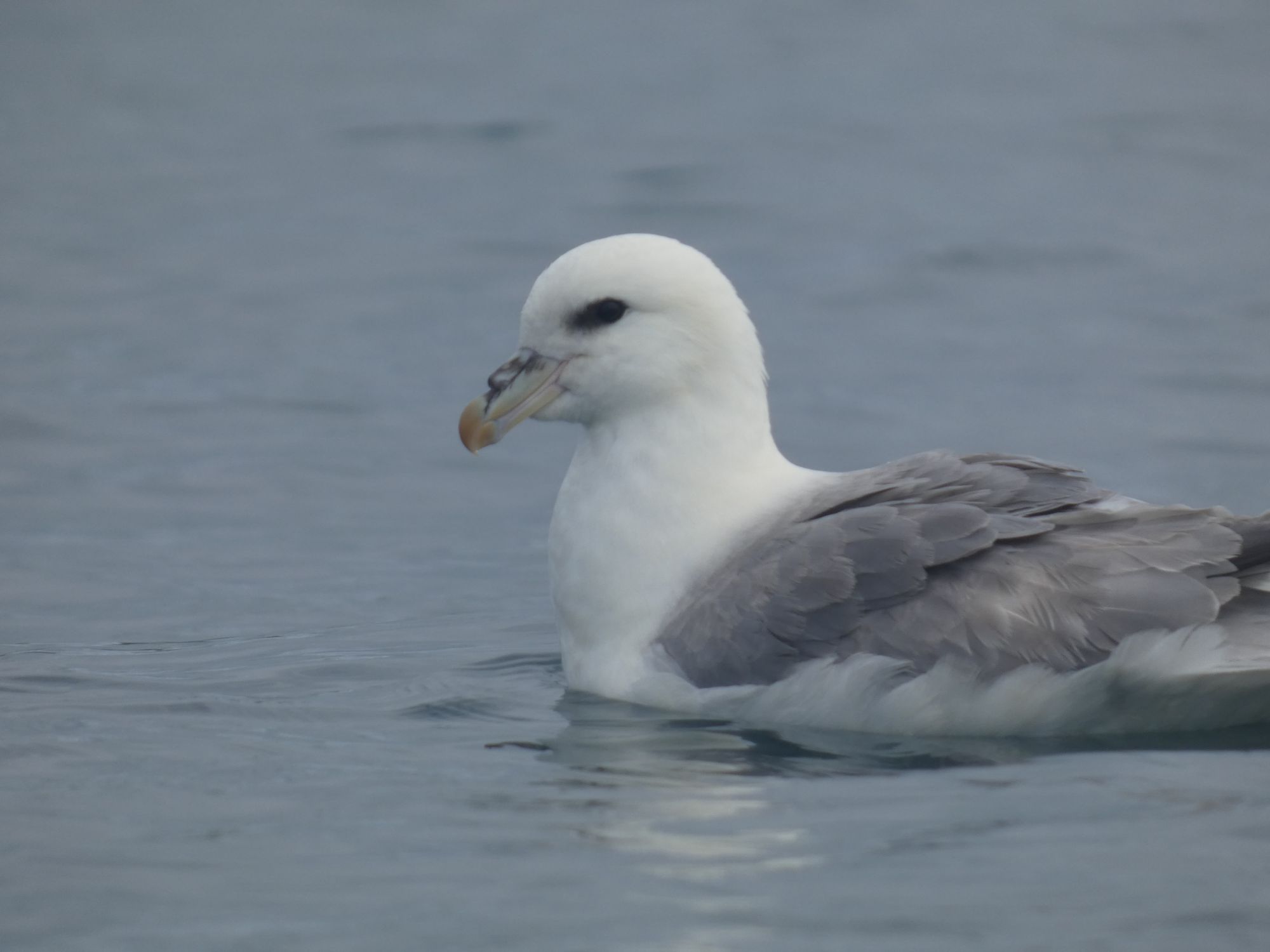
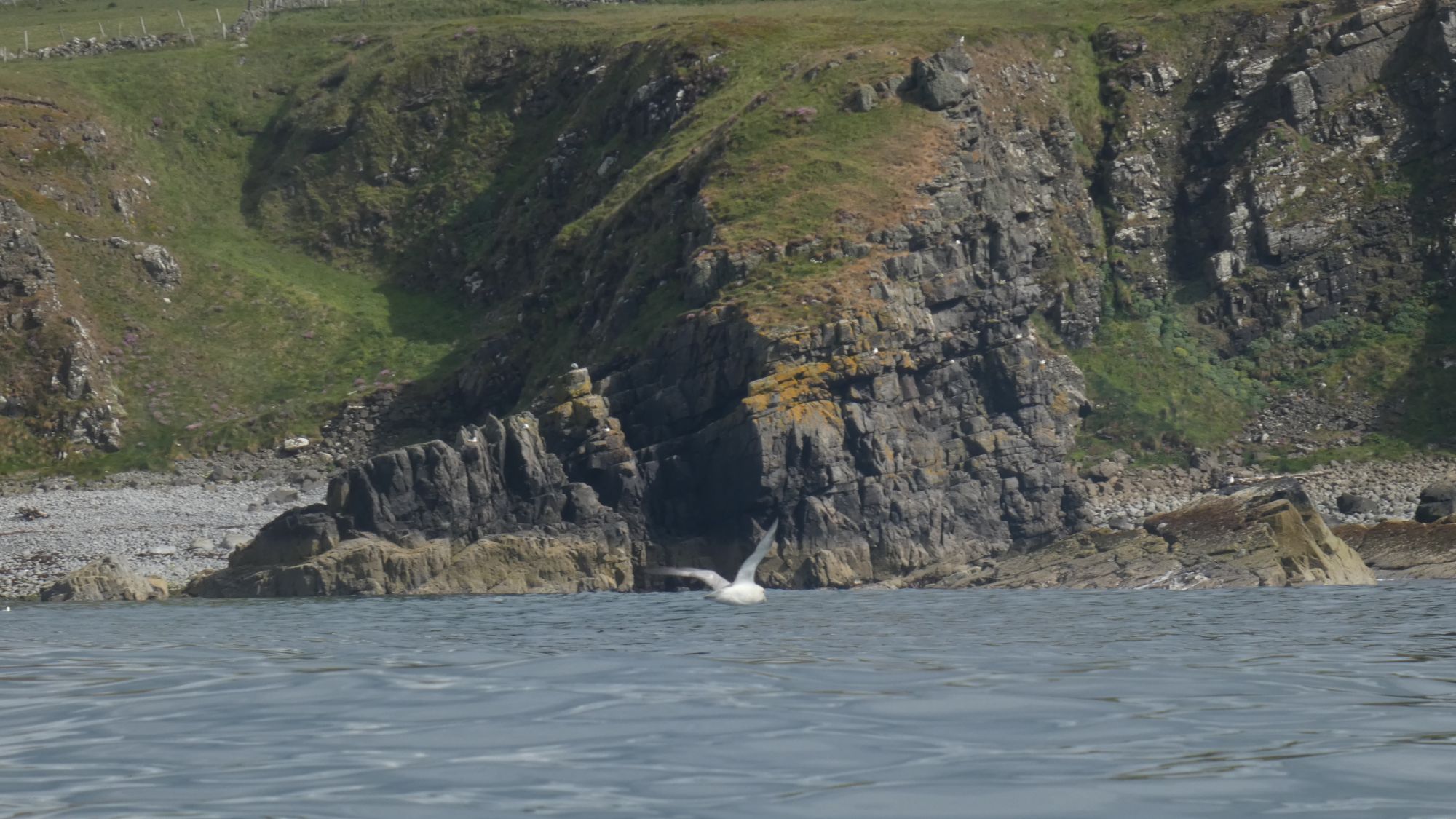
It was after this section of coastline that young fulmars became more numerous. They are often quite curious and will fly straight at the kayak only a foot or so above the surface, veering elegantly at the last minute to seek out more interesting morsels.
Who are you calling tube nose!Fulmar in flightArriving at Rosehearty
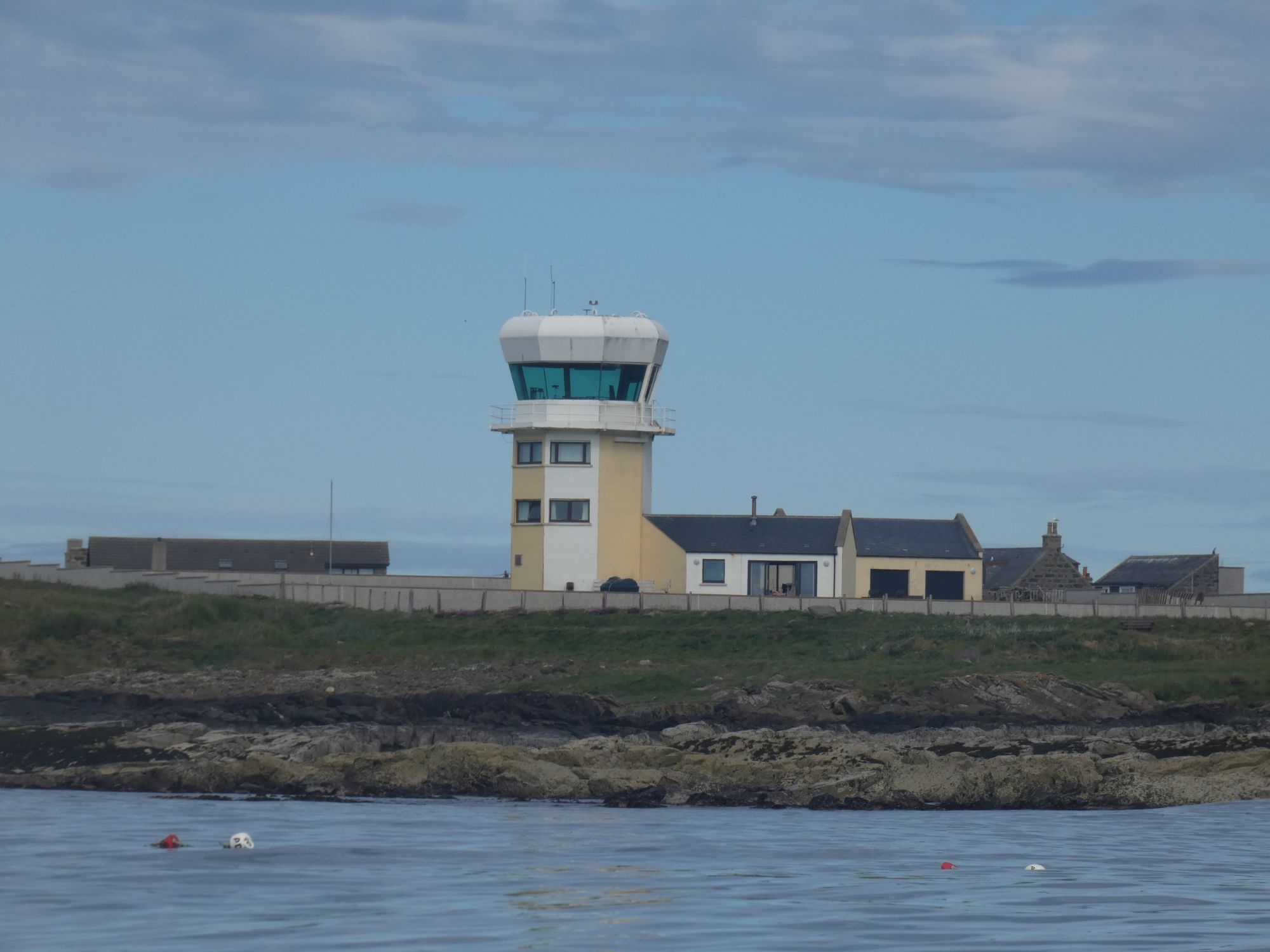
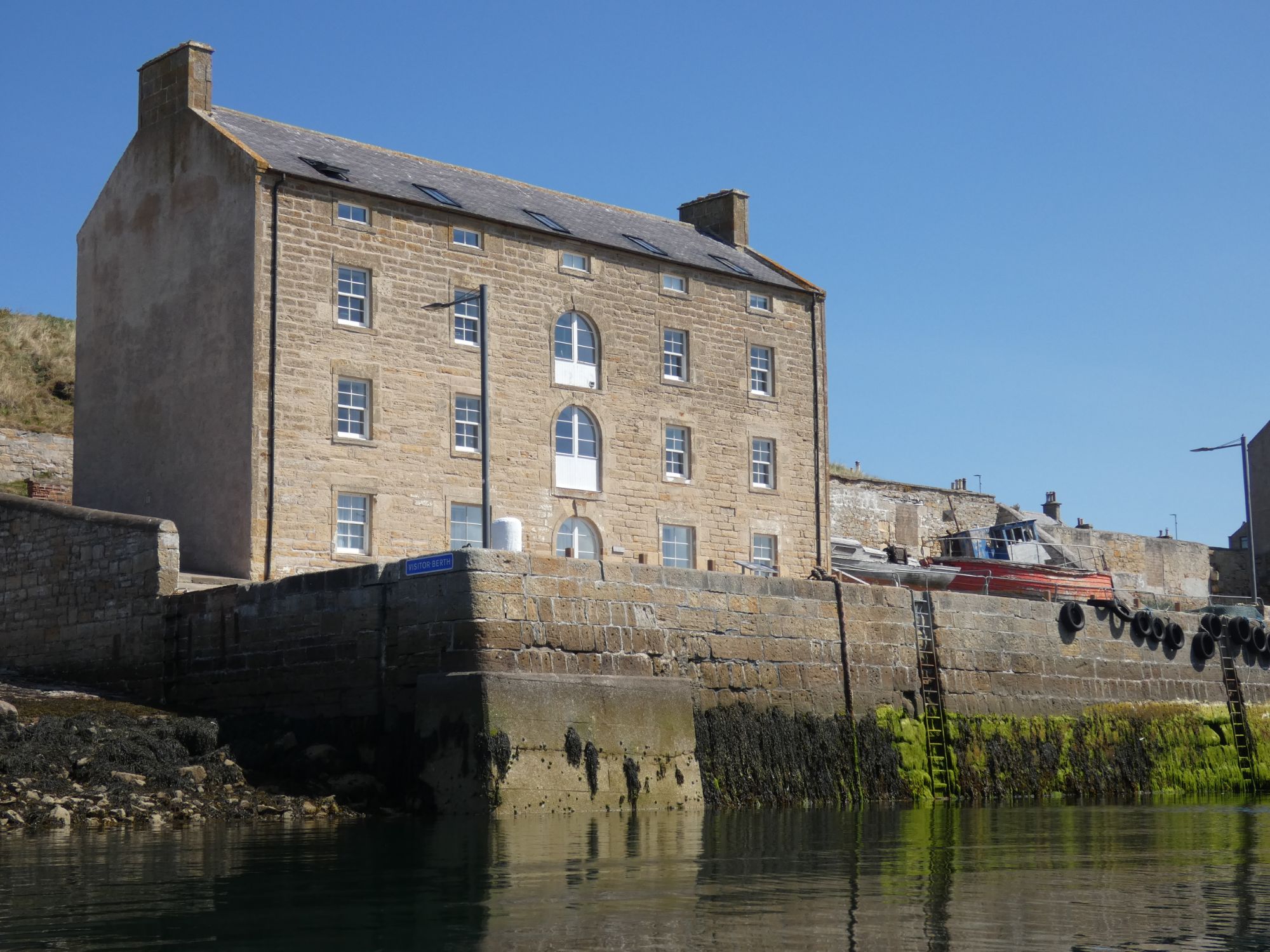
I have two nights at a hotel booked in Rosehearty, so there is plenty of time to investigate the history of this peculiar building.
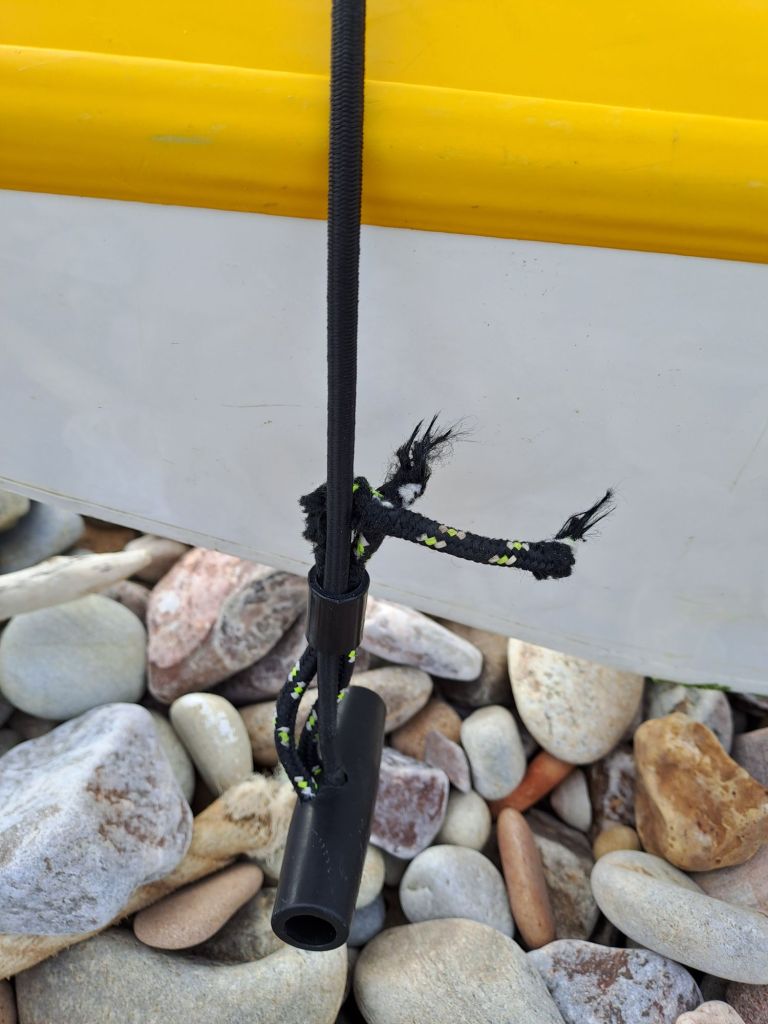
Before setting off today, I needed to replace the rope on my bow toggle. It broke when I was pulling the kayak up the ɓshingly beach yesterday. I should have replaced it earlier as it had been fraying for a while now, but it’s a fiddly little job that I kept putting off.
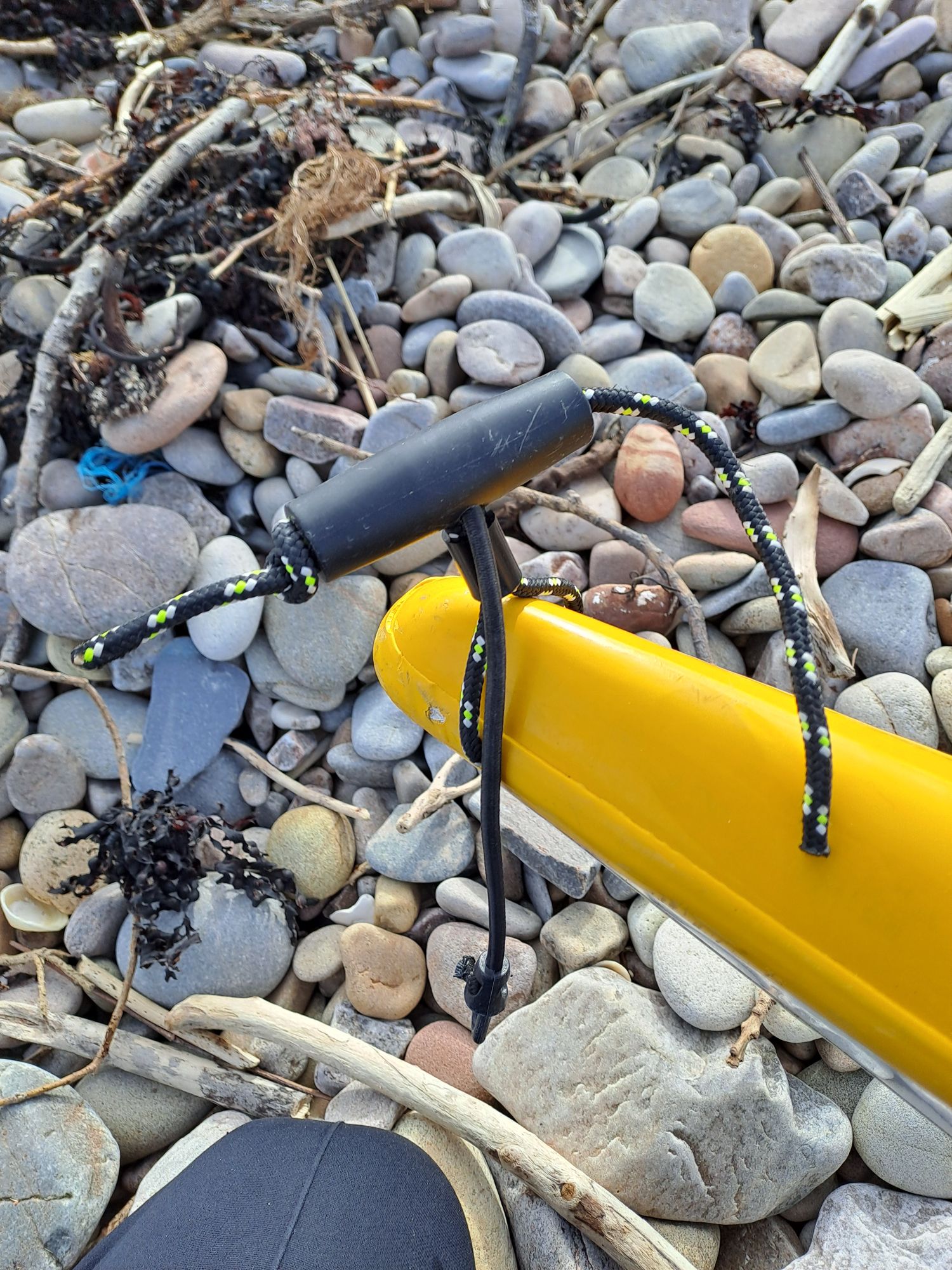
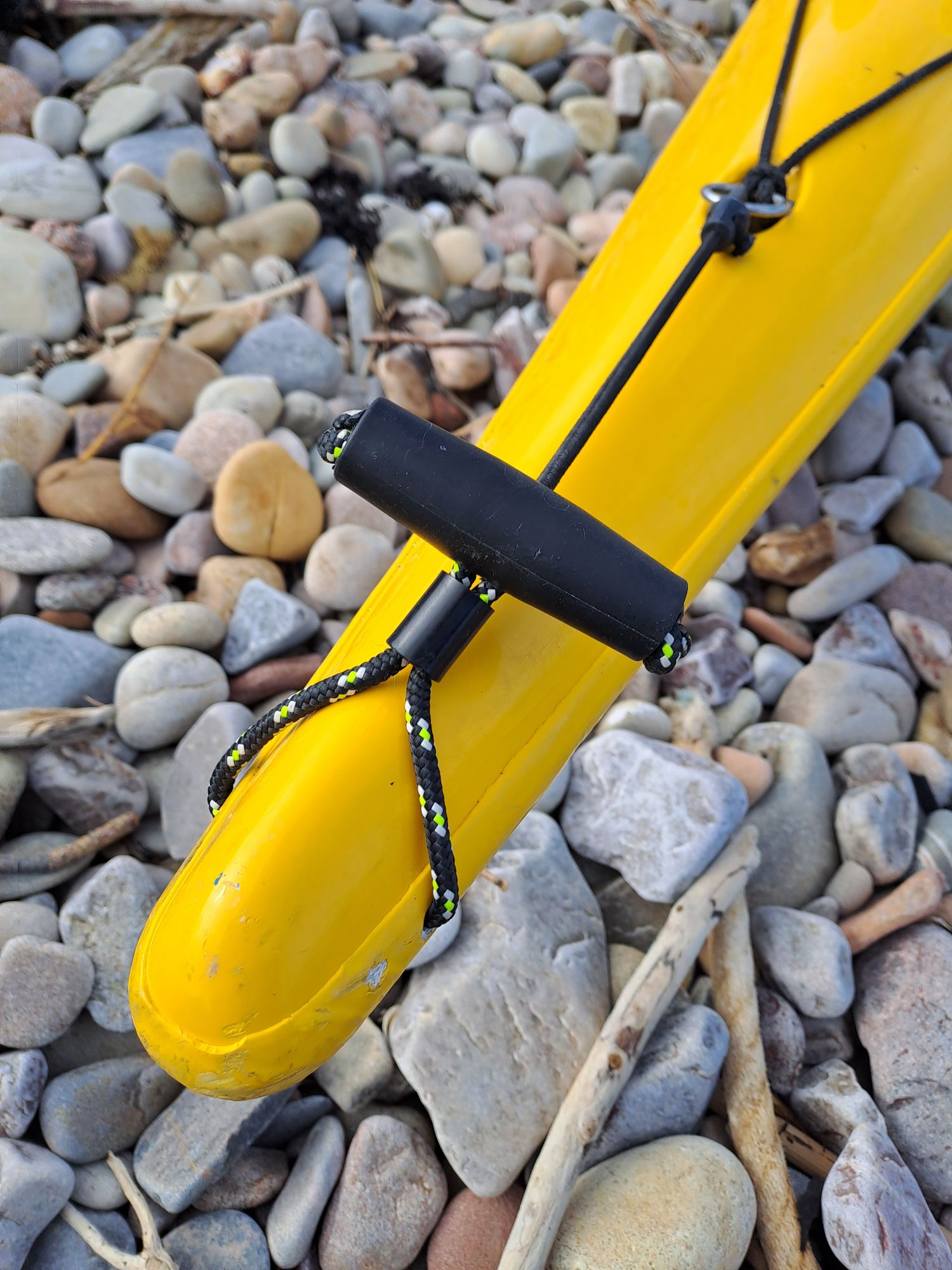
Getting the old knots out of the toggle proved to be the hardest bit. I think I made use of all of the blades on my Leatherman multi-tool, plus some drift wood sticks found lying on the beach. An hour had passed before I was satisfied with the final result.
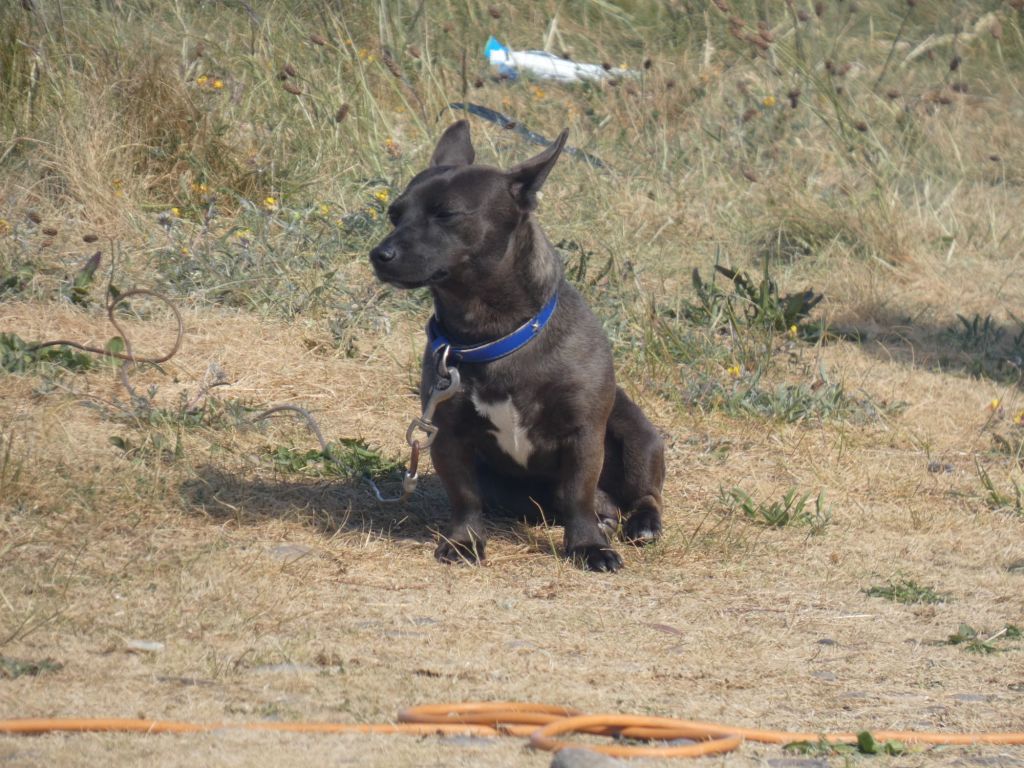
The broken ropeAlmost thereCompleted at lastMr. Yappy
It was almost 11 before I finally set off, and a happy Mr. Yappy gave his final yap of farewell.
About to leave Portgordon
The north easterly winds were light, and the swell was much reduced from yesterday, but it was still not a day for getting the camera out often.
Buckie Harbour entrance and sea wall
As I passed the sea wall beyond the entrance to Buckie Harbour, the reflected waves were often just as big as the incoming ones. This clapotis was to be a varying but constant companion throughout the day with the cliffs and headlands to follow. It would range from the feeling of a slightly unsteady walk back from the pub to a full-on fairground waltzer with an added vertical component.
Findochty. Or was it Portnockie?
I had my GPS on, but was really only using my map to navigate. Ticking the little headlands off in my mind as I went. I had considered looking at Cullen for a safe landing spot and a place to have a bite of lunch, but somewhere along the coast, my mental headland count had got out of sync with reality.
A photo of Cullen, which I passed without realising I hadOne of many little headlands
It was only after three hours of paddling that I started to question my slow progress of only 10kms that I consulted my GPS. I had actually done 18kms and was well past Cullen.
The waves crashing into Sandend Bay didn’t at first sight make it look like an attractive landing spot, but as I moved in closer to shore, I could see a calmer area on the eastern shore. It was a rocky shoreline, but I was fortunate to find a little channel wide enough for the kayak that ended on a small sandy beach. The perfect lunch spot.
My next stop at Portsoy Harbour was soon after lunch and not really necessary, but as the entrance looked navigable, I thought I’d pull in there for a look. I chatted to a fisherman who was taking advantage of the low tide to examine the chains of his mooring. Although the harbour was a fine summer haven, no boats stayed for the winter. The high walls looked imposing, but many a boat had been sunk in a storm when the seas piled over. One corner was even nicknamed the “death trap.”
Portsoy Harbour west wallPortsoy Harbour east wall. Death trap at the far end.
I enquired about the next two harbours to come, Banff and Macduff, and was told to watch out for every third wave at Banff. This rule had served him well over the many years he had used it. Until the one time it didn’t – the fourth wave got him!
However, he also told me about Whitehills, a harbour before Banff that I hadn’t considered. This one would be easily accessible in the current weather conditions. As it was now late afternoon and starting to cool down, I decided to take his advice and head there.
Pulling into the Sandhills Harbour an hour later proved as simple as he had said. The journey from safe haven to settled campsite was a little trickier.
The harbour was more a yacht marina than a small fishing harbour. There was no slip, only pontoons. I tied my kayak to a pontoon and went to investigate possible campsite options. Nothing looked promising within easy walking distance. One young girl said I could camp in her garden, but her mother wasn’t quite as keen. The girl was still keen to help, though, and we eventually settled on an area of rough grass close by. Later mumbled comments from passers-by suggested that not all the locals were quite as keen as she was to see a tent erected there.
I also received helpful advice from local onlookers as I unpacked my kayak – “yae cannae leave yoor boot there” and “belongs in a skip, not here.” However, when I left the pub a few hours later, one of the older men who’d witnessed the incident pulled over in his car when he saw me and apologised on behalf of the village for the behaviour of some.
I’d missed food time in the pub and didn’t feel I could get my stove out by my tent so settled for a cold dinner of snacks and fruit before settling in for the night.
The sound of the surf had been a constant companion as I lay in my tent, so it was no surprise to see it piling into the beach when I extracted myself from my sleeping bag.
Today, I was to be joined by David, the experienced member of “The Team”, and Mike Devlin, a hugely experienced kayak guide. They were both on the way back from leading Wilderness Scotland clients on a kayak adventure in Uig and Arisaig on the West Coast.
When they arrived at 9am, the Beach Hut café was still shut, so we ventured into the Moray Golf Club clubhouse for a coffee. Our scruffy paddling clothes would not have been suitable attire for a round of golf, but the clubhouse staff made us feel very welcome.
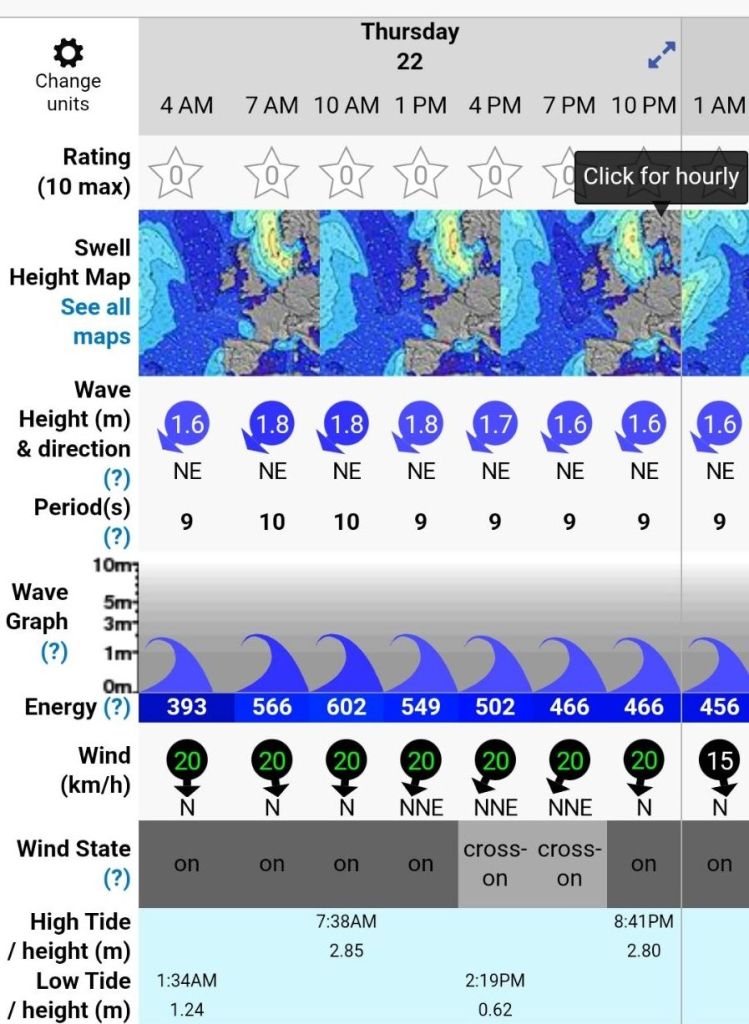
Here, we discussed our paddling options, and the conclusion was that none of us fancied going out in the current conditions. The forecast gave no certainty that things would be better tomorrow. Mike departed back to his home in Forres and David to Edinburgh – both to make better use of their time, rather than hanging around waiting for the weather to change.
The surf forecast
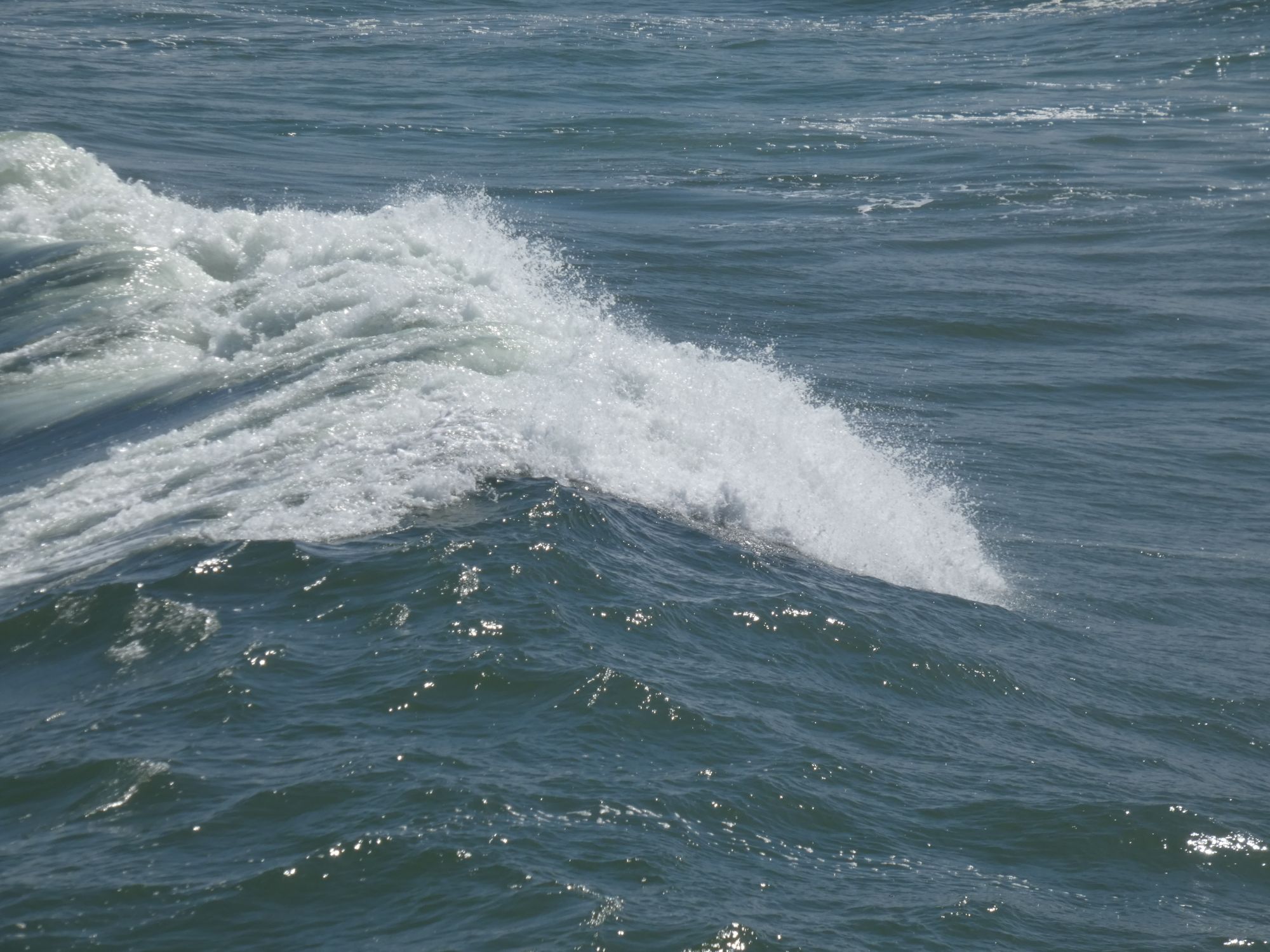
Before David left, we took a short drive over to Lossiemouth Harbour on the east side of town. The scenes here only reinforced our view that we’d made the correct decision.
A powerful breaking waveThe view looking east across the Spey Bay
I had time on my hands now, so I walked back through town and along the front. I stopped for a relaxed breakfast in the Harbour Lights and took photos as I went.
A good breeze for drying wingsLooking across the bay to the Covesea Lighthouse
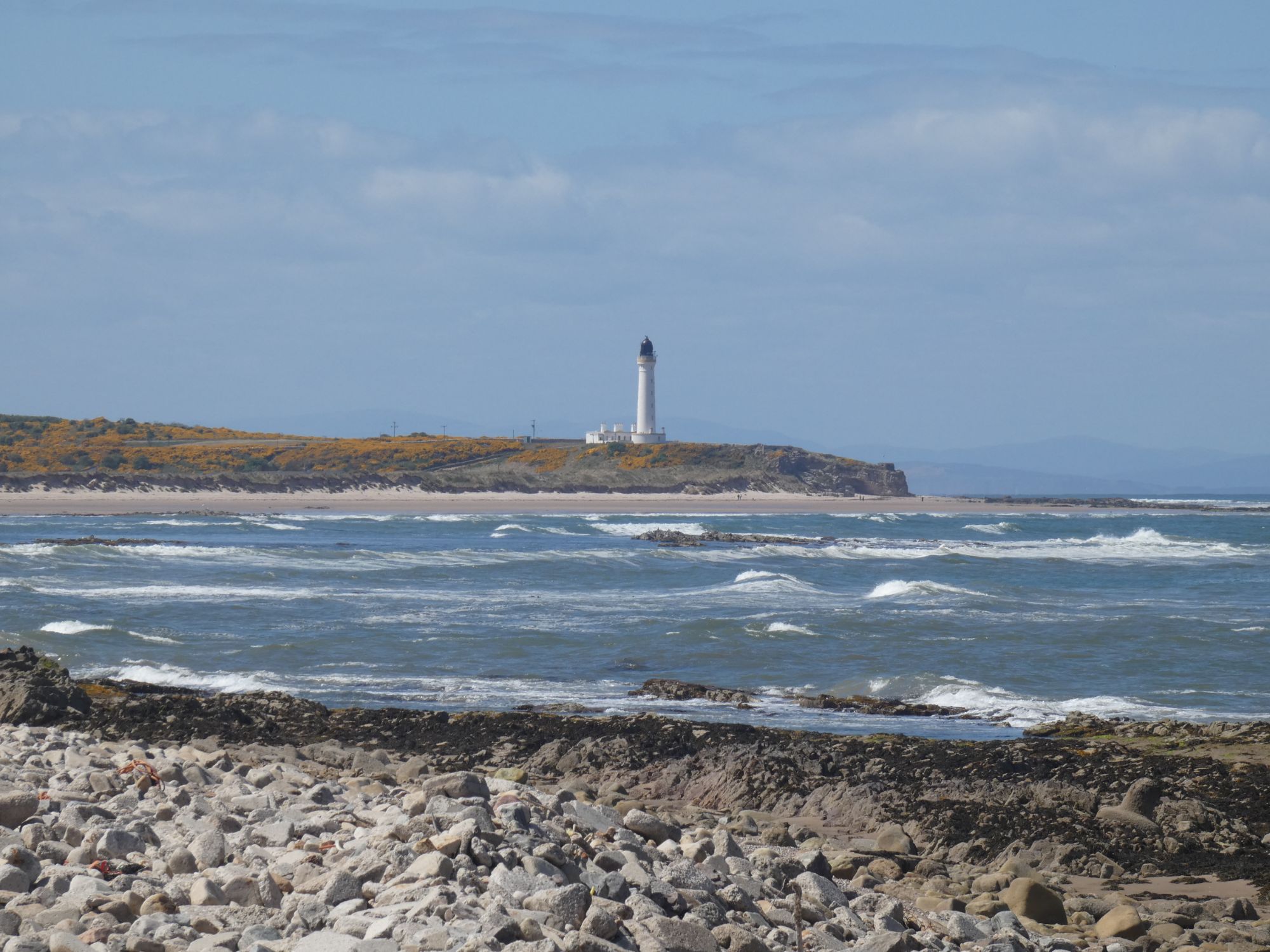
This view across the bay to the lighthouse is almost identical to the one I took earlier this year when Wendy and I came up here for a short walking holiday and recce trip for my paddle. I have used it on the home page for my blog – only the sea conditions are different.
Everything started to change around noon. The wind dropped away to a very light breeze, and the white tops on the waves out to sea faded away to a constant blue. Could I get a short paddle in now? Where could I land if I went across the Spey Bay? It was back to my tent to review the maps and East Coast Yachting guide.
At 2pm, I made the decision to go. Both Portgordon and Buckie on the other side of the bay had harbours that should be suitable for entry with a north easterly swell.
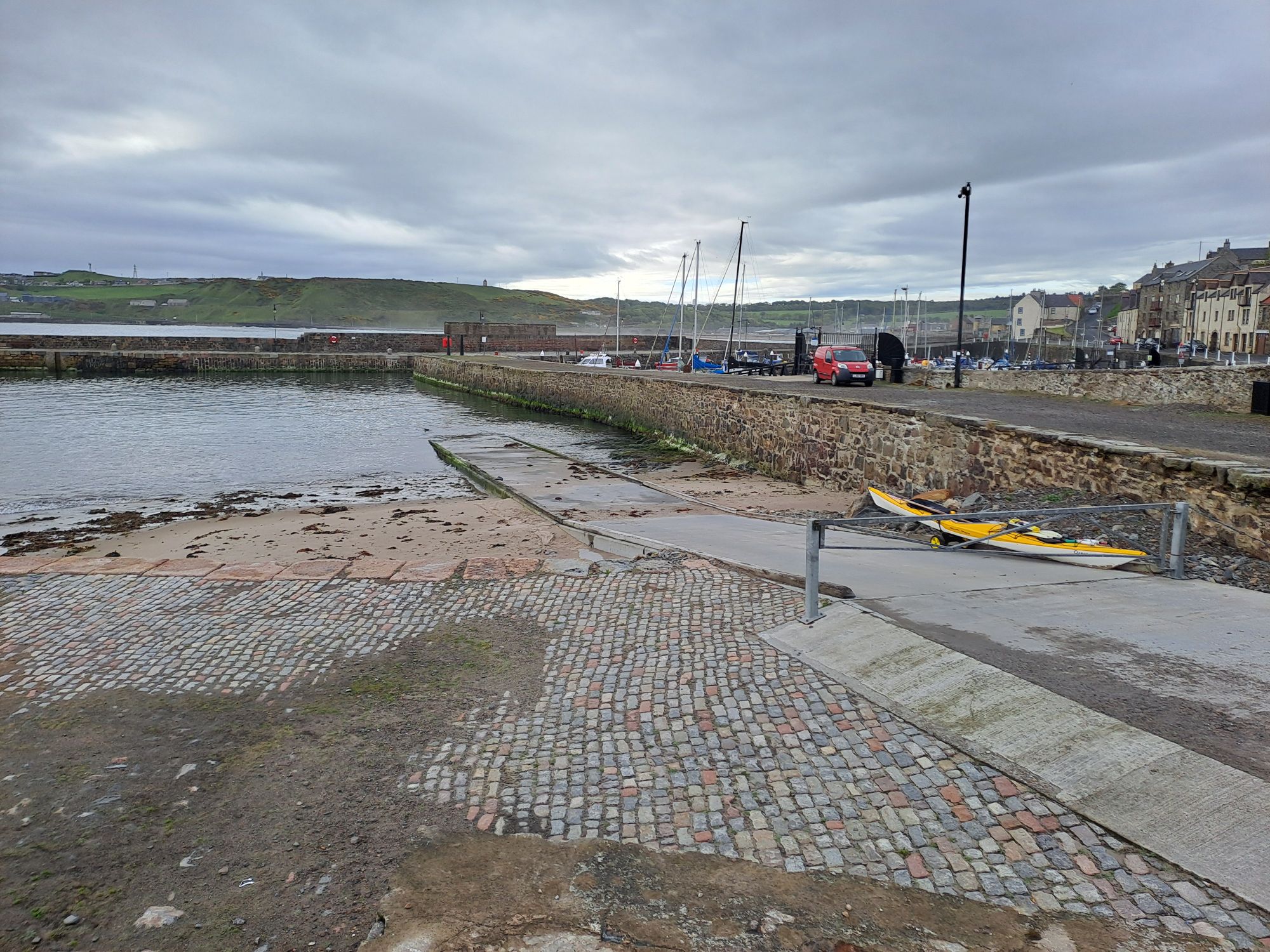
Rather than trolley the kayak back to my exit spot from yesterday, I chose to launch on the beach directly in front of my camping spot. There was more surf here, but it looked manageable. It was – but not quite the easy ride I had anticipated. A couple of full power paddles up the face of close to breaking waves ended with resounding thuds as the front half of the kayak dropped back to the water from the height of a meter or so. Once out, I took a very wide berth of all the remaining skerries and headed east across the bay.
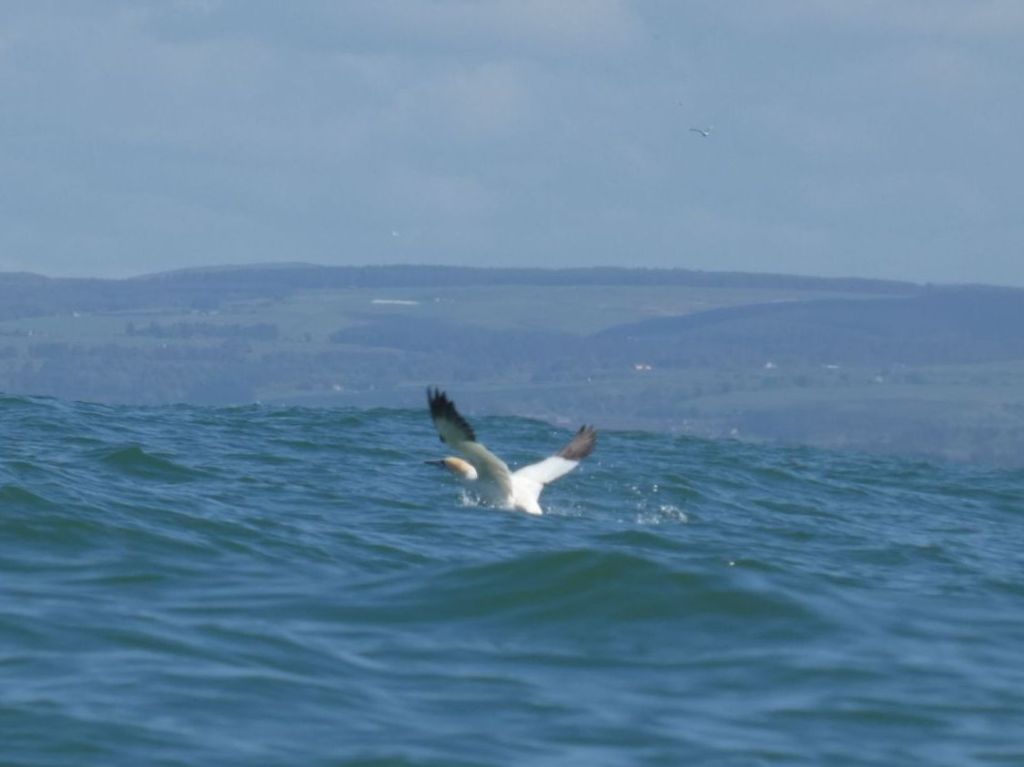
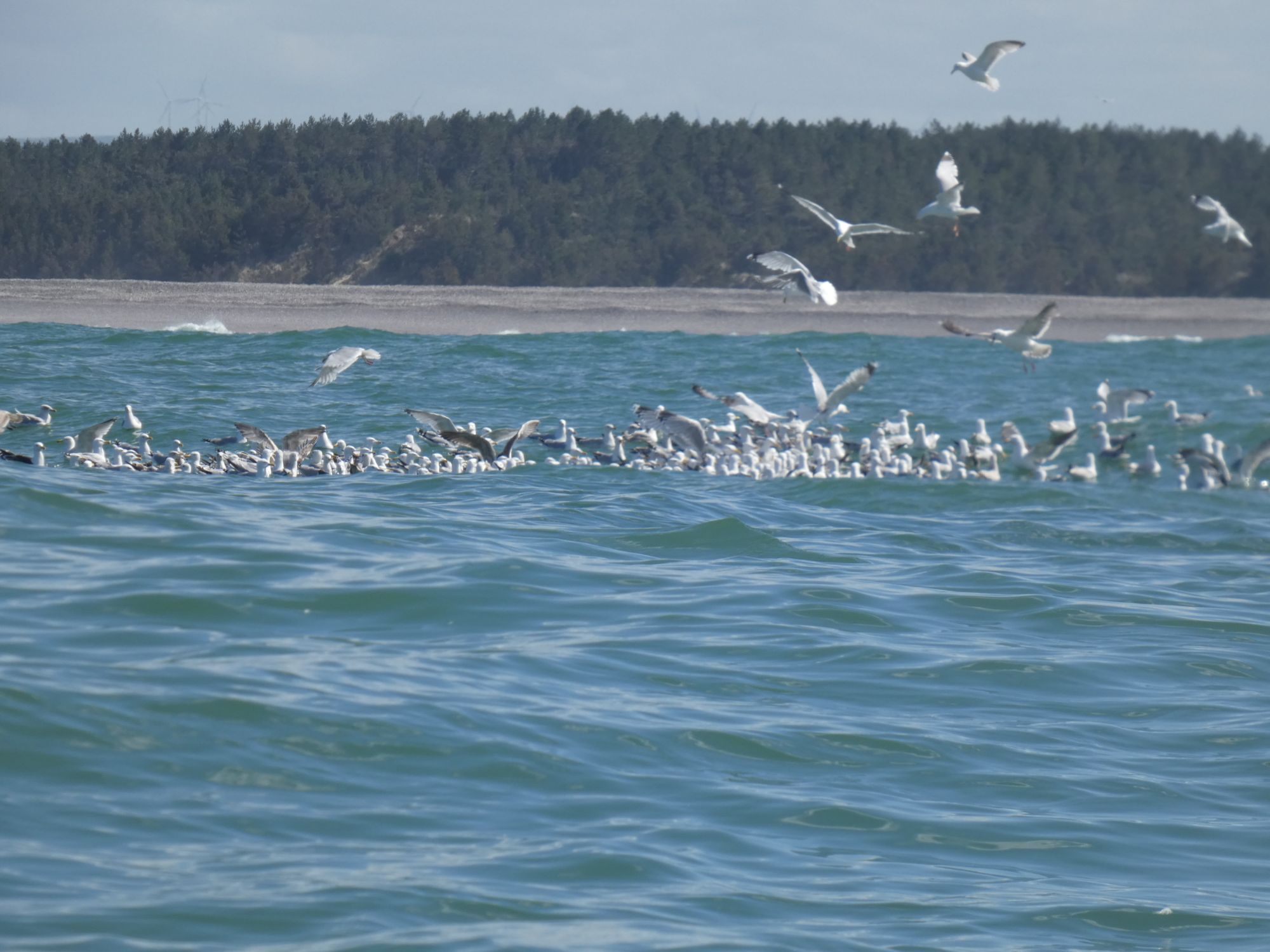
Although the swell was still substantial, the paddle across the bay was easy going, and I was able to get my camera out a few times. I probably saw more seabirds on this short paddle than I’d seen on any other full day so far.
A gannet taking offA gull dinner party
As I approached Portgordon, I spent my time trying to determine if there was any pattern to the way the swell behaved. There were definitely periods when bigger waves came in, but how many at a time and the interval between just seemed random to me. I was still several hundred metres away from the harbour entrance when I had to quickly turn into the waves and paddle hard to avoid a cresting monster of a wave. Portgordon wasn’t the harbour for me.
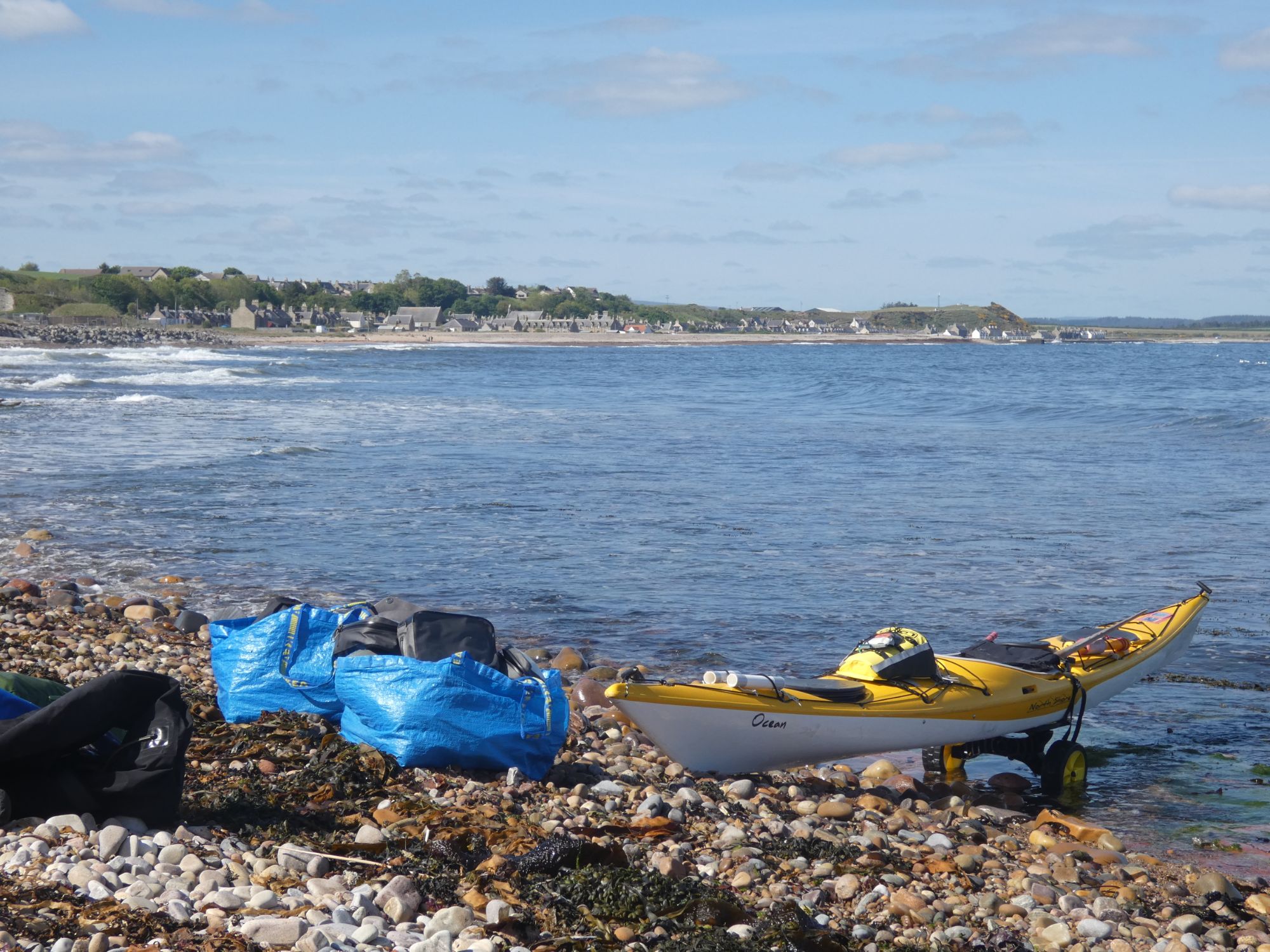
I paddled on, thinking I’d have to head for the large commercial harbour of Buckie. But as the coast curved round from SE to NE after Portgordon, I noticed a stretch of coastline where the surf wasn’t breaking. I paddled towards it and wasn’t disappointed when I was able to make a remarkably surf free exit – I could even get my camera out before the final landing.
The calm pool of my landing spot
I think the curve of the coast here resulted in some wave defraction/refraction that dissipated the energy of the waves further up the coast. I wasn’t complaining, whatever the reason. I had a flat spot for my tent and some caravan neighbours for company. All was good, apart from one small dog who couldn’t get over me appearing from the sea and yapped incessantly.
After setting up camp and having a bite to eat, I wandered into Buckie for a bit of sightseeing and a celebratory pint of Guinness.
In Buckie. Not exactly wild flowers, but a lovely display anyway.
High tide was at 6.30, and a slight easterly flow would run most of the morning to provide my slow-moving kayak a little assistance. An early start was on the cards.
The Meadows had been a great place to recharge. Wanda, the host with her two dogs, provided everything we needed but left us to enjoy our break.
We were back at the Nairn Harbour slip at 6.30. The boat was easily packed, the Coastguard informed (on my new replacement VHF), and hugs exchanged before I set off to sea once again.
Down the River Nairn after exiting the harbour
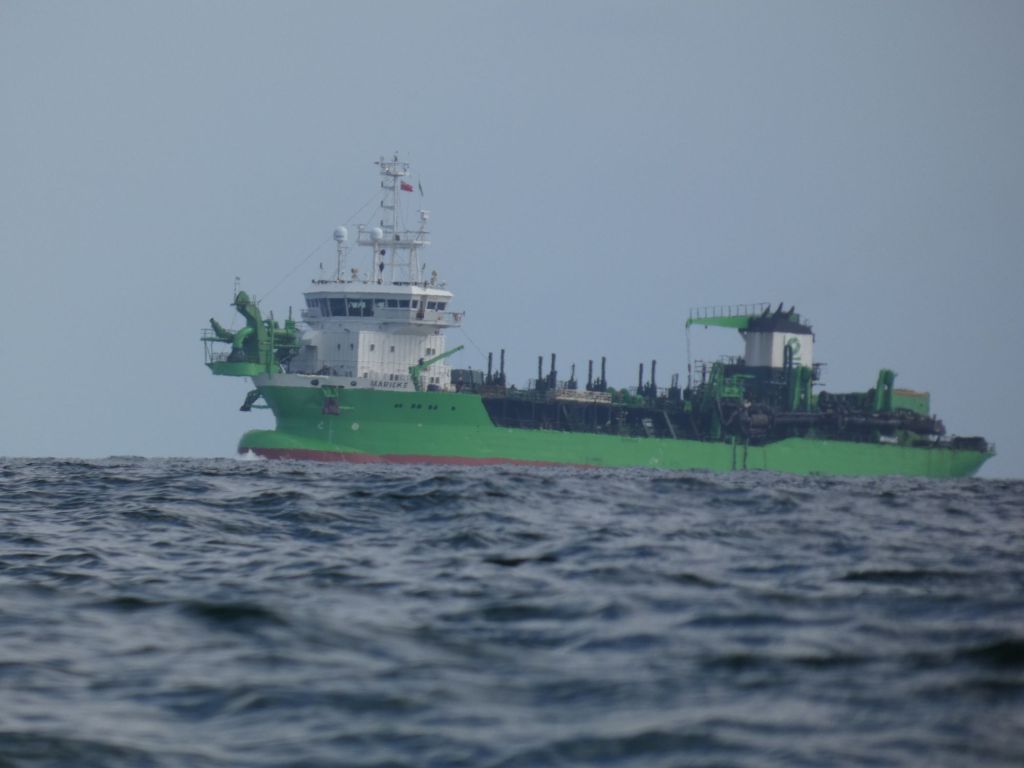
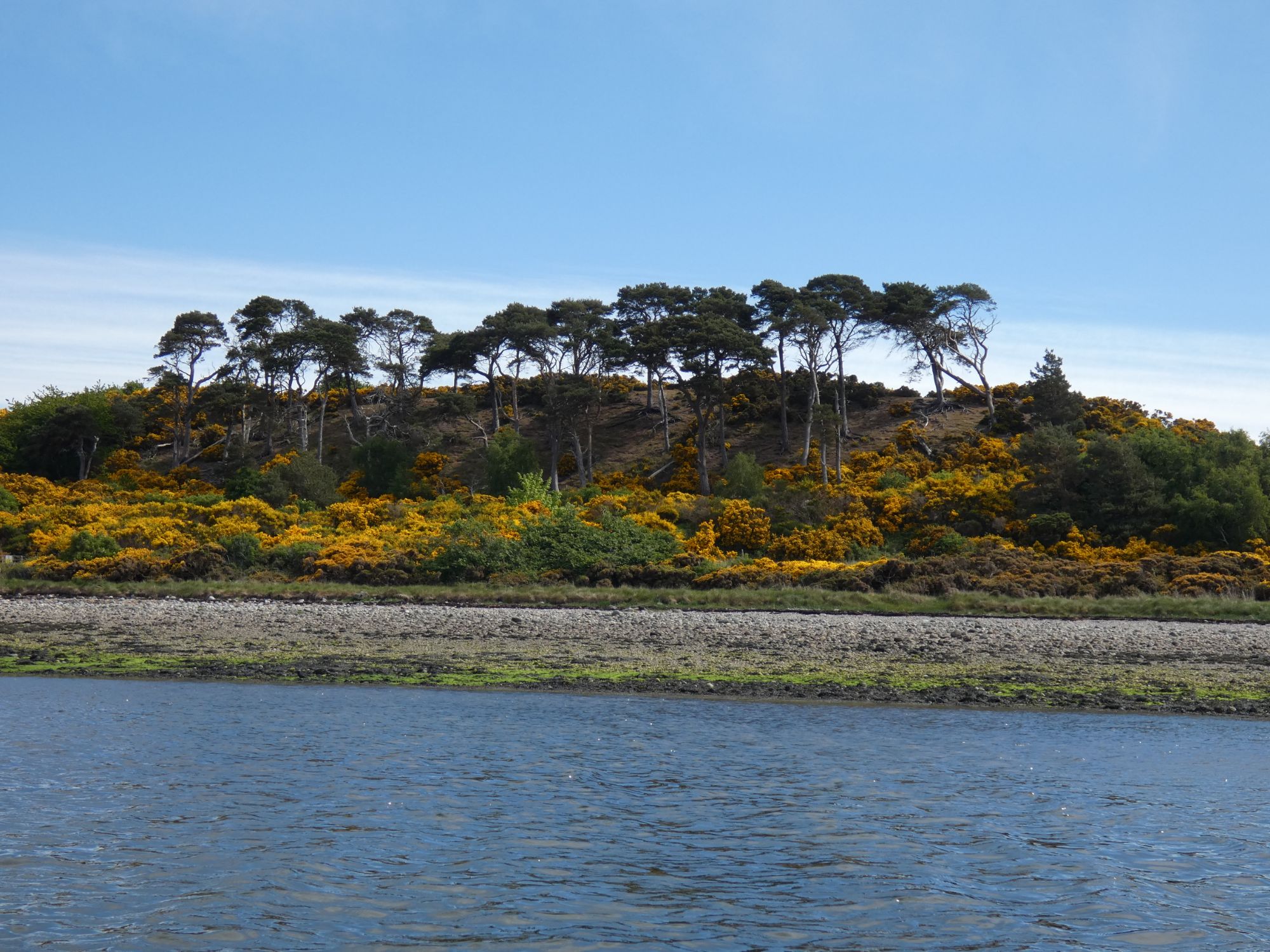
The coast between Nairn and Findhorn is low and flat with the Culbin Forest behind dunes and sandbars. Not much to draw the eye. On the north coast of the Moray Firth, I could see gorse covered cliffs, but as I progressed eastwards, the coast grew more and more distant. There wasn’t much boat traffic on the Firth, but I did have the regular passings of the green work boats taking their sand out to be dumped at sea.
Sand from Whiteness Head being dumped at sea
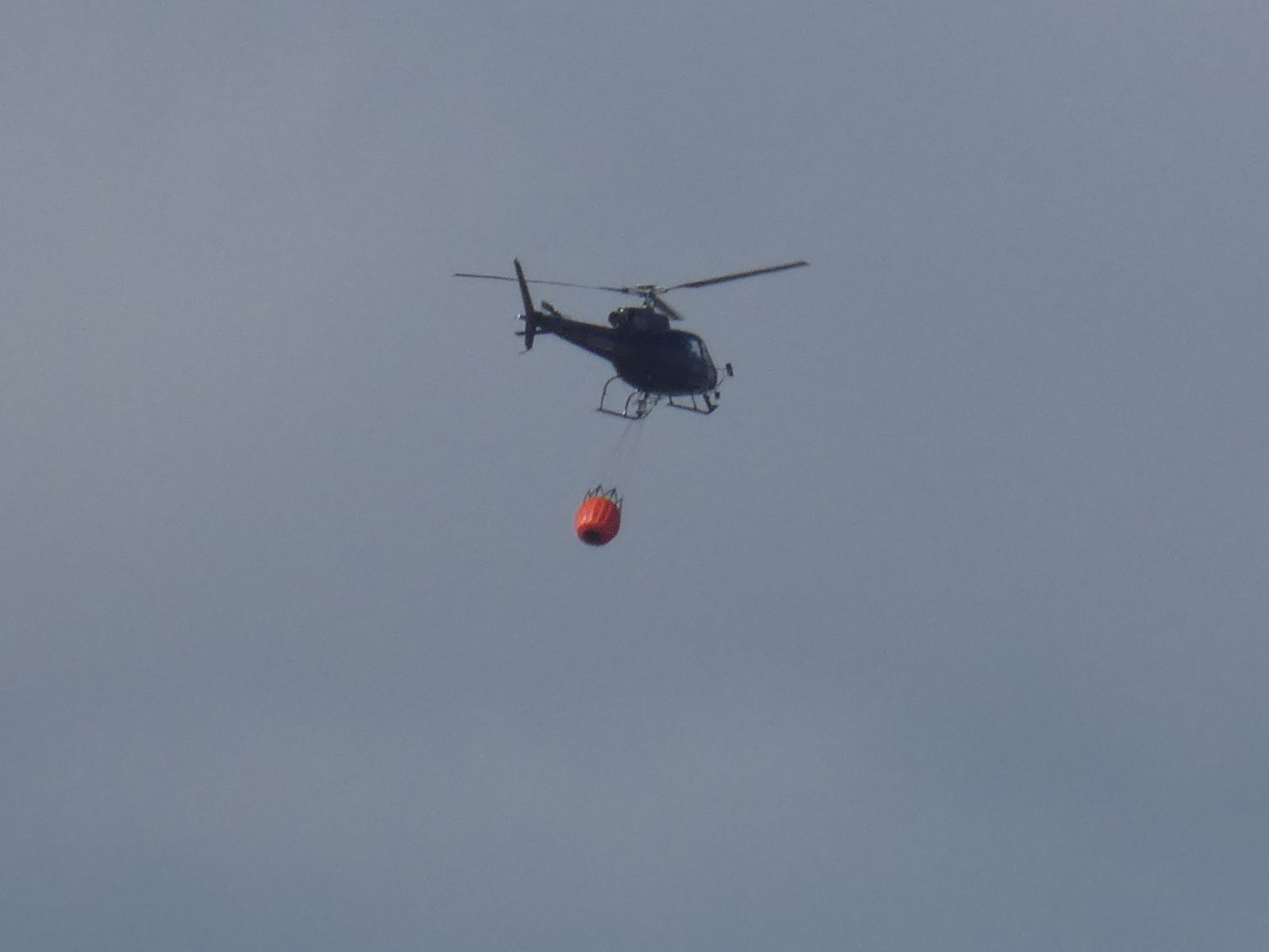
When out in Nairn over the last couple of days, we’d regularly seen smoke to the east, and Mike mentioned a report of firefighters tackling a grass fire. I no longer saw the smoke, but a helicopter was out collecting water and dropping it not far from the coast.
Dowsing a fire
I paddled past Findhorn, a stop there would have entailed landing on a surfy beach or a long detour into the bay. I chose to investigate the small fishing harbours of Burghead and Hopeman instead.
Approaching BurgheadInside the Burghead Harbour. Convenient slip on the left.Above the harbour wall
In Burghead, there were toilets and convenient picnic tables on a grassy area close to the harbour. The perfect spot for lunch and getting warmed in the sun watching the men working on their nets.
Mending nets
Hopeman is only a few kilometres east of Burghead. I didn’t need to stop again, but as I was passing close by, I took a wee nosey around the harbour.
A little surf creeps in the entrance of Hopeman HarbourThe high walls of the harbour stacked high with gear
I had considered stopping for the day at Hopeman but felt I still had the time and energy left to make it another 10 kms to Lossiemouth.
The coastline was more interesting now, but, as with my approach to Nairn, my mind was thinking ahead to exit at Lossiemouth. The north easterly wind had been blowing for a week now, and there was a good North Sea swell rolling into the Moray Firth.
Caves in the limestone cliffsA bit of coast walking away
I passed between the Covesea Skerries and the prominent lighthouse to the west of Lossiemouth. A few hardy paddle boarders were out surfing on the outside of the skerries. I watched one surf into the north side, walk a few yards on the rocks, and then confidently set off across the choppy chanel with his paddle towards the lighthouse on the shore. I needed his confidence for my approach to Lossiemouth.
I found my gap to the west of the harbour. The energy from the swell was dissipated on skerries further out, and I was able to negotiate a landing at the east end of the shore carpark.
I trolleyed my kayak a few hundred metres west to set up camp in some dunes away from the carpark. After setting up camp, I still had time to get an hour of warmth at the The Beach Hut café and bar.
Yesterday was my last day on the canals and the approximate half way point of my journey. About as from Edinburgh as I was going to get, there was a pleasant symmetry to the fact that I started my journey by crossing Thomas Telford’s Dean Bridge and reached the half way point by traversing Thomas Telford’s Caledonian Canal. The canal was completed in 1822 and the Dean Bridge about 10 years after, a few years before he died at the age of 77.
The day started with blue skies and very little wind, however, the forecast was for the wind to increase, and again it would be from the north east.
The view from my campsite on a fine morning
I considered the main challenges today as being the currents through the Kessock Bridge and through the narrows between Fort George and Chanonry Point. In an attempt to avoid a strong current against me it was best to get on the water early or wait another 6 hours and get tidal assistance. Waiting 6 hours wasn’t an option, as I had a 30+ kilometre paddle to do to reach Nairn.
I trolleyed the kayak down the east side of the canal and down to the Merkinch Nature Reserve. I then did a combination of sit-on-top paddling and wading in ankle deep water, dragging the boat behind, to get to the edge of the Beauly Firth where the day’s paddling could start in earnest.
Getting on the water at low tide
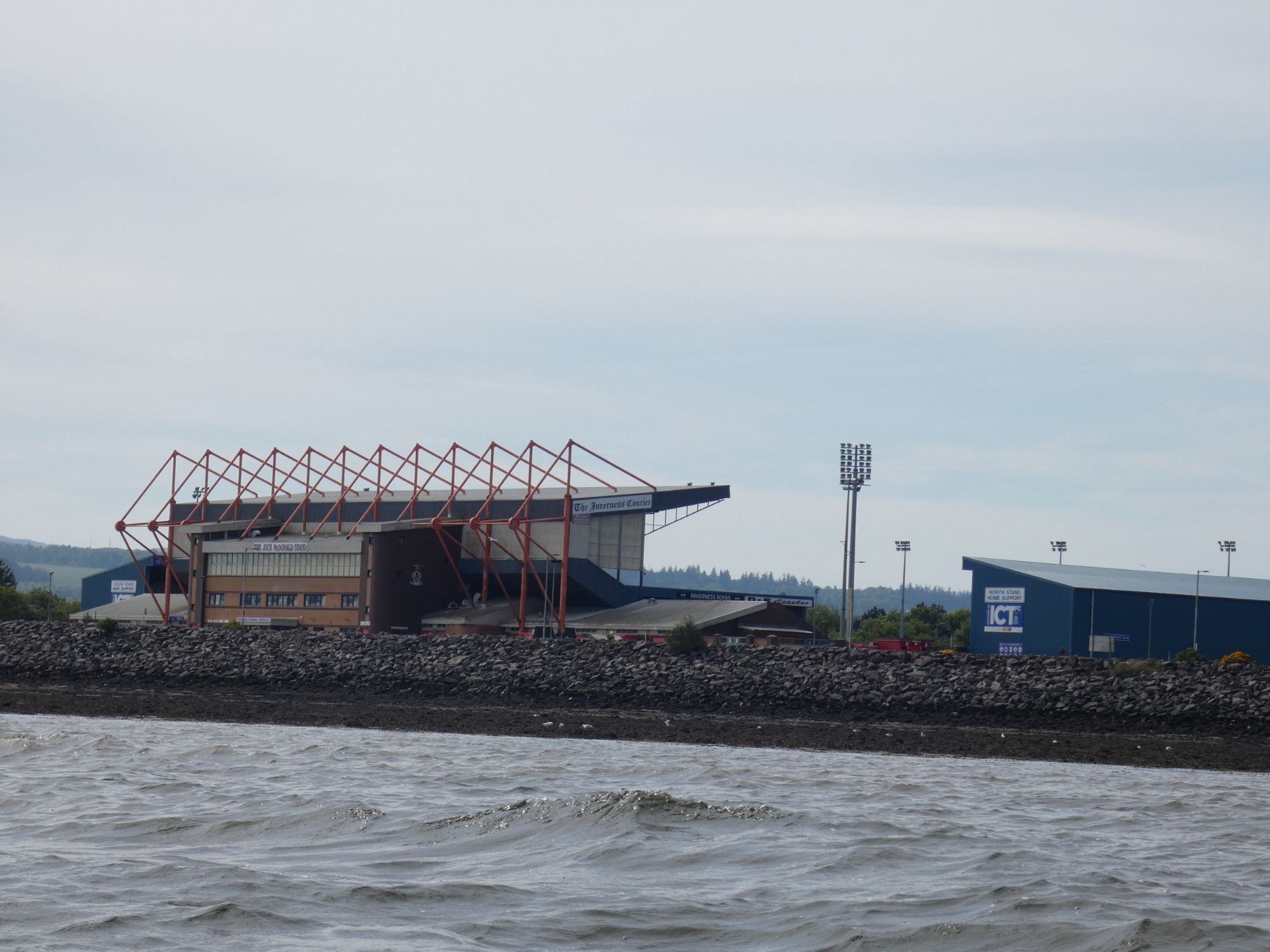
It was then due east out of the Beauly Firth into the Inner Moray Firth, under the Kessock Bridge (road bridge for the A9), and past the Caledonian Stadium (home to Inverness Caledonian Thistle FC).
No currents under the Kessock Bridge The Caledonian Stadium
The wind was picking up by this time so it made sense to hug the shoreline as much as possible to seek a little shelter. It’s also more interesting to be looking at the shore than straight out to sea all day.
Approaching Alturlie Point
Once round Arturlie Point, I thought it best to hug the coastline until I was due south of Fort George. This seemed the best compromise between shortest distance route and the shortest amount of time spent in the wind blown chop coming across the bay.
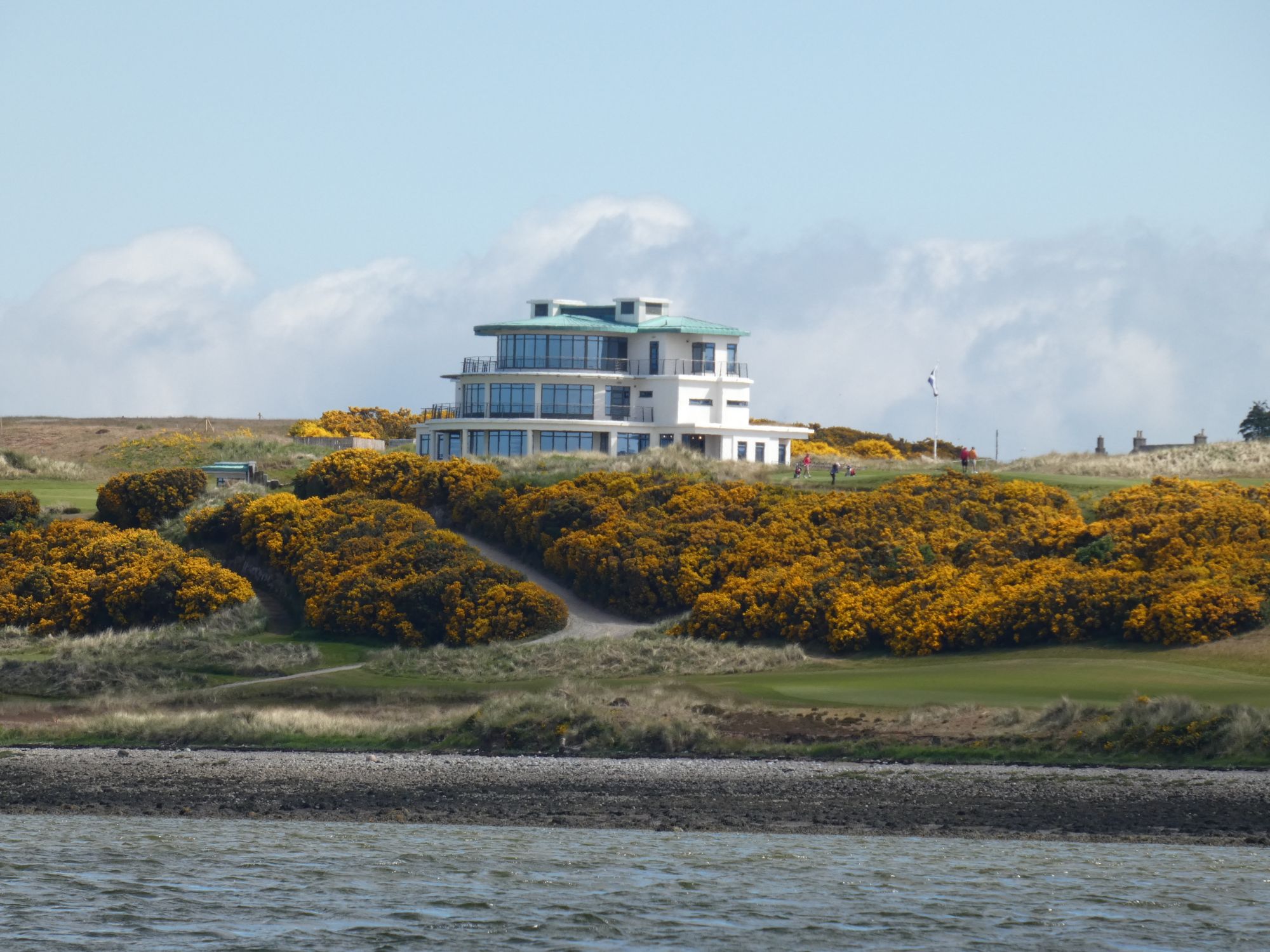
The impressive Castle Stuart Golf Clubhouse (with plenty of golf ball eating gorse)
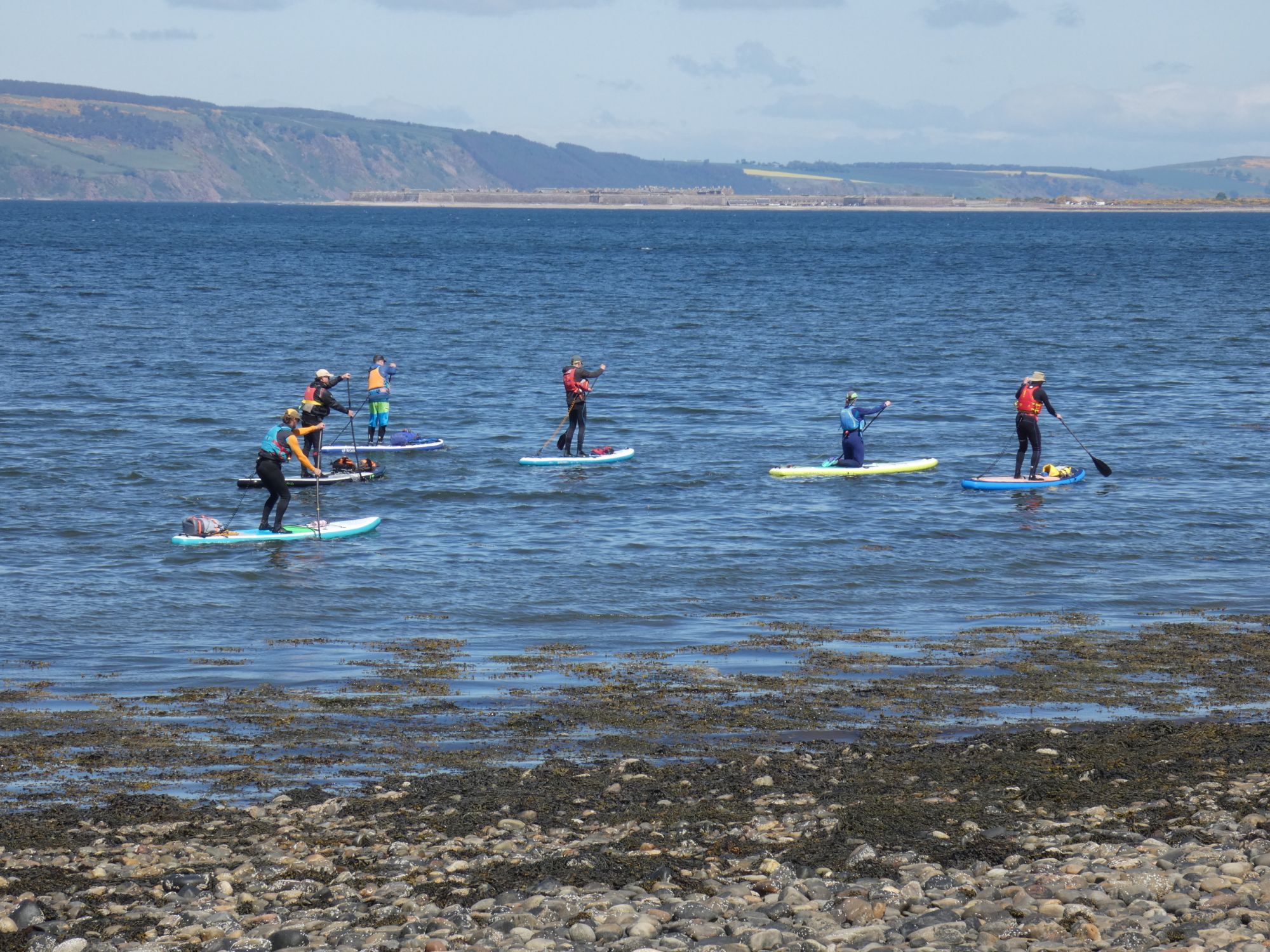
Just before I got to the point I was going to turn north, I spotted a group of paddle boards pulled up on the shore. This seemed like as good a time and place as any to have lunch, so I decided to stop for a chat. They were a group of eight from the Moray SUP Club out on a coaching qualification training day. It’s great to see that paddle boarding has now been taken into the fold of other paddling sports where competency and training are considered important.
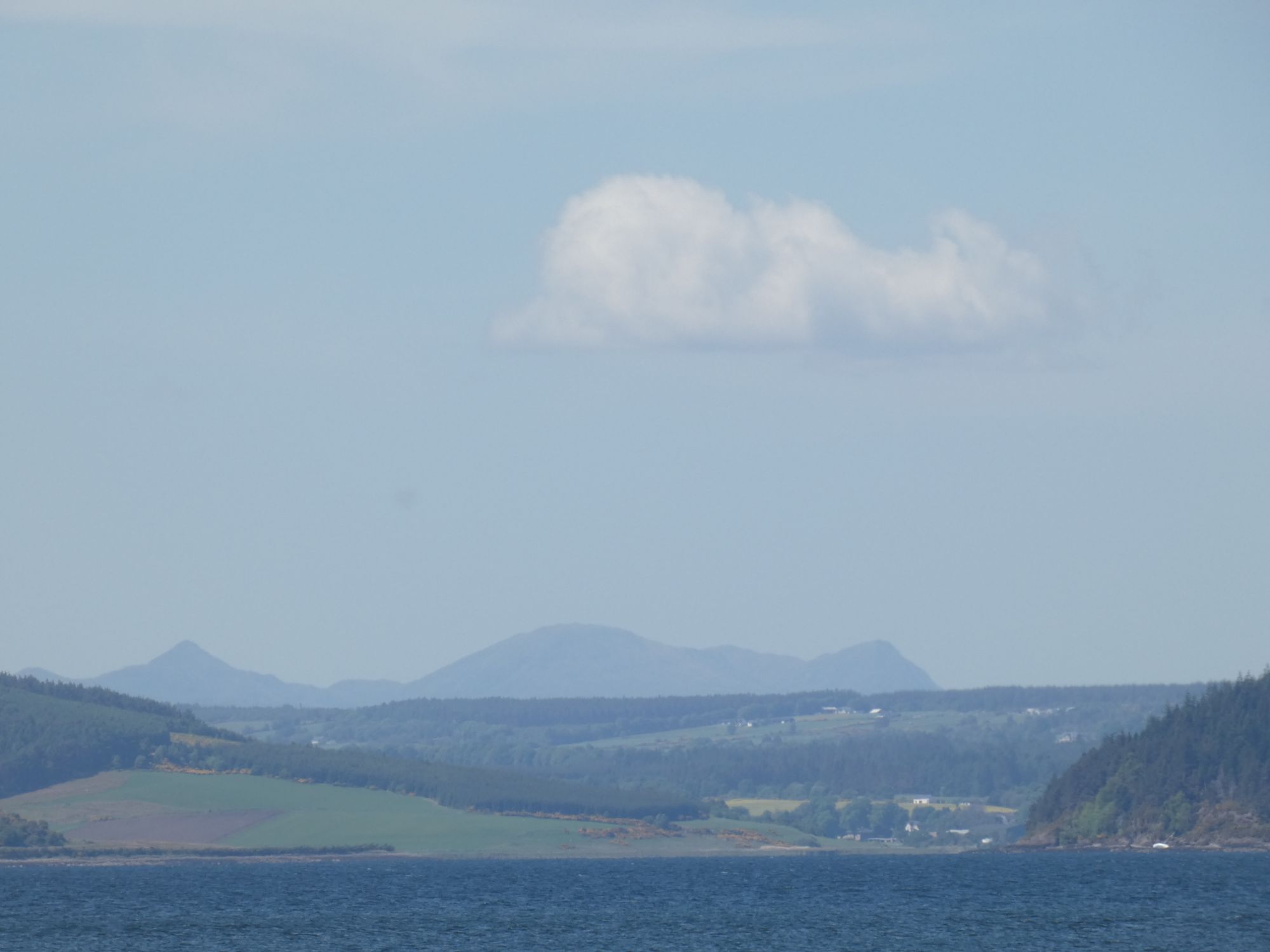
Paddle boarders back on the water after lunch and a warm-upBen Wyvis
After the paddle boarders departed, I finished my lunch and headed north across to Fort George. I had an F4 cross wind and a one foot high, short period wind blown chop on my right side, however, with the new low profile trolley bag arrangement on my back deck the kayak responded well to the skeg control. I had no problem maintaining direction and got into quite a nice rhythm – left blade on the crest and then right blade into the face of the next wave as the kayak rolled down the previous one.
There was shelter next to the shore at Fort George and an eddy current moved we swiftly north west towards the narrows. I could see a few people over on Chanonry Point and a RIB in the middle of the channel, but there was no sign of the dolphins that often fish and play here.
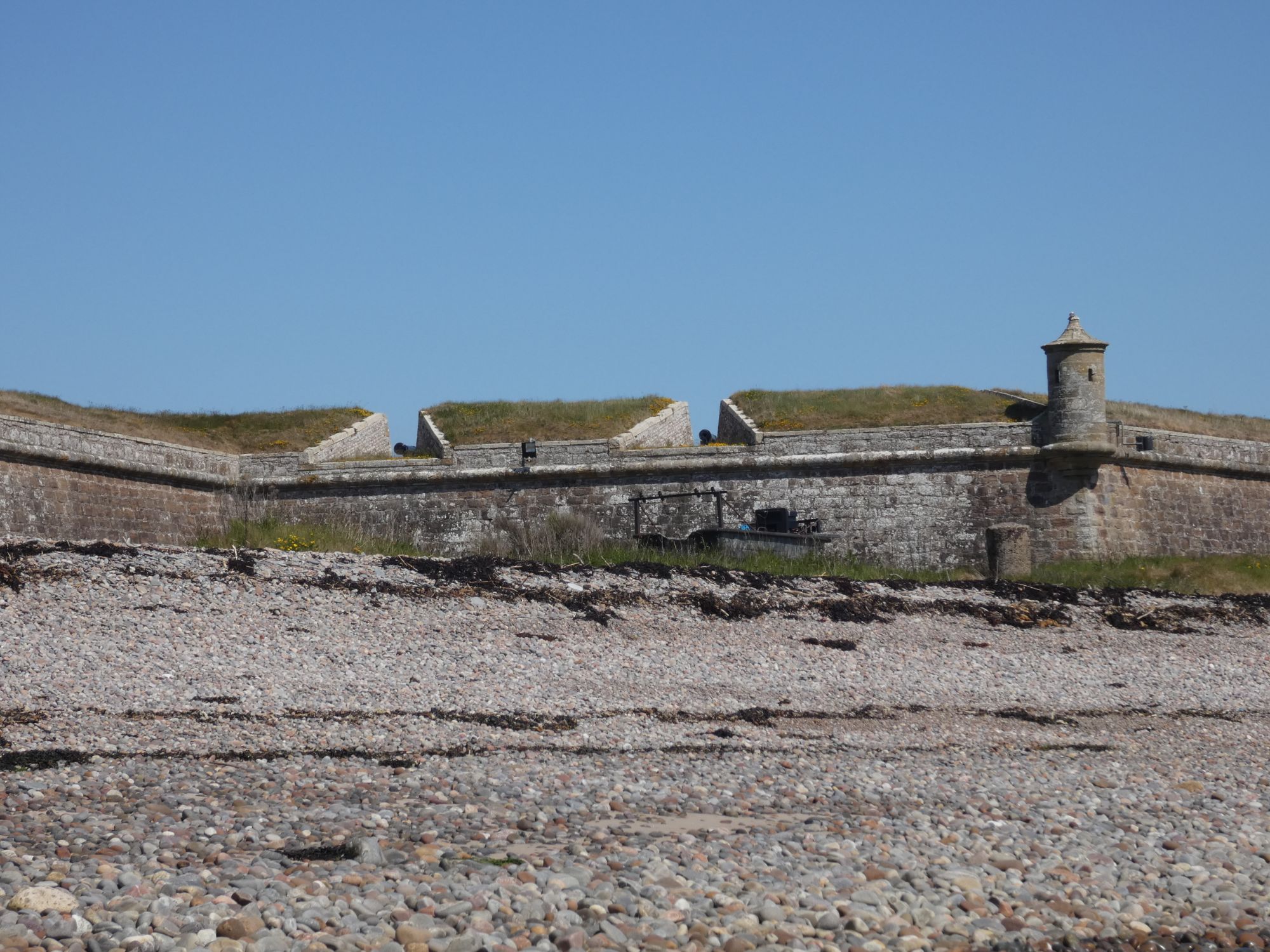
Fort George
The photo I took at Fort George was my last of the day. The conditions from here to Nairn were not conducive to removing the camera from it’s protective waterproof bag. The wind and current were not in my favour and it was a hard slog along the coast up to Whiteness Head and I could see a lot of breaking water quite far out from the shore – shallow sandbars
Approaching Whiteness Head, I could see quite a few large and medium sized vessels busy doing… what? I wasn’t quite sure. The largest vessel (which turned out to be the D’Artagnan) looked like a dredger and was operating very close to the shoreline next to a high sand hill. I stopped on a sandbar just to the west of where they were operating to see if I could work out my best route past them. Unfortunately, they had large floating booms going from the shore to several hundred meters out. Two, or possibly three, vessels would take it in turn to hook up to the floating boom, which I assume is a pipe which sand can flow through, load up and then depart eastwards for an unknown destination. I would have to go further out to sea to avoid the booms, and time my departure so that I didn’t get in the way of any vessels.
I thought I had managed this quite well, but as I got beyond the end of the booms, I saw a RIB approaching me from my right. I must be in trouble! There were three men aboard, and one of them shouted across to enquire if I required any help. I realised then that they were concerned for my safety being out in these turbulent sea conditions. They looked at me with bemused concern when I said I was fine and heading east to Nairn.
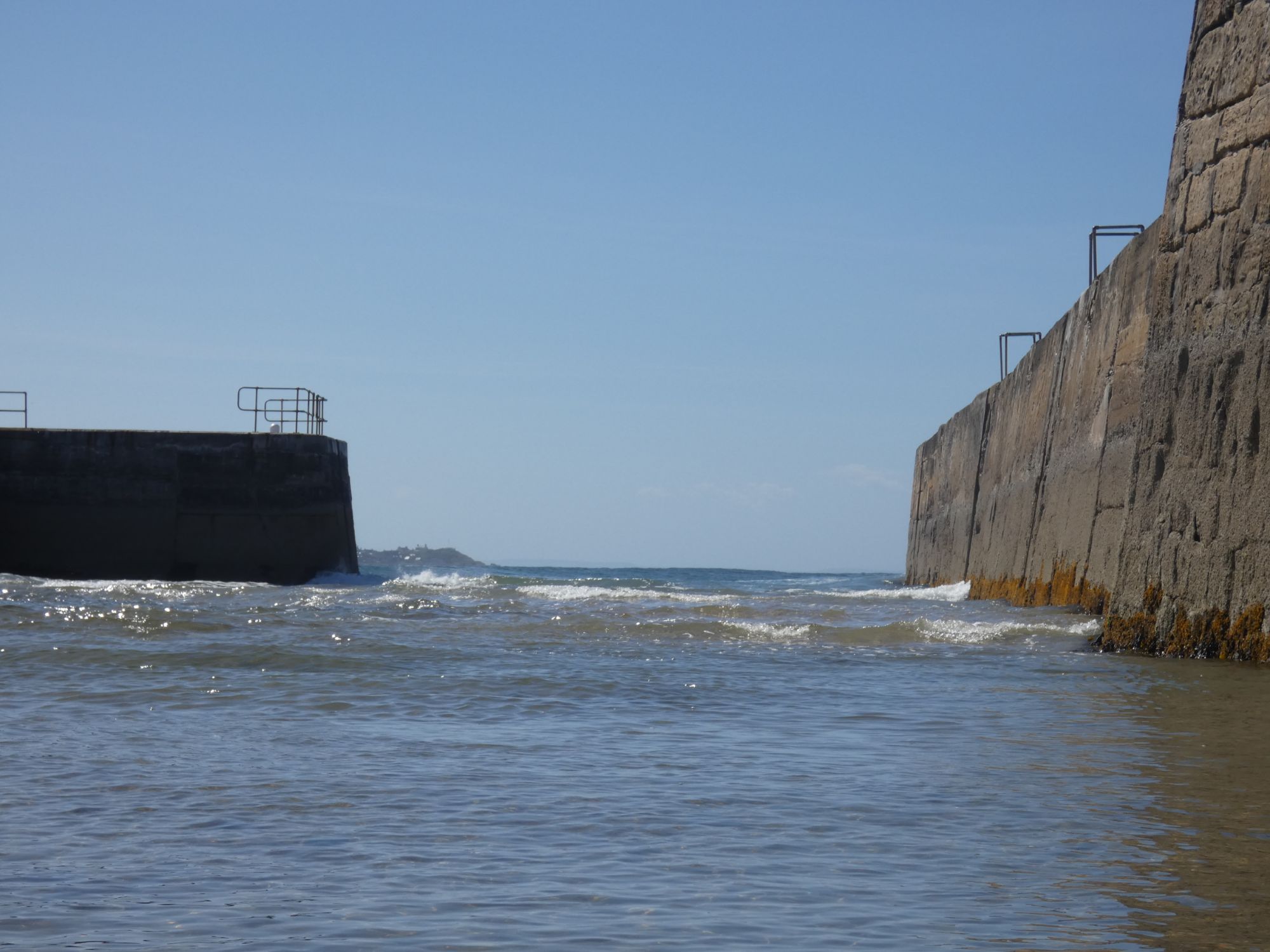
It took me a long 2 hours to complete the remaining 8 kilometres. All that time I was judging the state of the waves coming in, staying away from the breaking zone, and wondering what sort of landing I was in for when I reached Nairn. At Nairn, the harbour is reached via the mouth of the river Nairn. Two sea walls extend out beyond the beaches either side of the river. Making for the harbour seemed preferable to a beach landing. It still had to be taken quite gingerly, as the waves would often break before they reached the end of the sea walls. I pretty much kept my bow facing out to sea and reversed between the sea walls and onto the river.
Once on the river, there was a lot of relief and just a short paddle to the slip in the harbour. There, Mike, a Nairn resident and good friend of my brother-in-law, greeted me and helped me unload the boat and get it up the slip. Most welcome assistance after a taxing day at the end of 14 consecutive days of paddling. I needed a break! Thankfully, Wendy was also there to whisk me away to the paradise of a warm self-catering bungalow in the nearby countryside.








 One Man And His Boat