Author: Ritchie

  • Day 14 – A tough day on the ocean

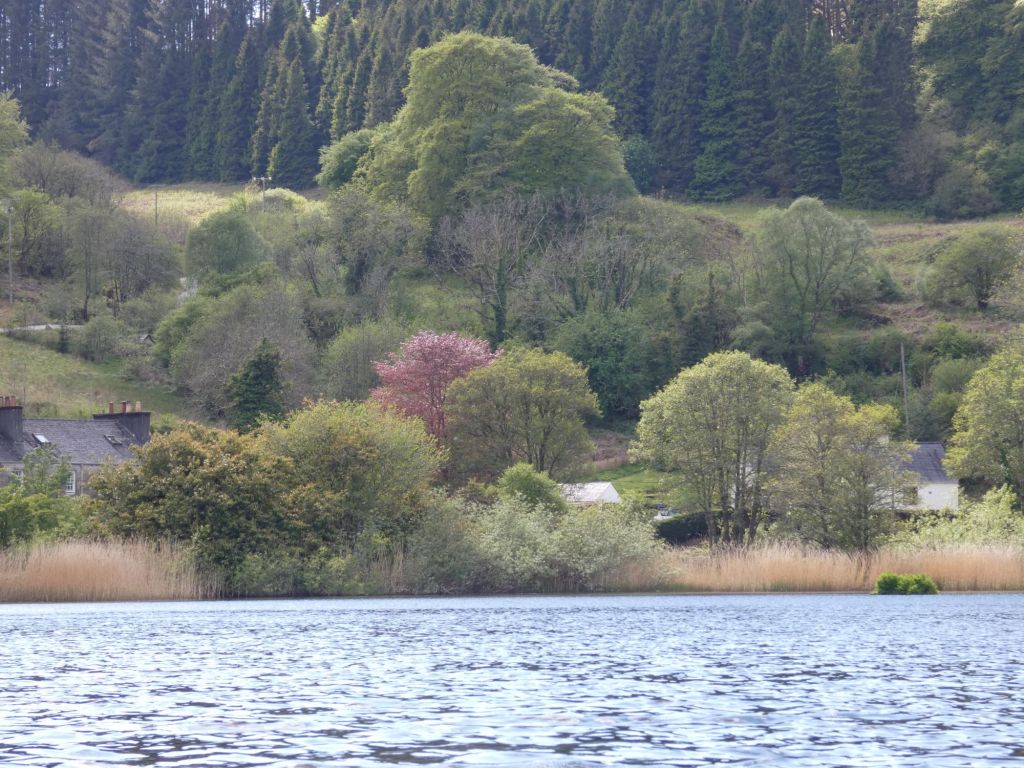
    • Inverness to Nairn
    • 34 kms

    Yesterday was my last day on the canals and the approximate half way point of my journey. About as from Edinburgh as I was going to get, there was a pleasant symmetry to the fact that I started my journey by crossing Thomas Telford’s Dean Bridge and reached the half way point by traversing Thomas Telford’s Caledonian Canal. The canal was completed in 1822 and the Dean Bridge about 10 years after, a few years before he died at the age of 77.

    The day started with blue skies and very little wind, however, the forecast was for the wind to increase, and again it would be from the north east.
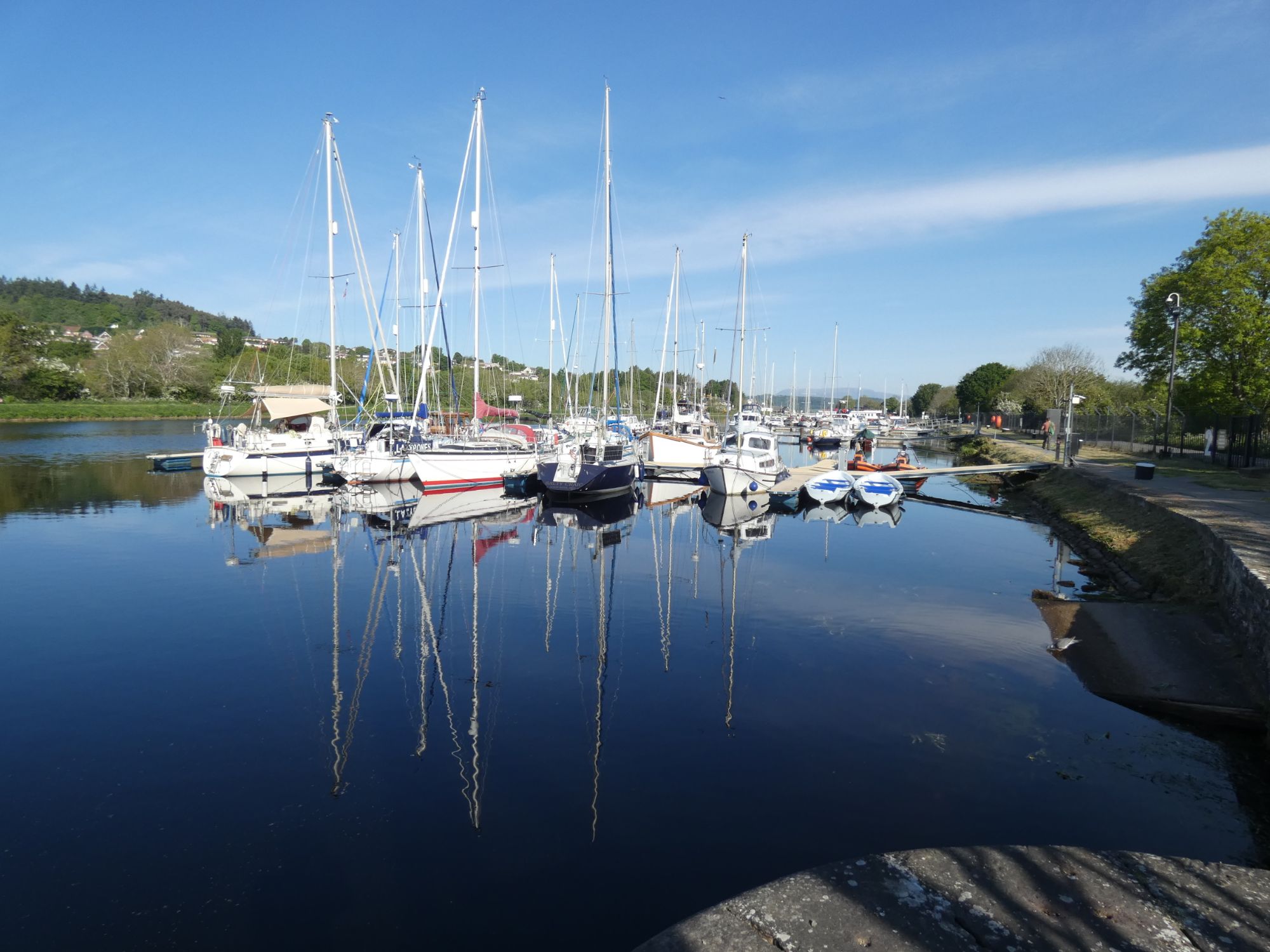
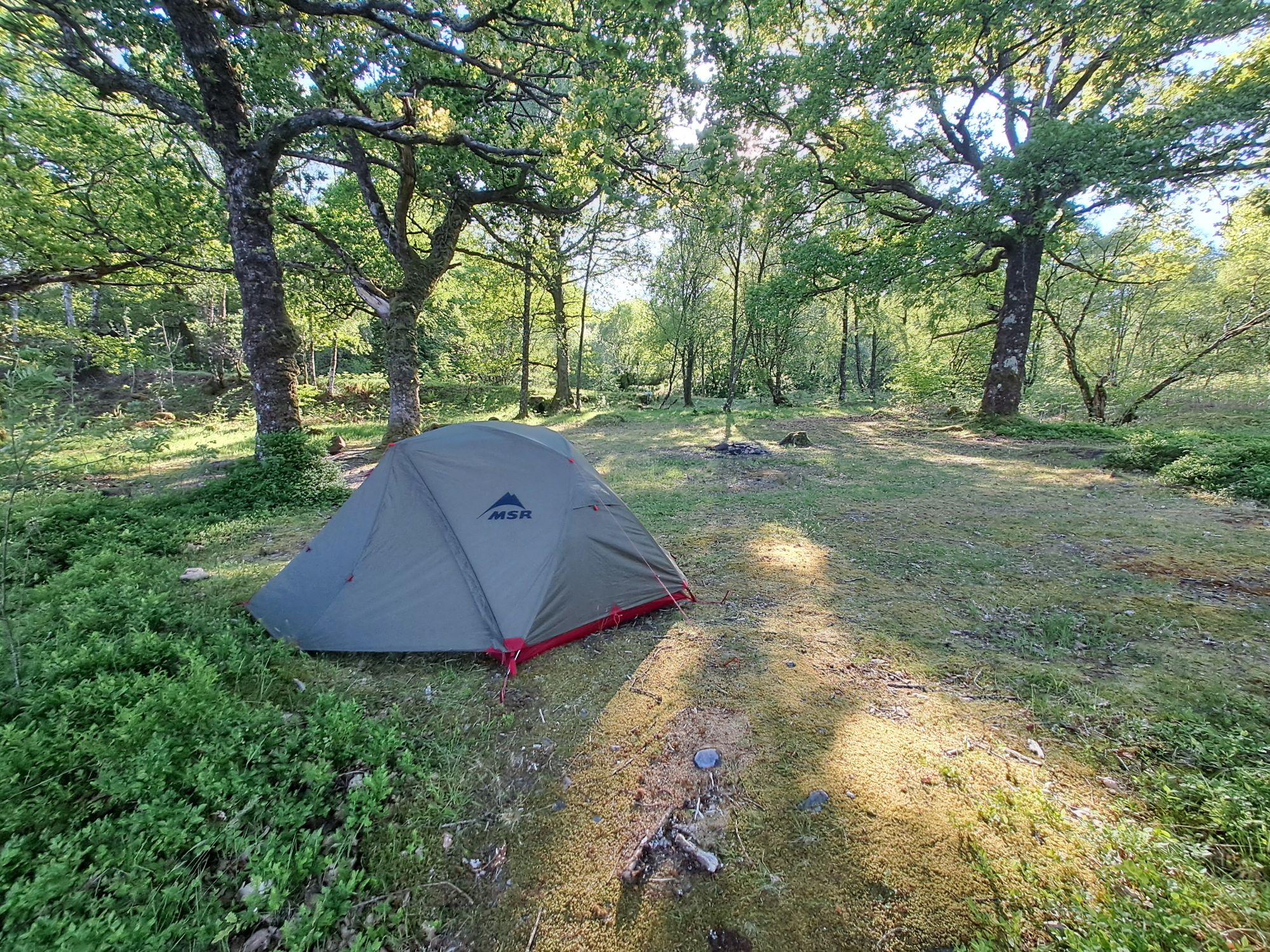
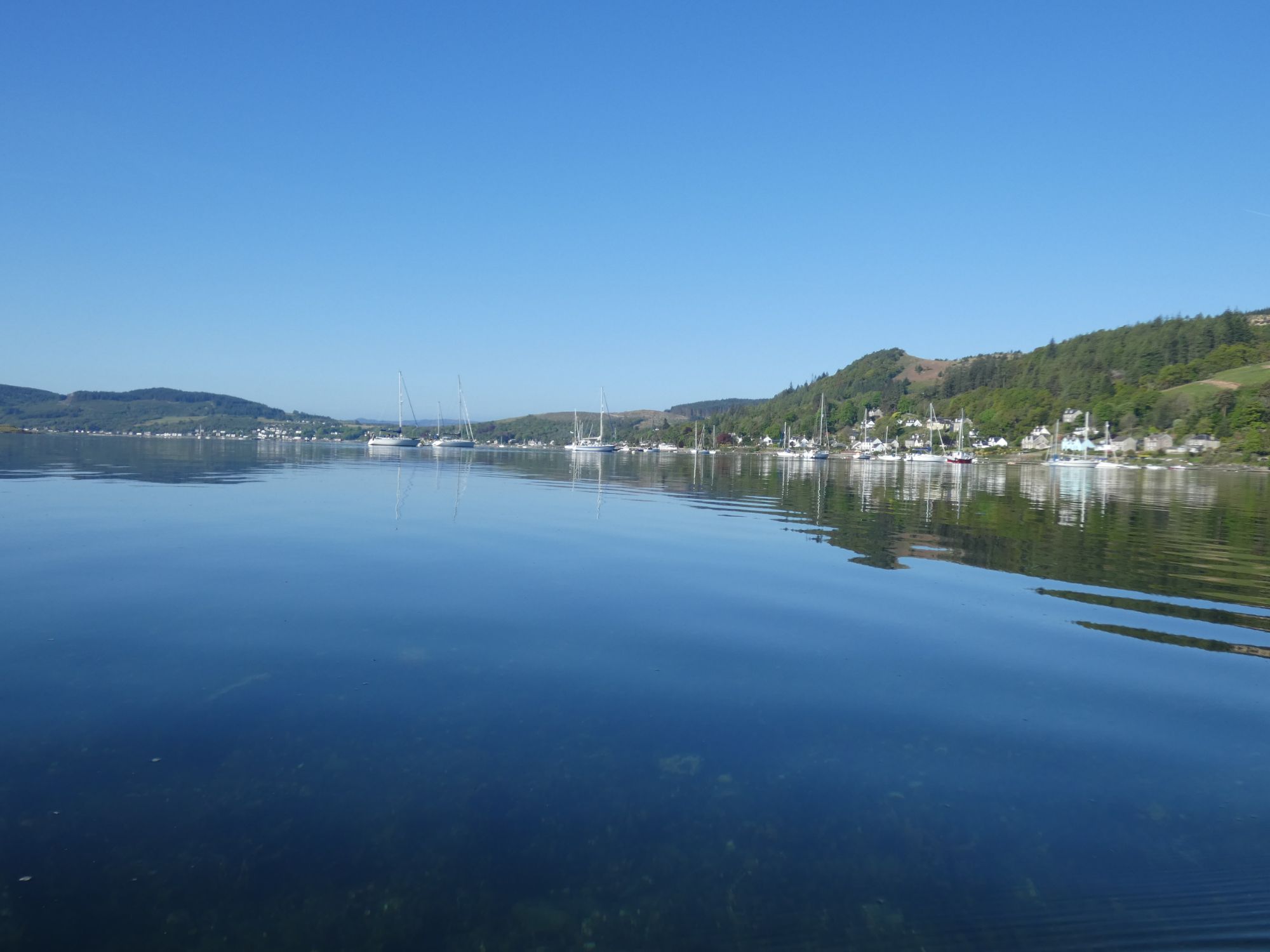
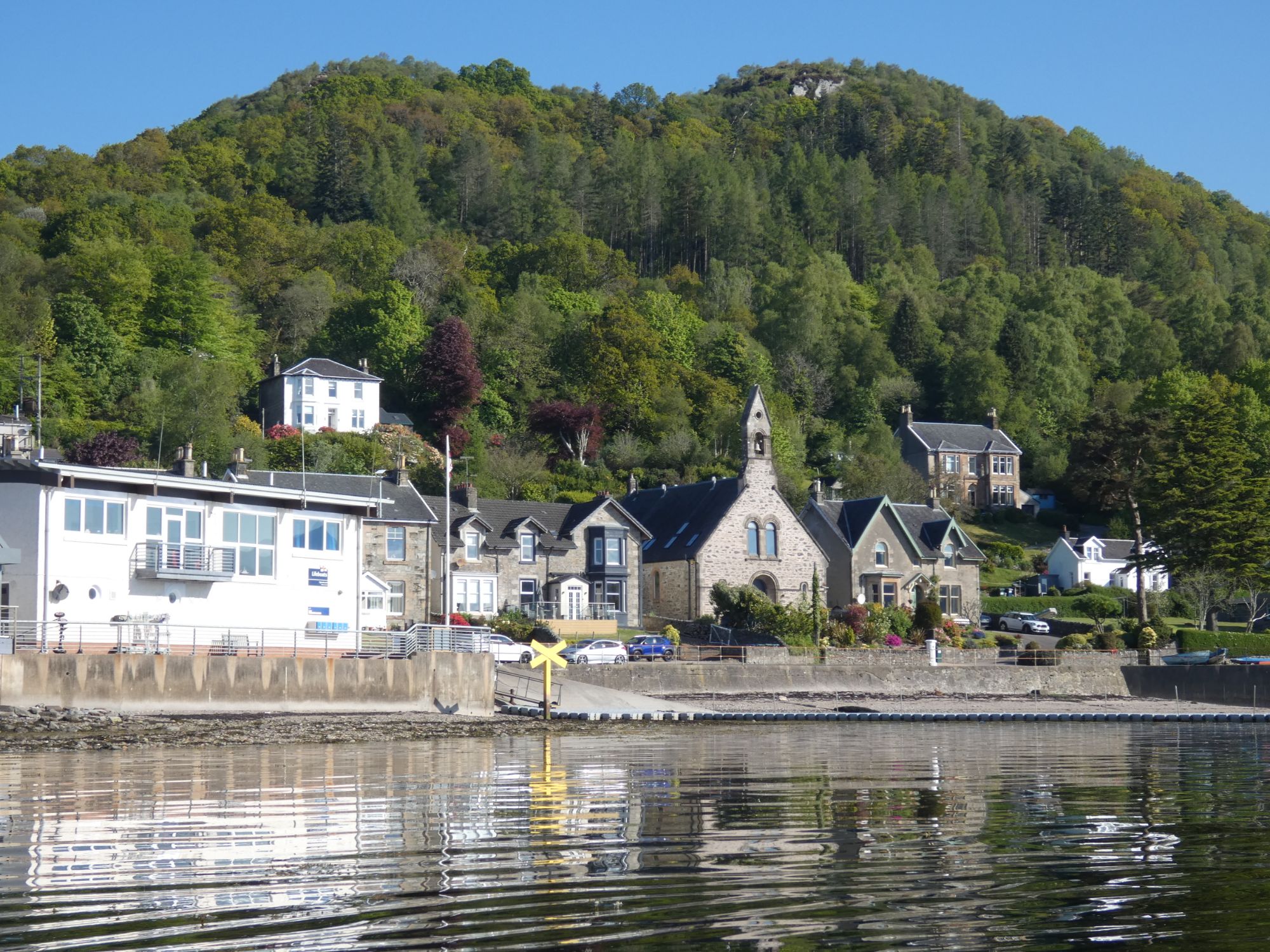
    The view from my campsite on a fine morning

    I considered the main challenges today as being the currents through the Kessock Bridge and through the narrows between Fort George and Chanonry Point. In an attempt to avoid a strong current against me it was best to get on the water early or wait another 6 hours and get tidal assistance. Waiting 6 hours wasn’t an option, as I had a 30+ kilometre paddle to do to reach Nairn.

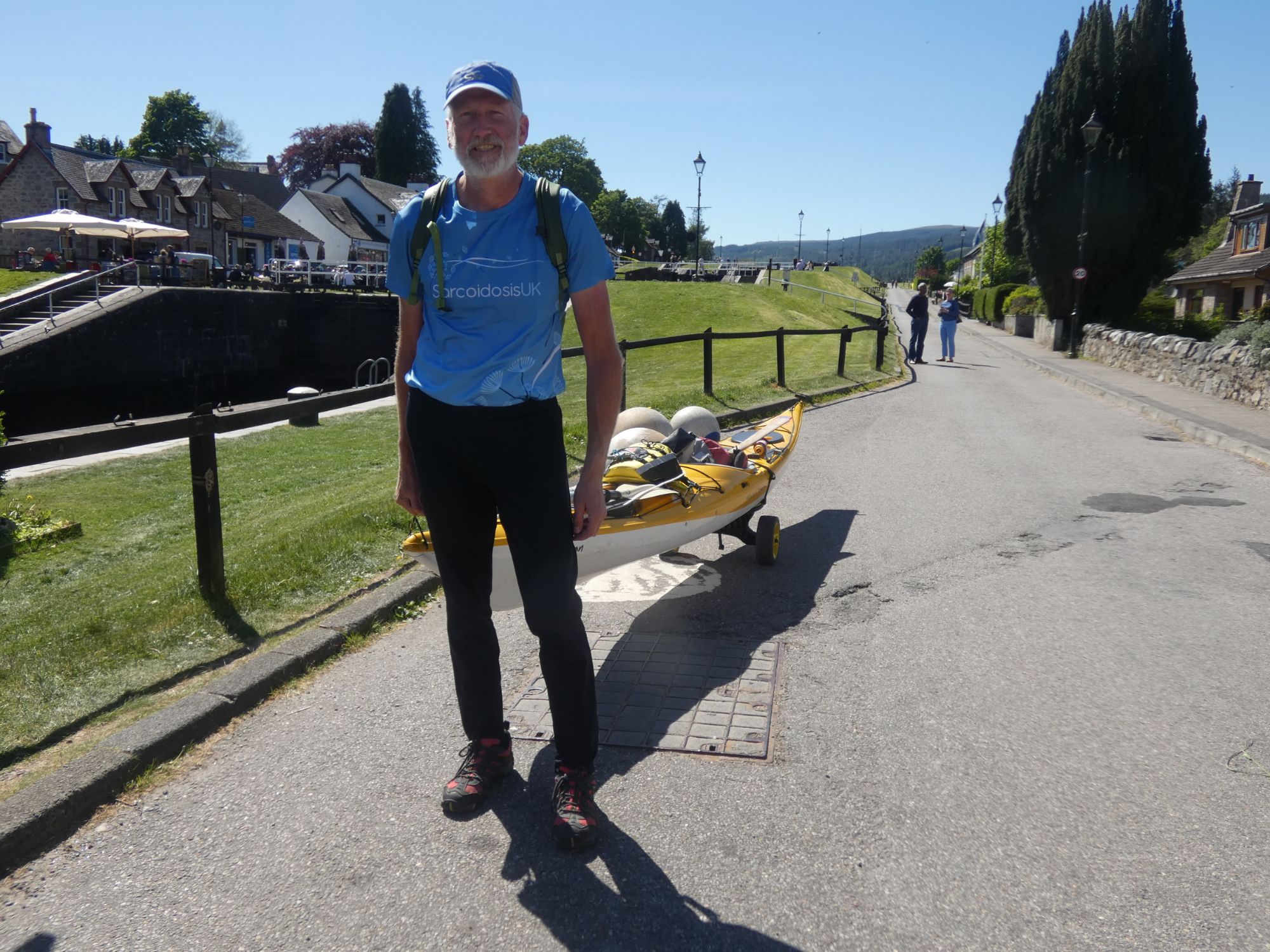
    I trolleyed the kayak down the east side of the canal and down to the Merkinch Nature Reserve. I then did a combination of sit-on-top paddling and wading in ankle deep water, dragging the boat behind, to get to the edge of the Beauly Firth where the day’s paddling could start in earnest.
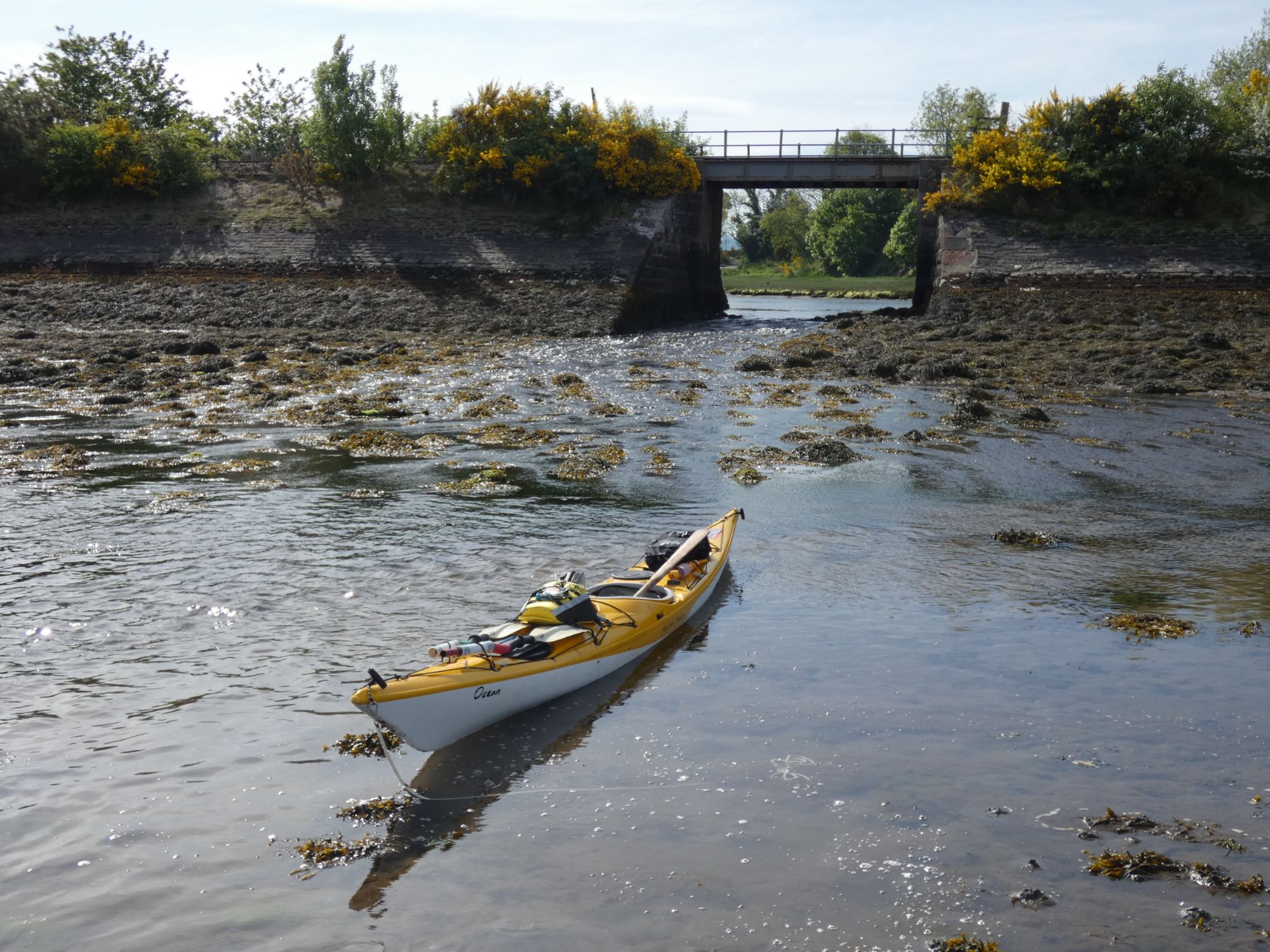
    Getting on the water at low tide

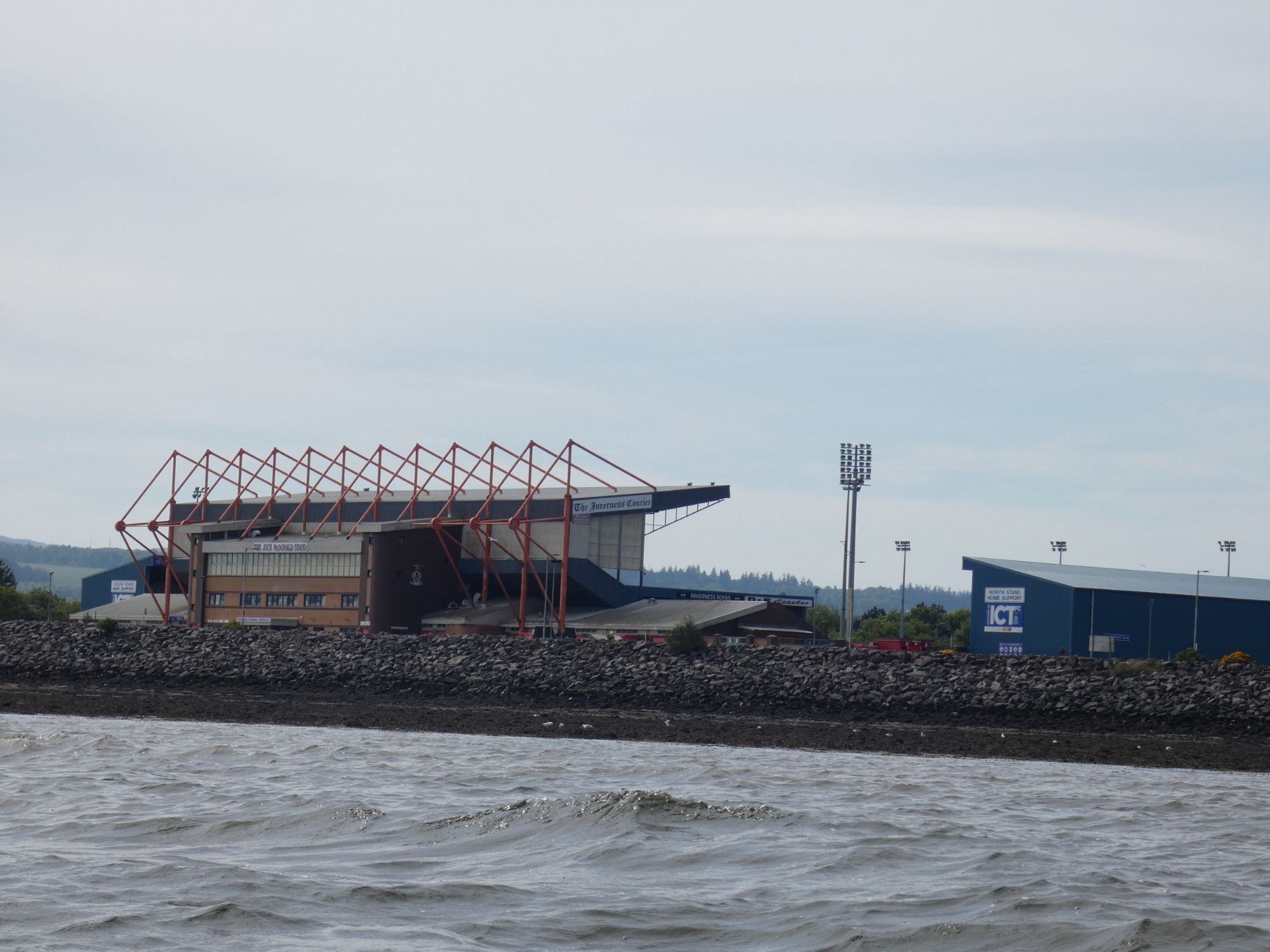
    It was then due east out of the Beauly Firth into the Inner Moray Firth, under the Kessock Bridge (road bridge for the A9), and past the Caledonian Stadium (home to Inverness Caledonian Thistle FC).
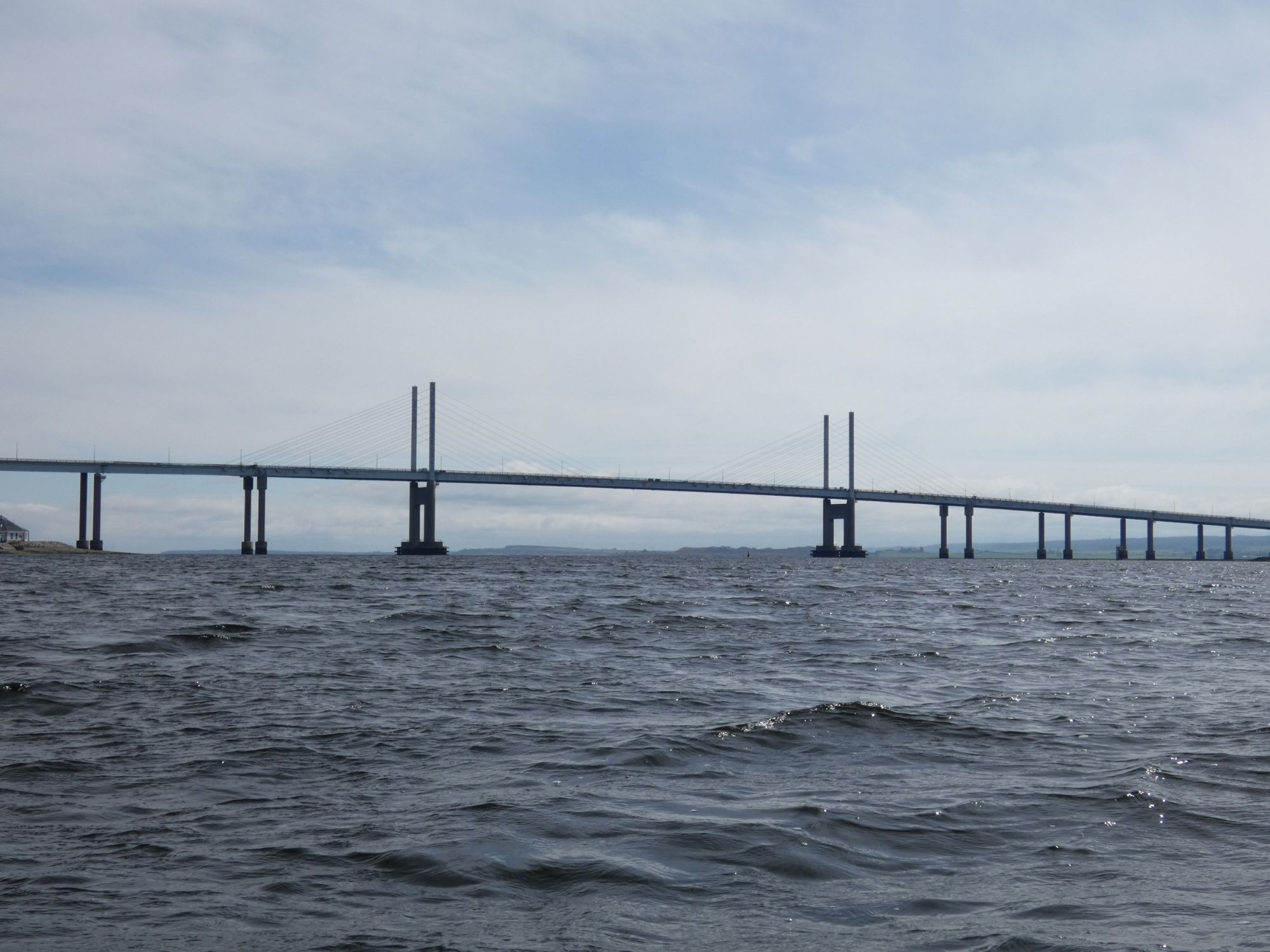
    No currents under the Kessock Bridge
    The Caledonian Stadium

    The wind was picking up by this time so it made sense to hug the shoreline as much as possible to seek a little shelter. It’s also more interesting to be looking at the shore than straight out to sea all day.
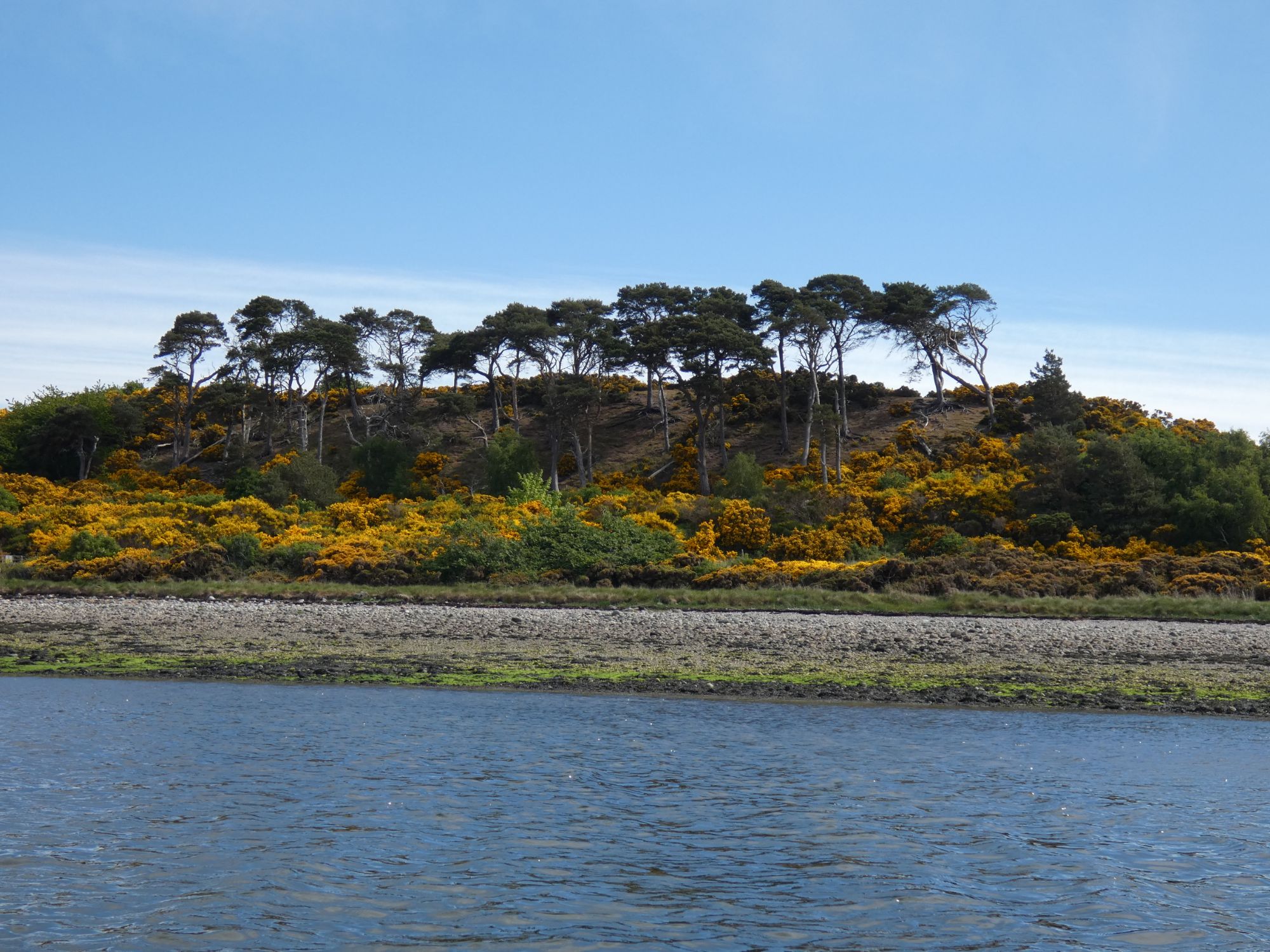
    Approaching Alturlie Point

    Once round Arturlie Point, I thought it best to hug the coastline until I was due south of Fort George. This seemed the best compromise between shortest distance route and the shortest amount of time spent in the wind blown chop coming across the bay.
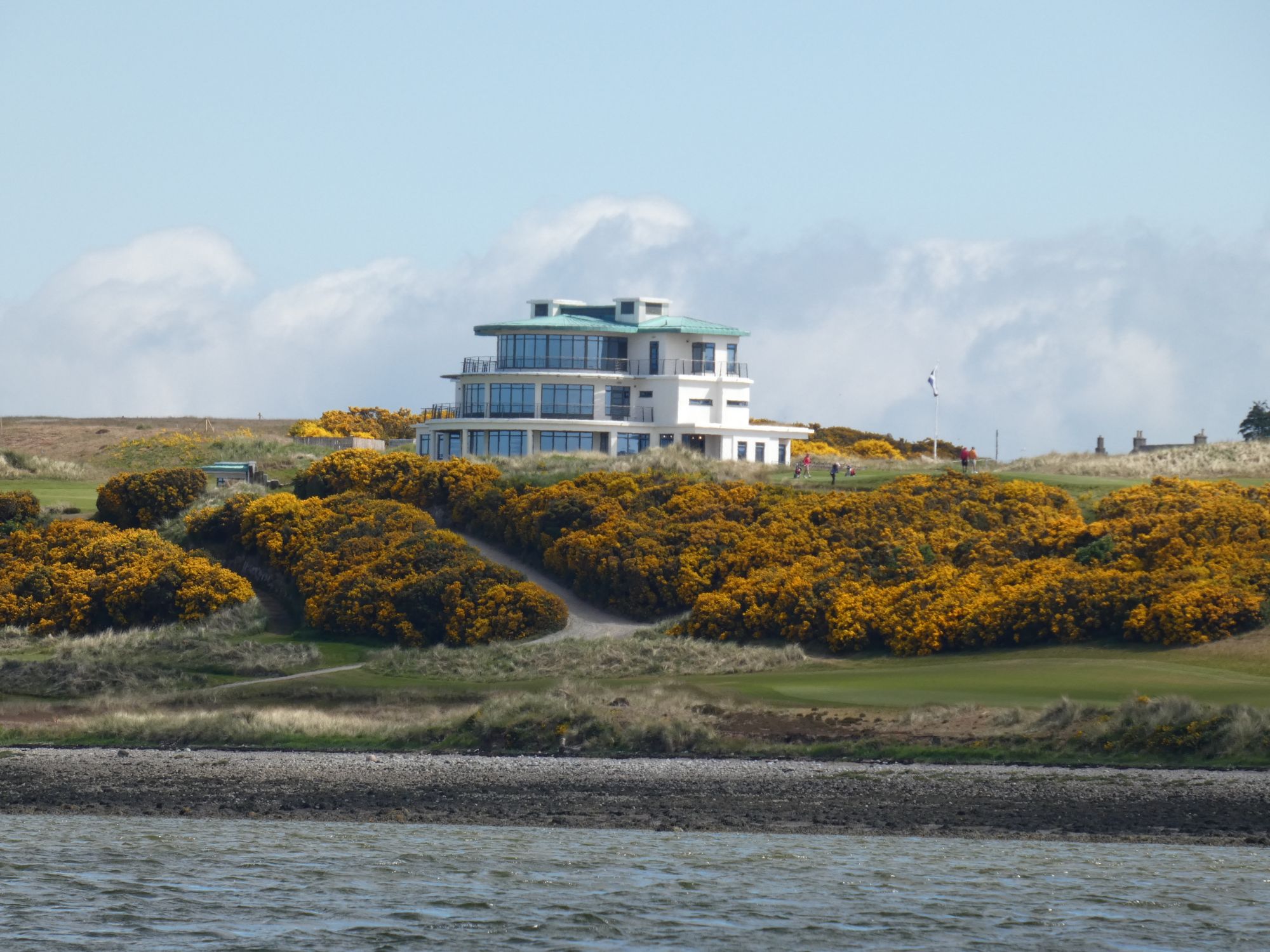
    The impressive Castle Stuart Golf Clubhouse (with plenty of golf ball eating gorse)

    Just before I got to the point I was going to turn north, I spotted a group of paddle boards pulled up on the shore. This seemed like as good a time and place as any to have lunch, so I decided to stop for a chat. They were a group of eight from the Moray SUP Club out on a coaching qualification training day. It’s great to see that paddle boarding has now been taken into the fold of other paddling sports where competency and training are considered important.
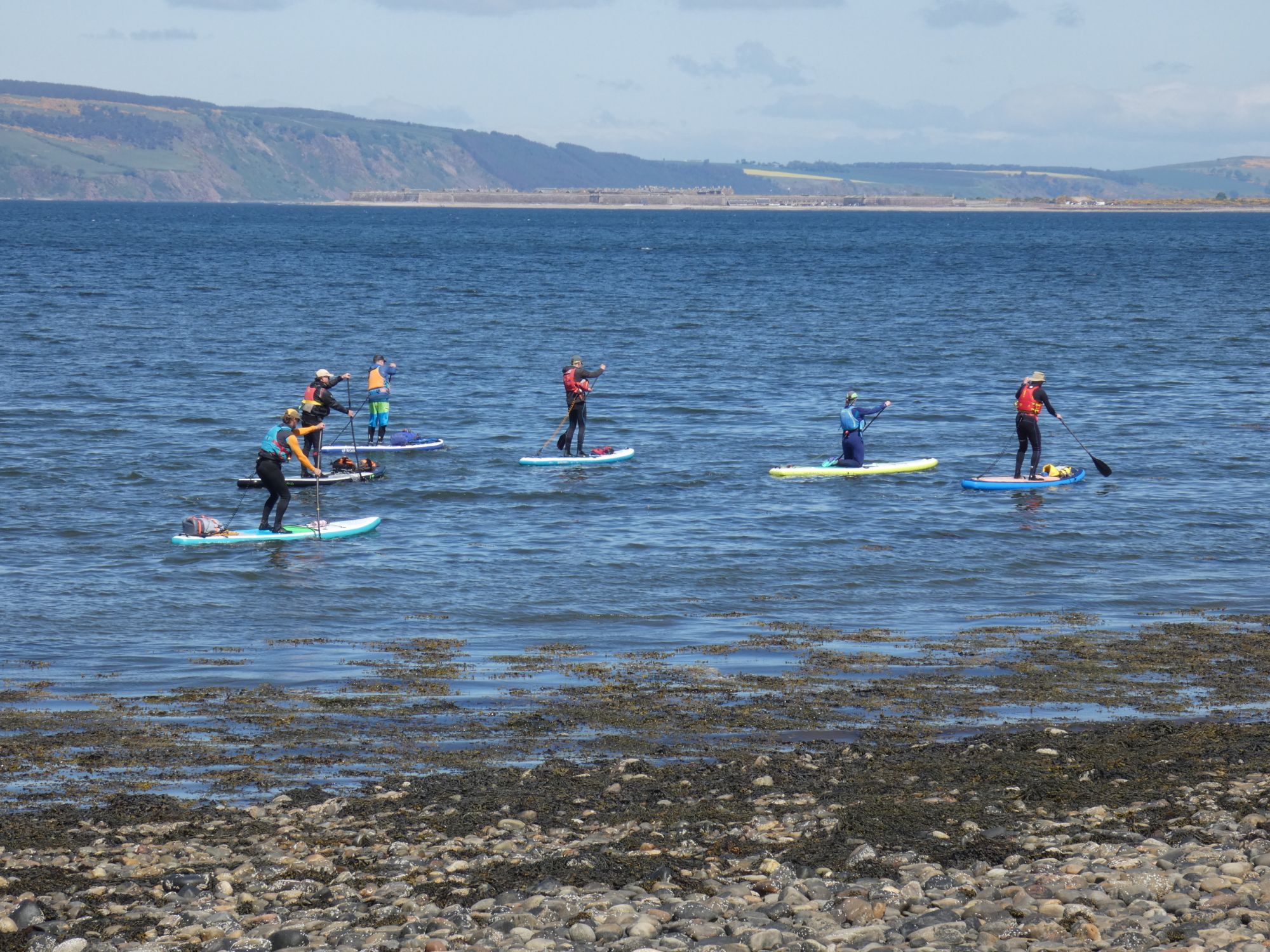
    Paddle boarders back on the water after lunch and a warm-up
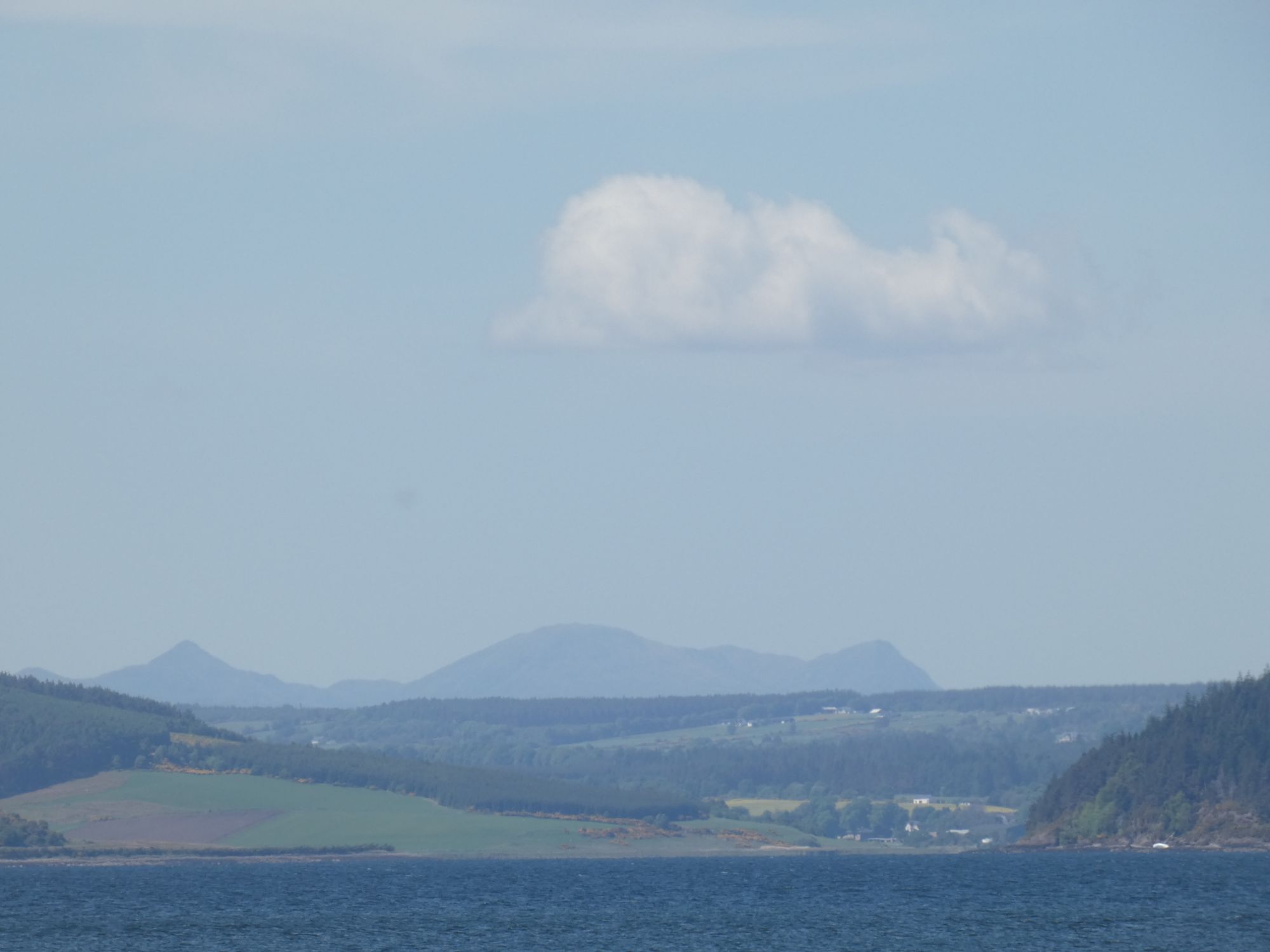
    Ben Wyvis

    After the paddle boarders departed, I finished my lunch and headed north across to Fort George. I had an F4 cross wind and a one foot high, short period wind blown chop on my right side, however, with the new low profile trolley bag arrangement on my back deck the kayak responded well to the skeg control. I had no problem maintaining direction and got into quite a nice rhythm – left blade on the crest and then right blade into the face of the next wave as the kayak rolled down the previous one.

    There was shelter next to the shore at Fort George and an eddy current moved we swiftly north west towards the narrows. I could see a few people over on Chanonry Point and a RIB in the middle of the channel, but there was no sign of the dolphins that often fish and play here.
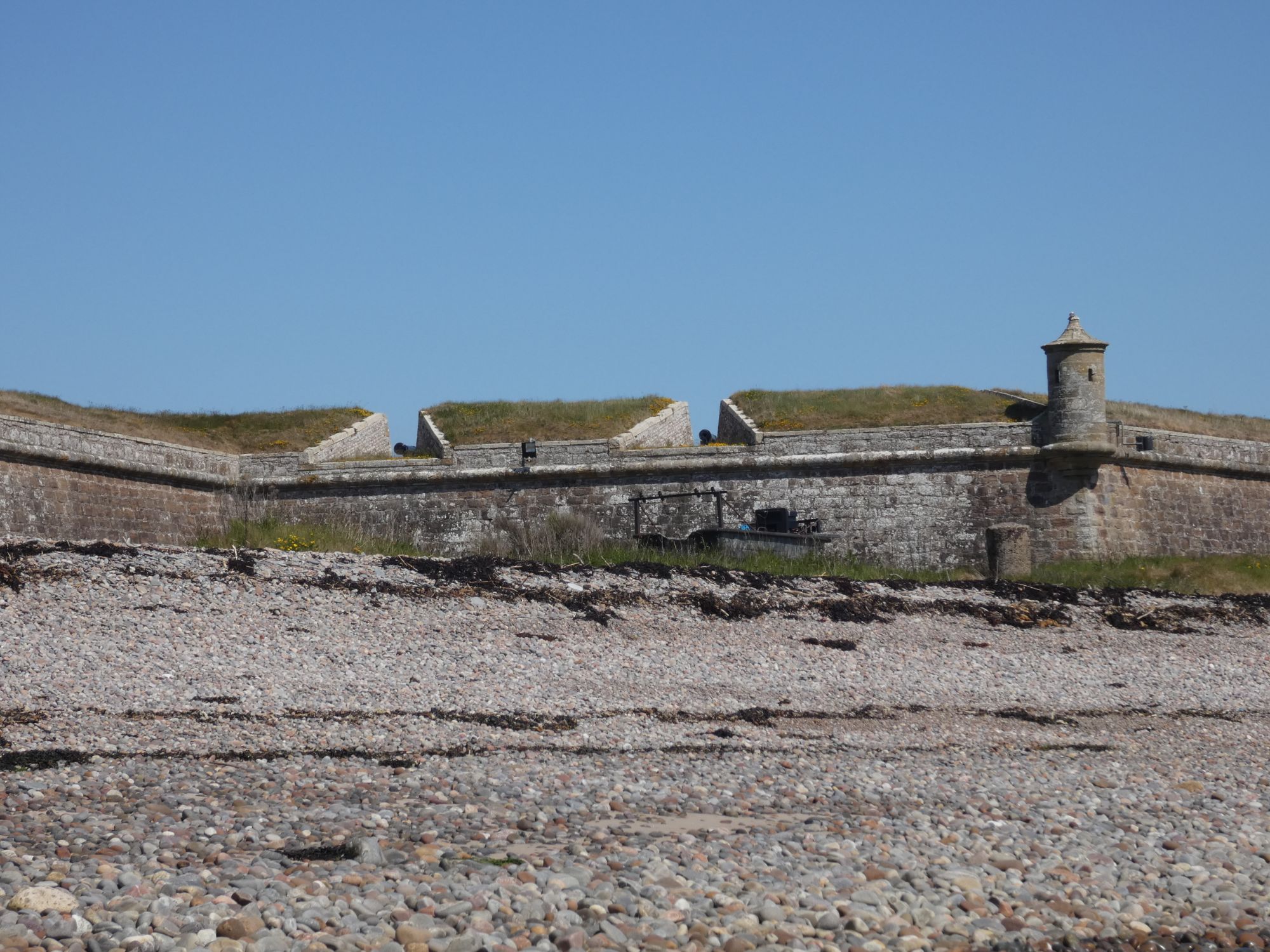
    Fort George

    The photo I took at Fort George was my last of the day. The conditions from here to Nairn were not conducive to removing the camera from it’s protective waterproof bag. The wind and current were not in my favour and it was a hard slog along the coast up to Whiteness Head and I could see a lot of breaking water quite far out from the shore – shallow sandbars

    Approaching Whiteness Head, I could see quite a few large and medium sized vessels busy doing… what? I wasn’t quite sure. The largest vessel (which turned out to be the D’Artagnan) looked like a dredger and was operating very close to the shoreline next to a high sand hill. I stopped on a sandbar just to the west of where they were operating to see if I could work out my best route past them. Unfortunately, they had large floating booms going from the shore to several hundred meters out. Two, or possibly three, vessels would take it in turn to hook up to the floating boom, which I assume is a pipe which sand can flow through, load up and then depart eastwards for an unknown destination. I would have to go further out to sea to avoid the booms, and time my departure so that I didn’t get in the way of any vessels.

    I thought I had managed this quite well, but as I got beyond the end of the booms, I saw a RIB approaching me from my right. I must be in trouble! There were three men aboard, and one of them shouted across to enquire if I required any help. I realised then that they were concerned for my safety being out in these turbulent sea conditions. They looked at me with bemused concern when I said I was fine and heading east to Nairn.

    It took me a long 2 hours to complete the remaining 8 kilometres. All that time I was judging the state of the waves coming in, staying away from the breaking zone, and wondering what sort of landing I was in for when I reached Nairn. At Nairn, the harbour is reached via the mouth of the river Nairn. Two sea walls extend out beyond the beaches either side of the river. Making for the harbour seemed preferable to a beach landing. It still had to be taken quite gingerly, as the waves would often break before they reached the end of the sea walls. I pretty much kept my bow facing out to sea and reversed between the sea walls and onto the river.

    Once on the river, there was a lot of relief and just a short paddle to the slip in the harbour. There, Mike, a Nairn resident and good friend of my brother-in-law, greeted me and helped me unload the boat and get it up the slip. Most welcome assistance after a taxing day at the end of 14 consecutive days of paddling. I needed a break! Thankfully, Wendy was also there to whisk me away to the paradise of a warm self-catering bungalow in the nearby countryside.
  • Day 13 – Escaping the monster

    • Foyers to Inverness
    • 34 kms

    My two days of paddling on Loch Ness – a Friday, and the 13th day of my trip. Am I in for a bad time, or is that just pushing superstition too far?

    The Foyers campsite was all I had hoped for – helpful staff, flat grass, a hot shower, and a friendly tent neighbour. Malcolm had been here in the glorious weather for several weeks, having travelled up from Cambridge on the sleeper train to Inverness and then by bus to Foyers.

    I didn’t think I had that far to travel to get to Inverness today, so I opted for a leisurely start in the warm sunshine. This, combined with my extended lunch stop in Dores later in the day, resulted in a later arrival in Inverness than I had hoped.

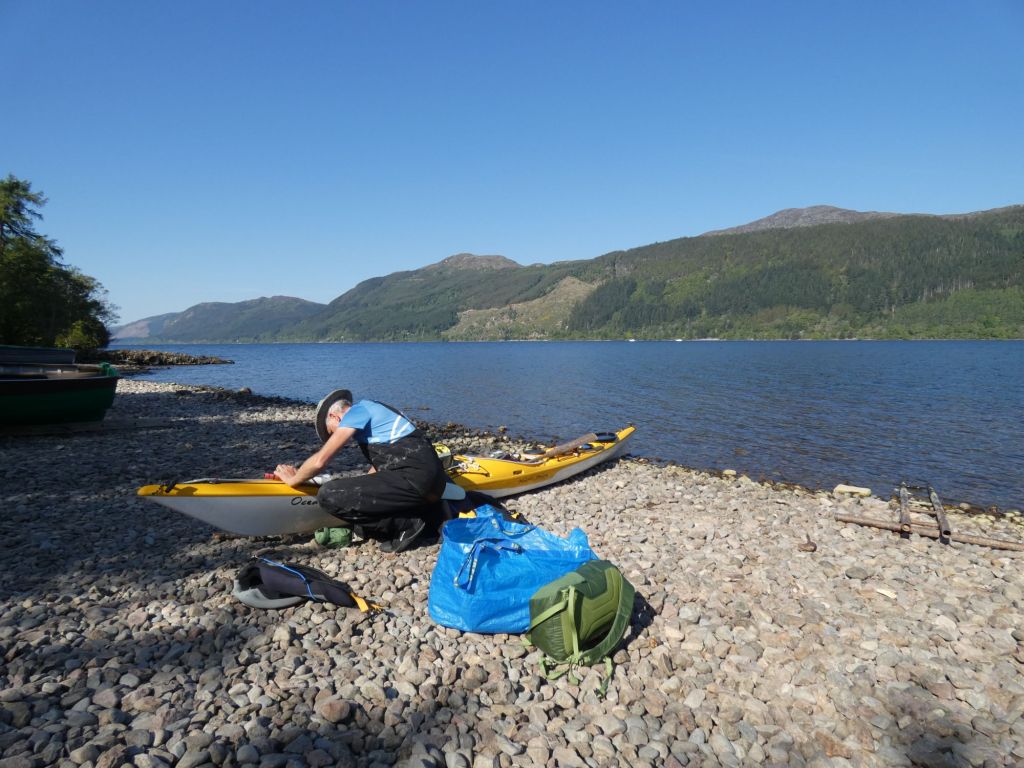
    Getting ready for my 2nd day on Loch Ness

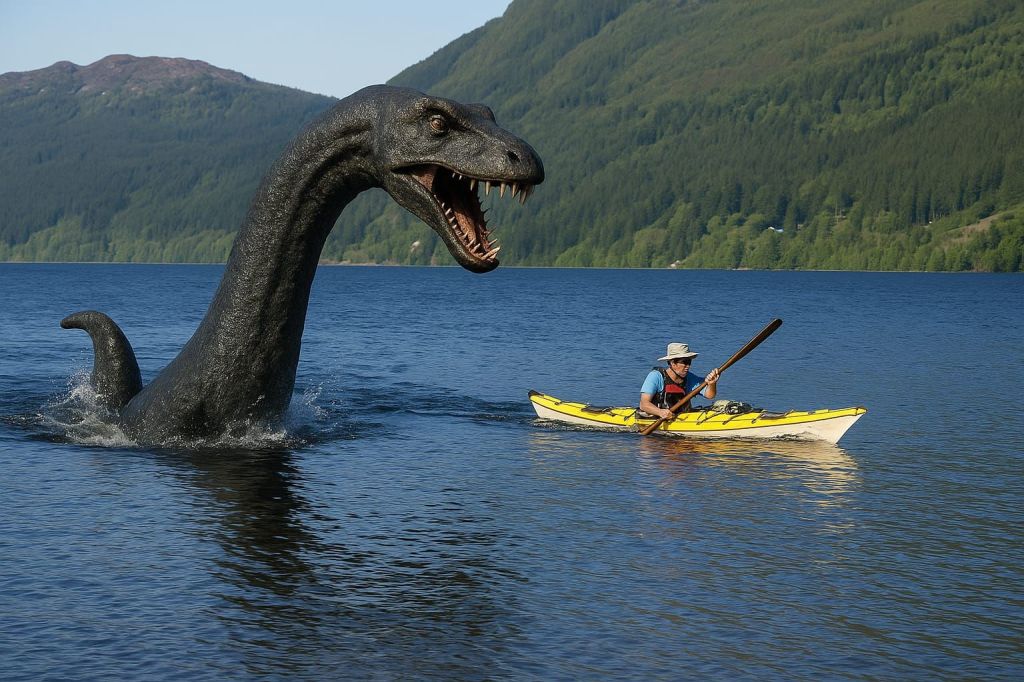
    I set off in high spirits, only to have them severely dented within minutes of leaving the shore… Nessie!

    Paddling as hard as I can

    The whole story of this incident can be read in Uncle Ritch meets Nessie

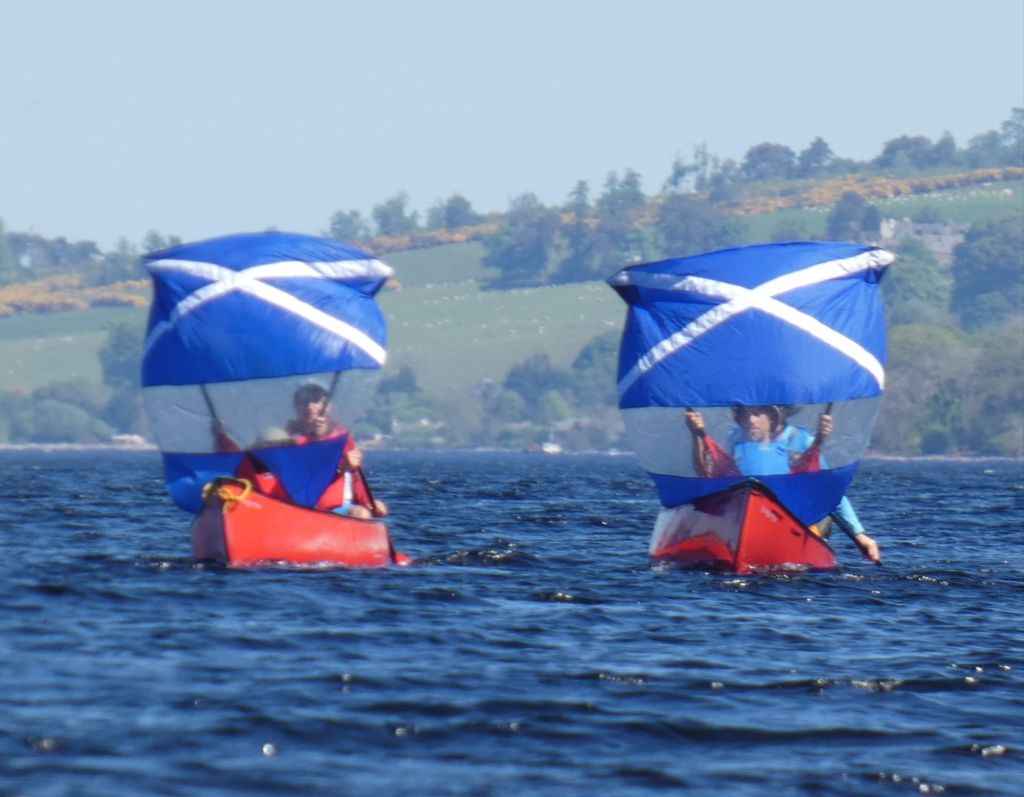
    As I recovered from this incident, I next had to deal with two viking long boats veering down on me. As they got closer, I could see that it was just two fast-moving patriotic Canadian canoes.

    I didn’t have long to chat as they sped past, but it looked like Arthur and his mates were in for a good weekend.

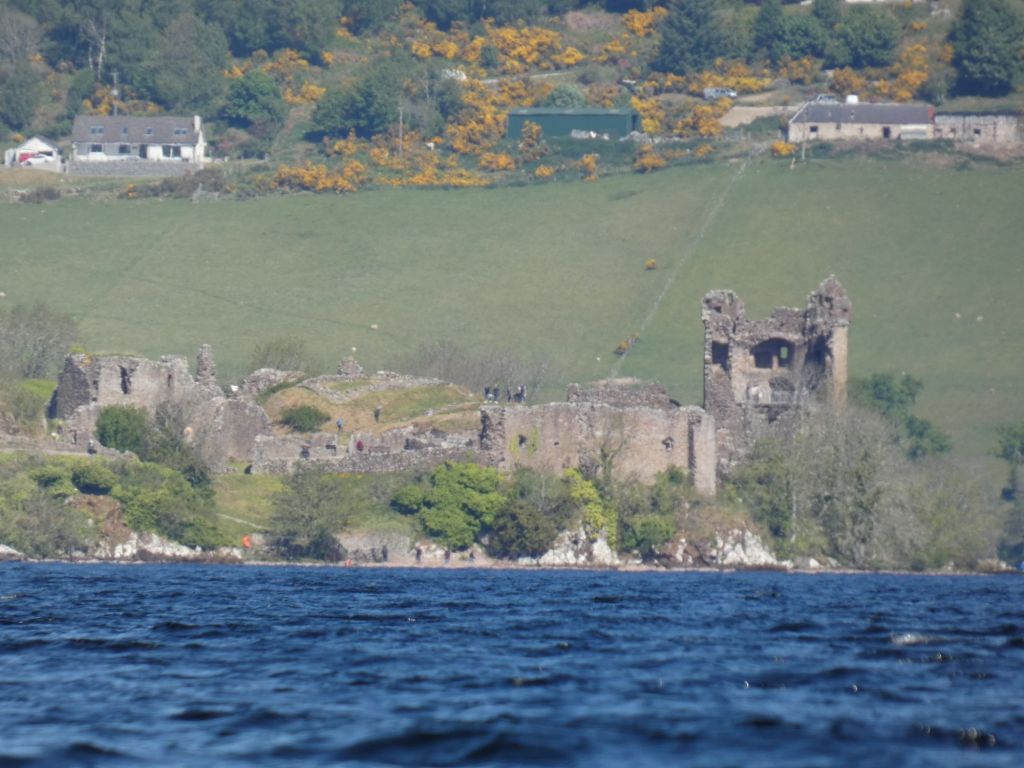
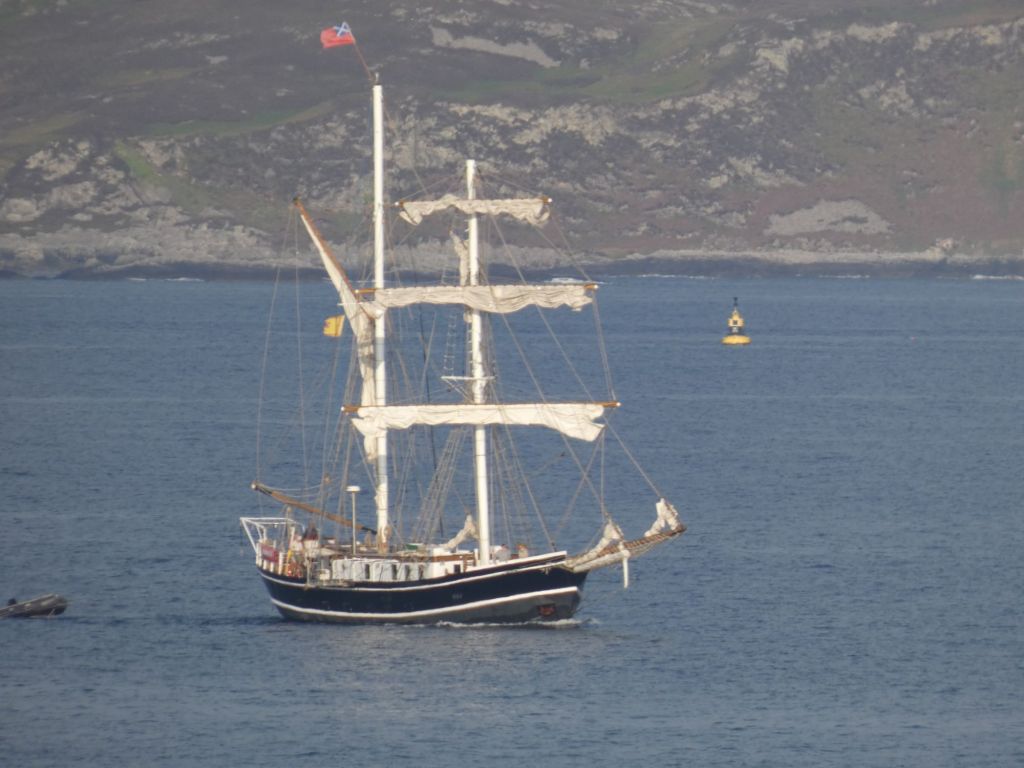
    Yesterday afternoon, the yacht Tirozo had sailed past me again, and I knew they were mooring for the night at Castle Urquhart. As I drew level with the castle on the other side of the loch, I could see them pulling out of the bay with their distinctive black sails. They soon became a small speck in the distance. We had started the canal together, but it seemed likely they would get to the end before me.

    Castle Urquhart on the west side of Loch Ness

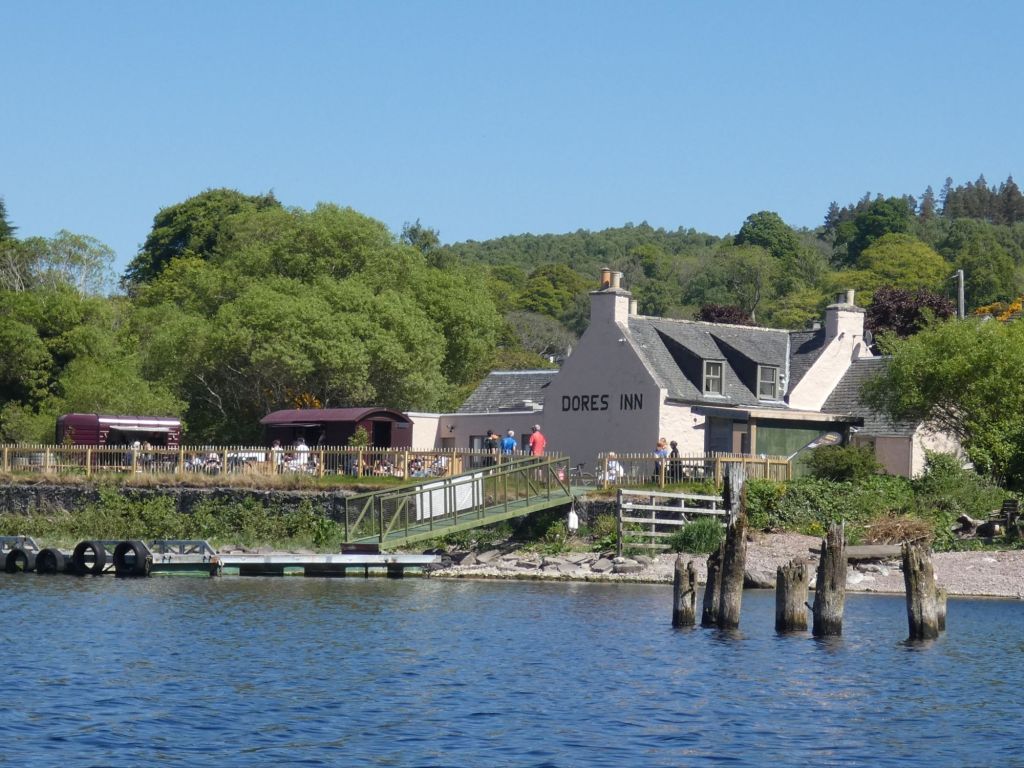
    My first and only stop for the day was at Dores. On my OS map, it is marked as having   a pub, but my map is not even close to being the latest edition. It seemed a good place to stop even if food wasn’t available. I got lucky. The pub is about to undergo renovation, but in the meantime, they have brought in pop-up food vans. This was their first official day of being open. I was treated to some excellent fried cod and salad in a wrap with fries on the side.
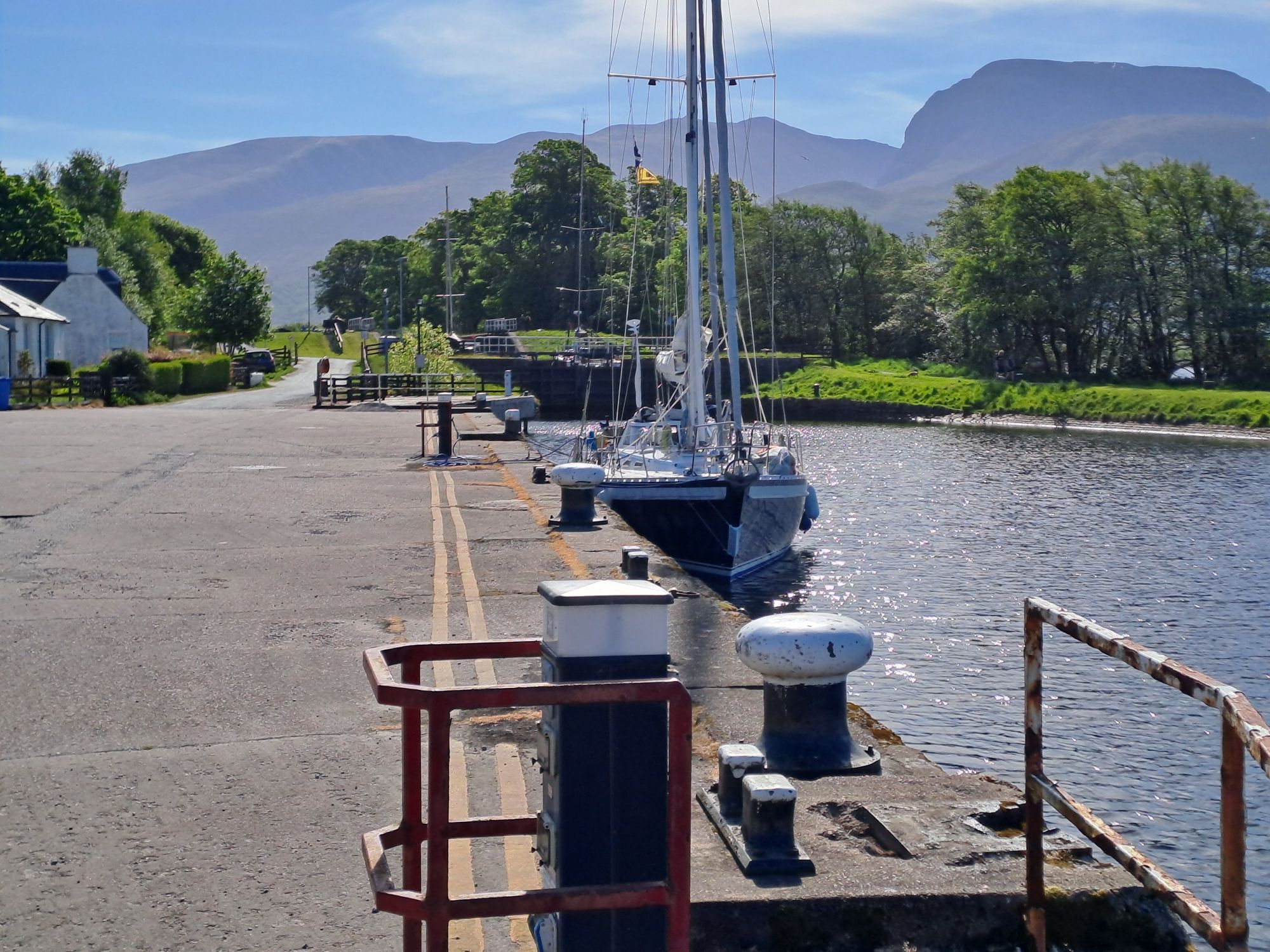
    The Dores Inn Pop-Up

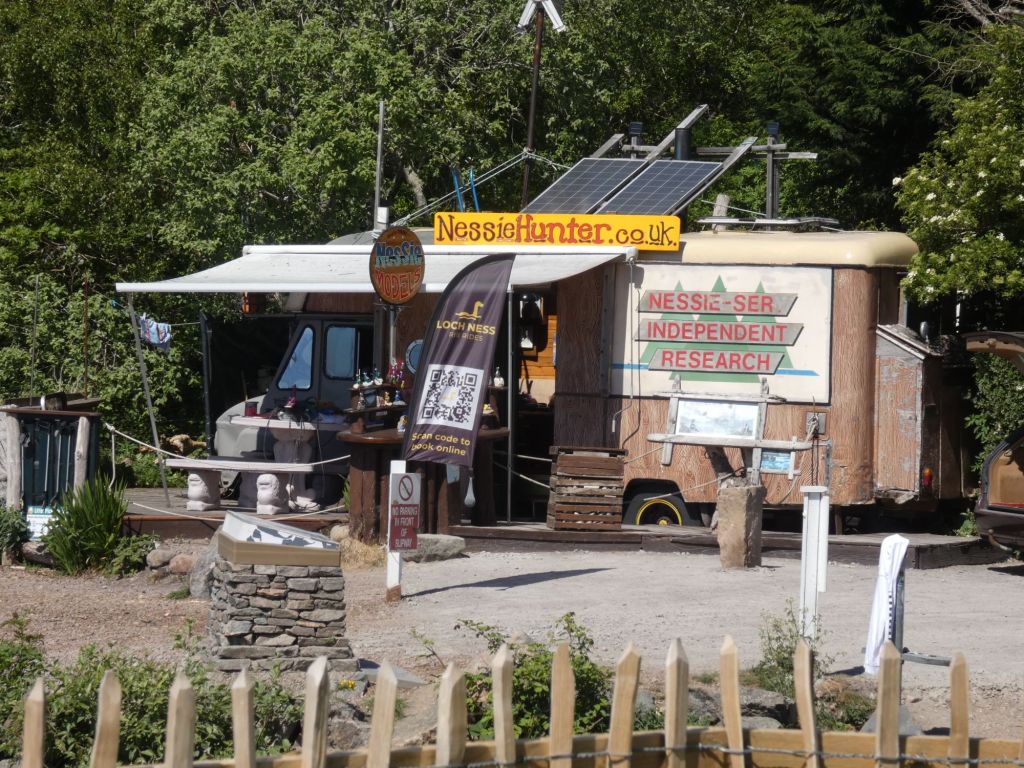
    Dores is also where the Nessie Hunter hangs out. I didn’t go in and inform him of my recent close encounter. I’ll let him keep hunting.

    Nessie Hunter

    After more than an hour of indulgence, it was time to move on. It didn’t take long to reach the end of the loch and start on the narrow canal section into Inverness.

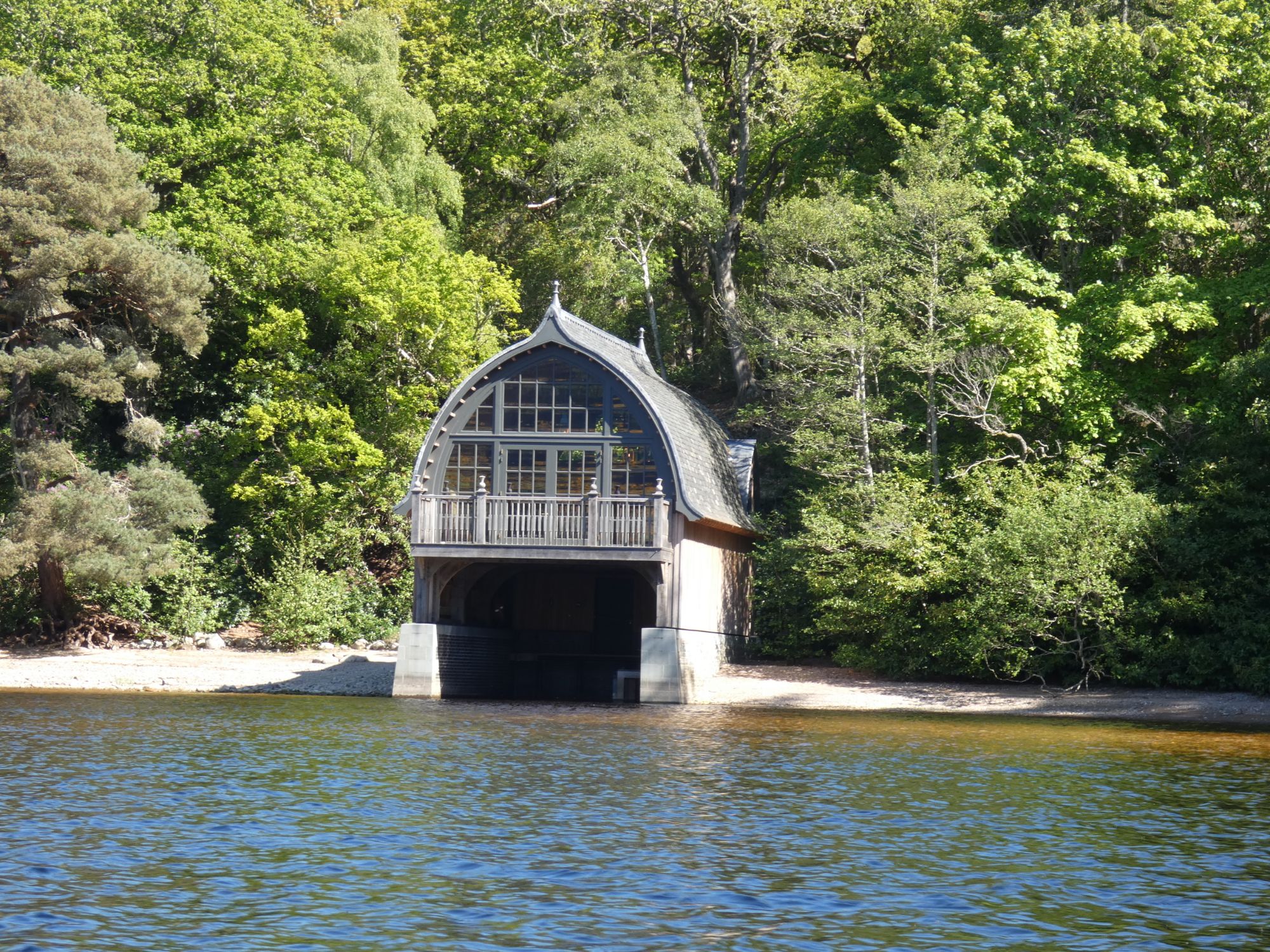
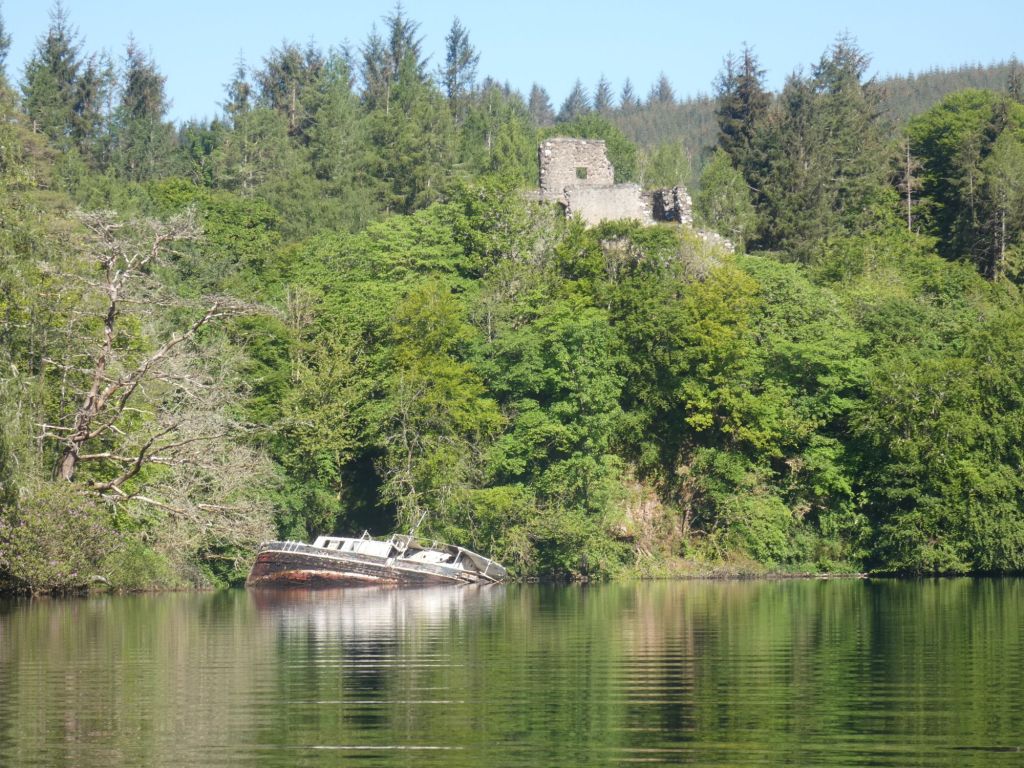
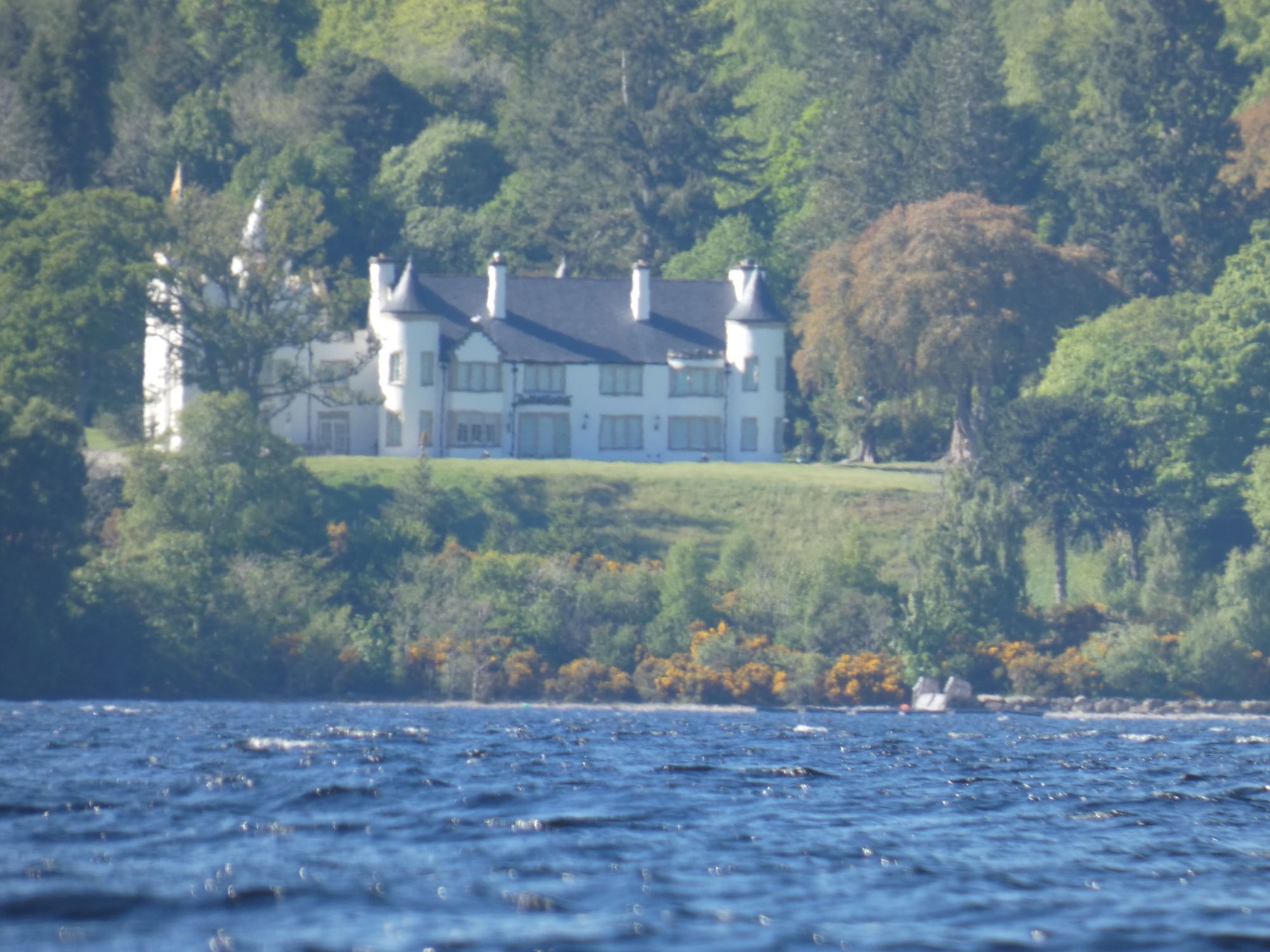
    THAT’s a boathouse
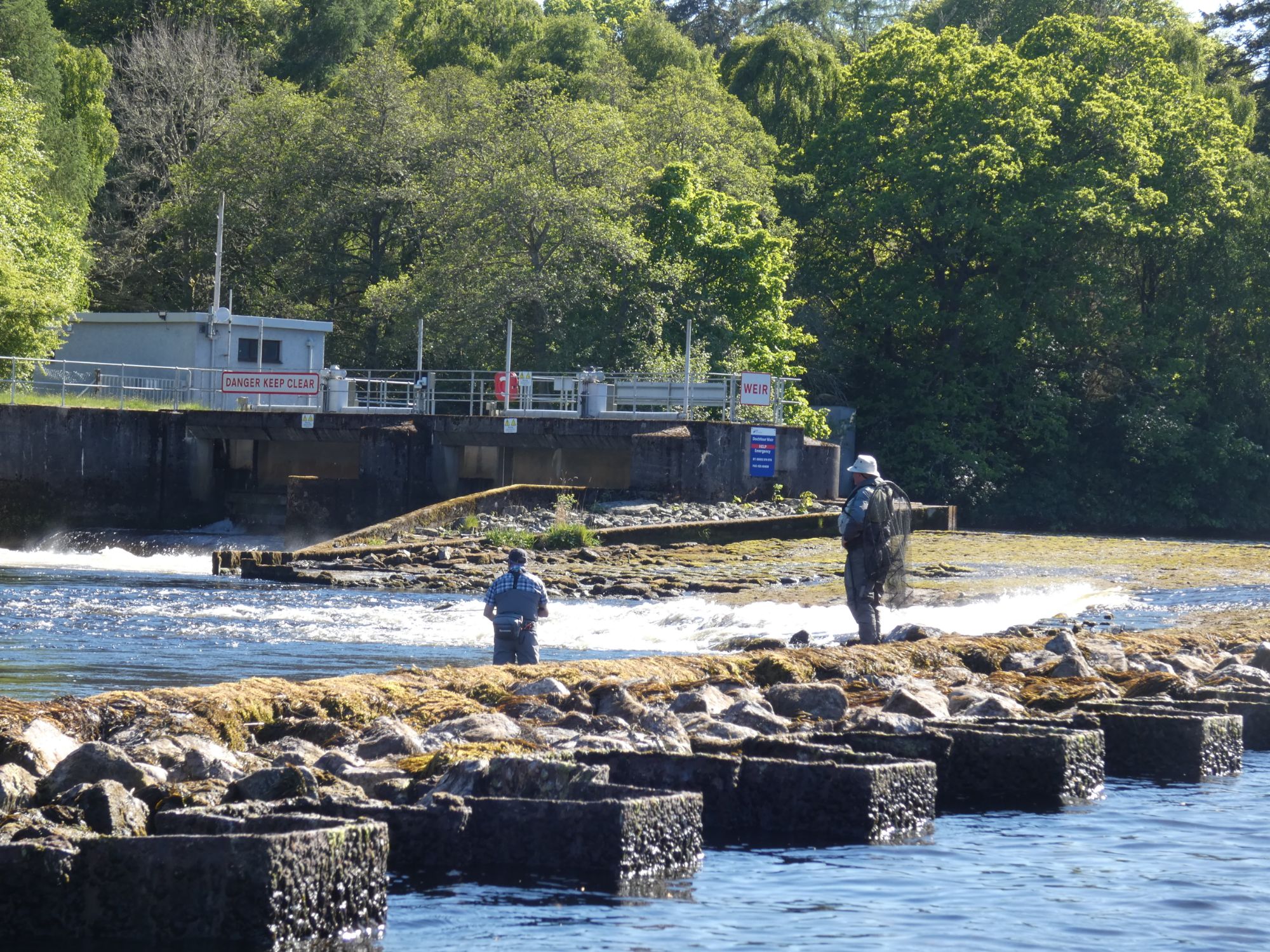
    Aboiding the Ness weir and fishermen

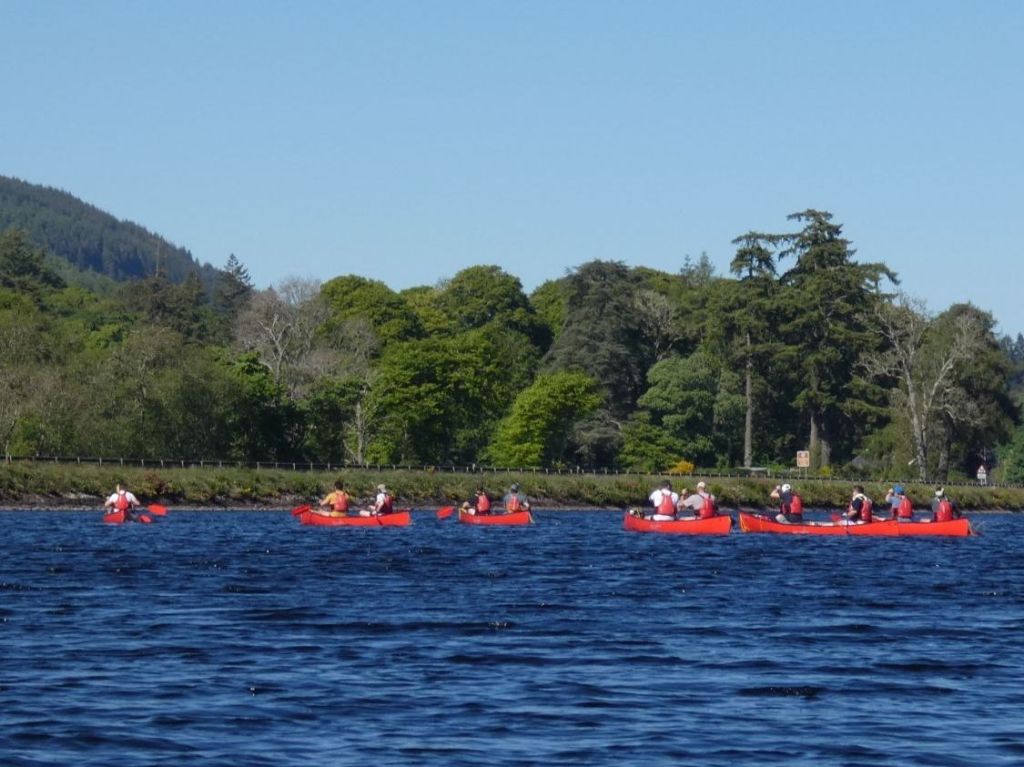
    Above the Dochgarroch lock, I ran across Donald from Explore Highland, leading a stag do canoe trip. We all exited the canal above the loch at the same time, and I had the opportunity to get some useful tips from Donald about getting through Inverness and on to the next section of my trip to Nairn.

    A stag do canoe trip

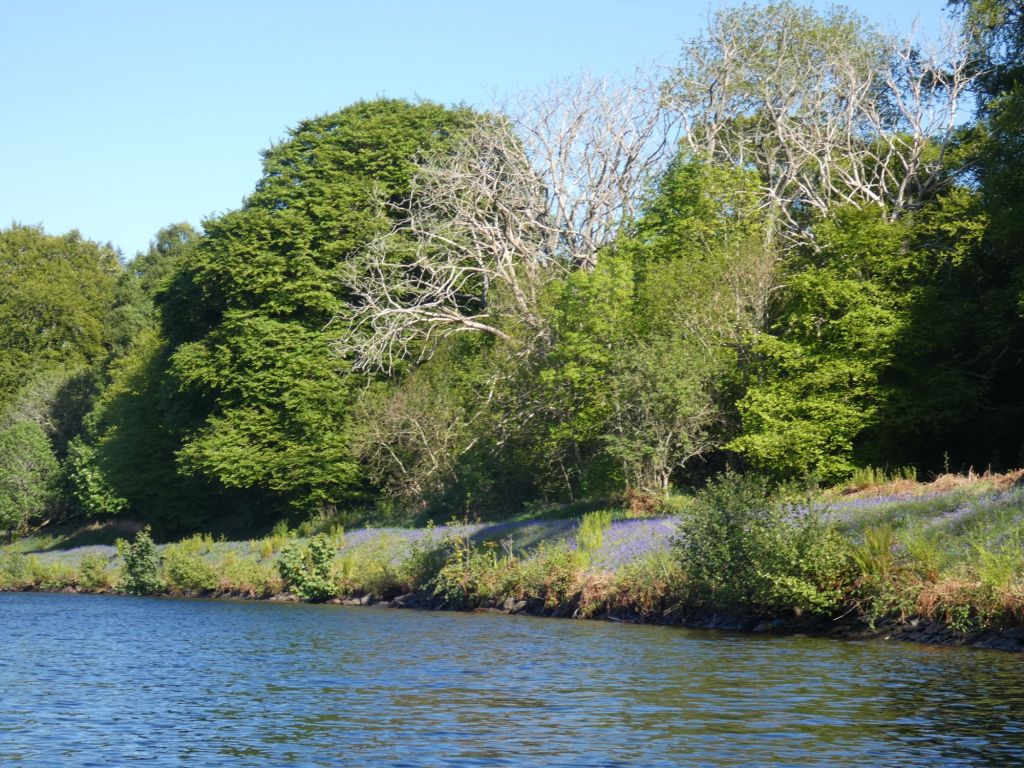
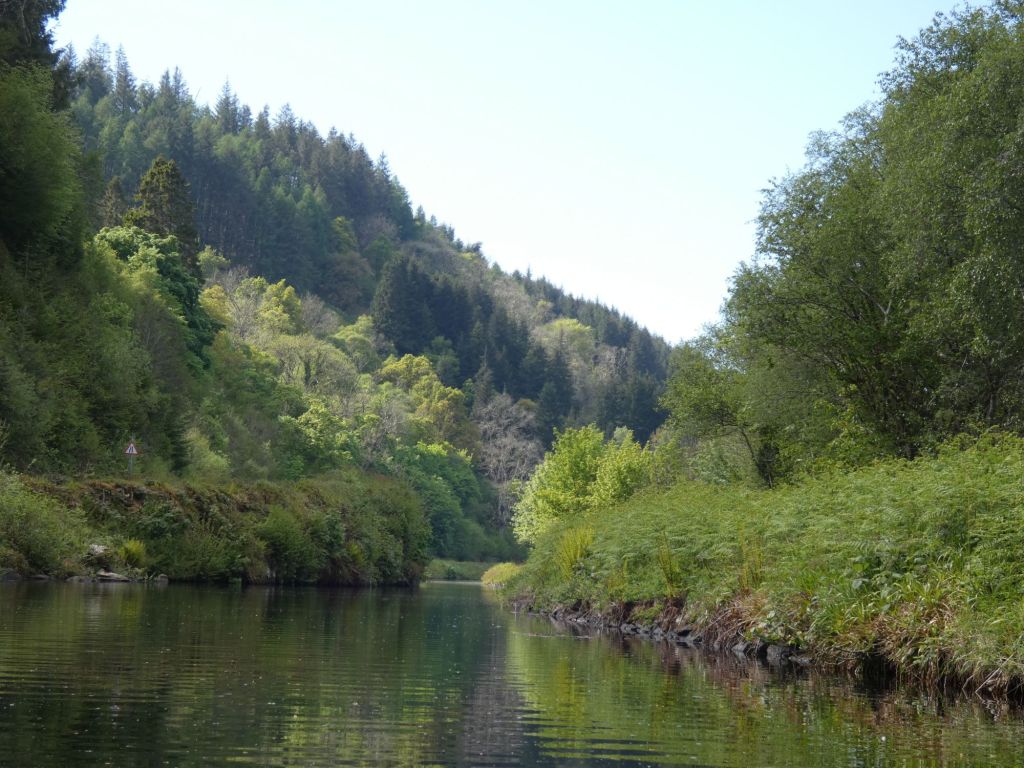
    The last section of the canal between Dochgarroch and the Muirtown locks was full of gorse, broom, and bluebells. Many people were out walking, cycling, and running on the canal paths.

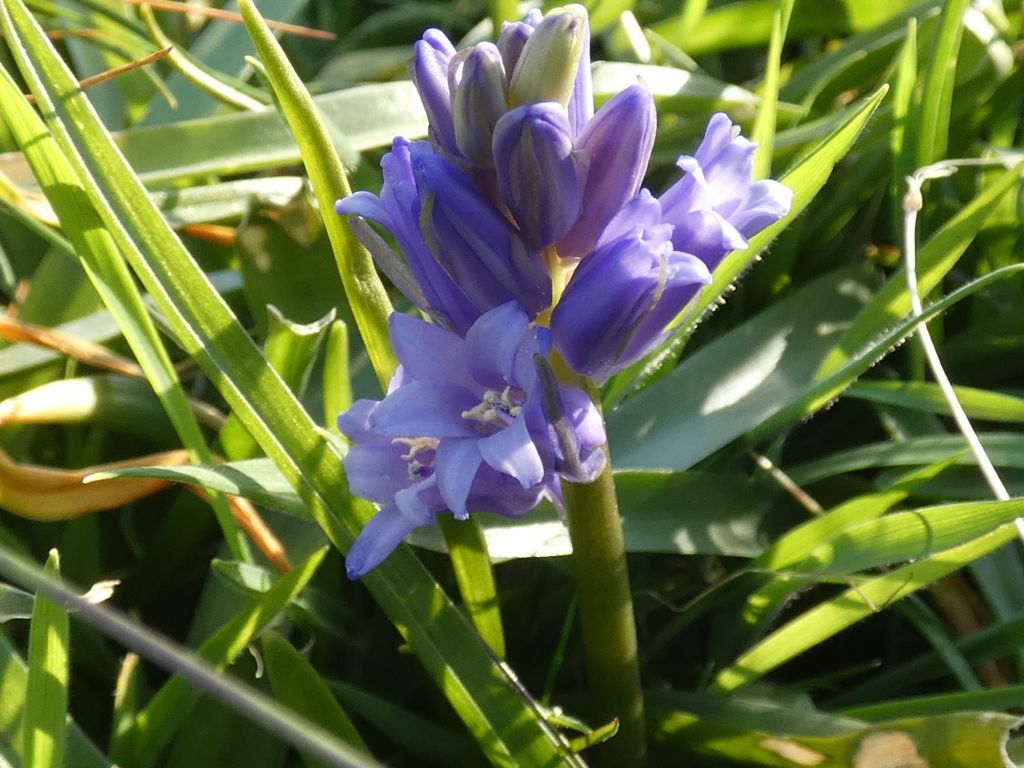
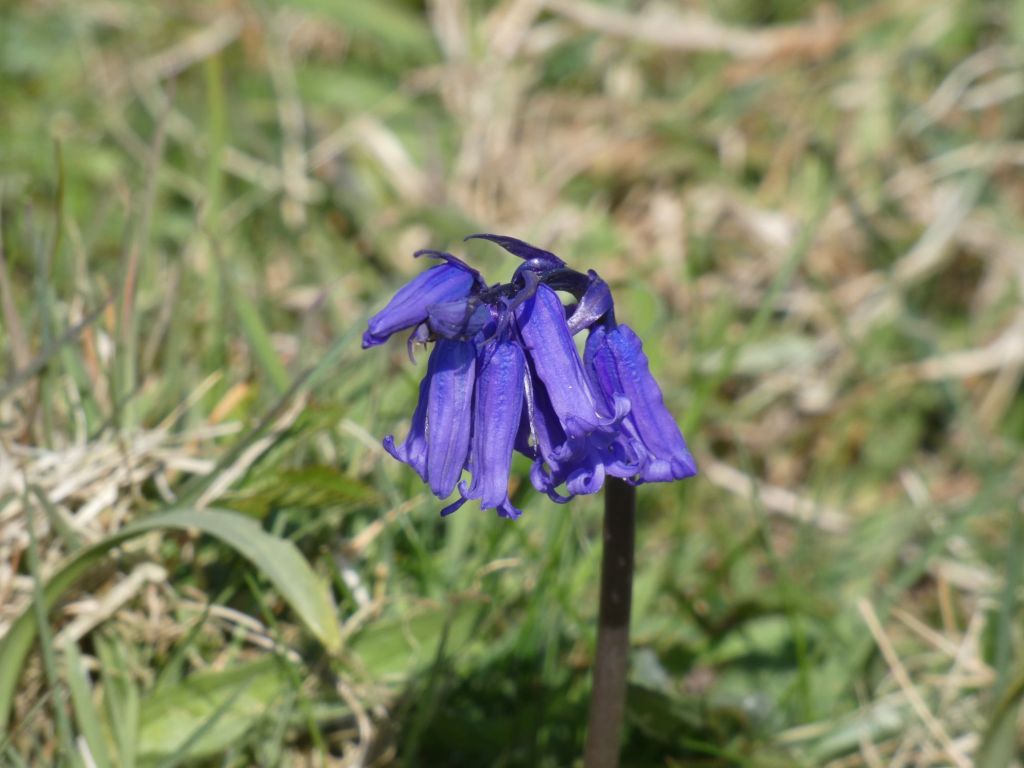
    A purple haze of bluebells on the canal bank

    I paddled for a while alongside a family in two canoes. They were just on the return half of their trip up to Dochgarroch lock. Their young girl was thrilled that her paddle was the same colour as my wee yellow kayak.

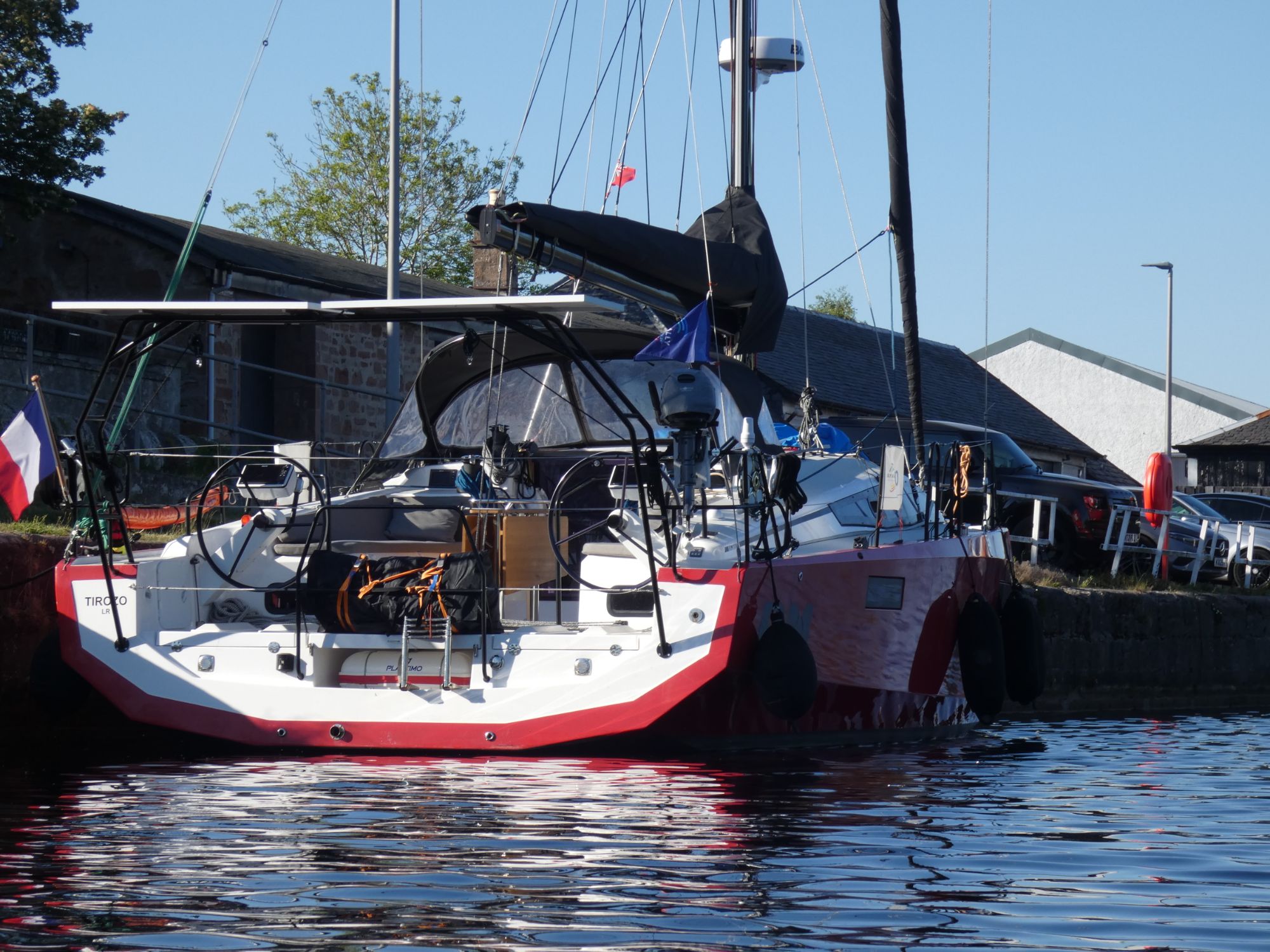
    Above the Muirtown locks, I came across the familiar site of the yacht Tirozo that I’ve shared this canal journey with.

    Tirozo… again!

    As I am now below the locks, did I get to the end first? They will soon be off to Scandinavia while I’ll be sticking to the Scottish coast.

    It took me a bit of walking up and down the sides of the canal below the locks to decide where to camp. The official guide suggests that a patch of grass on the west bank is the place to be, but it had a large group of youngsters playing football on it. When I investigated the east bank within the perimeter fence of the Scottish Canal office and marina, I came across Danny and a group of fellow boat owners sharing an evening meal at a picnic bench. They welcomed me to take up residence on the flat bit of grass next to them in the safety of the locked perimeter fence. I was much happier with this option and settled in for the night.

  • Day 12 – The beautiful trees

    • Laggan Locks to Foyers
    • 35 kms

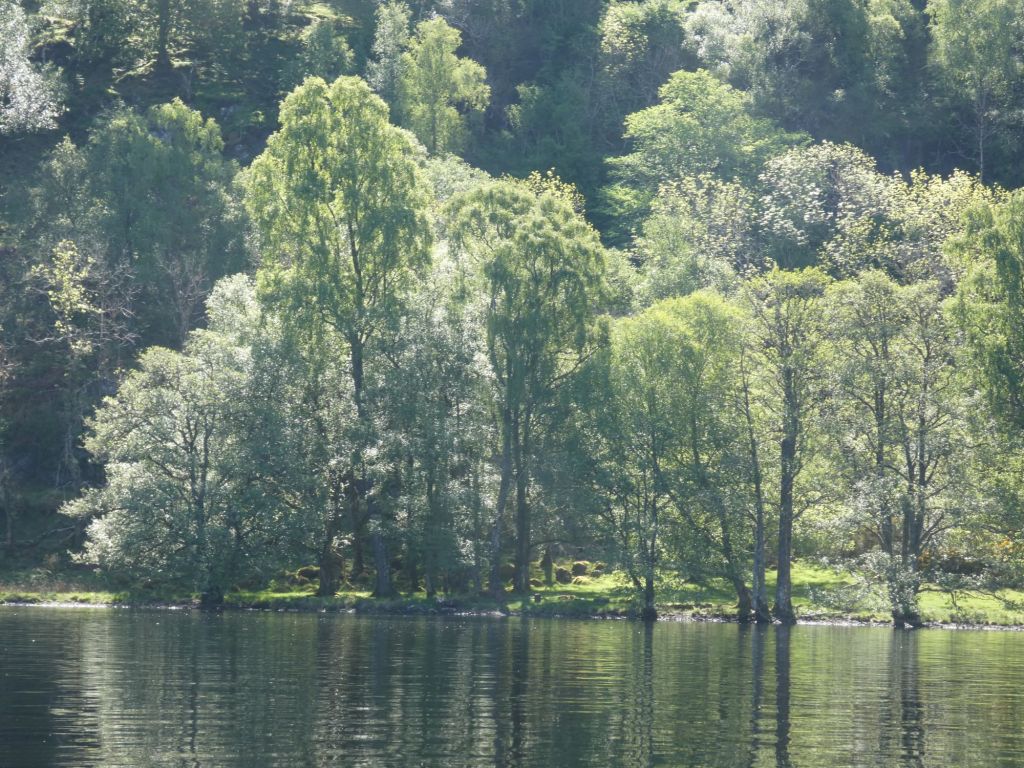
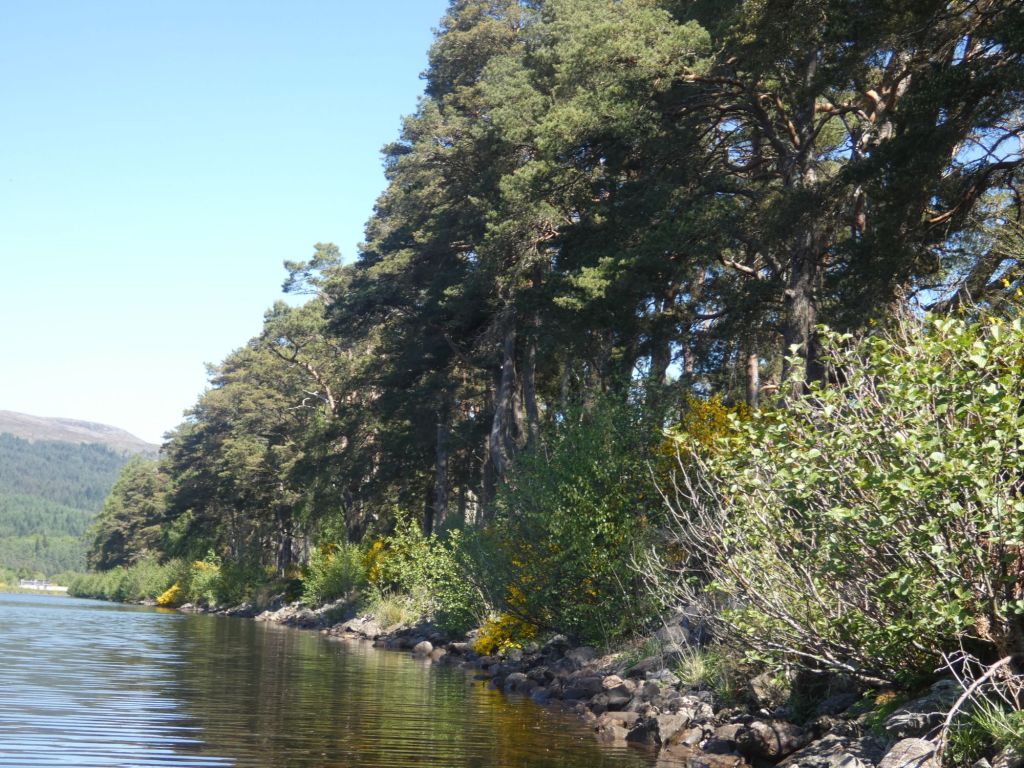
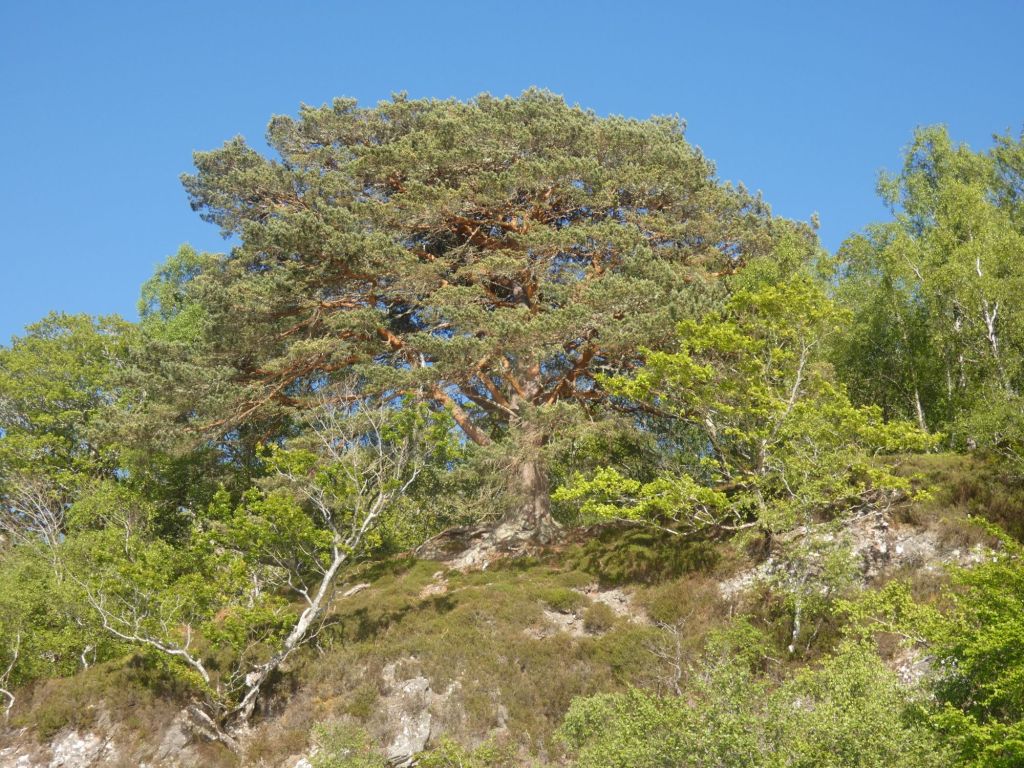
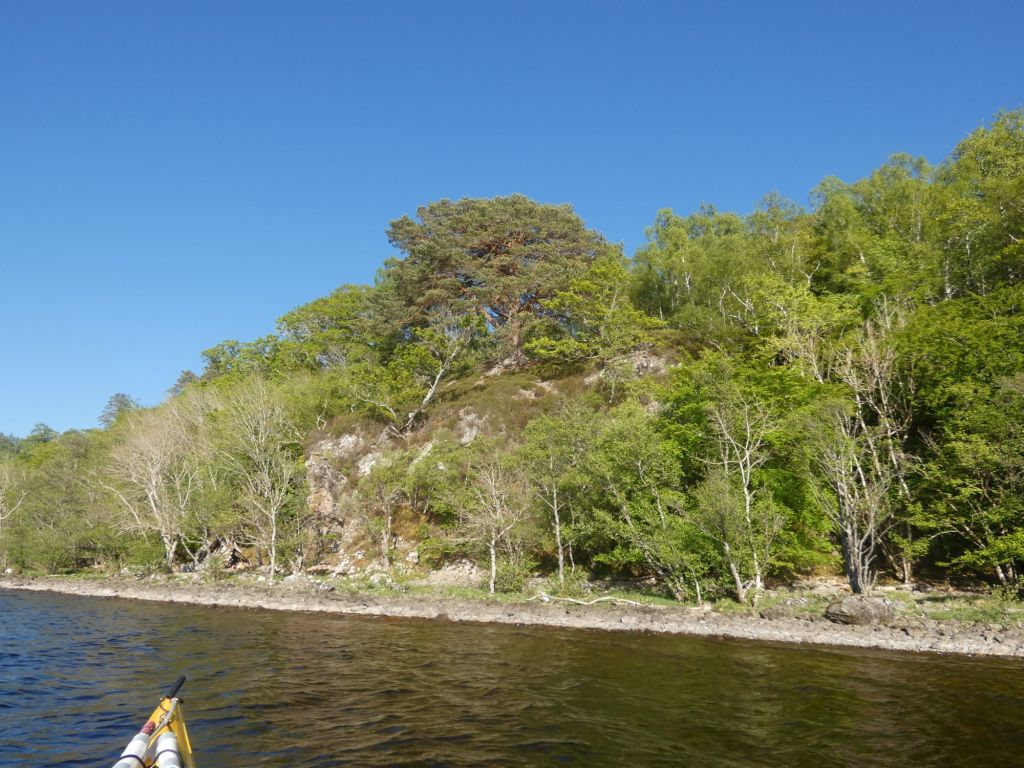
    Looking back at the 60 odd photos I took today, I see that the vast majority feature trees. I just can’t resist getting the camera out when they light up in the sunshine. The east shores of Loch Oich and Loch Ness (so far, at least) have lovely natural woodlands. The west shores… not so much – more commercial pine.

    There were two other tents where I camped at Laggan Locks, but as I set off at 9 am, I still hadn’t seen either of their occupants.

    The tow path was on the other side of the canal from the campsite, so I started with a short paddle and then a portage past the loch. I also went past the moored Tirozo – a late start for them.

    My first encounter of the day was with a couple in a double kayak. Their original intention was to paddle the canal from south to north but changed their plans with the wind forecast. They’d had an “exciting” time on Loch Ness with metre high waves in places. It was they who recommended the Foyers campsite at which I’m currently camped (very nice indeed).

    I was soon on the narrow Loch Oich. Larger vessels have to stick to a buoyed channel in the middle, but I was able to explore further in the shallows.

    Both have seen better days
    Risking the shallow side of an island

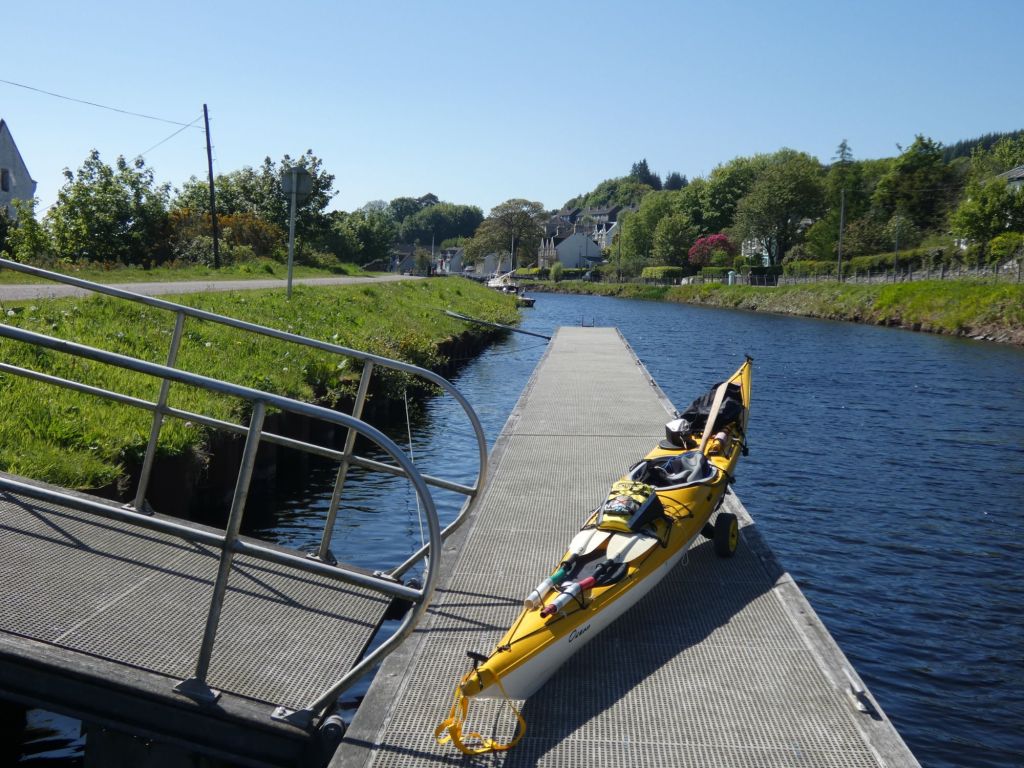
    After Loch Oich, there is a canal section with two single locks with simple portages that are well catered for with low pontoons and wide ramps well designed to allow kayaks to pass.

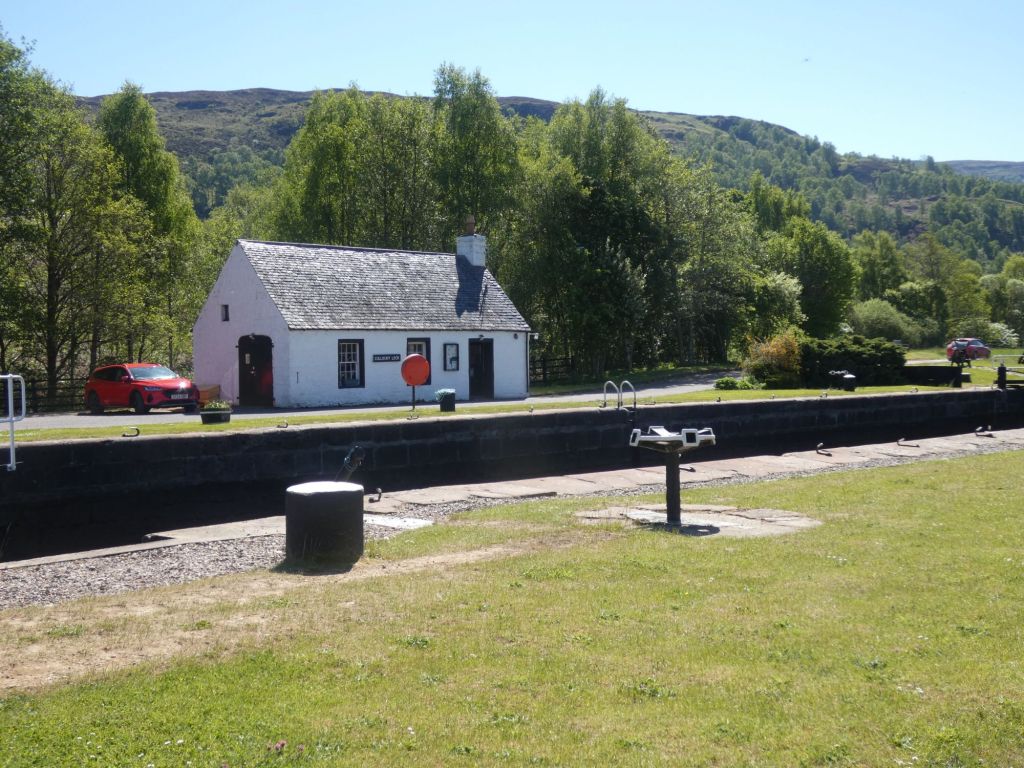
    Cullochy Lock
    Canadian canoe at Kytra Lock
    Struggling to keep control of the little ones

    Another short paddle and I was upon Fort Augustus – the only settlement of significant size on the canal between Fort William and Inverness. I stopped here for something to eat and a few supplies. The town was bustling with tourists keen to get photos of boats traversing the staircase of five locks and the views up Loch Ness. Needless to say, there were a few cuddly Nessies available for sale.

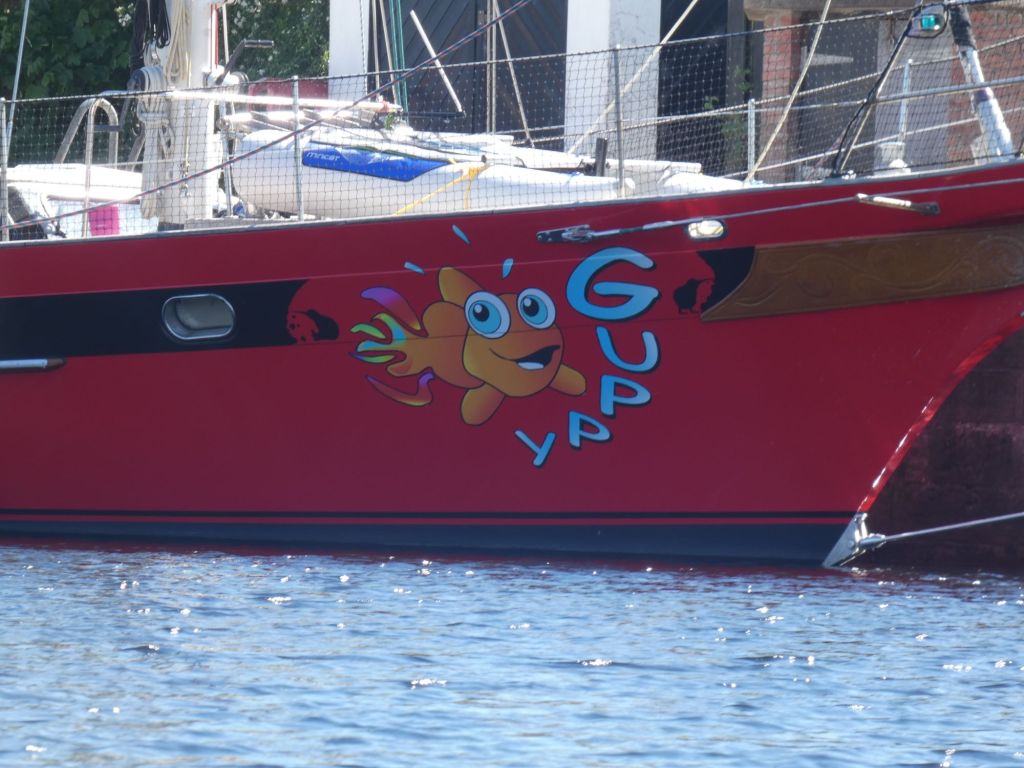
    There was an interesting yacht moored at the top of locks – Guppy. The original Guppy that Laura Dekker sailed solo around the world was wrecked by others’ carelessness soon after she completed the feat. This one is used to help and encourage youngsters to obtain sailing experience.

    Guppy

    When I returned to my kayak to start my portage down the locks, the skipper of the Tirozo came over for a chat. They had caught up with me again but would be delayed by the lock transit. I commented on his use of sails on Loch Lochie, and he informed me that he’d also used them on the much narrower Loch Oich – very impressive.

    En route to Loch Ness
    Getting ready to tackle monsters

    I started up the west side of Loch Ness to avoid being side on to the waves at the shallow southern shore. At the first narrow point, I crossed over, away from the main road and over to the very remote, attractive, and steep sided east shore.

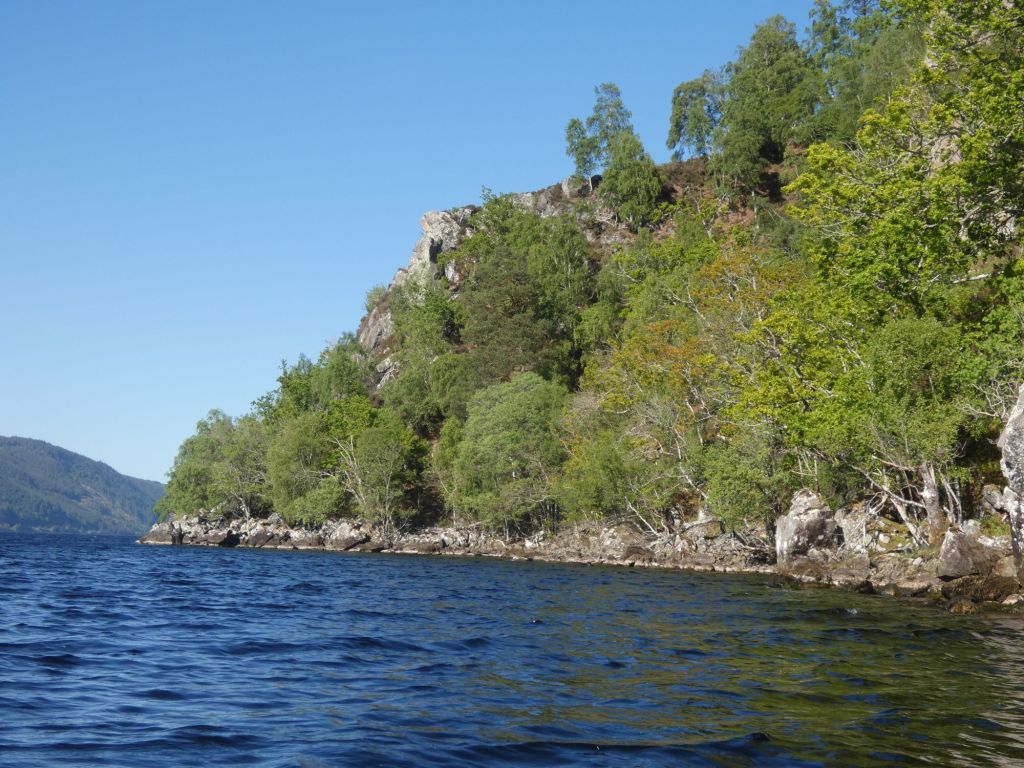
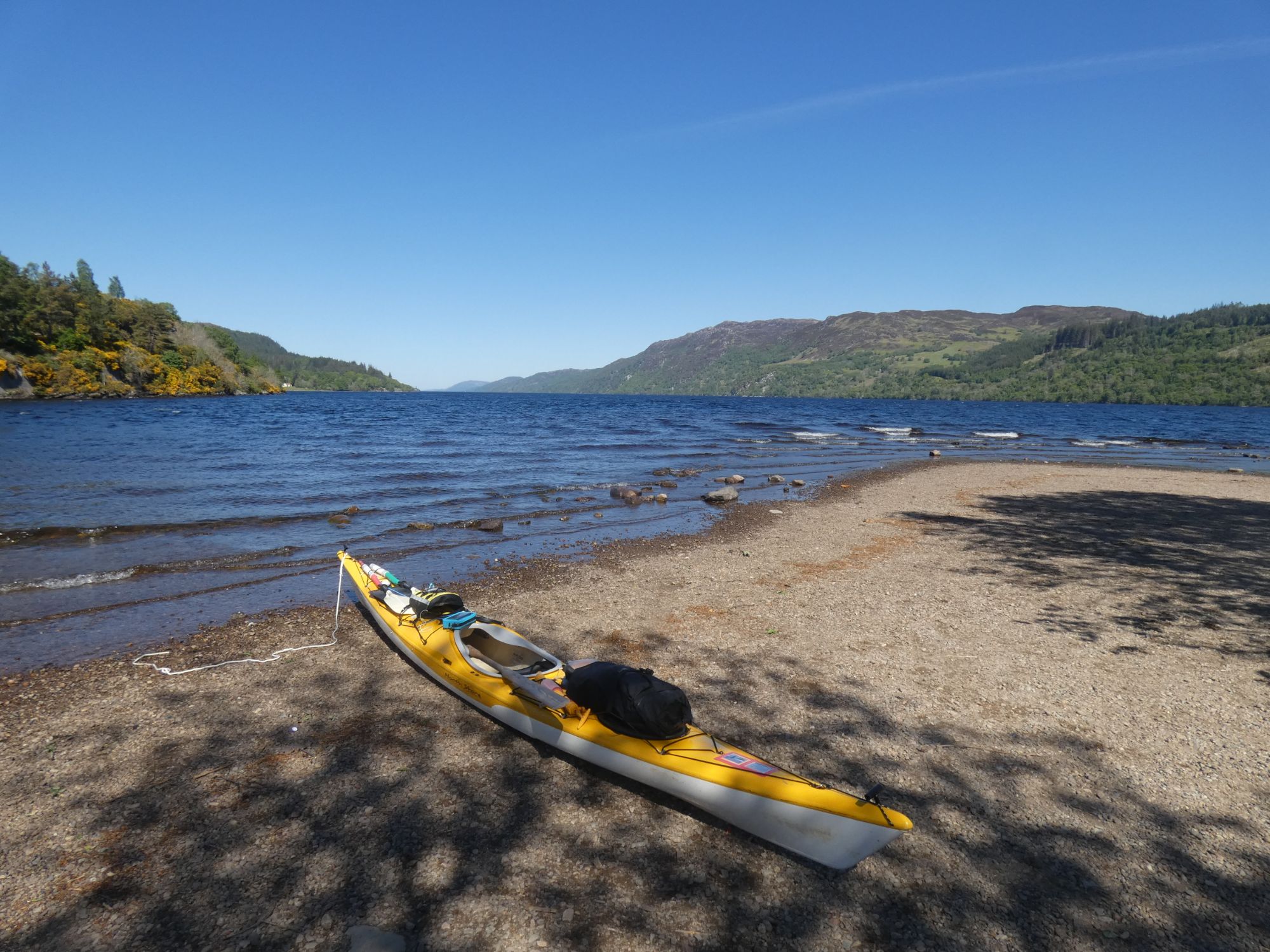
    Although I was paddling into a steady F3, sometimes F4, I was able to get some shelter by staying close to the shore. It was also warmer here as the sun’s heat re-radiated off the steep slopes. It was a good three hour paddle up to Foyers, and I enjoyed every minute of it.

    Looking across the loch
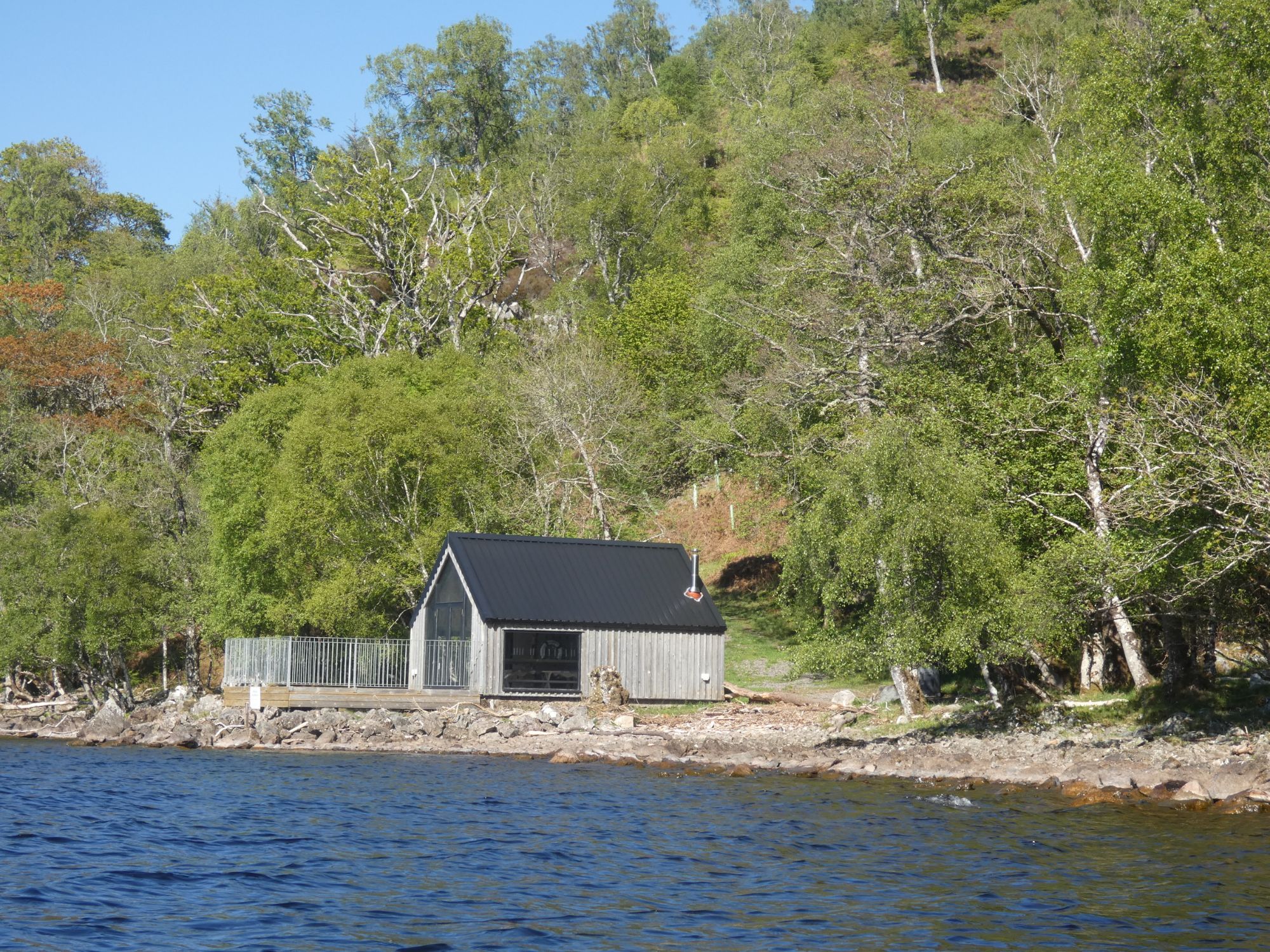
    The Knockie boathouse

    The camping opportunities were few and far between, but the only reasonable site was being made use of by a group of canoists. This was a guided trip of seven people with four canoes who, like the kayakers I met earlier, changed their plans to paddle from north to south. I was assured there was room for another tent, but I had already set my mind on the comforts of a commercial campsite.

    A rough campsite on the east shore
  • Day 11 – Start of the Caledonian Canal

    • Corpach to Laggan Locks
    • 32 kms

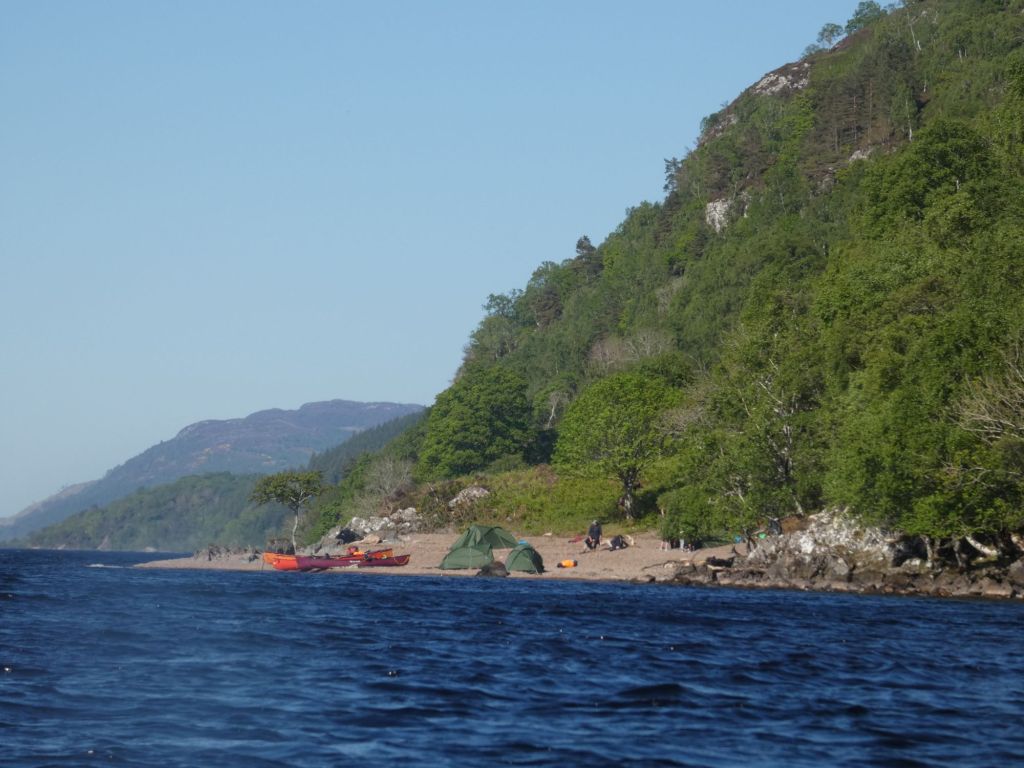
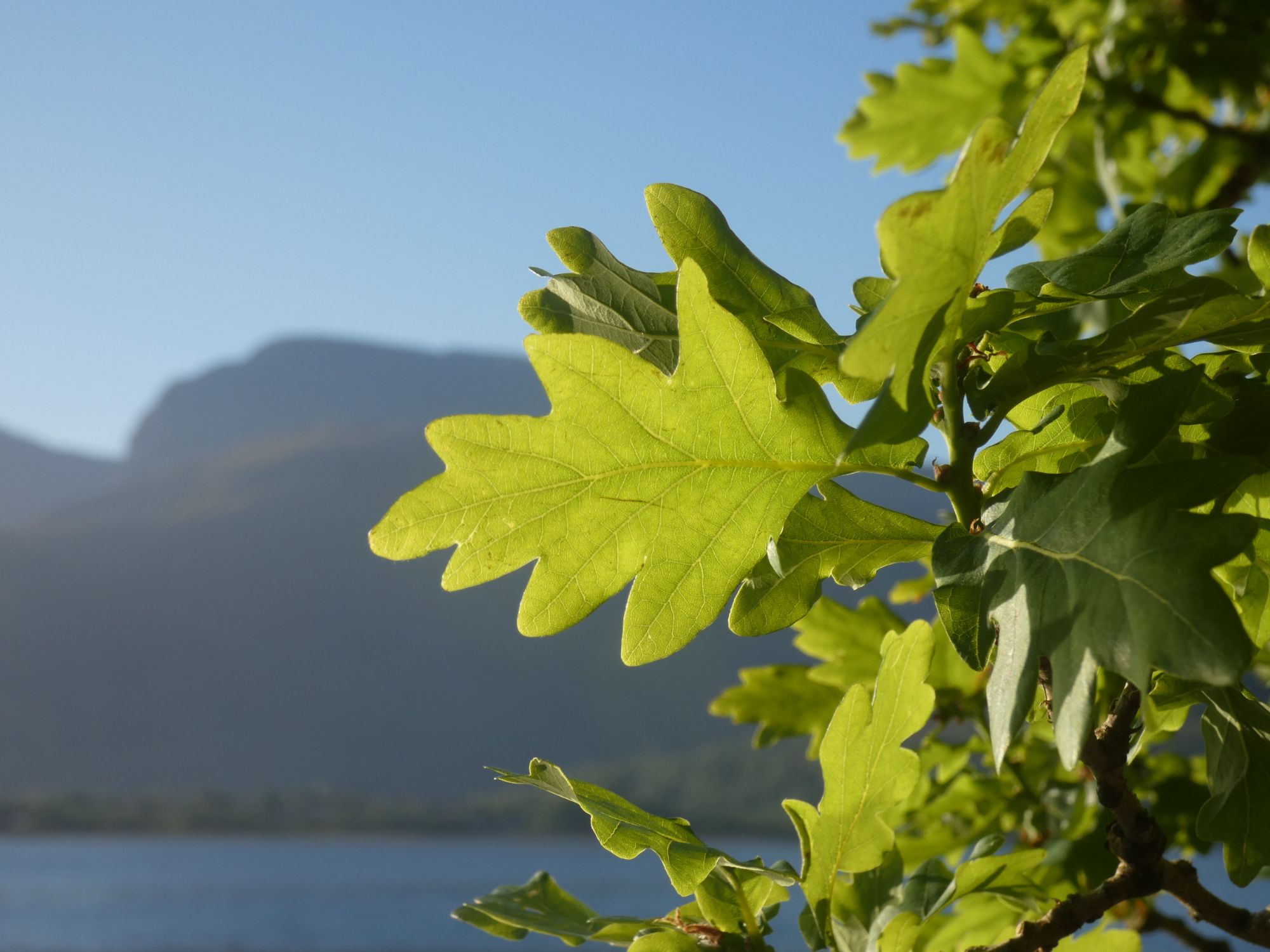
    The dawn chorus was a mixture between the songbirds of the oak woods in which I camped and the geese and sea birds from the small island a few hundred metres away. I lay in my sleeping bag until the sun was up and I could feel the warmth.

    Camped among the oak trees.

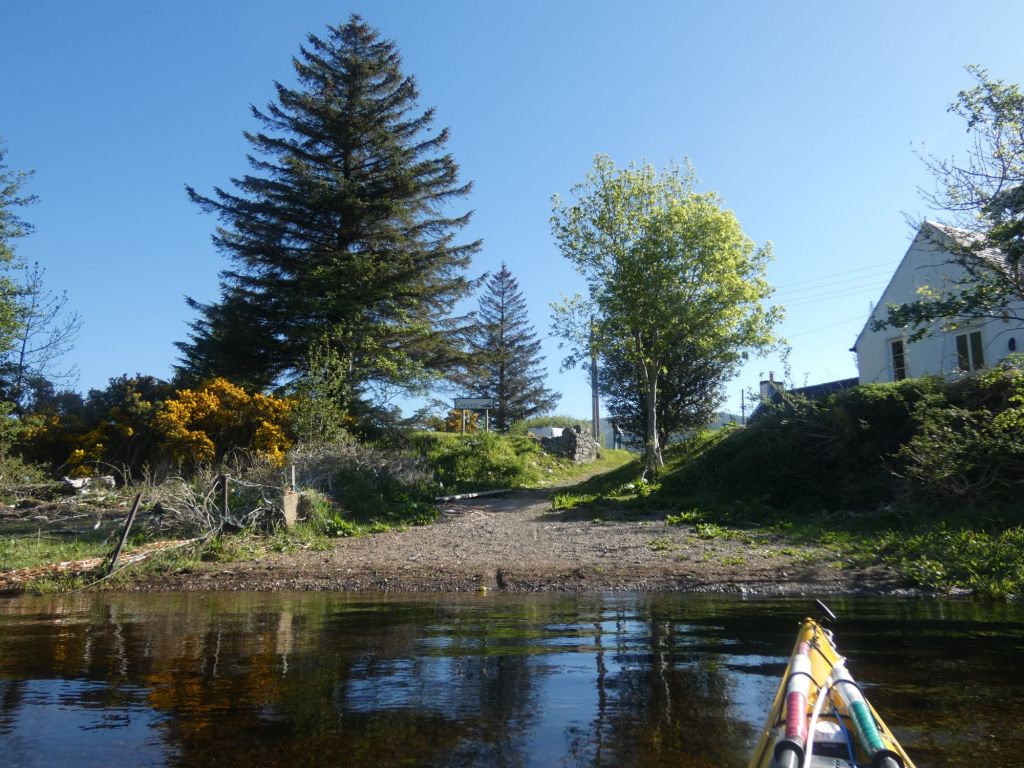
    It was a short paddle across to the entrance to the canal. I left my kayak at the bottom of the slip at the adjacent marina and walked up to request permission to use it.

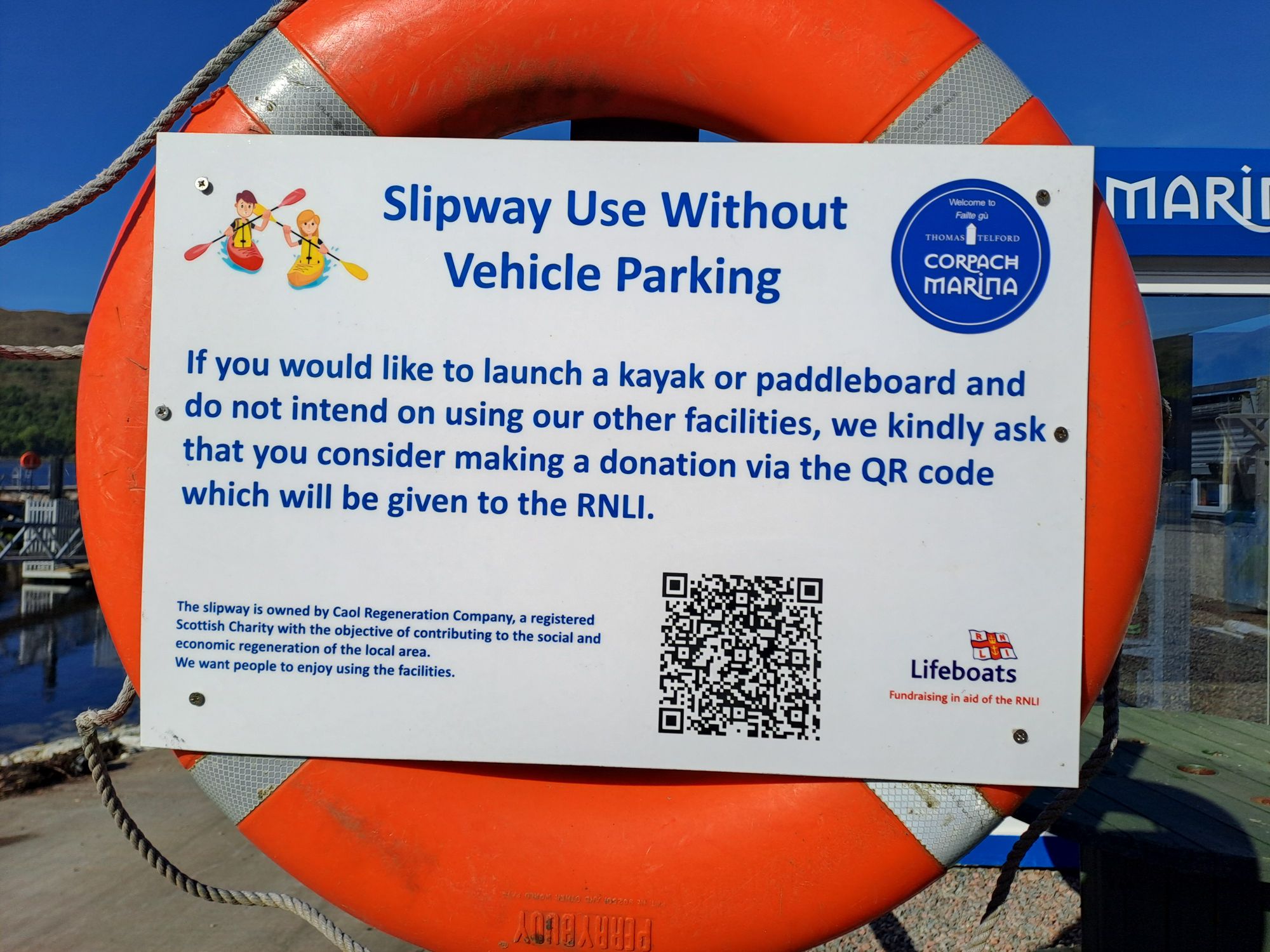
    Brian, in the marina office, was surprised by my entrance as he hadn’t seen any boat approach. He invited me in, despite my wet feet, and was happy to tell me all about the Corpach Community Marina that had been built from scratch only three years ago. There was no charge for my kayak, but a polite request to make a donation to the RNLI. As a long-time supporter and offshore member of the RNLI, I was only too happy to oblige.

    I pulled the kayak up the slip, and Brian took a photo to be added to the marina socials.

    By this time, the marina coffee shop had opened. I treated myself to the full Scottish breakfast, which I ate outside while watching the French crew of the yacht Tirozo organise their supplies. The yacht was on a nine month Nordic Odyssey with 12 other yachts arranged by GLY Rally.

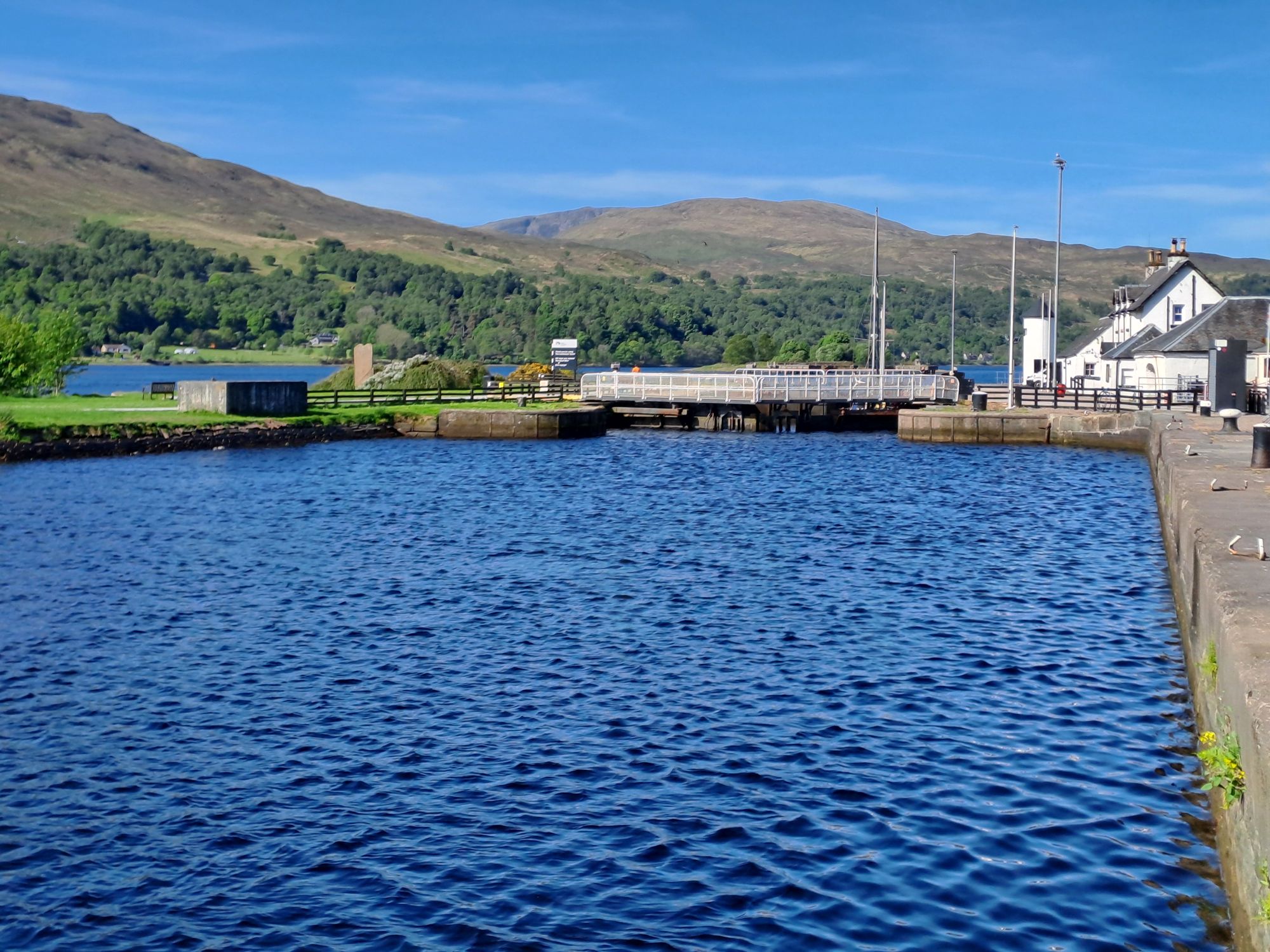
    The pool above the sea lock.
    Looking up the canal to the next lock.
    The French yacht Tirozo.

    I trundled my kayak on its trolley past all this action on the first few locks and then got a short paddle in before the bigger portage of the Neptune’s Staircase.

    On the way up, I met Alex and asked him if he’d mind taking a short video of my efforts. He was happy to do so, and he accompanied me to the top of the staircase. He’d worked as a commercial fisherman and then in the north sea and further afield on an oil rig maintenance vessel. He now lives on the Moray Coast, so there’s an opportunity for our paths to cross again in about a week’s time.

    One rung of the eight that makes up the staircase.
    The gorse in full bloom all along the canal and up the hillside.
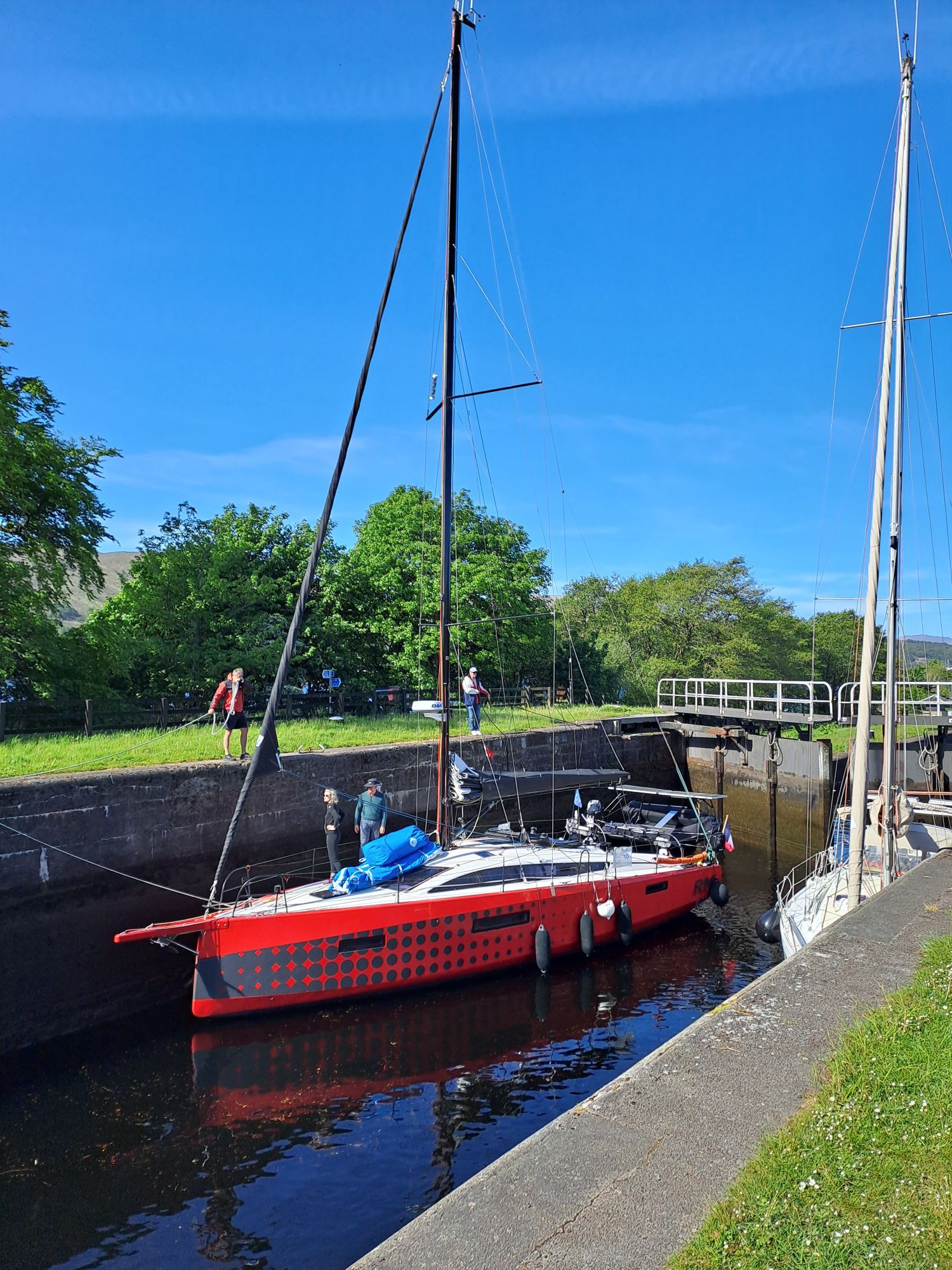
    Not just gorse, but broom as well.

    The lovely coconutty aroma of the gorse was often strong as I paddled on the more sheltered sections. I associate this with Scottish hillside golf courses (the Braid Hills in Edinburgh for one) and the often fruitless search for a lost golf ball after a wayward drive. And also with my dad, though more often than not, it would be my ball we were searching for rather than his. I felt tears on my cheeks for a few moments as I paddled on – must be the north easterly winds.

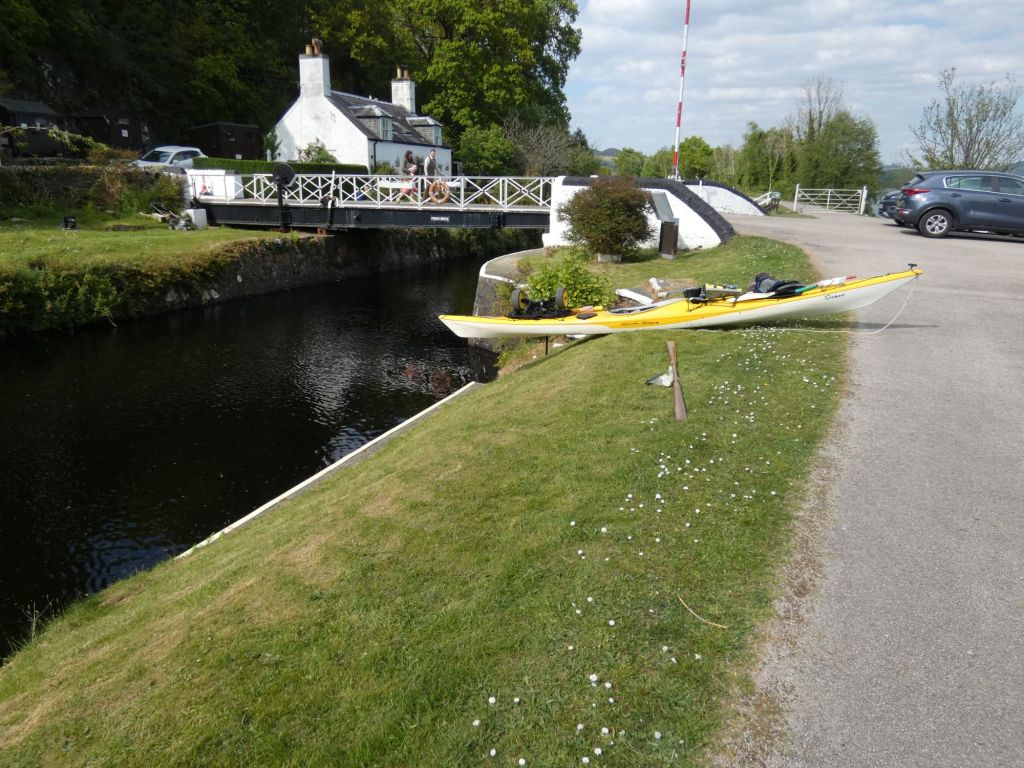
    I paddled this section of the canal last year with Paul, so when I got to the two locks and swing bridge at Gairlochy, I knew what to expect.

    A locked gate.

    The canoe trail is clearly marked as going through this gate with a lock. But unless I missed the memo with the combination code when I registered my trip, there was some change to the route that had not yet been resolved.

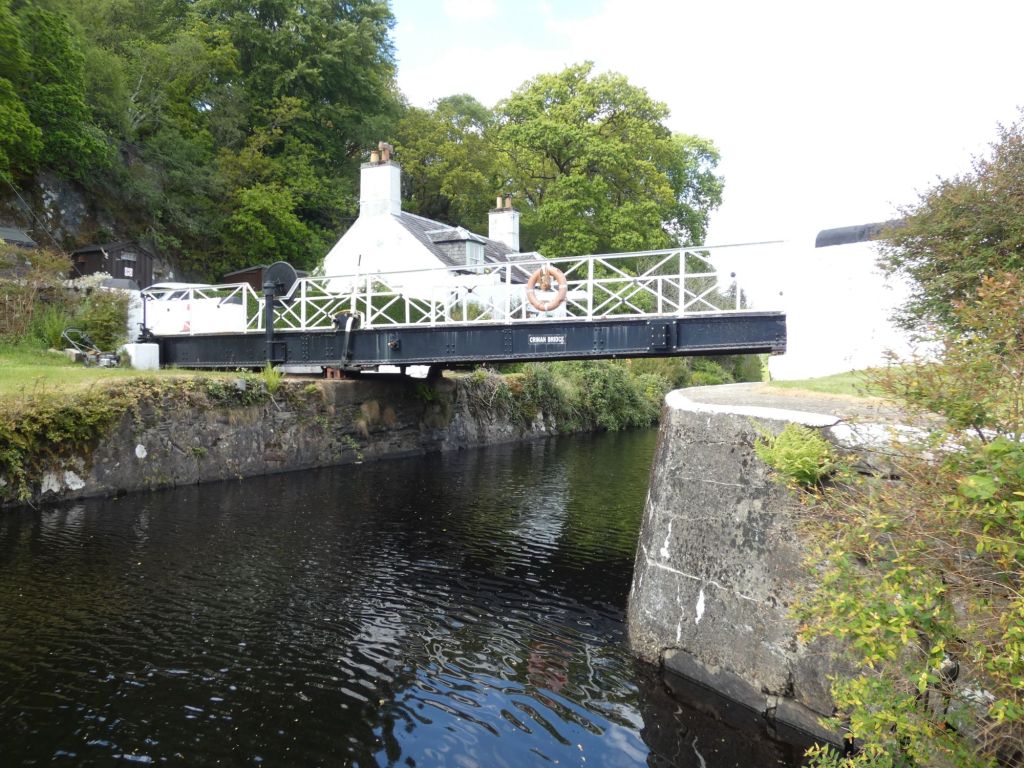
    One alternative option would have been to go over the swing bridge and launch from a pontoon on the other side of the canal. Unfortunately, the swing bridge currently had a hydraulic problem and was stuck in the closed to vehicular traffic position.

    I therefore ended up doing the same thing as last year.

    Down the steep bank it went.

    Only Loch Lochy lay between me and my camping spot for the night. A simple paddle of about 16 kilometres. The wind was coming straight down the loch, and it was difficult to tell if one side would provide more shelter over the other. I opted for the west side as it had the quieter road to paddle beside.
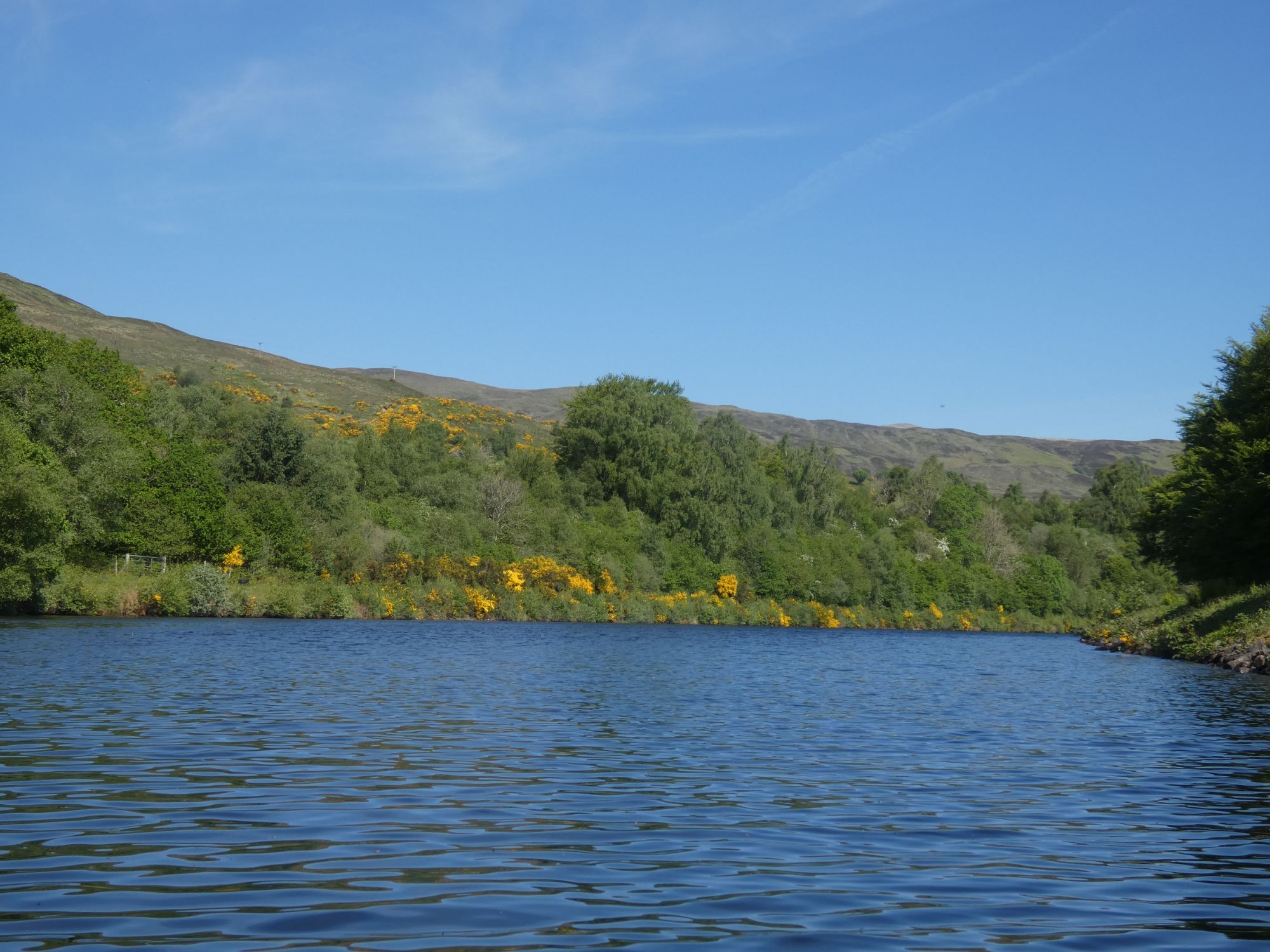
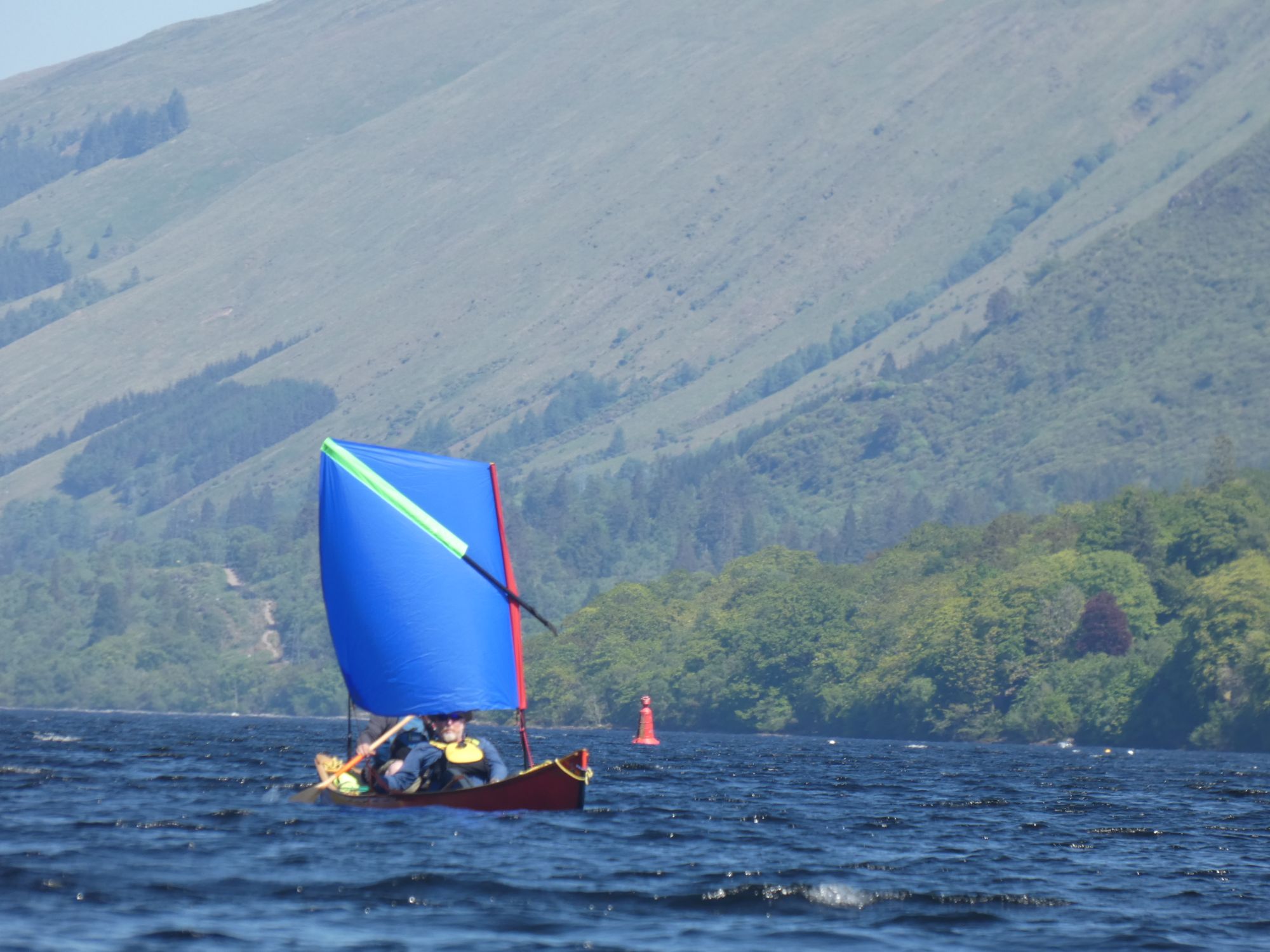
    Two men and a canoe! Testing a sail while waiting for the lumpy loch to settle down.

    The yacht Tirozo, which I had left behind in the locks, passed me a few kilometres up the loch. It was good to see it in full sail, tacking its way up the loch. The other yachts that passed were just motoring down the middle.
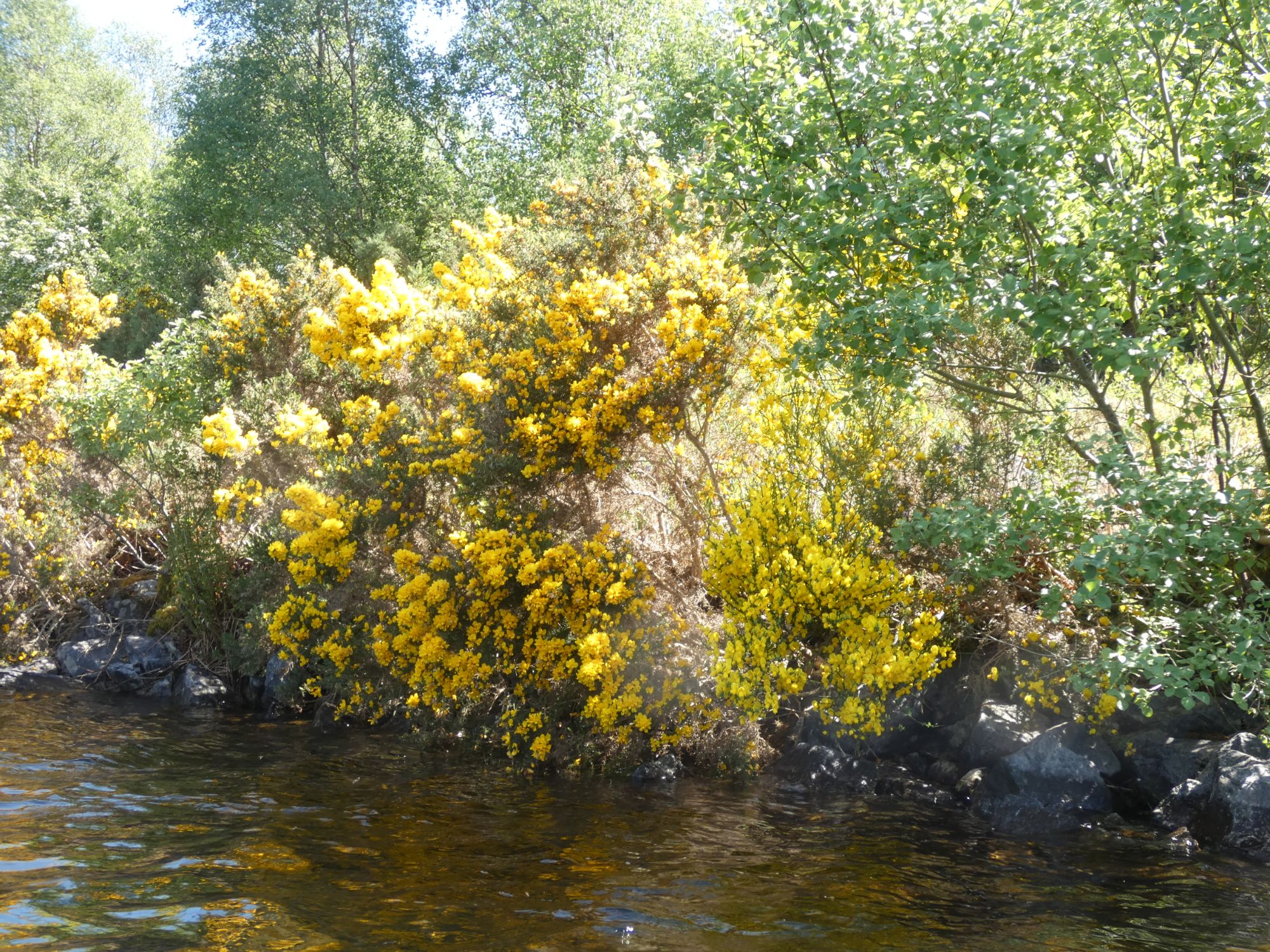
    The Tirozo was on a starboard tack heading towards the western shore when it passed me. When it was half  kilometre ahead, it did what I considered a very slow and poorly executed manoeuvre across to the port tack. I heard later from the two guys I was about to meet on shore that there was much shouting to be heard aboard the yacht at this time. I suspect there was an abrupt change in water depth they hadn’t anticipated that led to this hurriedly executed manoeuvre.
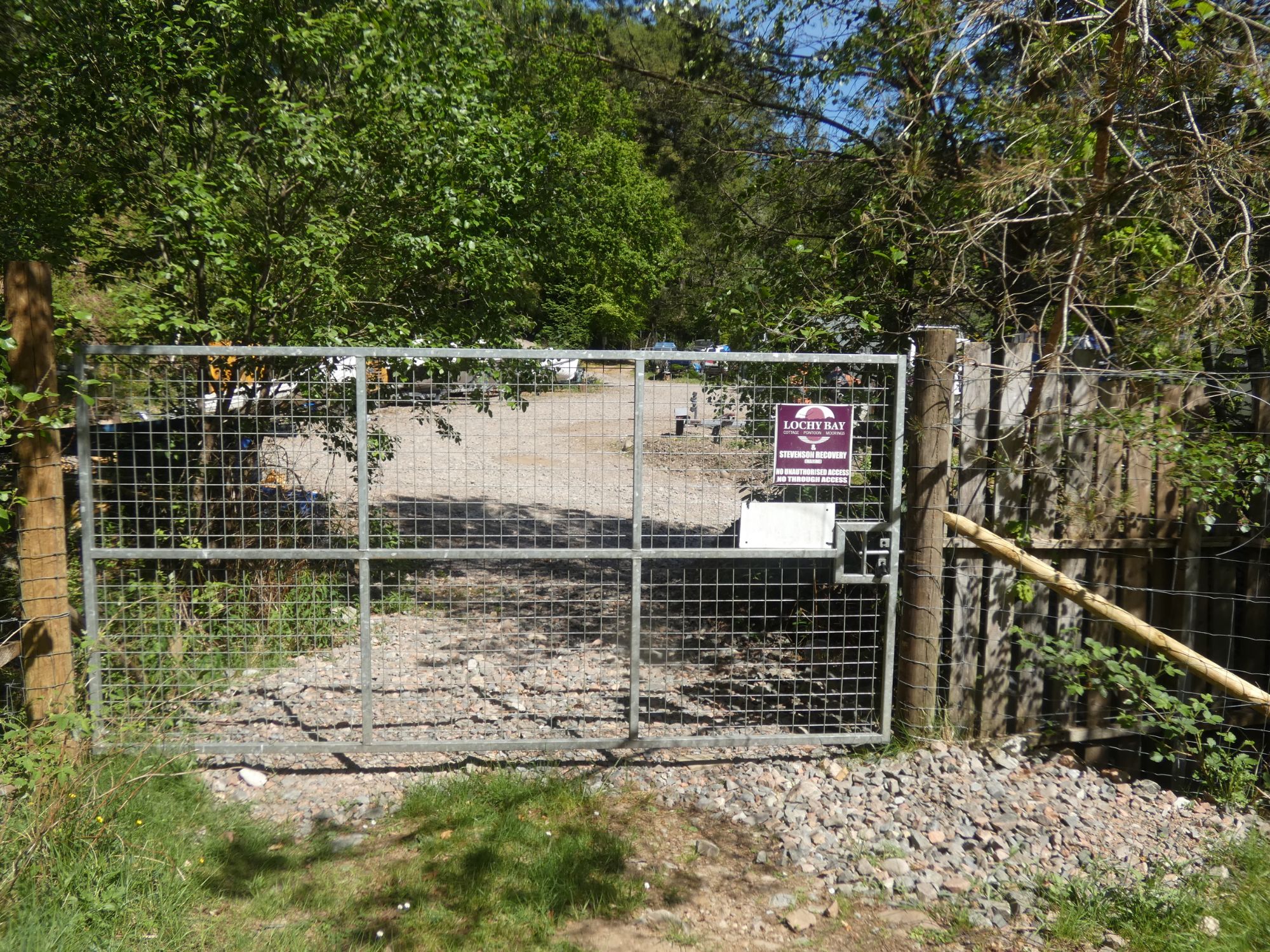
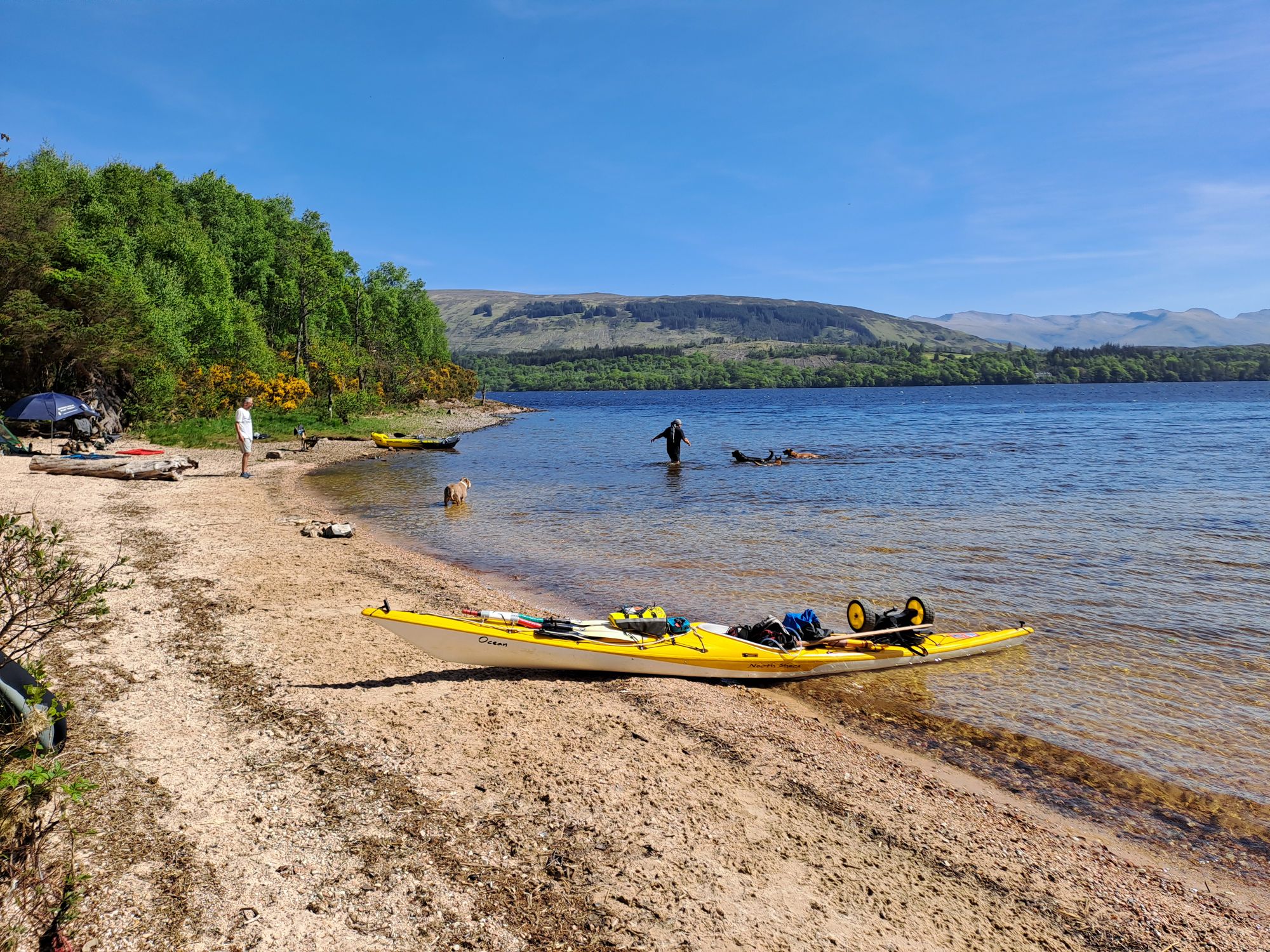
    I went ashore to have a bite to eat and landed on a nice beach where a couple of guys with four dogs were camping and fishing. The dogs were a little wary of this strange object arriving from the sea but soon settled down and back playing ball with their humans again.

    Patrick and Terry with their four dogs – Bruno, Miss Bully, Heĺla and Zeus.

    I didn’t stop again before arriving at Laggan Locks, where I could camp at an approved canoe and hiking trail site with toilets and showers.

  • Day 10 – Tube fed fish

    • Dalnatrat to Corpach
    • 30 kms

    The plan was to get up early, be otw (on the water) by 6am, paddle hard up to Corran to get through the narrows before the ebb started, and then take it easy up to Fort William. If I made it to Fort William before 2 p.m., I might  consider doing the first part of the canal up to Moy – the first permitted camping area.

    The plan failed miserably.

    I was constantly on the move over breakfast as there was no wind to keep the midges at bay. When I set off, 20 minutes behind schedule, the wind had suddenly picked up. I soon found myself battling against an F4 northerly with a short choppy sea. I thought it might blow over quickly, but after an hour, with a cold wet t-shirt, I decided it was time to get dressed for the conditions.

    Pit stop for fresh shirt and a cag.

    The Corran narrows were still a speck in the distance at the time the flow changed.

    Two more hours of hard paddling and still a kilometre short of the narrows, I took a rest.

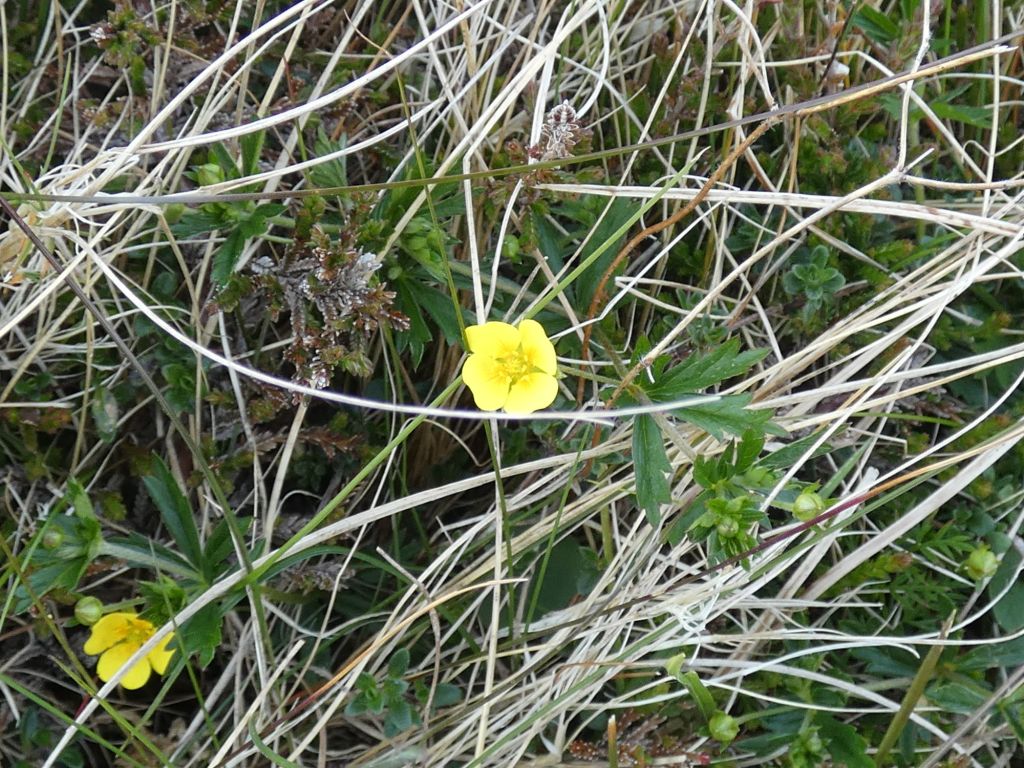
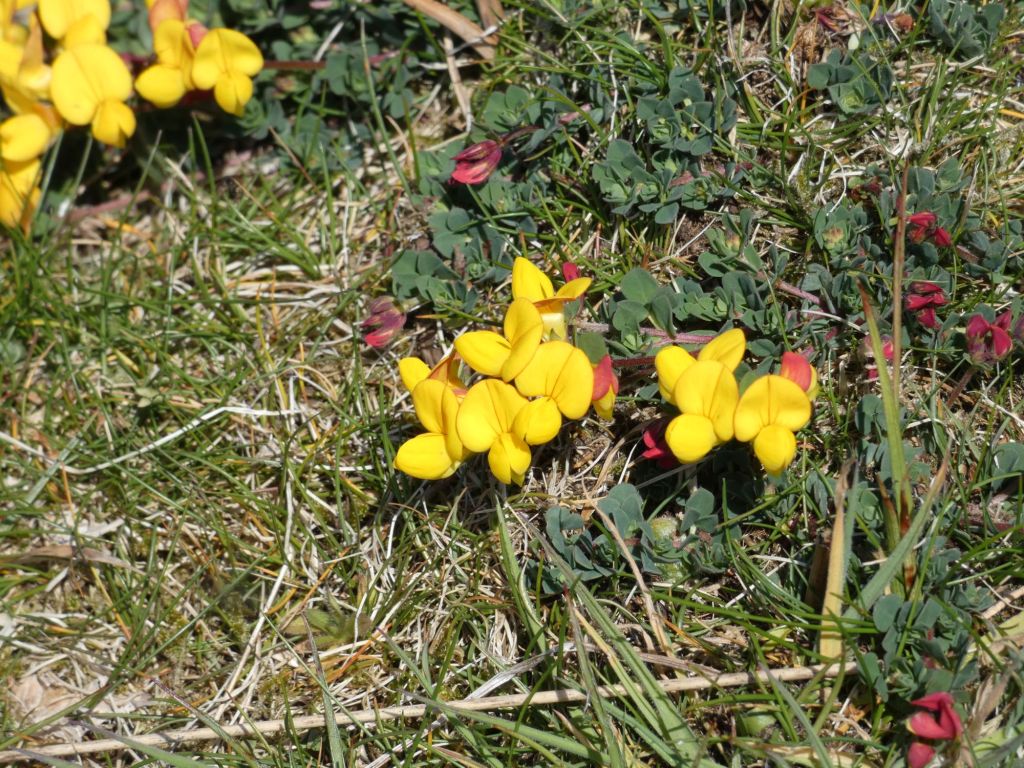
    A few flowers to distract me from my battle.
    Looking east towards the Ballachulish bridge and Glen Coe.

    At the narrows, I decided to ferry glide across to the west side of the Loch – maybe there’d be some shelter from the wind over there. The crossing went smoothly, and I only lost a few hundred metres to the current. However, I still had to get past the point where the current ran fastest. It took a serious amount of effort. The shore just inched by on the left side until the current finally eased up on the other side of the ferry ramp.

    The Corran ferry showing how a ferry glide is done.

    There was no more shelter from the wind on the west side than there had been on the east. To make matters worse, I was forced to stay 500 metres offshore to clear a fish farm. On the bright side, the sun was now shining.

    Attractive hillside in the sun.
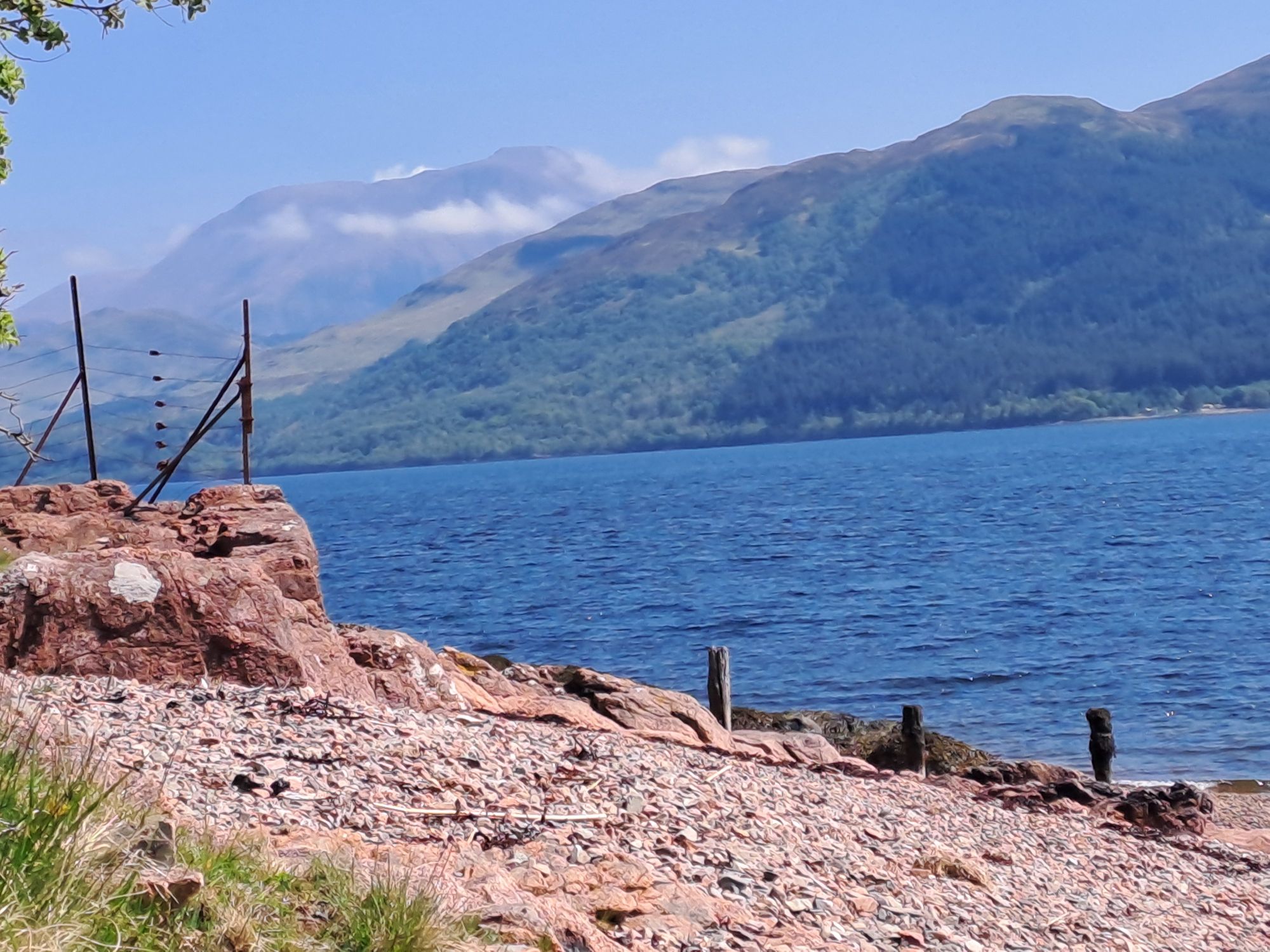
    At lunchtime, Ben Nevis finally put in an appearance.

    After lunch, I started to feel the impact of my short 4 hours of sleep last night. I was falling asleep at the paddle. I decided to stop again for short nap. When I awoke after 30 minutes, conditions had changed dramatically. The wind had gone completely, and I was able to switch back to wearing just a t-shirt again.

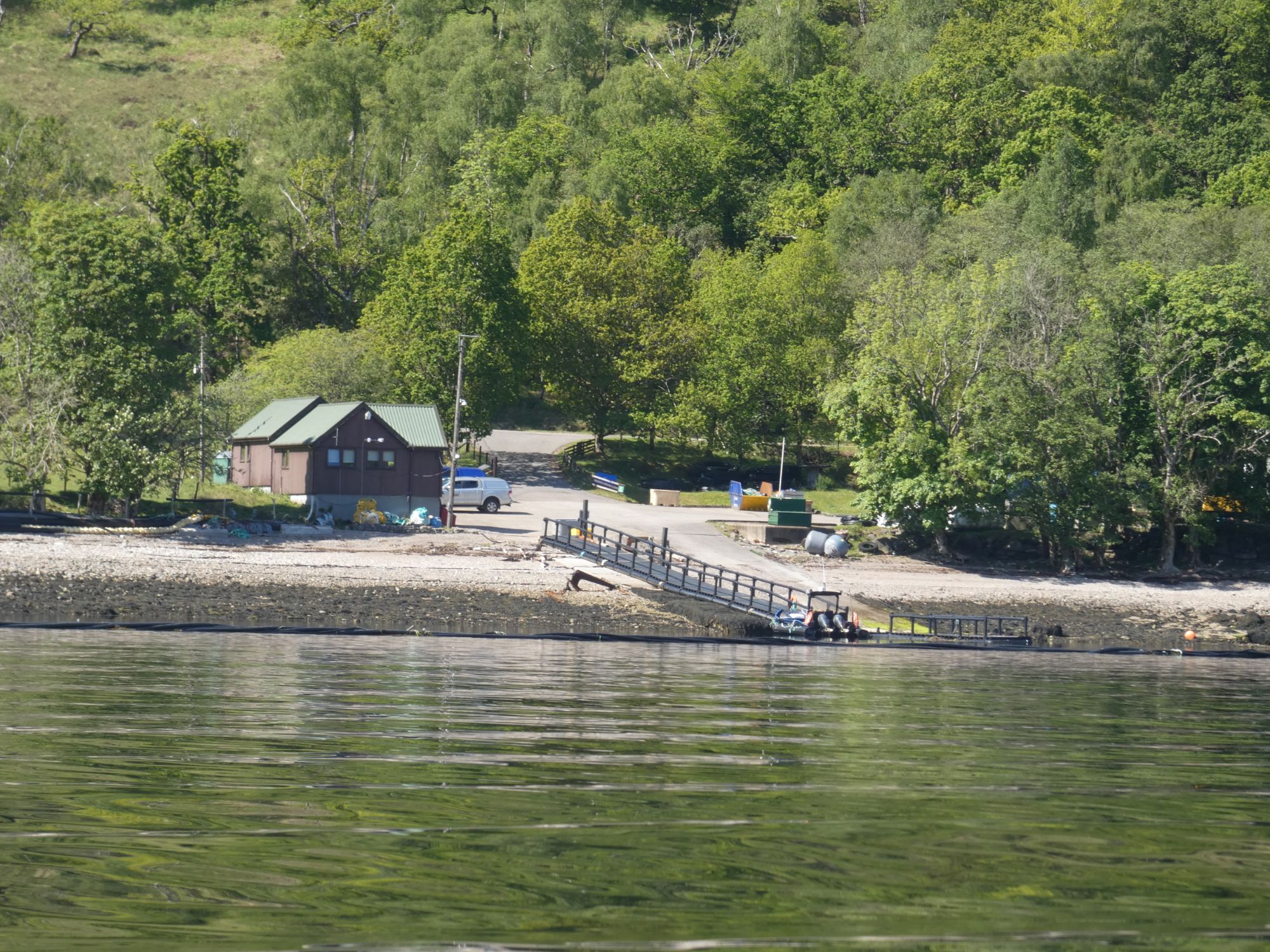
    Paul and I did this section of the route last year. On that paddle, we’d got caught out by this next fish farm. We’d attempted to paddle between it and the west shore but had had to turn back and go round when our path was obstructed by plastic tubes used to send food from the shore facilities directly to the fish enclosures.

    As well as the inconvenience, forcing paddlers away from the shoreline has the potential to cause real safety issues when the weather conditions are poor.

    Tubes at fish enclosure end.
    Shore facilities with tubes heading out to fish enclosures.

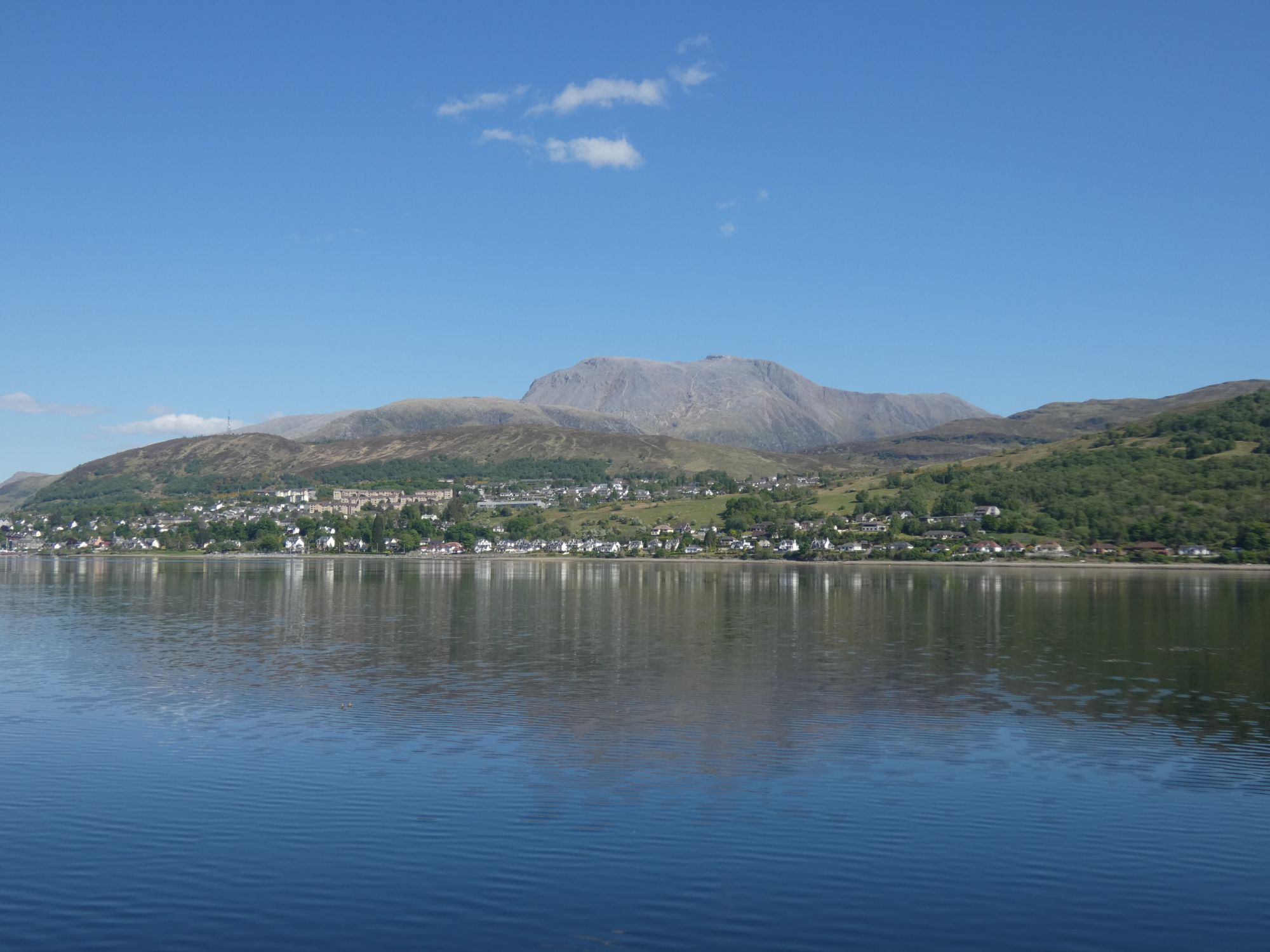
    The rest of my paddle up to and past Fort William was easy and done at speed now that the wind had gone. There were perfect views of Ben Nevis the whole way up.

    Ben Nevis and the southern outskirts of Fort William.
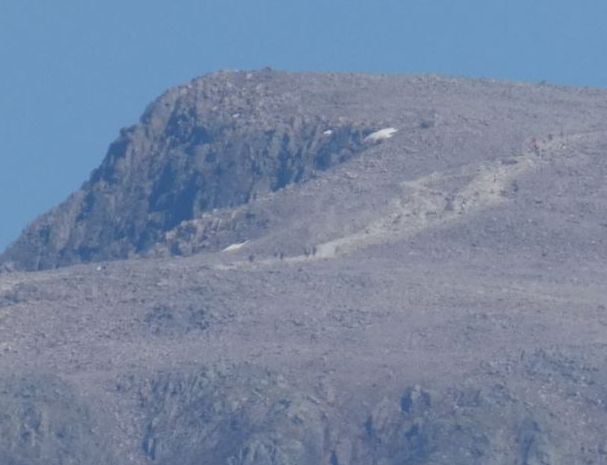
    Hikers approaching the top.

    My opportunity to do the first part of the Caledonian Canal had long passed, so I camped opposite, ready to take it on first thing in the morning.

    Camping in an Oak wood.
  • Day 9 – I unclog my nose in your direction

    • Gallanach to Dalnatrat
    • 31 kms

    I had three main objectives for today: have a seafood meal in Oban, take photos at Castle Stalker, and get as far up Loch Linnhe as I could. Objective three was definitely compromised by the first two.

    The flood flow going up Loch Linnhe didn’t start until 11.30, so I used this as an excuse for a relaxed start to the day. In truth, the currents in Loch Linnhe are not particularly strong and only cause problems in a couple of locations.

    The 2nd of my cycling neighbours, a young Dutch man, was also planning an Outer Hebridean cycle. Today, however, he was taking a break from cycling and doing a boat trip to Staffa. A great thing to do any day, but with the sun and light winds today, he was in for a real treat.

    I finally rolled my kayak down to the dive centre at 10 am. My out of hours arrival yesterday had been caught on cctv, so my £1 launch fee was doubled to £2. Still a bargain considering the other options.

    It was just a short paddle up to Oban, during which I pondered the options for landing there. In the past, I’ve always landed on the strip of beach below the main road in the centre of town. When the tide is out, it’s rough, gentle slopping and seaweedy. This is not a problem with two or more people as you can carry a loaded kayak a short distance up the beach to deal with the tidal movement for an hour in town. With one person, this is not possible. Even with the trolley, you need to offload kit before attempting to roll it over rough stuff. I would prefer another option.

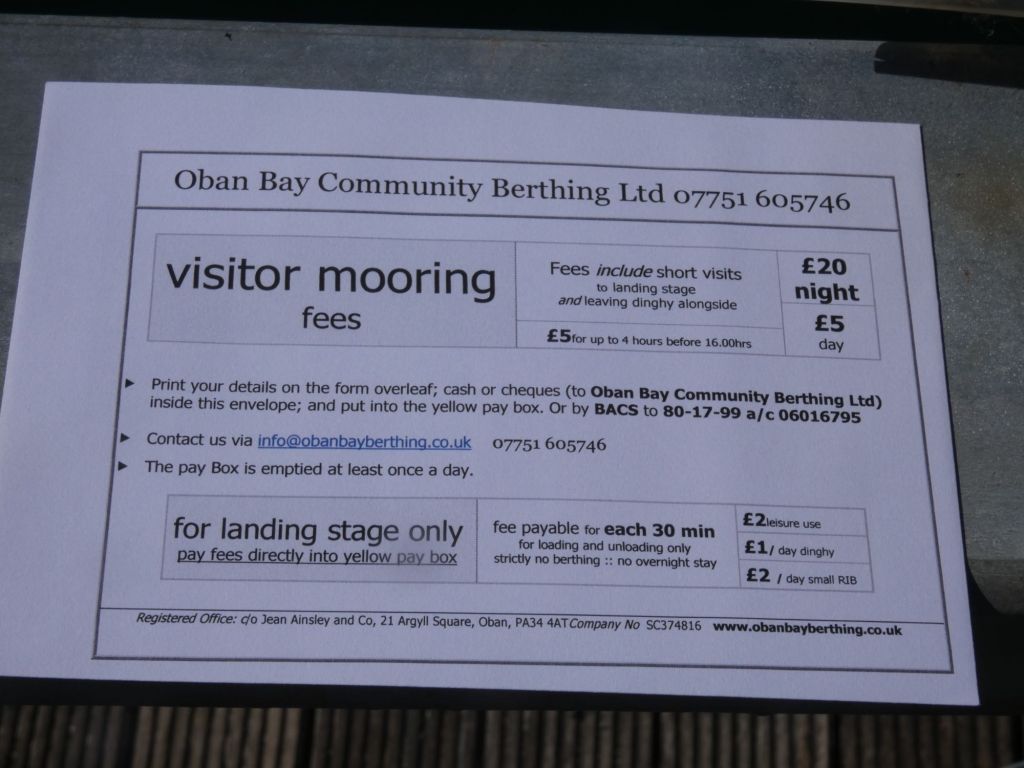
    On entering Oban bay from the south, I went under a walkway that led to a pontoon with many yacht tenders tied to it. This turned out to be the solution to my problem. For a mere £2 I could leave my kayak here and walk into town for that much anticipated seafood snack.

    Envelope with easy to understand mooring charges.
    West Coast Scallops
    Oban in the sun. With the rough beach in avoided
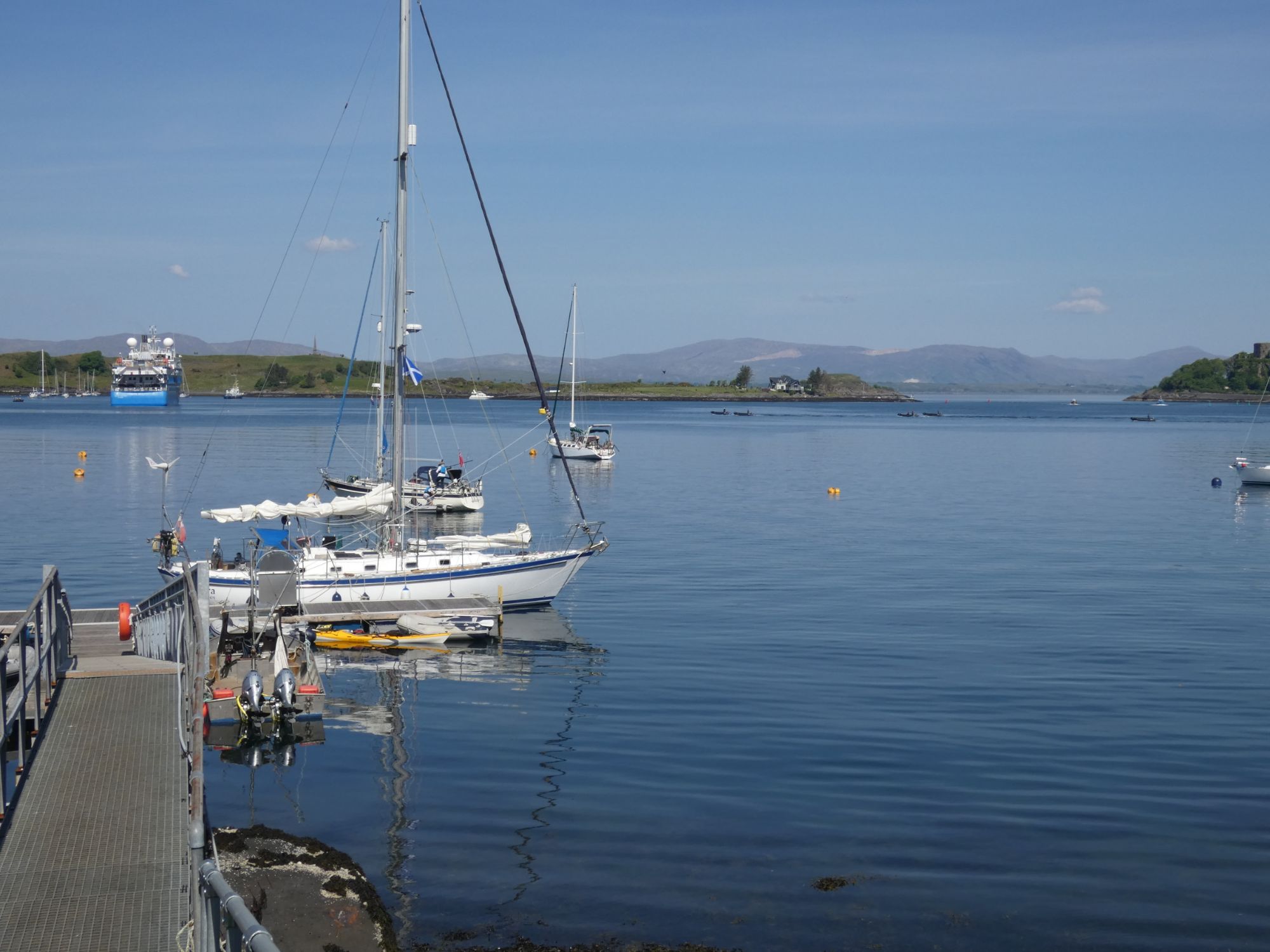
    The view out to Mull from above my pontoon mooring.

    The yacht moored next to me on the pontoon had sailed up from Southampton to take part in the Scottish Islands Peak Race beginning tomorrow – Ben More on Mull, The Paps of Jura & Goatfell on Arran. I’ll be keeping an eye out for Tahira of Beaulieu in the results table.

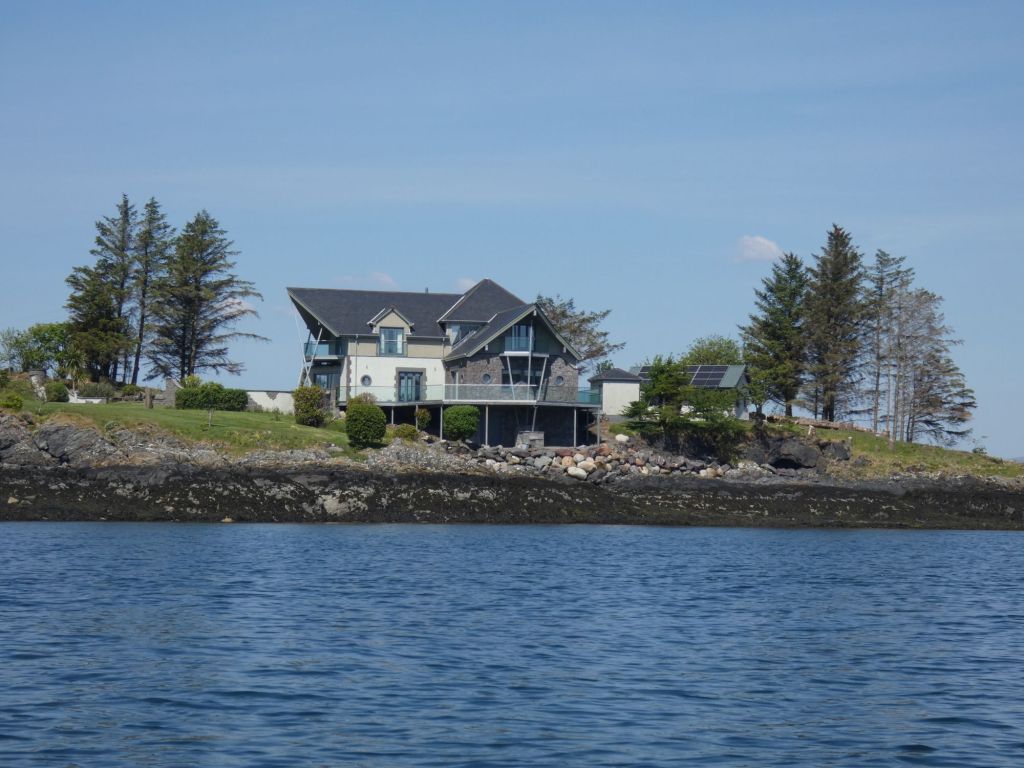
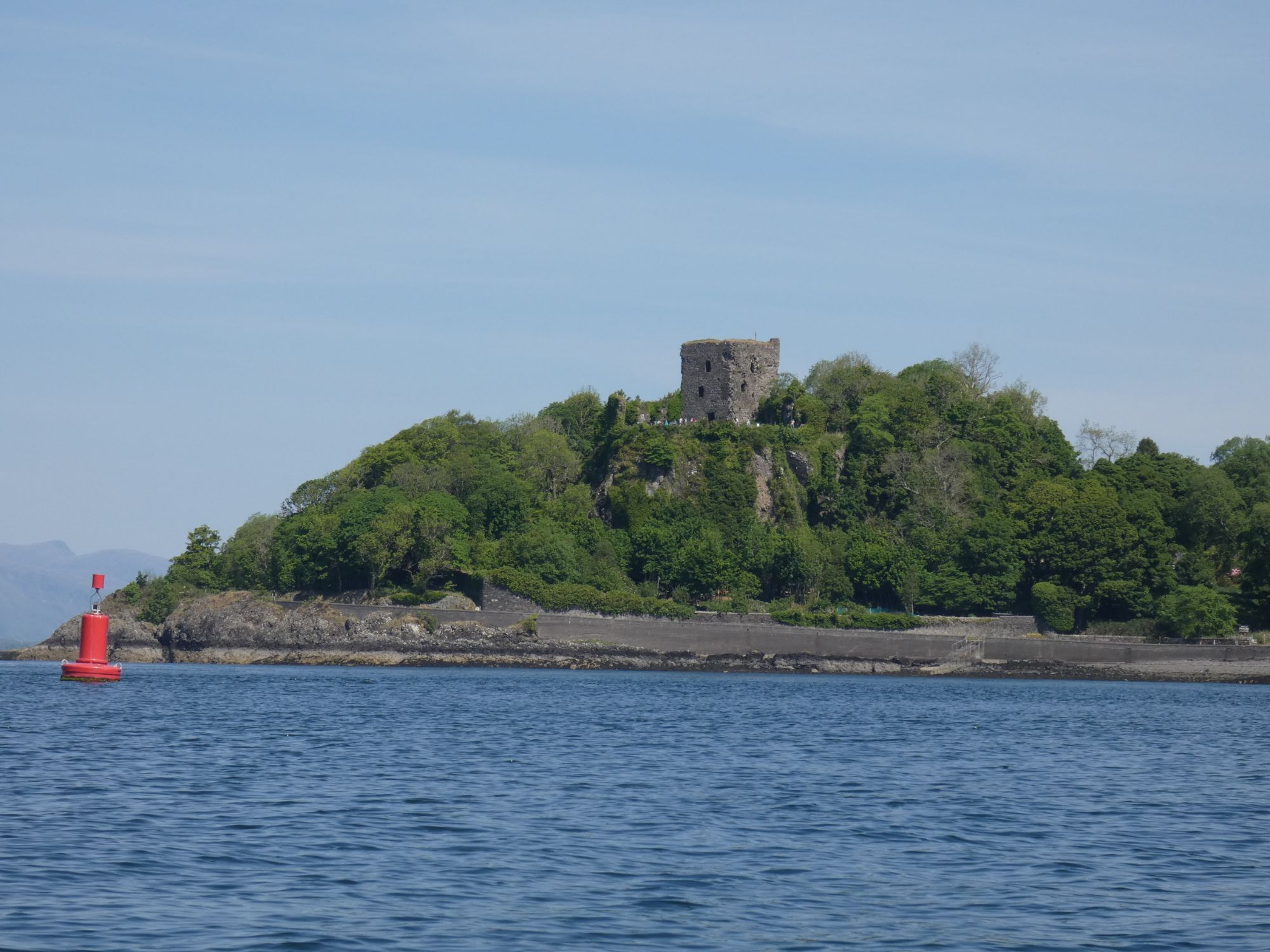
    I set off again across the bay, crossing the channel at the narrow buoyed entrance where it is easy to see what is coming and nip across quite quickly. There are two quite different buildings on either side of the channel here.

    A “des res” on the Kerrera side.
    Maybe once a “des res” on the mainland.

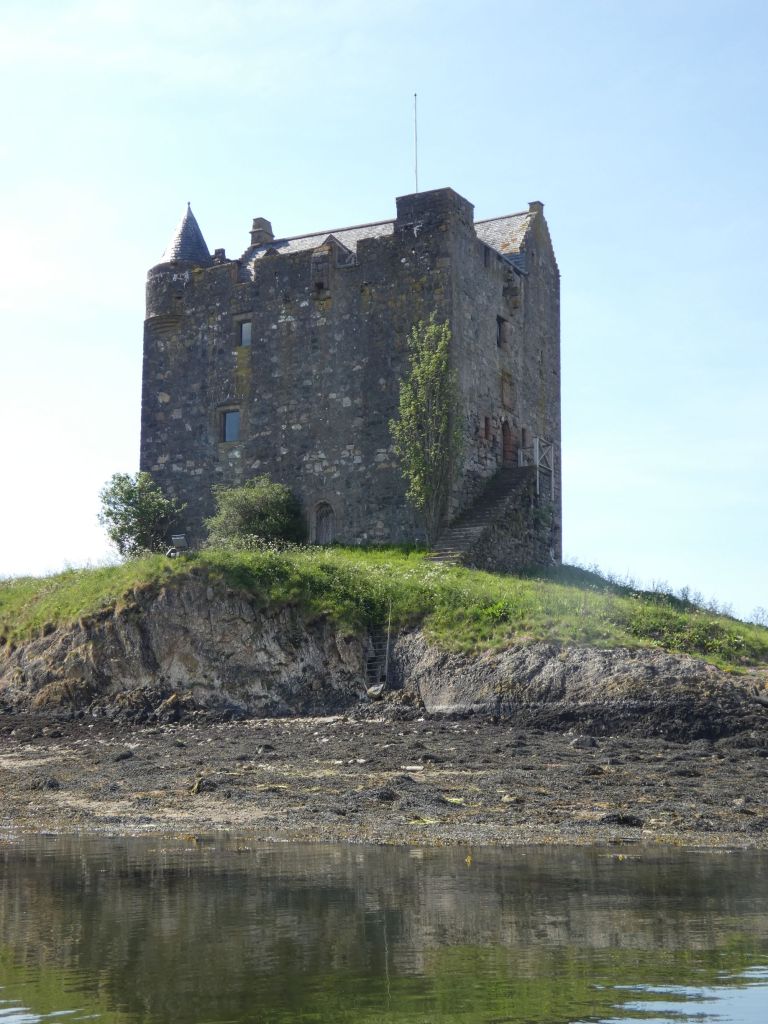
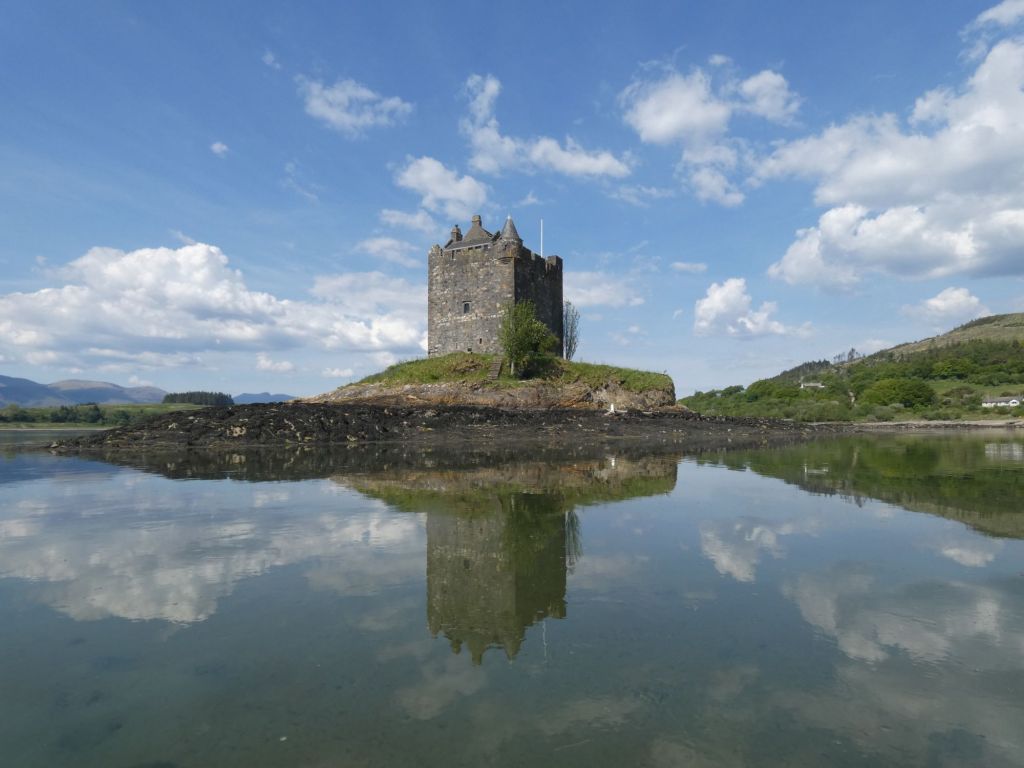
    Once out of the bay and past Ganavan beach, I headed north towards Lismore until I was in the centre of the channel. At this point I headed NE, hoping to make the most of any tidal assistance. I only really noticed the push at the north end of Lismore. After this I headed into the shallow waters around Castle Stalker. There was just enough water to allow me to get all the way around it. This is one of the castles used in filming the French taunting scenes in Monty Python’s The Holy Grail. Everyone likes a Monty Python quote, but I’ll leave it for those interested to match up my castle photo with a YouTube clip. More interestingly, my deviation gave me the surprise opportunity to get a clip of a young otter clambering up the rocks beneath the castle.

    The Holy Grail is inside.
    Castle Stalker
    Young otter

    After this, the wind picked up and swung round to the NE. Paddling into this became an effort, so I sought out the first half decent campsite and got some rest 

  • Day 8 – The Slate Islands

    • Garvellachs to Gallenach
    • 30 kms

    There was no rush to get going today as the ebb tide was running south in the sound till 10.45. I got a good night’s sleep and felt recovered from my heat exhaustion of yesterday. I ate a leisurely breakfast before lugging all my kit down to the kayak in the channel.

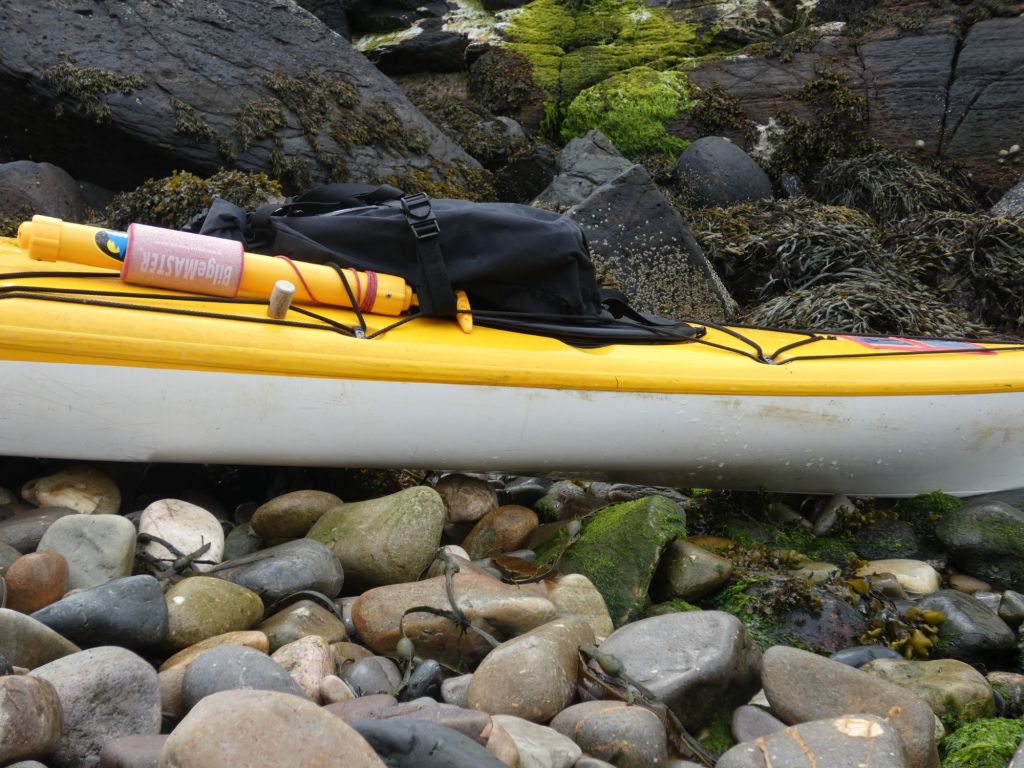
    Yesterday, I had again not been happy with the trim of the kayak. Today, I made an effort to do something about it. There was more room in the hatches now that I’d eaten through half of my rations. I put the wheels of the trolley in the front hatch first, and then tried to get everything else in. It worked!

    Wheels in the hatch.
    New low profile trolley bag.

    I was ready to leave before 10. As the channel continued to dry, I decided to get underway. I was in my short sleeve cag today as it looked like the sun was about to make an appearance.
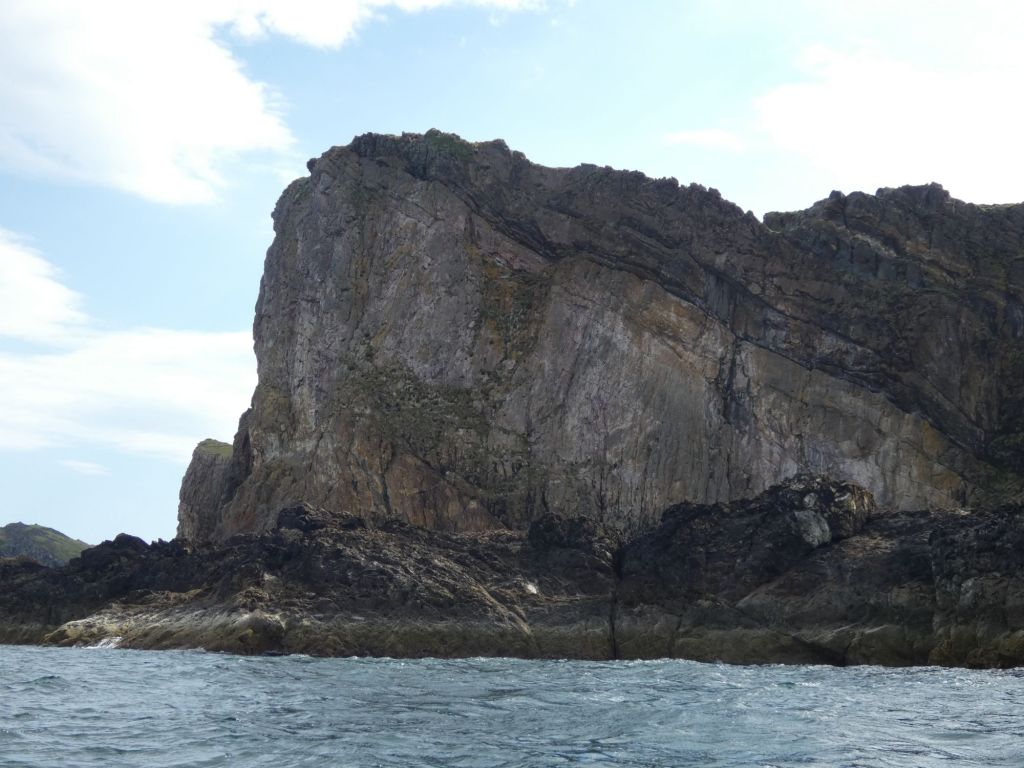
    I headed round the west side of the other islands in the chain to see what bird life resided on the cliffs. None! I was surprised. It looked like prime fulmar territory to me. There didn’t appear to be any bird life between me and Mull.
    The impressive but empty cliffs.
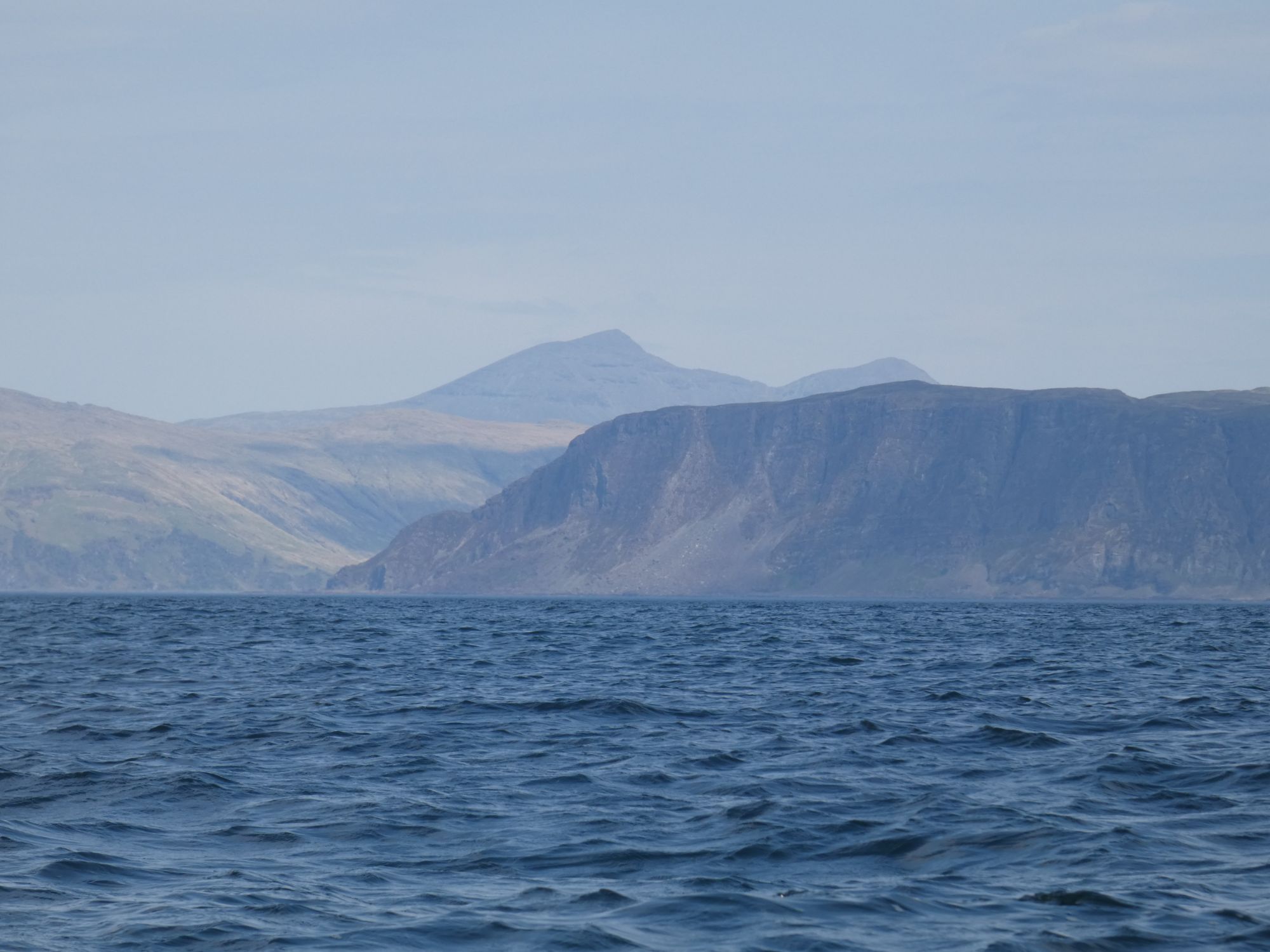
    Ben More on Mull and the empty skies.

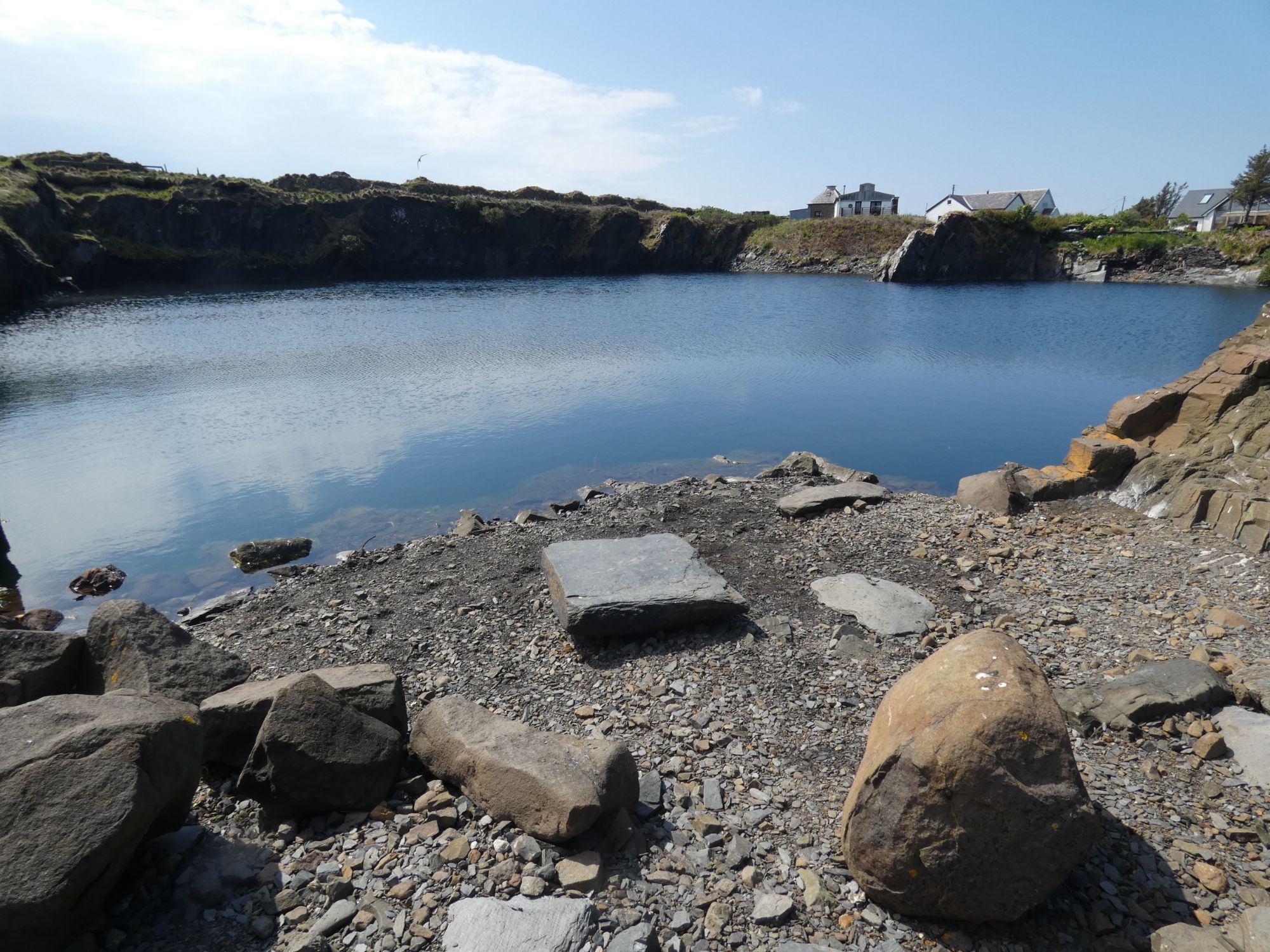
    Once round the north end of the last island, I headed east to Balnahua, the doughnut island (or donut to my American family). From above, it looks as if it has a hole in it – thè flooded slate quarry. I landed here for a snack and a few photos.

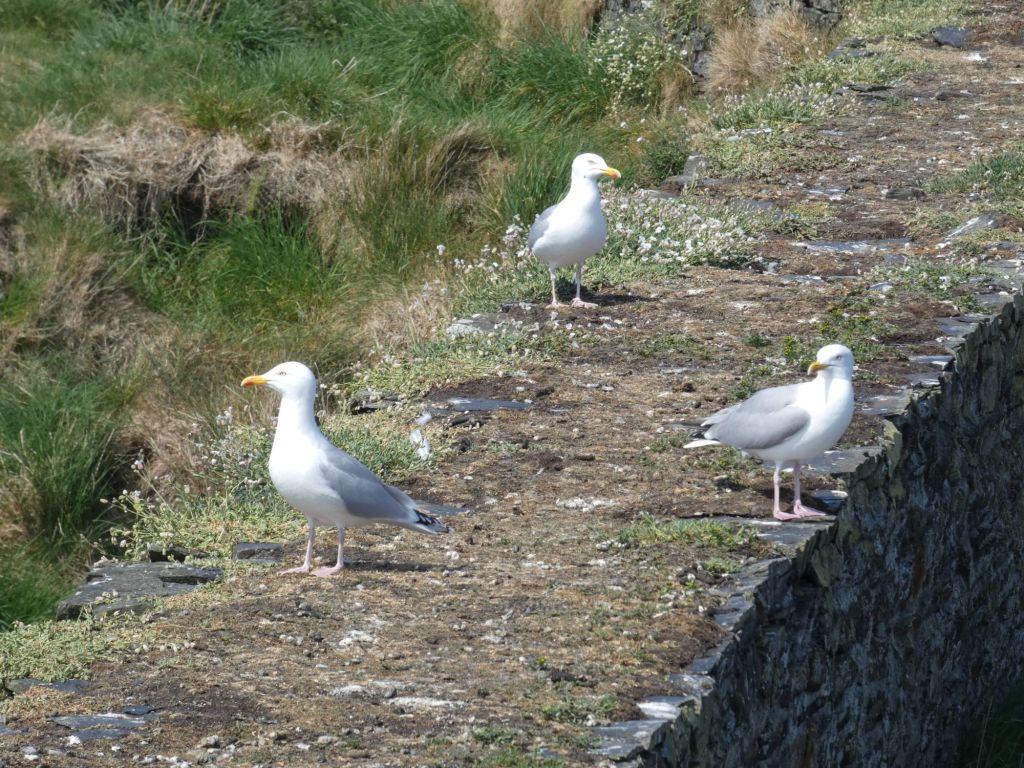
    Herring gulls. Nesting where they should be. Rather than the Edinburgh New Town roof tops.
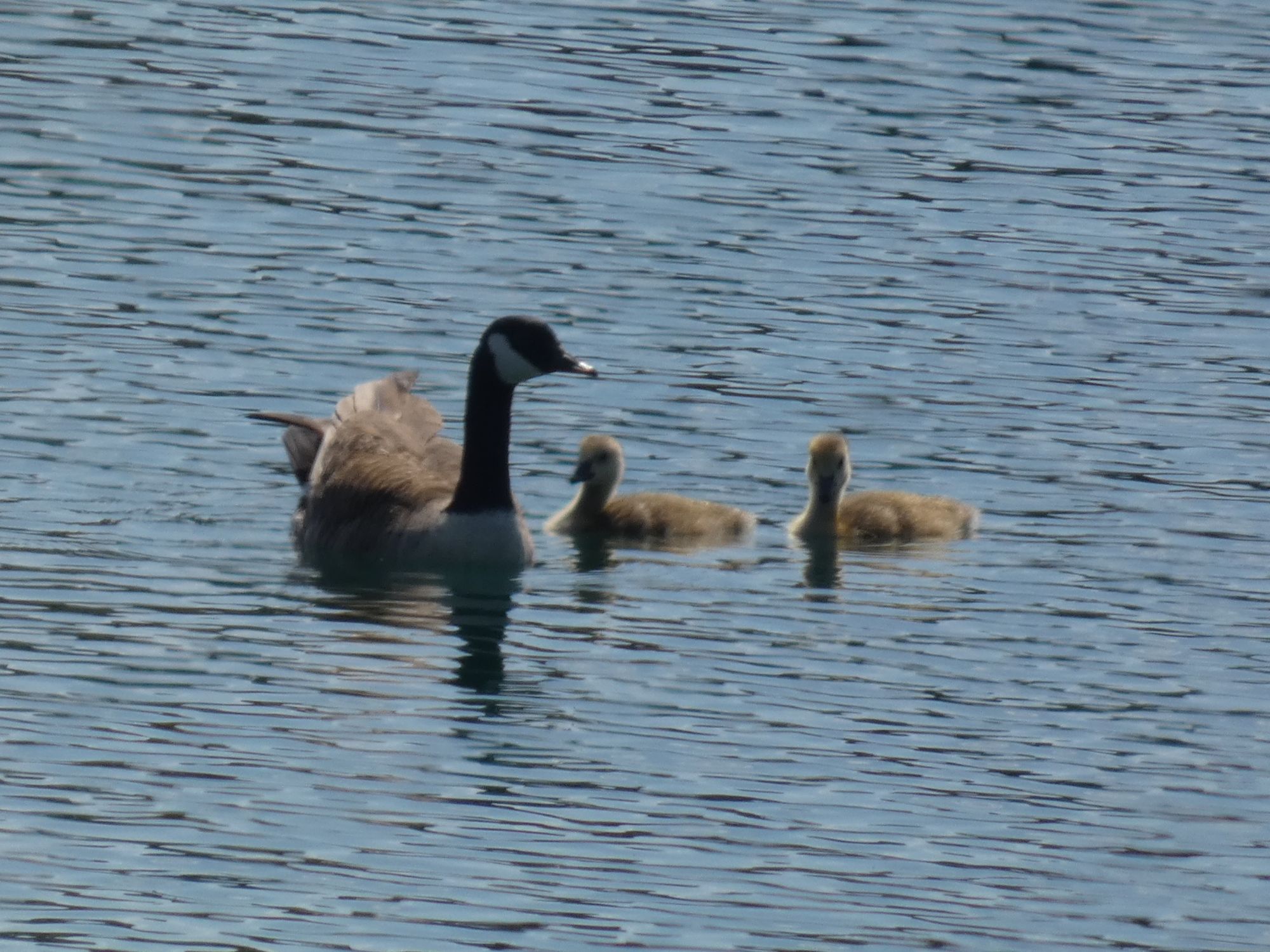
    Canadian geese goslings.
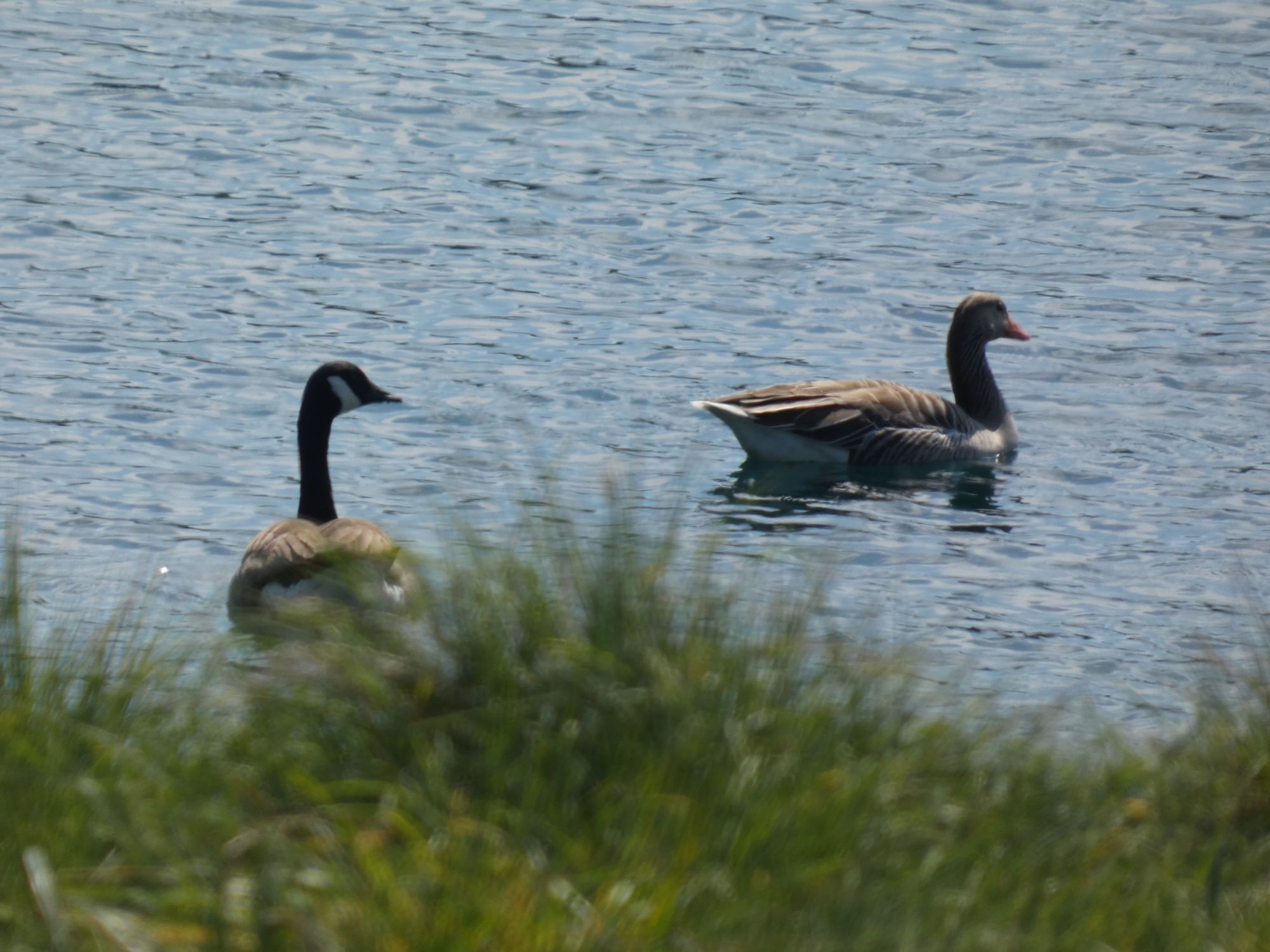
    Two types of geese. Canadian and graylag(?)
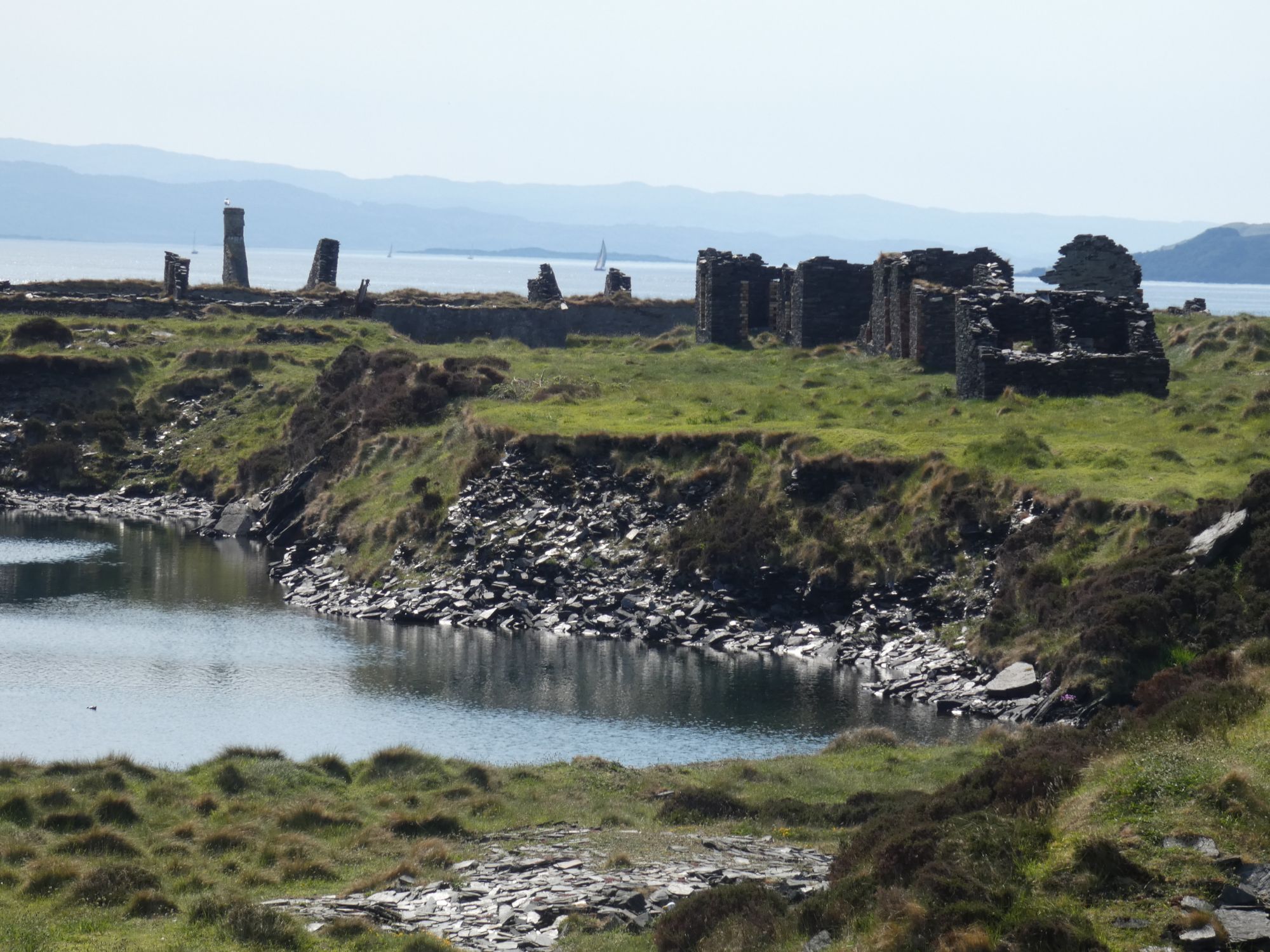
    Quarry works buildings.

    It was after taking these geese photos that I realised I’d mistitled my day 1 post. You’d think I’d know the difference between a gosling and a cygnet. Fixed now.

    I took the opportunity to remove my cag here and spent the rest of the day with just a t-shirt.

    It was then an easy paddle on to Easdale, another Slate island. I was surprised to realise that I’d never actually visited it before. Wendy and I rented a cottage across the Easdale sound in Ellenabeich for a week one Christmas. We even went out for a short paddle, but for some reason, we never landed on the island.

    In today’s sunshine, it was an very charming place. I imagine it can feel a little different in the winter. It seemed very quiet when I paddled into the small harbour and tied up on the visitor pontoon, but when I climbed up the steps on the harbour wall, I was encountered by 20 or so people sitting at picnic benches. I thought it must be a buzzing cafe, but it turned out to be a wild swimming group from the central belt up here to swim in some of the flooded quarries.

    Easdale is, of course, home to the World Stone Skimming Championships, so no visit to the island would be complete without a visit to the venue and a wee test skim. Although I fancied my chances, this year’s event in September is already fully subscribed – maxed out at 350 participants.

    I had a nice chat with one resident who’d married in to a family with a long slate quarrying heritage. She was from Perthshire originally but had now been living on the island for 40 years. There’s a good chance that the slates on my Edinburgh New Town flat come from here.

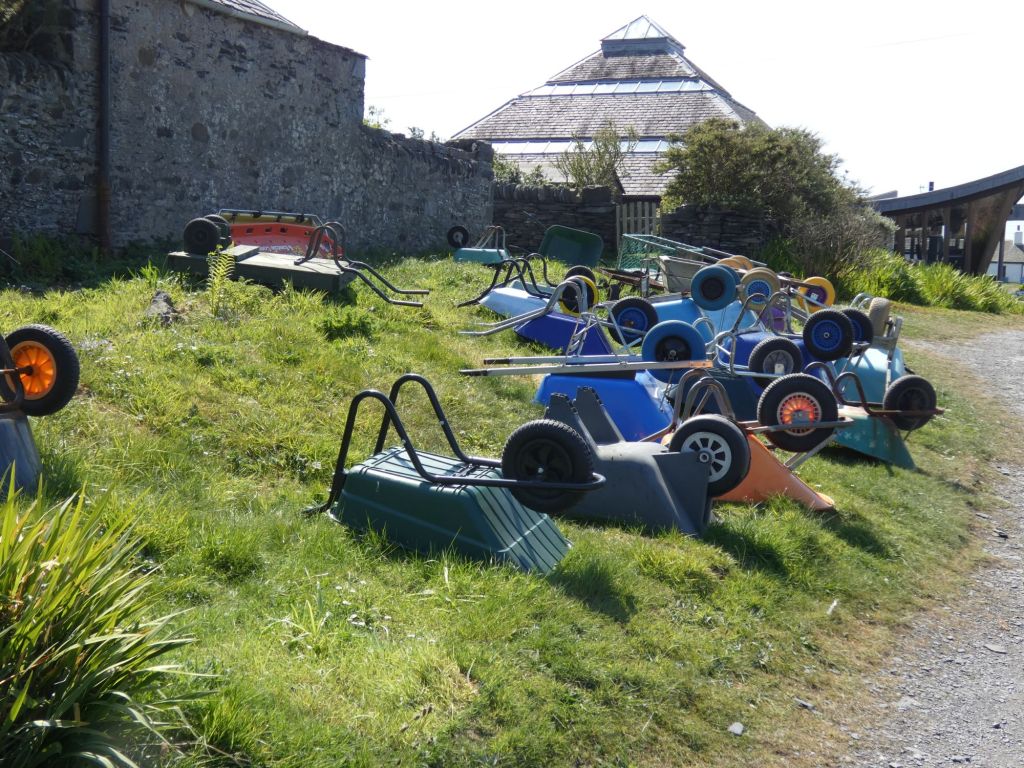
    The Easdale mass transport system.
    I was tempted, but carrying a rock in a kayak seems a little dumb.
    The bell looks in good nick.
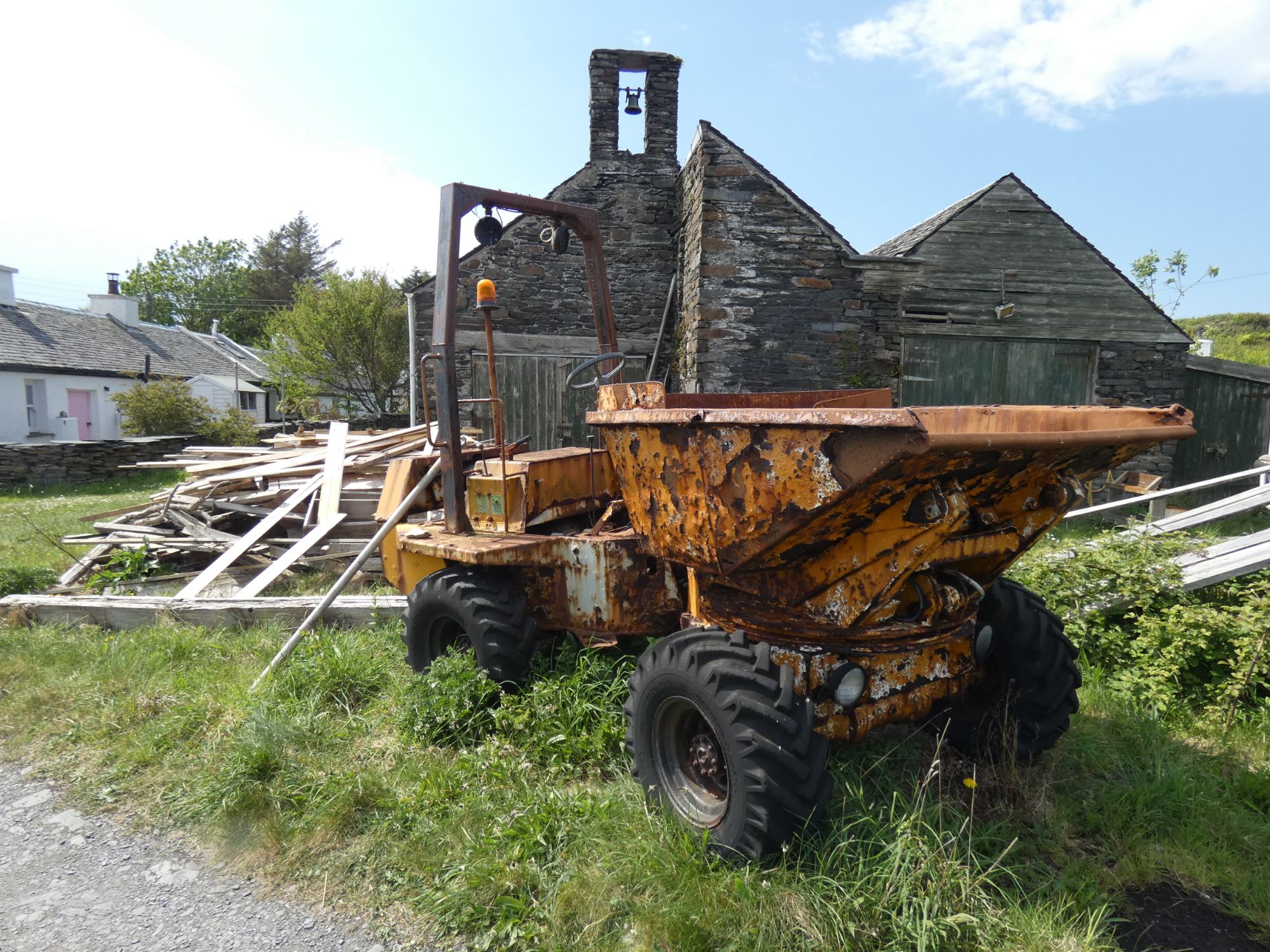
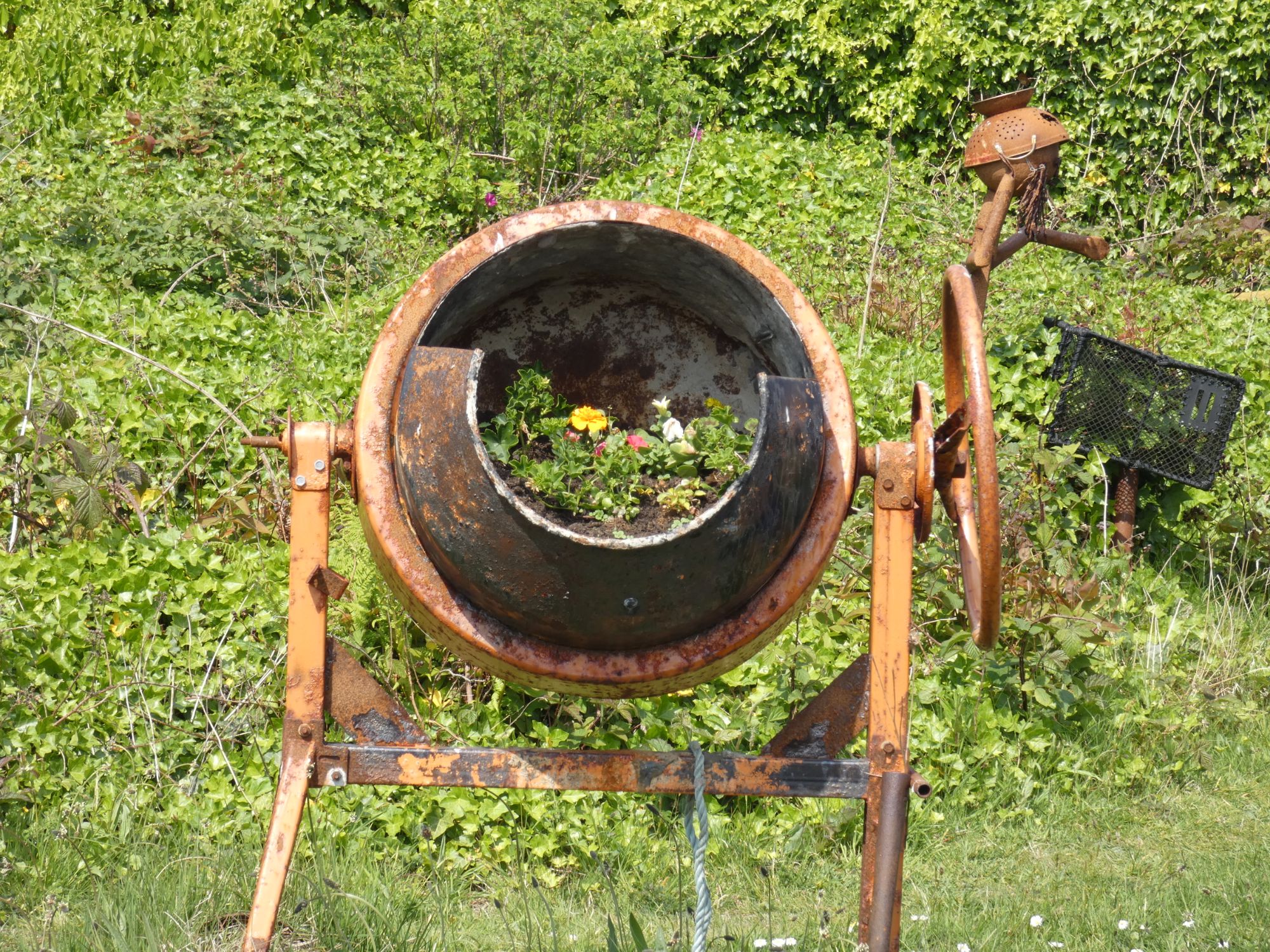
    Upcycling.
    The stone skimming venue.
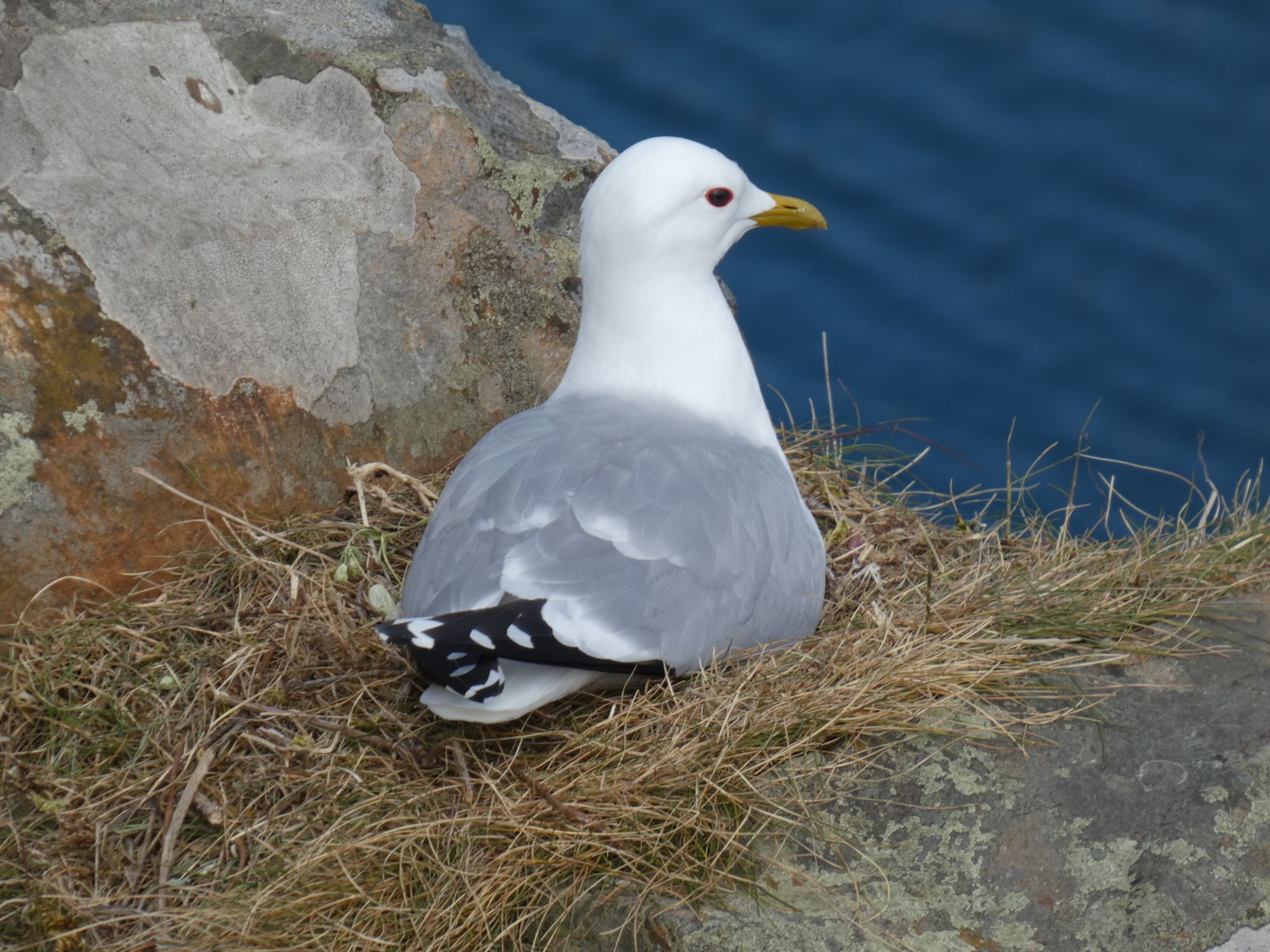
    Kittiwake nesting on the edge of a slate quarry.

    I didn’t stay long enough to see everything I’d have liked to, but it was still too long to make my hopes of getting to a camping spot beyond Oban unrealistic. I therefore took it easy paddling up to the campsite at Gallenach south of Oban.

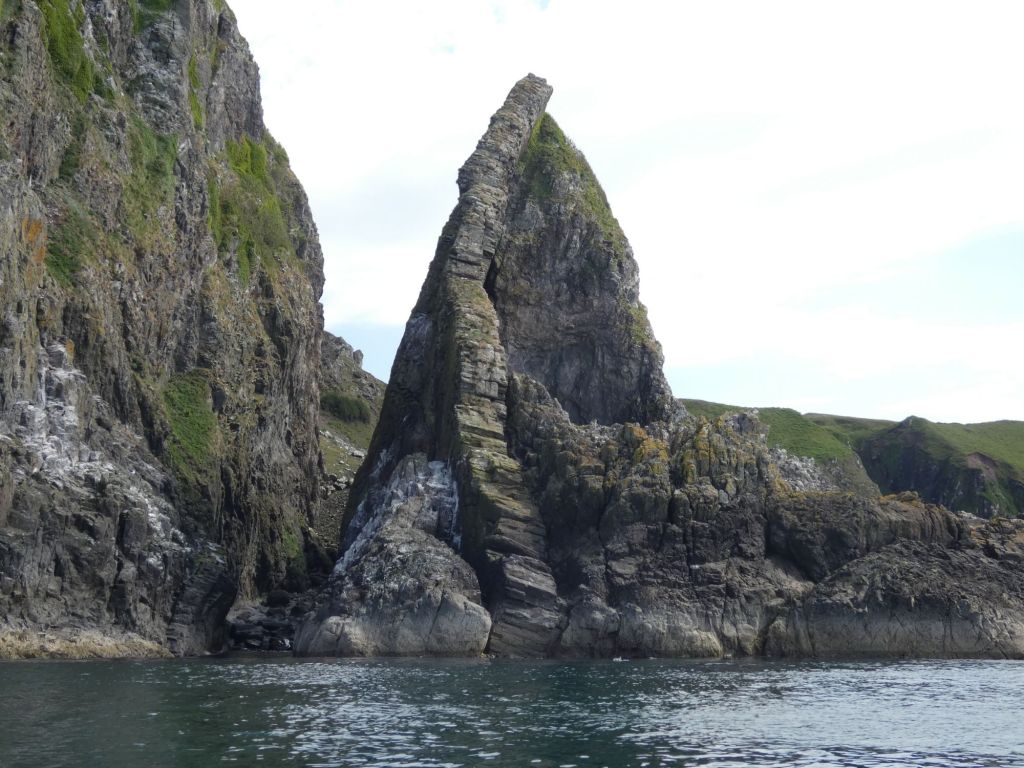
    A dyke
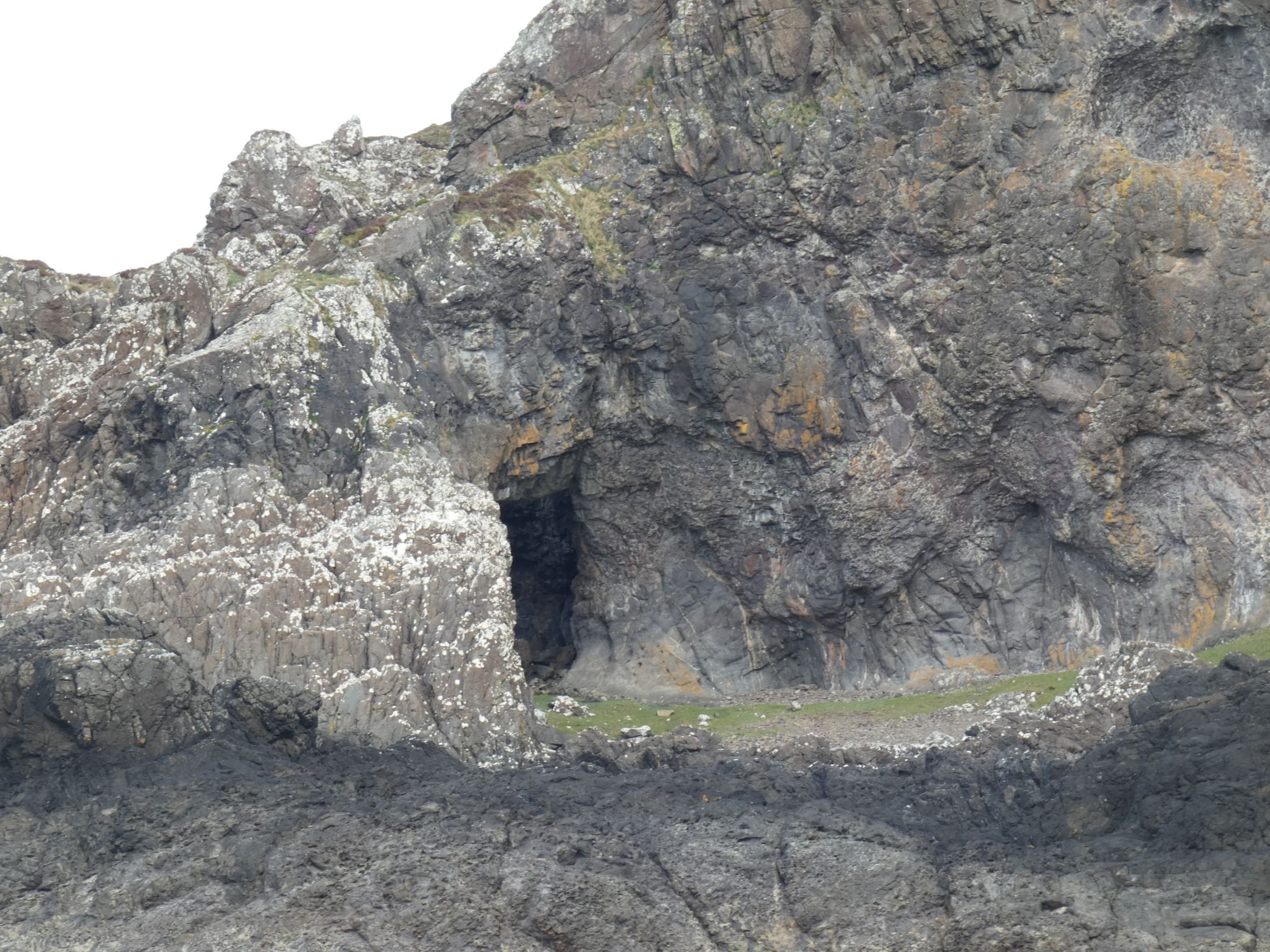
    A cave
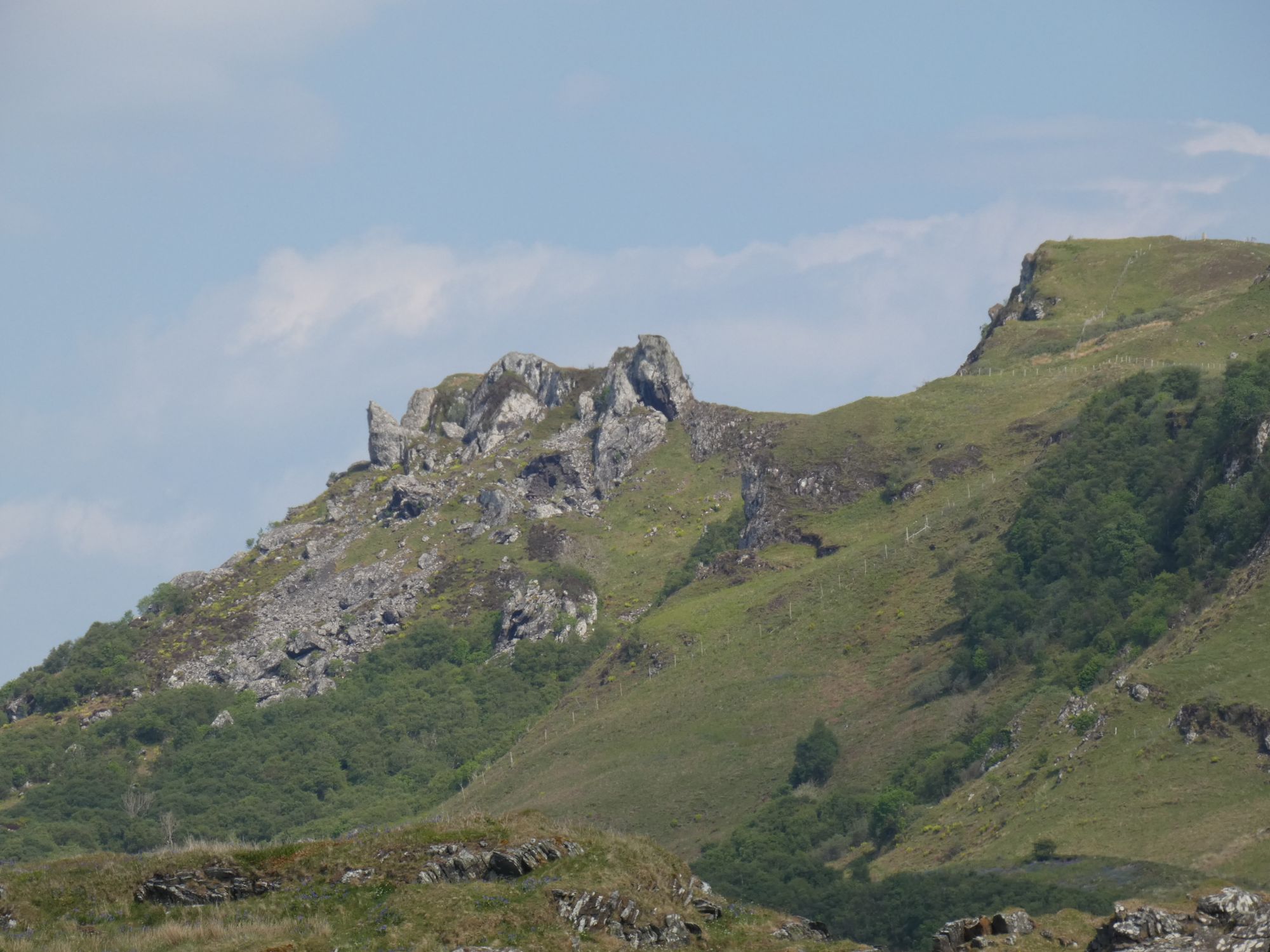
    A citadel
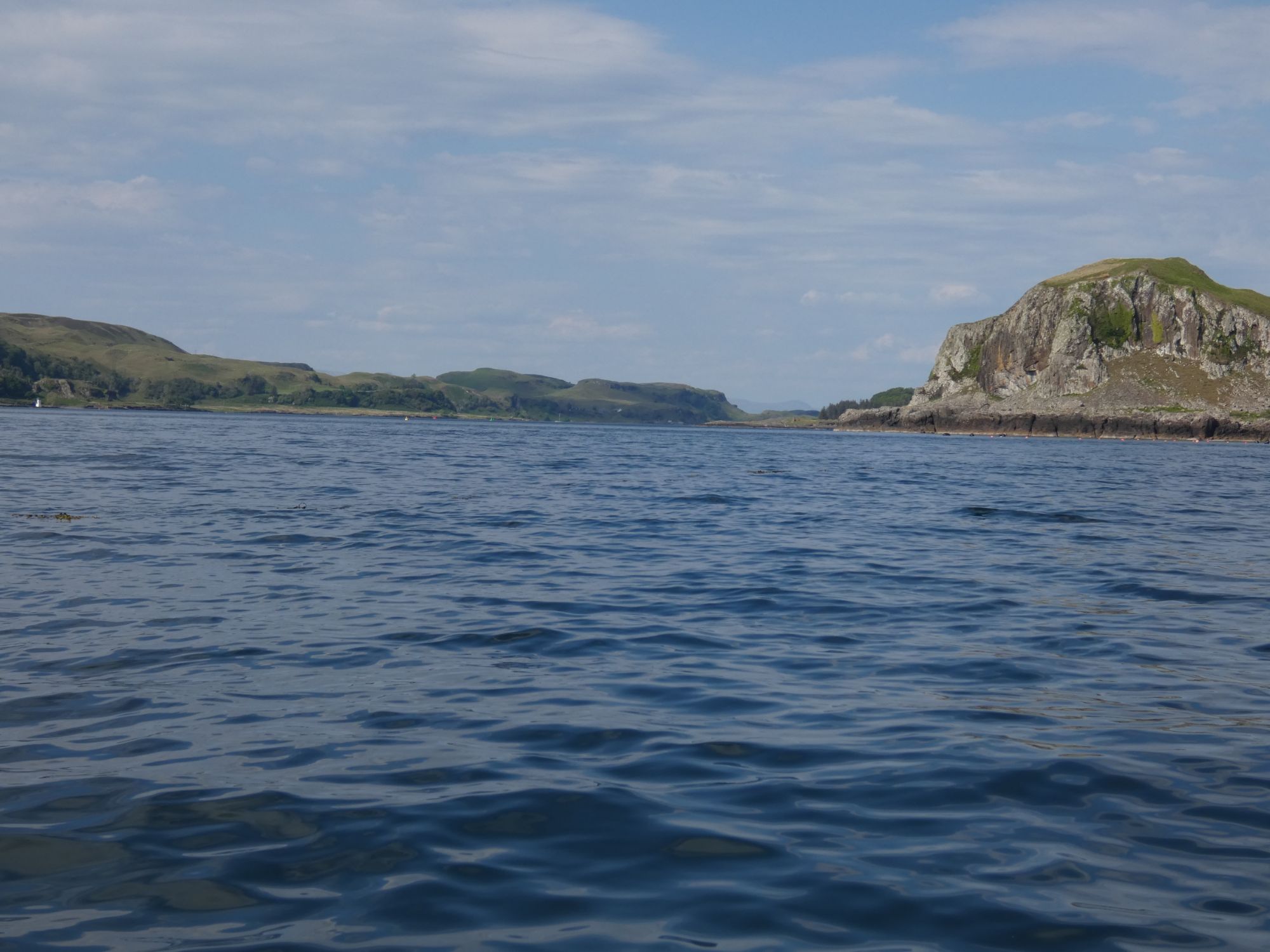
    The Sound of Kerrera

    The campsite has an old jetty on the water’s edge, but getting a kayak out here and up to the campsite would be extremely difficult. I paddled a few hundred metres further to the nice boat ramp at the Puffin Dive Centre. It was just after 5 and had closed for the day, but there were two fellow paddlers sitting in a camper van who welcomed me ashore. Ann and Heather had just finished their final day of a series of paddles in the local area and were able to fill me in on the dive centre’s facilities and charges.

    I walked up to the campsite to make a booking and check the suitability for getting my kayak there fully loaded. Within a couple of hours, I had my kayak parked up next to my tent in a nice spot, looking over to Kerrera.

    My camping neighbours were both cyclists. One was heading over to Barra on the ferry tomorrow to lead a group of female cyclists on an Outer Hebridean adventure.

  • Day 7 – The monastic life for me

    • Crinan to Garvellachs
    • 32 kms

    Crinan marks the end of stage 2 of my journey. Today is the start of the West Coast section. Between Crinan and Oban there are a few different routes I can take – hug the mainland coast or take in a number of the numerous islands. All options require careful consideration of the tides, as the tidal flows can be very strong in the various sounds and firths.

    I have opted to make the most of the fine settled weather and take the most westerly route – out to the Garvellach islands. I have been out there a few times, but never starting from Crinan. It involves going through the narrow gap between Jura and Scarba – the Gulf of Corryvreckan. Home of the notorious Corryvreckan whirlpool that almost put an end to George Orwell completing 1984.

    I’ve been through here a couple of times before on circumnavigations of Jura, and it is relatively straightforward if you time it for slack water between ebb and flood. Today, this would occur sometime between 9.30 and 10. I sought a second opinion on my planning from David last night. He confirmed it was a doable plan and gave me plenty of other advice on what to look out for.

    I awoke this morning at 4.30, paddled across to Crinan to fill my water bags, informed the Belfast Coastguard of my trip, and was heading west across the sound of Jura by 6.30.

    Being at the north of Jura at slack water meant crossing the sound of Jura while the ebb was still running. I could maintain a fairly straight course until I hit the group of islets in the centre of the sound. At this point the strong southerly flow dominated. Although I stuck to a NW bearing my track shows that I was often travelling SW. All I could do was maintain my heading, knowing that when I got across to Jura, the flow would reduce considerably and that I would be able to recover the ground I had lost.

    As I got within a couple of kilometres of the north end of Jura, I saw a lone kayaker ahead of me – the first sea kayak I have seen on the water since leaving Edinburgh. By the time we stopped for a chat, we were in an eddy that kept us moving north without any effort from us. He, Rob, lived locally on the north of Jura – a sparsely populated part of a sparsely populated island (a total population of about 250). He was interested in my trip and would have accompanied me to the Garvellachs if he hadn’t had his son staying with him.

    I arrived at the eddy line between the north flowing eddy and the main easterly stream around 9am and could see that I’d still have a considerable time to wait before it would be slackening off. I went ashore for a bit.

    Whilst ashore I saw a sea eagle and a small heard of goats. The eagle was being harried on its way by some angry sea gulls, and I wasn’t in time to get a photo. I was able to capture this little video of the goats, though.

    Wild goats on Jura
    The last of the ebb at the Corryvrecken

    Once back on the water, I waited at the eddy line until it became less pronounced, and the main flow looked weaker. At 9.40, I was on my way. It weant without any drama, but I think I probably could have made things easier for myself if I’d waited 10 minutes longer. I was making slow progress against the remains of the ebb before I started to speed up.

    The rest of the paddle to the Garvellachs was long and hot as I’d put on my long sleeve cag at the beginning of the day. I was happy to finally get out of the boat around noon. That was six hours in the kayak with only the short break on Jura.

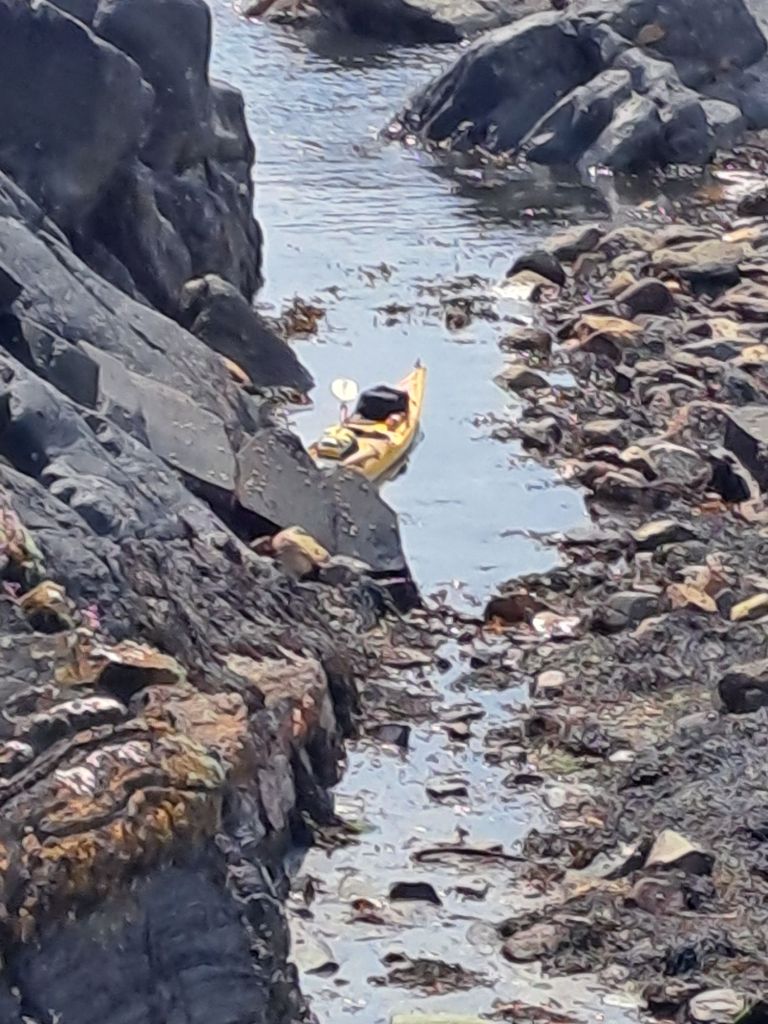
    The Garvellachs are a short chain of islands. The one I reached first, Eileach an Naoimh, was where I camped for the night. None of the islands have easy beach landings, and the only obvious place to get out is a narrow, rocky gully that ends in a pebble beach. As I was arriving at low tide, I’d have to wait for the water to come in before finally getting the boat to the pebble beach.

    Awaiting high water

    A few yachts were anchored close by, and I had company till mid afternoon. After they left, I had the island to myself. Though, a large yacht arrived late evening to anchor off shore for the night.

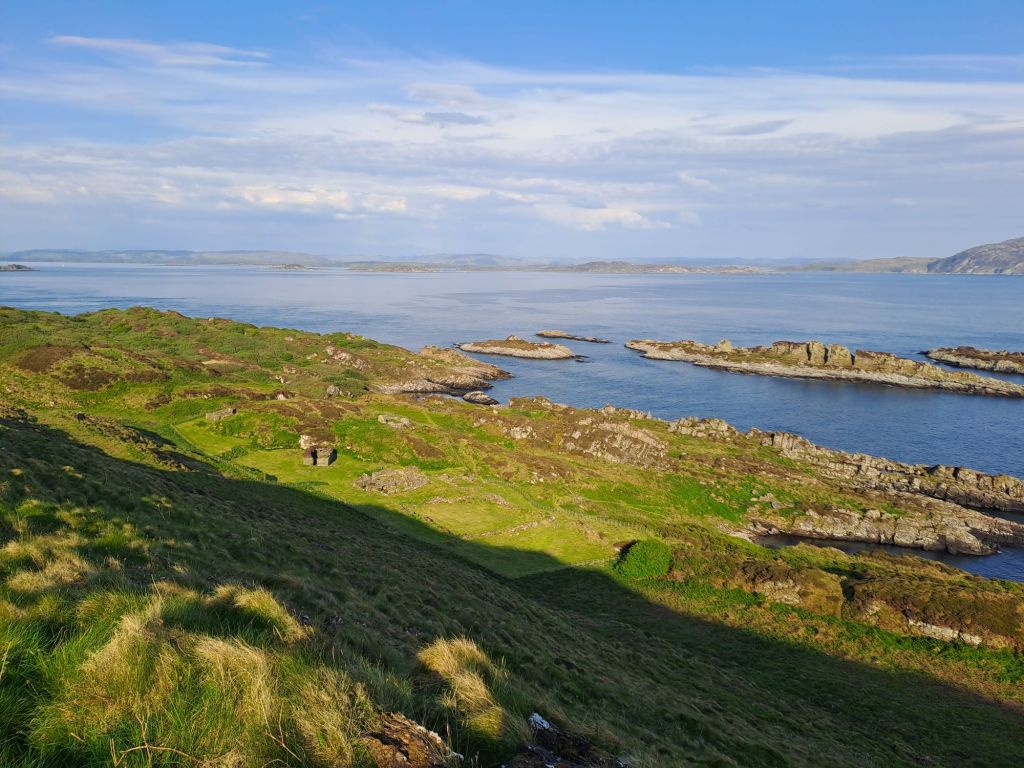
    A view from the summit. Monastery, islands, and mainland to the north east
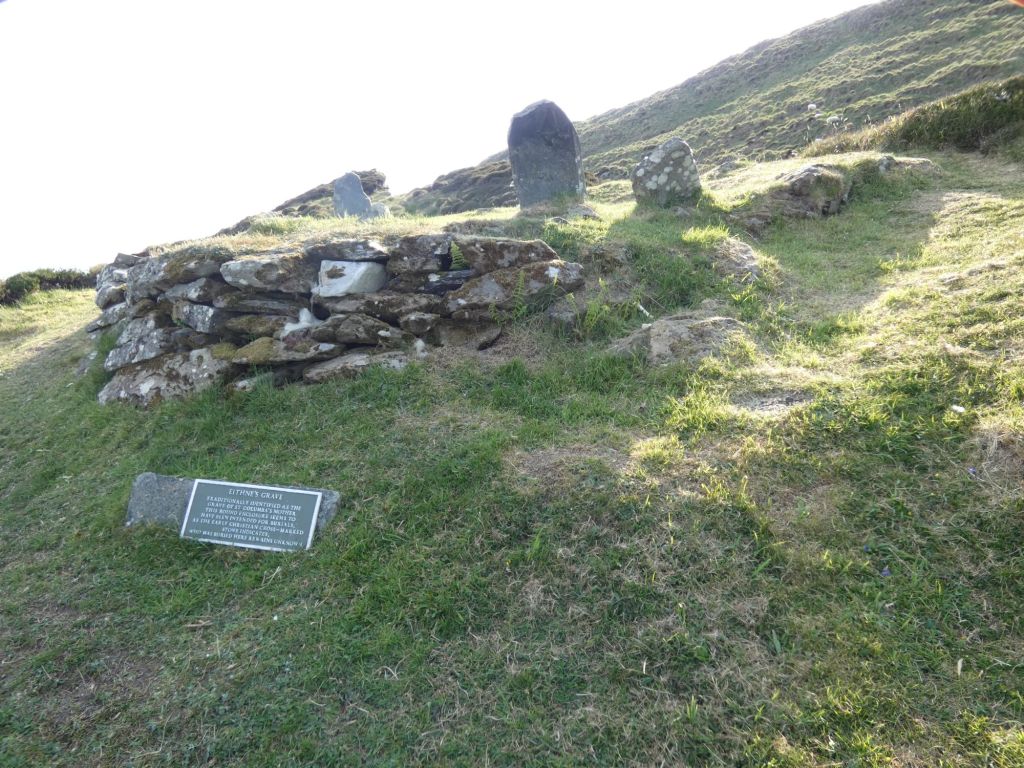
    The grave of St Columba’s mother, Eithne (allegedly).
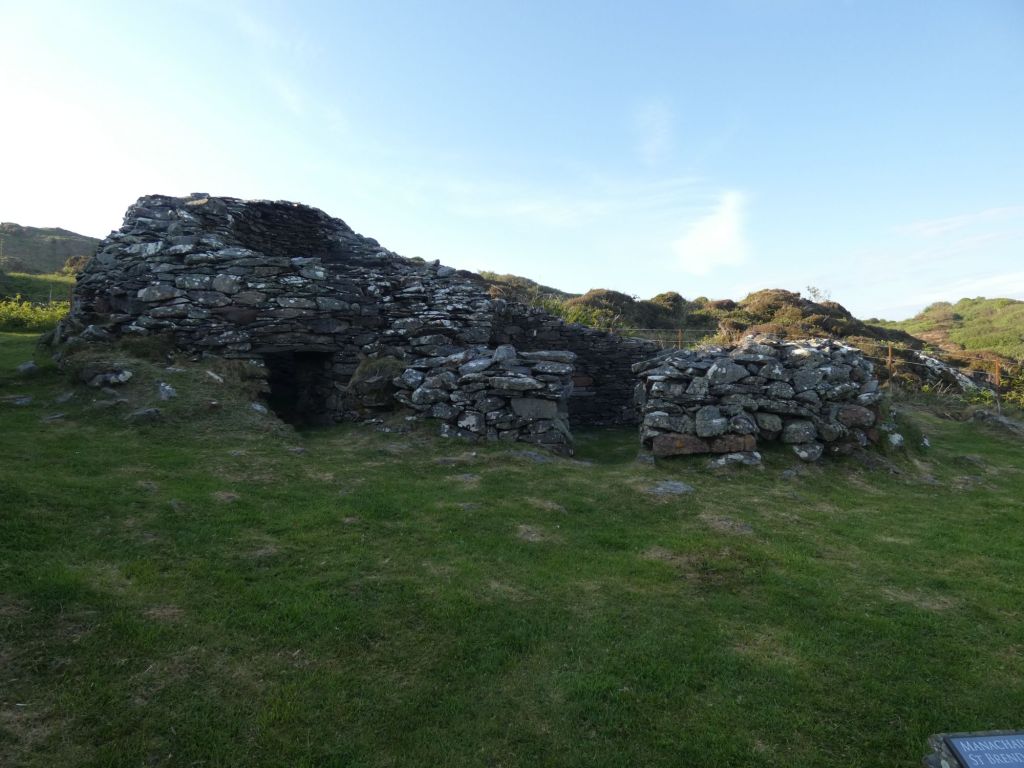
    Monastic cells.

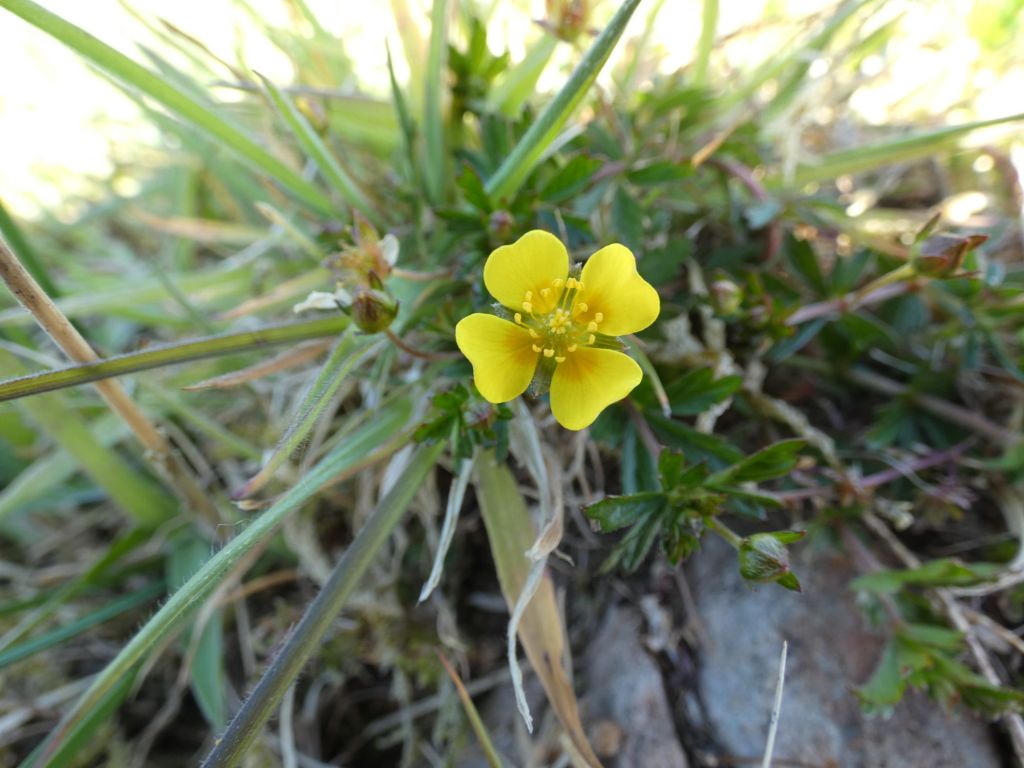
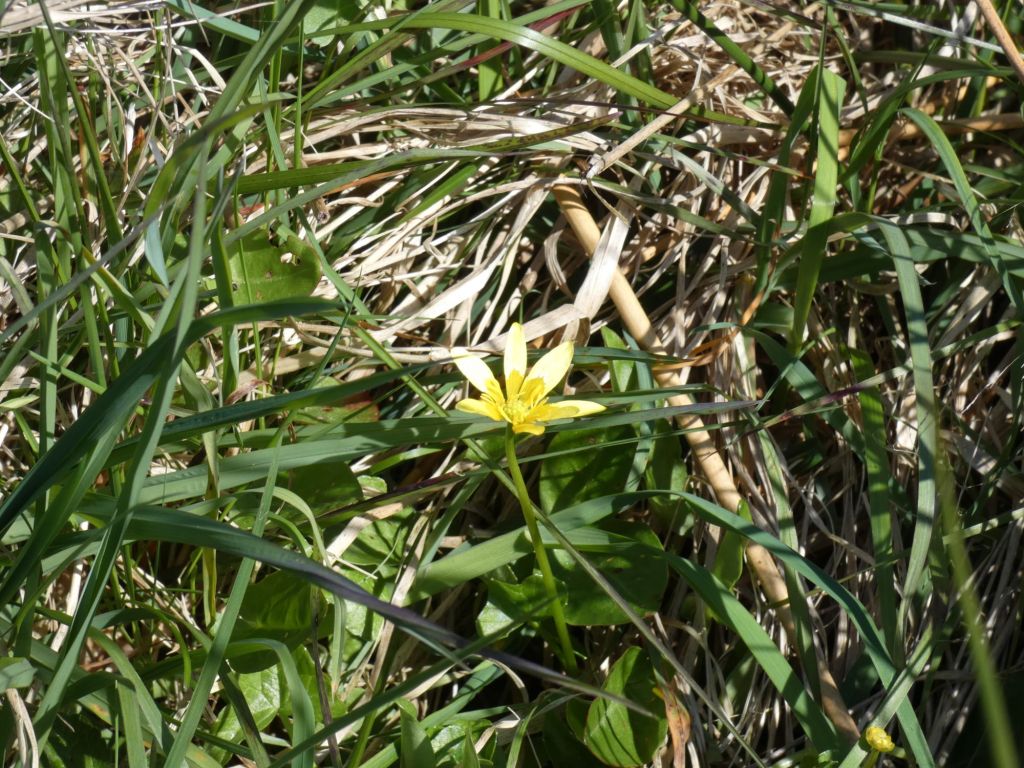
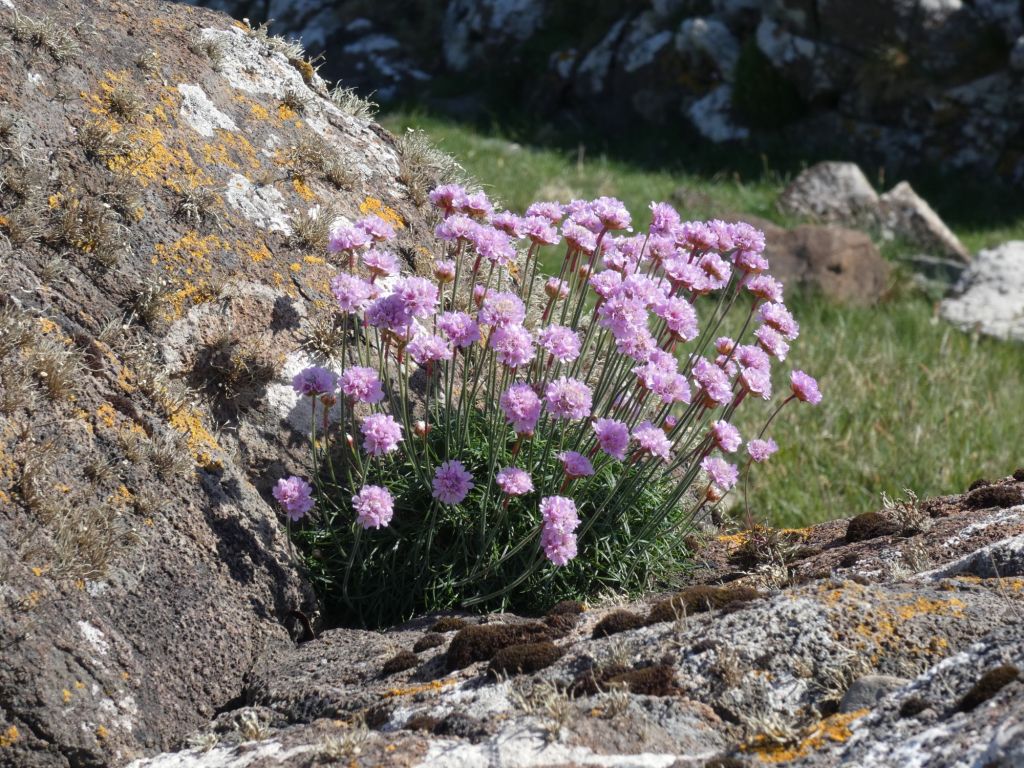
    The island flowers.

    Yacht arriving for the night.
  • Day 6 – Mister Chatty

    • Kilfinan Bay to Crinan
    • 26 kms

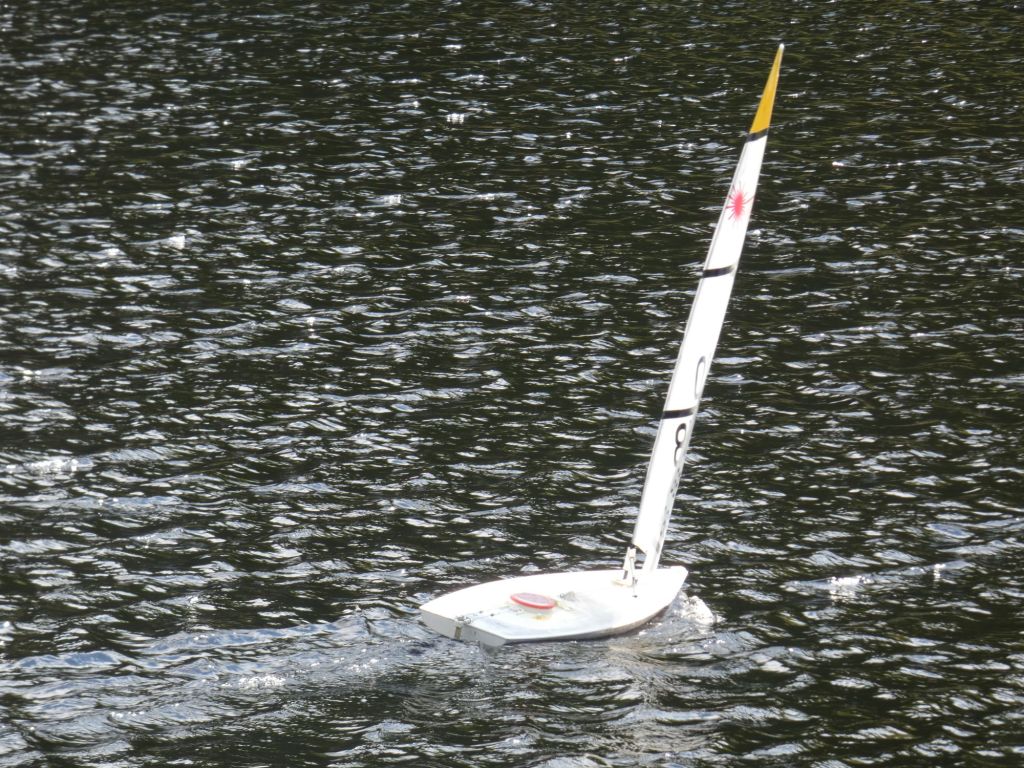
    From not seeing anyone yesterday, I was chatting with anyone who showed the least interest in engaging with me today:  the Scottish Canal’s man in the Ardrishaig Sea Lock office, two French men walking past as I portaged through Ardrishaig, Catherine the Christian Aid lady at lock 6, a lady swimming at the pond above lock 9, a local man sailing his model Laser dinghy between locks 9 and 10, two walkers from Inverness but now living in Cambrigeshire, and a guy from Glasgow getting onto a sit-on-top at Crinan. I’m sure I’ve missed a few others too.

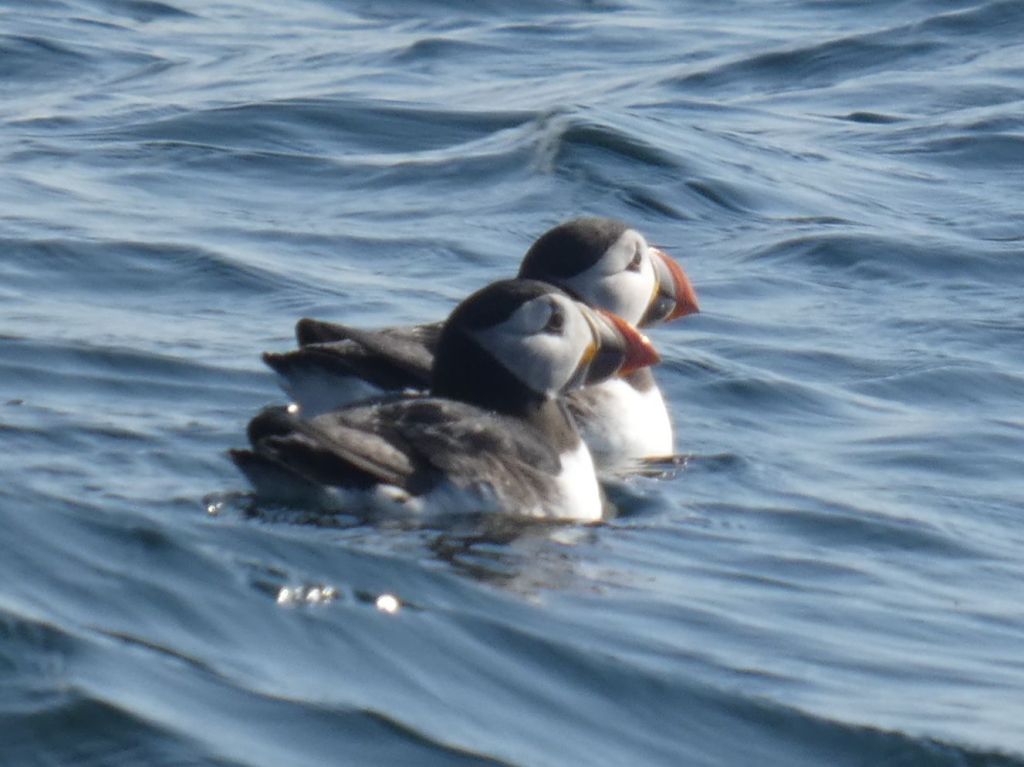
    The morning 7 km paddle across Loch Fyne was a good way to start the day. Nothing but the seabirds to keep me company. Most ignored me, but a group of small young gulls (Kittiwakes maybe) made repeated flyovers to see if they could work out what I was. Three puffins sped by – the first I’ve seen on this trip. A couple more were hanging out on the water a kilometre from Ardrishaig.

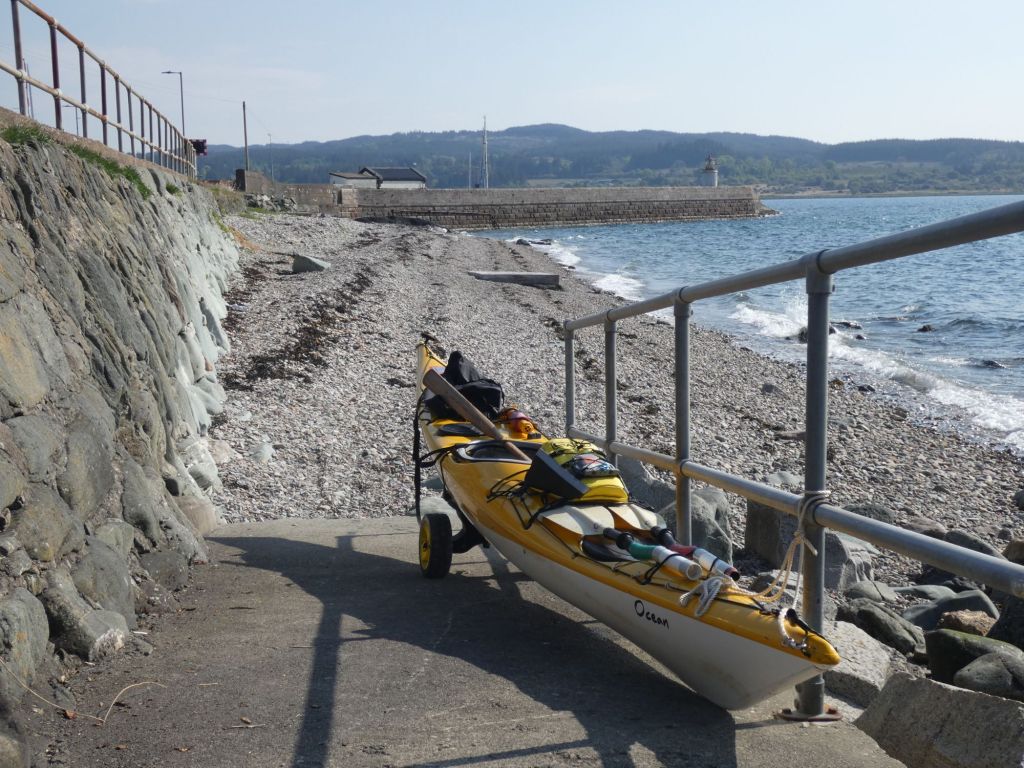
    I landed my kayak on a pebble beach to the south of the canal entrance, pulled it up a ramp, and tied it to the railing.

    Unlike the Lowland Canals, I hadn’t done any research or planning for this one. I know it’s a common route for canoes and kayaks, and I registered my trip online. Other than that, this was a voyage of discovery.

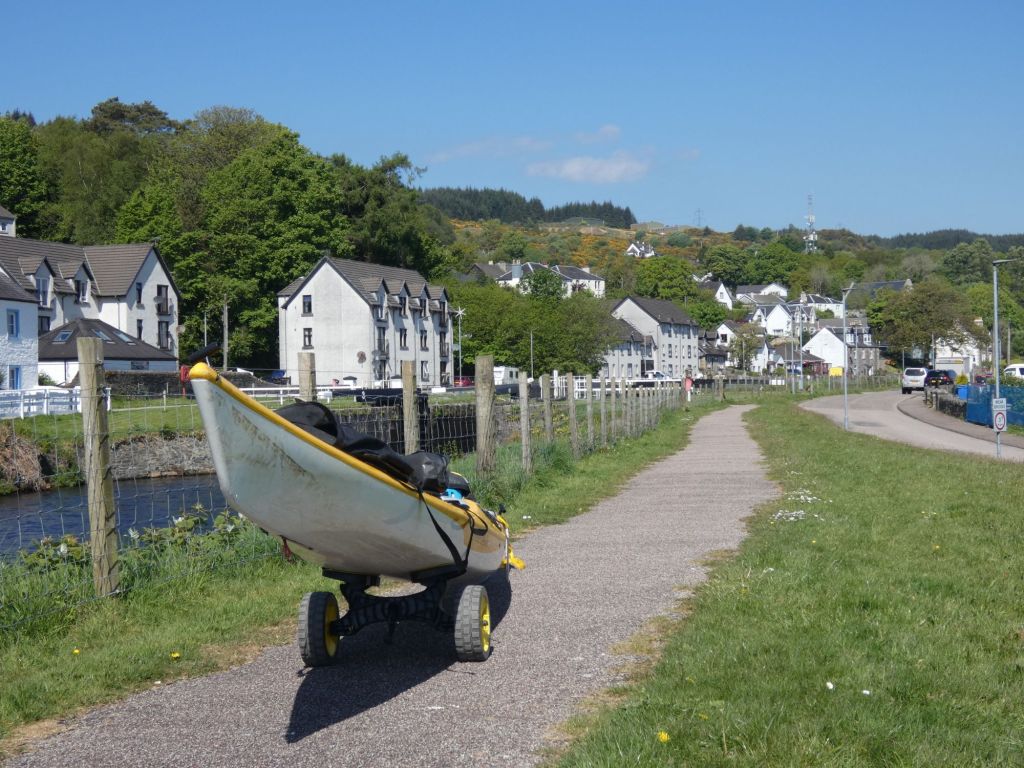
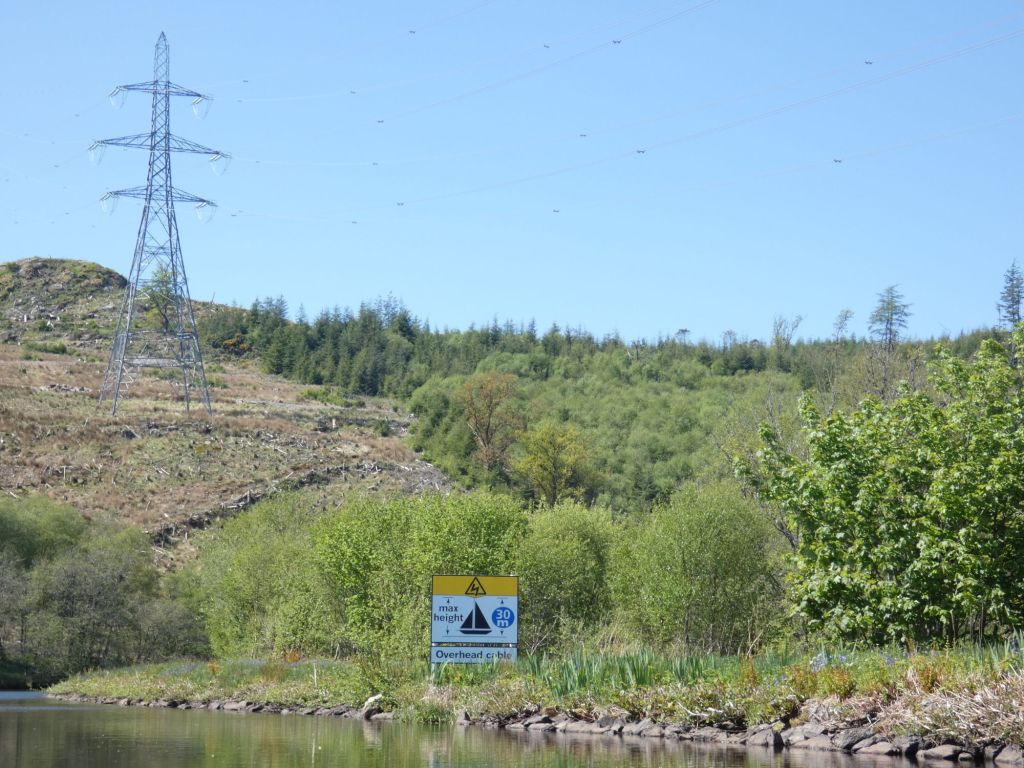
    I walked the route to the kayak put in place above lock 4, refuelled myself and my battery power bank at the Rumblin’ Tum café, checked in with the canal staff at the Sea Lock office, and then returned to my kayak for the start of the first portage. The rest of the trip was a delight, best told with a few photos.

    I finished the canal at Crinan Bridge, a quarter of a mile before Crinan, as it’s easier to get to the sea here. I then paddled up to Crinan, tied up at the bottom of a ramp, and got a much needed shower in the excellent facilities there. Unfortunately, I forgot to fill up my water bags and will have to nip back there tomorrow before heading north.

    A castle in my back yard.
  • Day 5 – On my own

    • North Bute to Kilfinan Bay
    • 35 kms

    The couple on the yacht moored across from my campsite took their dog ashore for a short walk and waved to me as they crossed in their small tender. Apart from that, and a few other waves from a distance, I haven’t communicated with anyone in the flesh all day.

    The tidal flow in the western kyle wouldn’t be in my favour till 11 am. However, the light southerly winds were forecast to freshen as the day progressed, so I decided it was best to get down to Ardlamont Point as quickly as possible. After that, I’d be heading north up Loch Fyne, so a fresh southerly would be helping me along.

    In the end, it was very easy going down to the point.

    The Maids of Bute overlooking the northern end of the western Kyle.
    All calm as I approached Tighnabruaich.
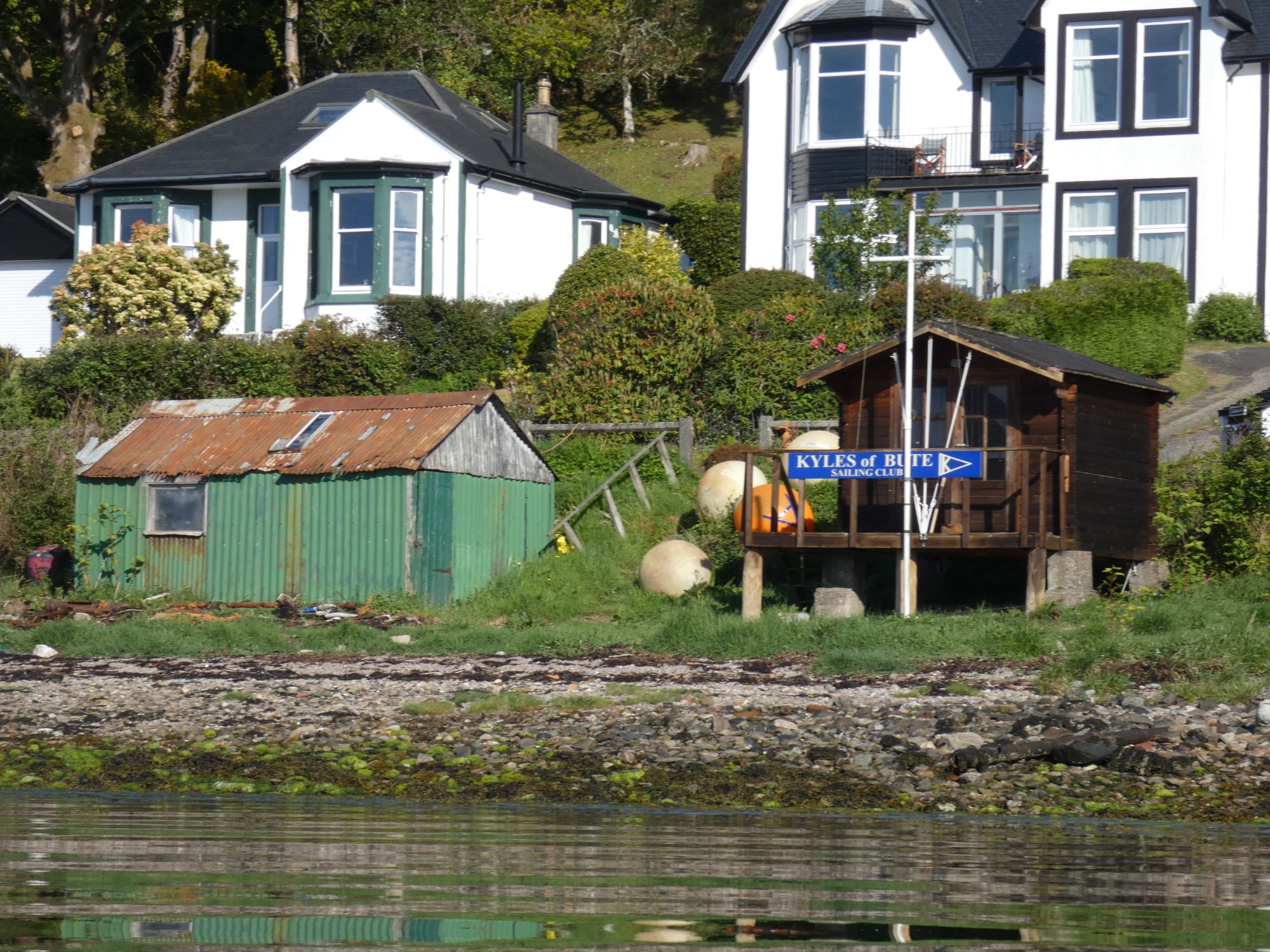
    A rather modest club house considering the size of the yachts moored here.
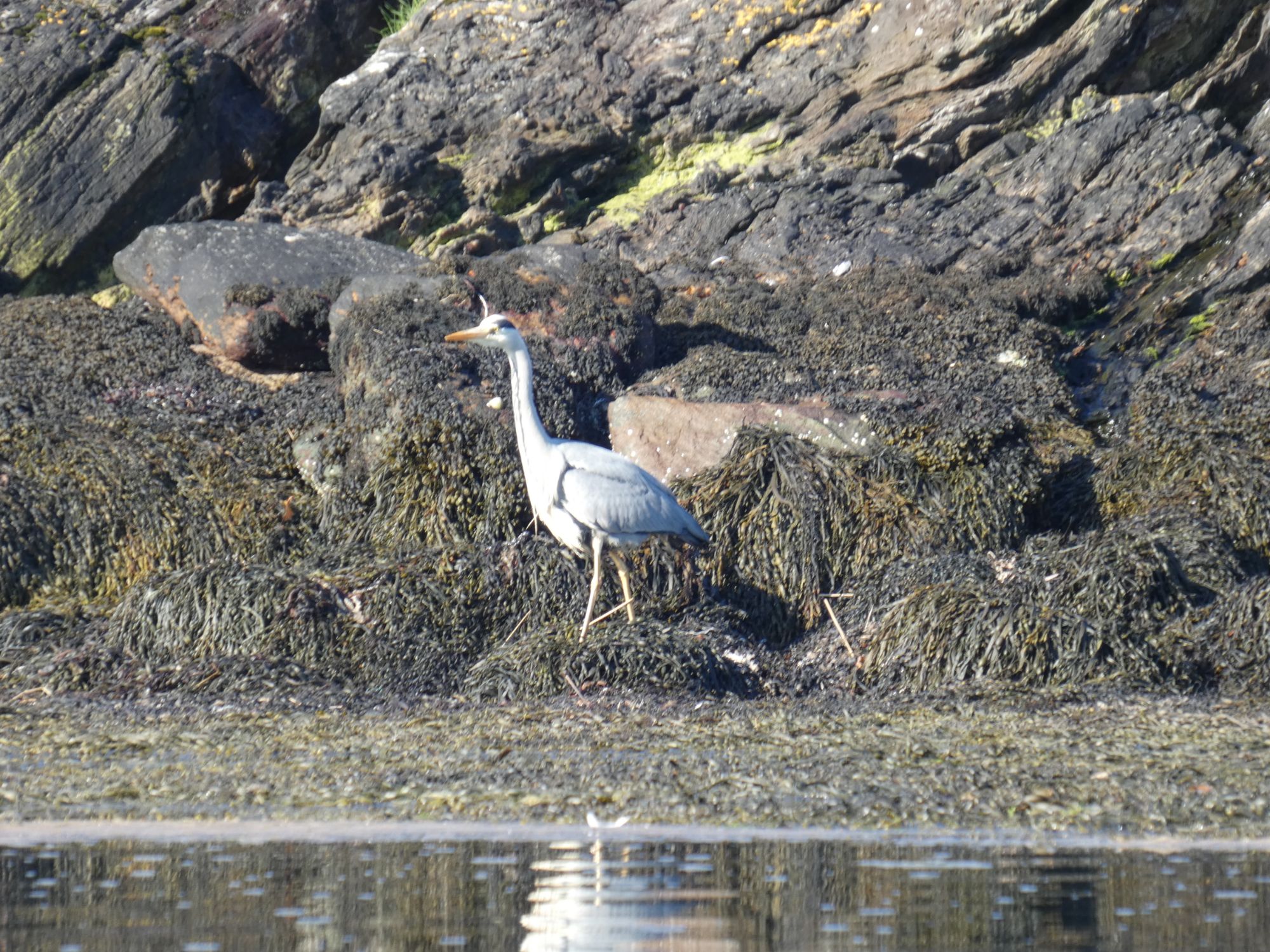
    Grey Herons are seen fishing on the shores everywhere I go.
    Tighnabruaich RNLI station.
    The Oystercatchers would always take flight as I approached.

    The wind did indeed freshen as I headed northwest from the point, and it gave rise to a wind blown chop on my beam. It was the first time this trip that I felt that I should have been wearing a cag. The little breaking tops would sometimes threaten my bib and spray deck defences, but as I turned north after 45 minutes it was just my t-shirt that was a little wet.

    The rest of the paddle up Loch Fyne was easy enough, but I feel my directional control with following wind and sea has been a little compromised by having the trolley on the back.

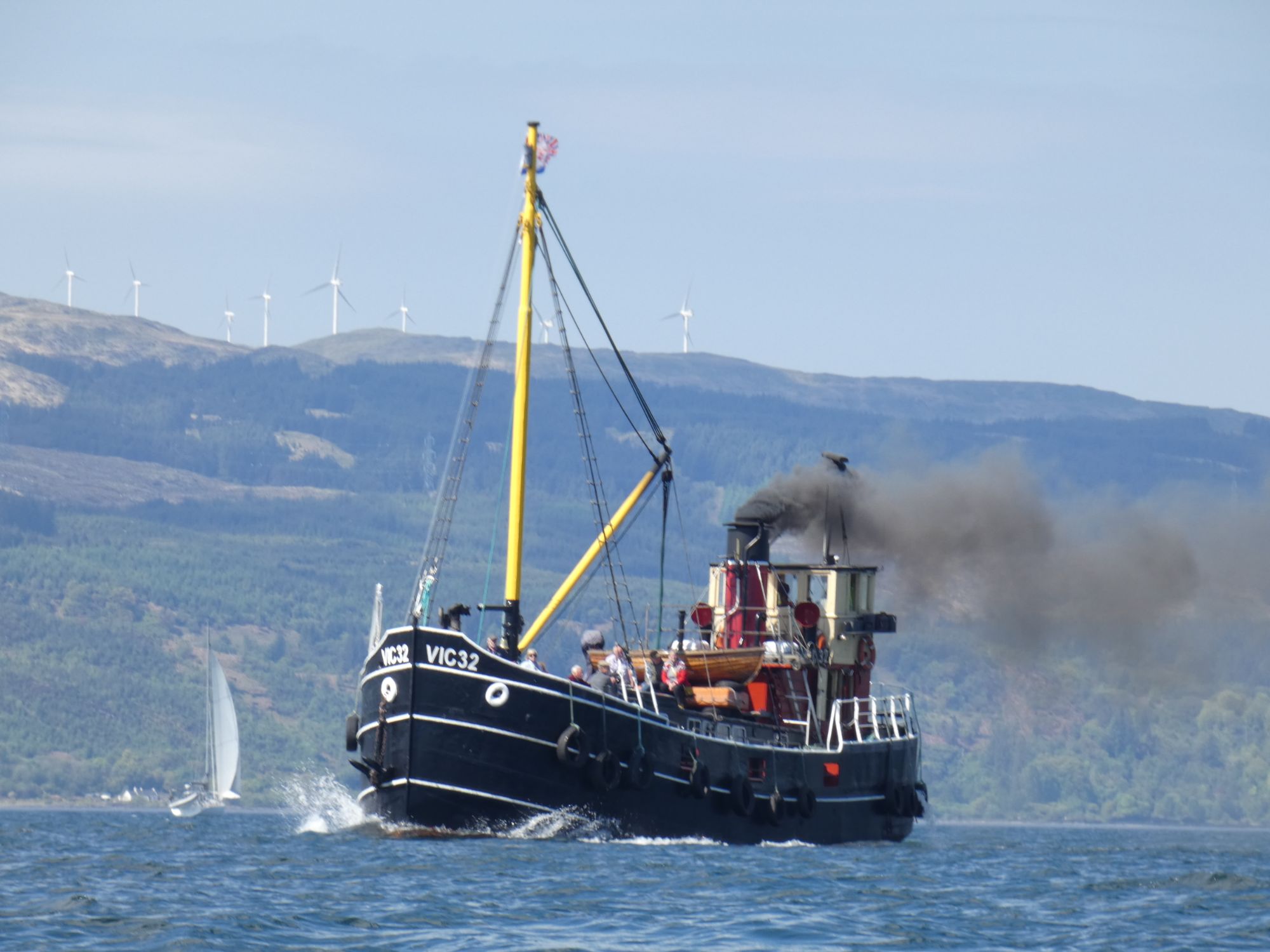
    An interesting boat heading down Loch Fyne. I could smell it for half an hour afterwards. I think it was using old tyres for fuel.
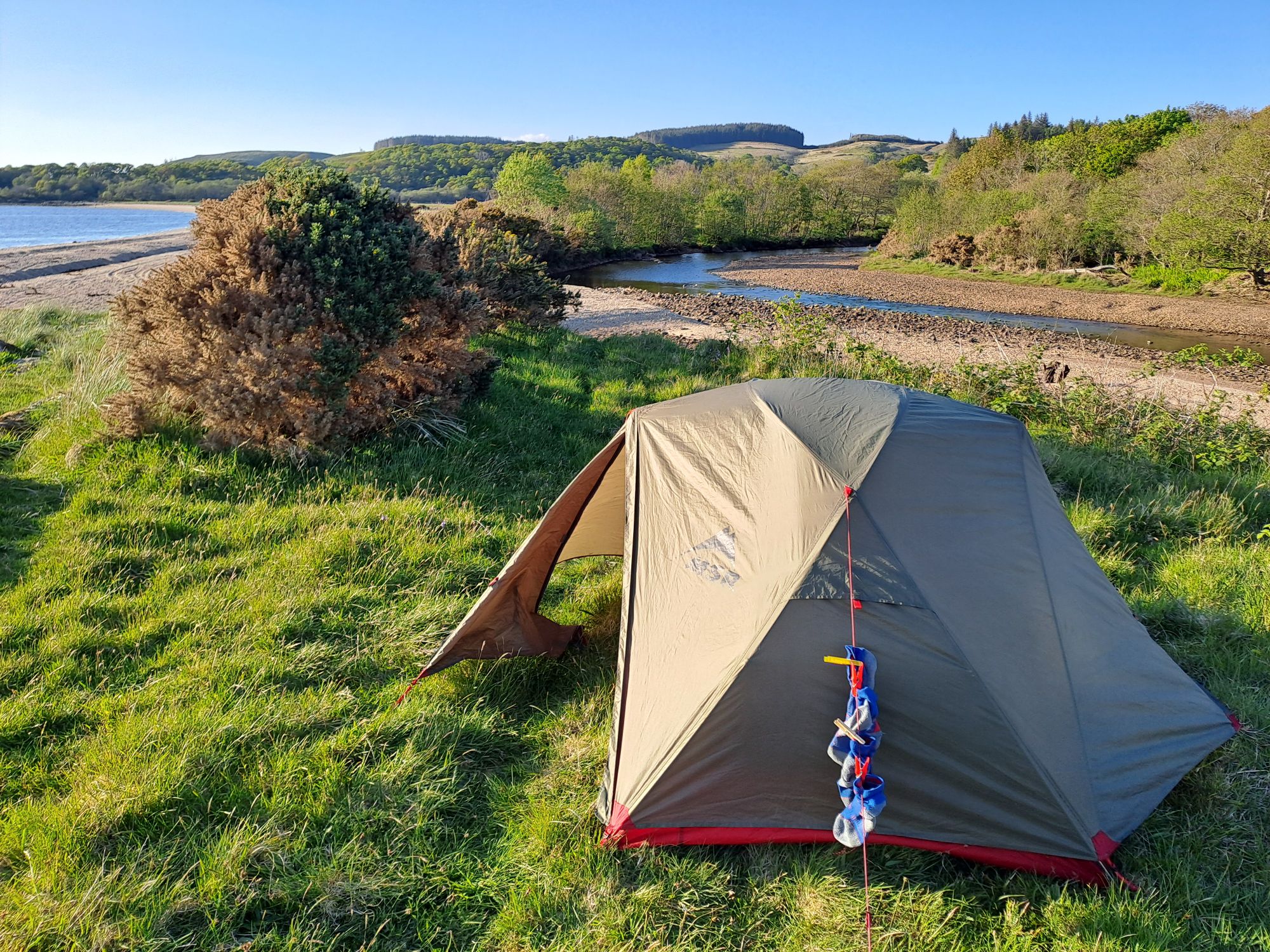
    My quietest campsite so far. Stream on one side, Loch Fyne on the other.